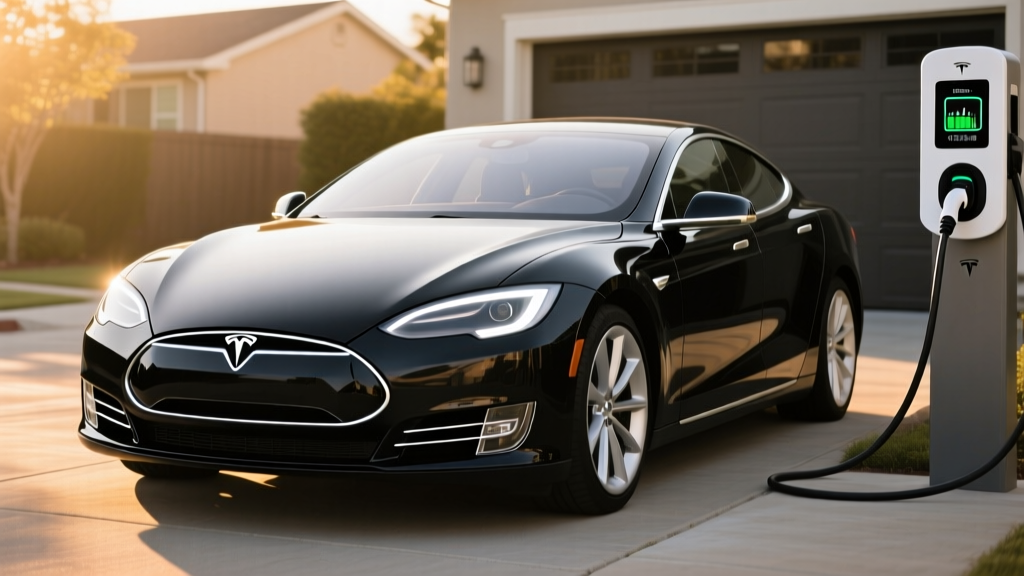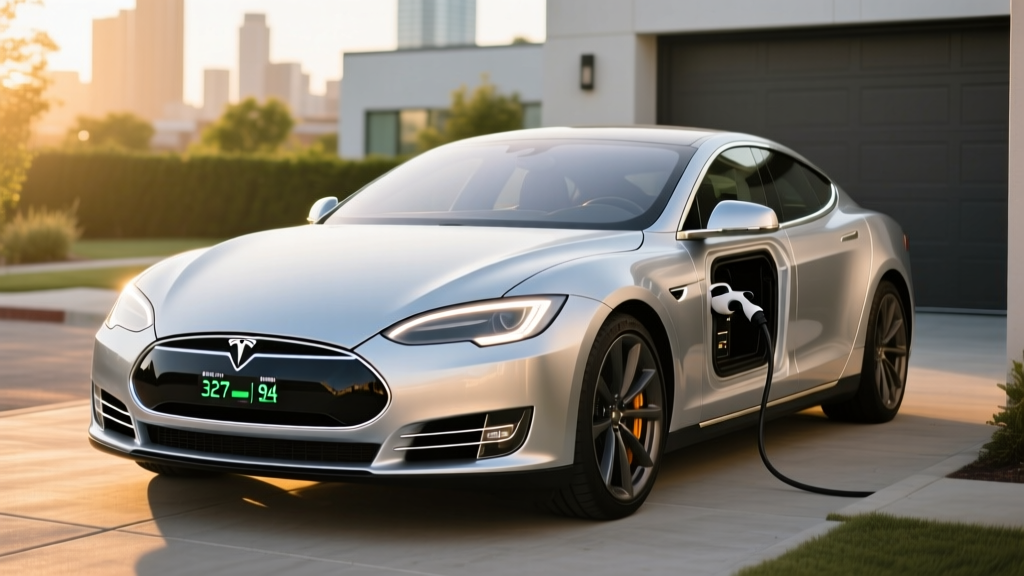
The 2015 Tesla Model S P85D was a watershed moment in electric vehicles. With its dual-motor all-wheel-drive layout, 691 horsepower, and the introduction of Ludicrous Mode, it proved that an EV could out-accelerate supercars while seating five adults and their luggage. Now, more than a decade later, used P85D examples are appearing on the secondary market at tempting prices. But buying a decade-old luxury EV requires hard data on battery health, charging infrastructure compatibility, and real-world ownership costs.
This guide breaks down exactly what a 2026 buyer needs to know before purchasing a used 2015 Tesla P85D — from its 85 kWh NMC battery degradation curve to its 120 kW Supercharger peak rate, and whether it still makes sense against modern alternatives.
2015 Tesla P85D: Full Specification Sheet
| Specification | 2015 Tesla Model S P85D |
|---|---|
| EPA Range (Original) | 253 miles (Performance) / 275 miles (with 85 kWh pack, pre-update) |
| Usable Battery Capacity | ~81 kWh usable (85 kWh gross) |
| Battery Chemistry | NMC (Nickel Manganese Cobalt) — Panasonic 18650 cells |
| Drivetrain | Dual-Motor AWD (rear-biased) |
| Horsepower | 691 hp (combined, Insane Mode) |
| 0–60 mph | 3.2 seconds (Insane) / 2.8 seconds (Ludicrous, late-2015 OTA) |
| Top Speed | 155 mph |
| Max DC Fast Charge | ~120 kW peak (Supercharger V1/V2) |
| 10–80% DC Fast Charge | ~40 minutes |
| Level 2 Charge Rate | 10 kW (single charger) / 20 kW (twin chargers option) |
| Efficiency | 93 MPGe combined (29 kWh/100 mi) |
| Cargo Volume | 26.3 cu ft (rear) + 5.3 cu ft (frunk) |
| Seating | 5 standard (7 with optional rear-facing jump seats) |
| Original MSRP | $127,820 (base P85D, before incentives) |
| Battery Warranty (Original) | 8 years / unlimited miles (85 kWh pack) |
| Powertrain Warranty | 4 years / 50,000 miles (expired) |
Real-World Range: What to Expect in 2026
Real-World Expectation (Used, 2026): Expect 190–240 miles of usable range depending on battery State of Health (SoH), driving style, and climate. Highway driving at 75 mph drops range to roughly 180–210 miles. In cold weather (below 32°F), NMC chemistry loses 20–30% of available range, meaning a degraded pack could deliver as little as 140–160 miles on a freezing winter day.
The P85D's 85 kWh pack uses Panasonic 18650 NMC cells — the same cylindrical architecture that powered early Model S and Model X vehicles. NMC chemistry offers excellent energy density but is more susceptible to calendar and cycle degradation than the LFP (lithium iron phosphate) packs Tesla now uses in Standard Range models.
According to data aggregated by fueleconomy.gov, the 2015 Model S 85D/P85D was rated at 93 MPGe combined. However, real-world efficiency is heavily influenced by the P85D's performance tuning. Aggressive acceleration, frequent Ludicrous-mode launches, and sustained high-speed driving all push consumption well above the EPA's 29 kWh/100 mi figure — often into the 35–40 kWh/100 mi range on spirited drives.
Battery degradation reality: Studies of high-mileage Model S packs show average capacity loss of 10–15% after 100,000 miles and 15–25% after 150,000 miles. A 2015 P85D with 120,000 miles might retain 75–85% of its original capacity, translating to roughly 60–69 kWh usable — enough for daily commuting but tight for road trips without planning.
Charging Speed: DC Fast, Supercharger, and Home Level 2
| Charging Method | Power (kW) | Speed (mi/hr added) | Notes |
|---|---|---|---|
| Level 1 (120V household) | ~1.4 kW | ~3–4 mi/hr | Emergency/trickle only; 60+ hrs for full charge |
| Level 2 (240V, 40A single charger) | 10 kW | ~28–30 mi/hr | Standard onboard; ~8 hrs for full charge |
| Level 2 (240V, 80A twin chargers) | 20 kW | ~58–60 mi/hr | Optional equipment; rare on used market |
| DC Fast (Tesla Supercharger V2) | ~120 kW peak | ~200+ mi/hr at peak | 10–80% in ~40 min; tapers sharply above 80% |
| DC Fast (CCS via adapter) | ~100–120 kW | ~180 mi/hr at peak | Requires Tesla CCS adapter (sold separately) |
The P85D charges via Tesla's proprietary connector (now being rebranded as NACS). At a Supercharger V2 station, the pack can accept up to roughly 120 kW, though sustained rates average closer to 80–90 kW over the 10–80% window. The charge curve tapers significantly above 60% State of Charge, and above 80%, speeds drop to under 30 kW to protect the NMC cells.
CCS compatibility note: The 2015 P85D was built before Tesla adopted CCS as a standard in North America. However, Tesla sells a CCS Combo 1 adapter that enables charging at Electrify America, EVgo, and other non-Tesla DC fast networks. As of 2026, most major networks have opened to NACS-equipped vehicles, but adapter compatibility with 2012–2017 Model S vehicles should be confirmed with Tesla directly before purchase.
For home charging, a Level 2 wall connector on a 60-amp circuit (48A continuous) delivers the full 10 kW the single onboard charger can handle — adding roughly 29 miles of range per hour. A full charge from 10% takes about 8 hours. This is adequate for overnight replenishment but slower than modern EVs with 11.5–22 kW onboard chargers.
Performance: Insane and Ludicrous Mode Explained
The P85D's party trick remains its straight-line acceleration. The rear motor produces 469 hp and the front motor 221 hp, for a combined 691 hp (in Insane Mode). In standard mode, 0–60 mph takes roughly 4.2 seconds — already sports-car territory.
Engaging Insane Mode drops that to 3.2 seconds. And if the vehicle received the late-2015 Ludicrous Mode over-the-air update (a $10,000 option at the time, later included on some builds), the P85D could hit 60 mph in a claimed 2.8 seconds — rivaling a Lamborghini Huracán off the line.
The dual-motor AWD system provides exceptional traction in rain and light snow, with torque vectoring between axles. However, the P85D is a heavy vehicle at approximately 4,969 lbs, and that mass is noticeable in cornering. This is a grand tourer, not a track car.
Regenerative braking: The P85D offers adjustable regen levels (Standard and Low). In Standard mode, one-pedal driving is achievable in most city conditions, though not as aggressive as modern EVs with stronger regen tuning.
Interior, Tech, and Daily Usability
The 2015 Model S interior centers on its iconic 17-inch portrait touchscreen — groundbreaking in 2015 but showing its age by 2026 standards. The screen controls virtually every vehicle function, from climate to suspension height to media. Early Model S screens are prone to delamination (yellowing/bubbling at the edges) and unresponsiveness; replacement screens from Tesla cost roughly $1,500–$2,500.
Driver assistance: The P85D was available with Tesla's first-generation Autopilot hardware (HW1), introduced in late 2014. This includes adaptive cruise control, lane-keeping assist, and semi-autonomous steering on divided highways. Important: this is SAE Level 2 driver assistance, not self-driving. The driver must remain fully engaged with hands on the wheel and eyes on the road. HW1 is far less capable than Tesla's current HW4 system and does not support Full Self-Driving (Supervised) features.
Cargo and passenger space: The Model S offers 26.3 cubic feet behind the rear seats and an additional 5.3 cubic feet in the front trunk (frunk). Legroom is generous — 42.7 inches front, 35.4 inches rear. The optional rear-facing jump seats (for small children) allowed a 7-passenger configuration, though these are rare and not recommended for highway use.
Air suspension: Most P85D examples came equipped with Tesla's adaptive air suspension. While it provides a comfortable ride and adjustable ride height, air struts on 2012–2017 Model S vehicles are a known failure point, with replacements costing $1,500–$2,500 per corner. Budget for this in your ownership plan.
Used Pricing, Tax Credits, and Ownership Cost
| Cost Factor | 2026 Estimate |
|---|---|
| Used P85D Market Price | $18,000–$28,000 (depending on mileage, condition, battery SoH) |
| Federal Used EV Tax Credit (§25E) | Up to $4,000 (30% of sale price, max $4,000) |
| Effective Price After Credit | $14,000–$24,000 |
| Annual Insurance (avg.) | $2,200–$3,000 (varies by state/driver) |
| Annual Electricity (12,000 mi) | $450–$700 (at $0.13–$0.18/kWh) |
| Estimated Annual Maintenance | $800–$1,500 (air suspension, coolant, tires, screen) |
Federal tax credit eligibility for used EVs: Under IRS §25E, buyers of a used P85D from a licensed dealer may qualify for a credit of 30% of the sale price, up to $4,000. Key requirements include:
- Sale price must be $25,000 or less
- Buyer income caps: $75,000 (single) / $112,500 (head of household) / $150,000 (joint)
- Vehicle must be purchased from a licensed dealer (private-party sales do not qualify)
- Vehicle must be at least 2 model years old (2015 qualifies)
- Credit is non-refundable but can be transferred to the dealer at point of sale as a discount
Important: The P85D does not qualify for the new-vehicle §30D credit (it's not new). The §25E used-EV credit is the applicable incentive. Consult a tax professional to confirm your eligibility, as income limits and dealer requirements must be met.
Total cost of ownership reality: A P85D at $22,000 with $4,000 credit nets $18,000. Over 5 years, add roughly $12,500 in insurance, $3,000 in electricity, and $5,000–$7,500 in maintenance (including likely air suspension and potential screen or MCU replacement). That's roughly $38,500–$41,000 over 5 years — competitive with a used BMW 5 Series or Mercedes E-Class, but with lower fuel costs and higher repair risk.
Pros and Cons: The Honest Verdict
✅ Pros
- Supercar-level acceleration (2.8–3.2 sec 0–60) at a used-sedan price
- Spacious interior with frunk + large trunk (31.6 cu ft total)
- Access to Tesla Supercharger network (with NACS connector)
- Over-the-air updates still supported for core functions
- Dual-motor AWD excellent in rain and snow
- Up to $4,000 federal used-EV tax credit available
❌ Cons
- Battery degradation: 15–25% loss common at 150k+ miles
- Air suspension failure is nearly inevitable; $6,000–$10,000 for all four corners
- MCU1 (Tegra-based) touchscreen prone to failure and delamination
- HW1 Autopilot is outdated; no FSD support
- No battery preconditioning for DC fast charging (slower cold-weather charging)
- 85 kWh battery warranty expired (8yr/unlimited — lapsed in 2023)
- Insurance costs above average for the segment
Who Should Buy the 2015 P85D (And Who Shouldn't)
Choose the P85D if:
- You want thrilling performance at a sub-$25,000 price point
- Your daily commute is under 60 miles round-trip
- You have home Level 2 charging and can budget $5,000+ for potential repairs
- You value Supercharger network access for occasional road trips
Skip the P85D if:
- You need reliable 300+ mile range for frequent road trips
- You want modern driver-assist features (HW1 is severely limited)
- You cannot absorb a $6,000–$10,000 air suspension or battery replacement
- You live in extreme cold and need consistent winter range
Best competitor comparisons: Against a used 2017–2018 Chevrolet Bolt EV ($12,000–$16,000), the P85D offers more performance and space but far higher maintenance risk. Against a used 2018 Tesla Model 3 Long Range ($20,000–$26,000), the Model 3 has a newer battery, HW3 Autopilot, better efficiency, and lower repair costs — but less cargo room and no air suspension. The P85D occupies a niche: maximum performance per dollar for buyers willing to accept legacy-EV maintenance.
Frequently Asked Questions
What is the real-world range of a used 2015 Tesla P85D?
With a healthy battery (80–85% SoH), expect 200–230 miles in mixed driving, 180–210 miles on the highway at 75 mph, and as low as 140–160 miles in sub-freezing temperatures. Always check the vehicle's displayed range at 100% charge and compare it to the original EPA rating to gauge degradation.
How fast does the P85D charge at home and on the road?
On a Level 2 home charger (240V/40A), the P85D charges at 10 kW, adding about 29 miles per hour — a full charge takes roughly 8 hours. At a Tesla Supercharger V2, it peaks at ~120 kW, with a 10–80% session taking about 40 minutes. Charging is slower in cold weather because the 2015 Model S lacks battery preconditioning for DC fast charging.
Does the 2015 P85D qualify for any federal tax credit?
It does not qualify for the new-vehicle §30D credit. However, under IRS §25E, buyers purchasing from a licensed dealer for $25,000 or less may receive up to $4,000 (30% of sale price). Income caps apply: $75,000 single / $150,000 joint filers. Confirm eligibility with a tax professional.
Is the P85D's battery warranty still active?
No. The 85 kWh battery was covered for 8 years with unlimited miles, meaning warranty coverage expired in 2023 at the latest. A replacement 85 kWh pack from Tesla costs approximately $15,000–$20,000 installed, though third-party refurbishers offer rebuilt packs for $10,000–$14,000.
Can the P85D use non-Tesla charging networks?
Yes, with Tesla's CCS Combo 1 adapter, the P85D can charge at Electrify America, EVgo, and other CCS-equipped stations. However, confirm adapter compatibility with Tesla for pre-2018 Model S vehicles before relying on this for road trips.
Is it worth buying a 2015 P85D vs. a newer used EV?
The P85D makes sense for performance-focused buyers on a budget who can self-insure against expensive repairs. If reliability and low maintenance are priorities, a used 2018+ Model 3 Long Range or 2020+ Chevy Bolt EUV offers better long-term value with modern hardware and remaining battery warranty.
Sources: EPA fueleconomy.gov — 2015 Tesla Model S, IRS §25E Used Clean Vehicle Credit, Tesla Model S Owner's Manual (2015).