The 2015 Tesla Model X SUV at a Glance
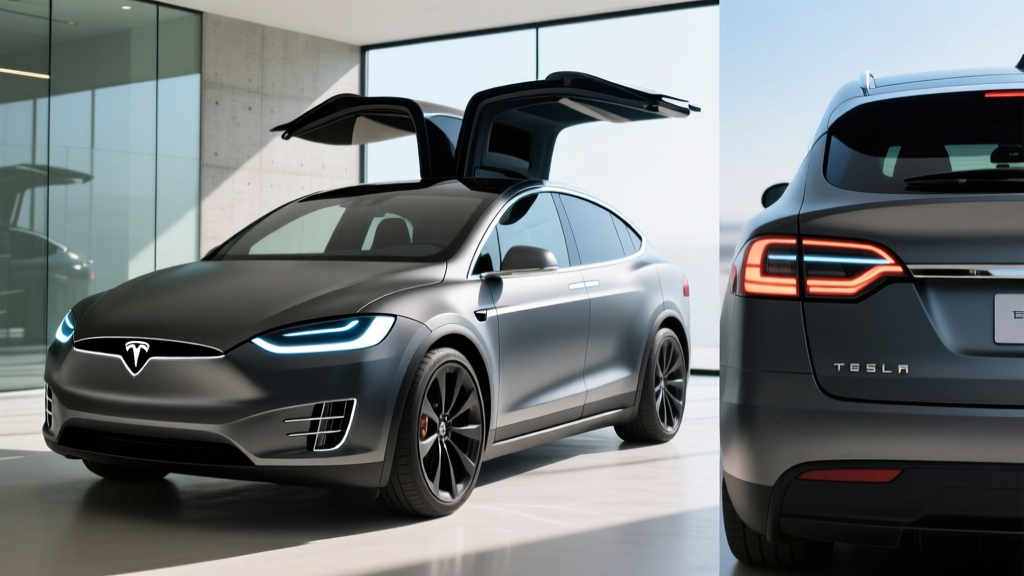
The 2015 Tesla Model X was the first electric SUV to prove that a battery-electric vehicle could haul a family across the country without compromise — at least on paper. Launched in late 2015 as a 2016 model-year vehicle, the Model X debuted with falcon-wing rear doors, a massive panoramic windshield, and the same 90 kWh battery pack that powered the Model S. Over a decade later, it remains one of the most recognizable EVs on the road and a popular entry point into the used electric SUV market.
But buying a decade-old EV is not the same as buying a decade-old gas car. Battery degradation, obsolete charging hardware, out-of-warranty drivetrain components, and software support all factor into whether a 2015 Model X is a smart purchase or an expensive gamble. This guide breaks down every spec that matters — range, charging speed, battery health, real ownership costs, and how it compares to newer alternatives you can buy today.
| Specification | 2015 Tesla Model X 90D | 2015 Tesla Model X P90D |
|---|---|---|
| EPA Range | 250 miles | 250 miles |
| Battery (Usable) | ~83.5 kWh (90 kWh nominal) | ~83.5 kWh (90 kWh nominal) |
| Battery Chemistry | NMC (Nickel Manganese Cobalt) | NMC (Nickel Manganese Cobalt) |
| Drivetrain | Dual-Motor AWD | Dual-Motor AWD |
| Horsepower | 518 hp (combined) | 762 hp (Ludicrous mode) |
| 0–60 mph | 4.8 seconds | 3.2 seconds (Ludicrous) |
| MPGe (Combined) | 92 MPGe | 89 MPGe |
| Energy Consumption | ~37 kWh/100 mi | ~38 kWh/100 mi |
| Max DC Fast Charge | ~120 kW (Supercharger V2) | ~120 kW (Supercharger V2) |
| 10–80% DC Charge Time | ~40 minutes | ~40 minutes |
| Level 2 Home Charge Rate | ~11.5 kW (48A) | ~11.5 kW (48A) |
| Level 2 Miles per Hour | ~29 mi/hr | ~29 mi/hr |
| Cargo (Behind 3rd Row) | 21.8 cu ft | 21.8 cu ft |
| Cargo (All Rows Folded) | 83.1 cu ft | 83.1 cu ft |
| Seating | 5, 6, or 7 passengers | 5, 6, or 7 passengers |
| Towing Capacity | 5,000 lbs | 5,000 lbs |
| Original MSRP | $132,000 | $142,000 |
| Current Used Price (2026) | $18,000–$28,000 | $22,000–$32,000 |
Real-World Range: What the EPA Sticker Doesn't Tell You
The EPA rated the 2015 Model X 90D at 250 miles of range and the P90D at 250 miles as well (the P90D's more aggressive powertrain tuning slightly reduced efficiency but the same pack size yielded a near-identical rating). For context, fueleconomy.gov lists the combined efficiency at roughly 92 MPGe for the 90D variant.
EPA Range: 250 miles (90D and P90D)
Real-World Highway (70 mph, moderate temps): ~200–220 miles
Real-World Highway (cold weather, below 30°F): ~160–185 miles
City/Commuter (stop-and-go, mild temps): ~235–250 miles
The gap between EPA and real-world range in the 2015 Model X is significant, and there are three reasons for it. First, the Model X is a heavy vehicle — curb weight exceeds 5,200 lbs — and that mass penalizes highway efficiency more than city driving, where regenerative braking recovers energy. Second, the 90 kWh battery pack was subject to a software-limited charge ceiling from the factory to reduce degradation risk, meaning usable capacity was closer to 83.5 kWh. Third, any 2015 pack now has 10+ years of calendar aging. Expect 10–18% capacity loss depending on climate history, charging habits, and mileage. A well-maintained example with 80,000 miles in a temperate climate might still deliver 210–220 real-world miles in fair weather. A high-mileage unit that spent its life in Arizona heat or regularly charged to 100% may sit closer to 175–190 miles.
If your daily commute is under 60 miles round-trip, even a degraded pack will cover it easily with home charging. If you plan regular 200+ mile road trips, you'll be planning Supercharger stops — which brings us to charging speed.
Charging Speed: DC Fast and Home Level 2
The 2015 Model X uses Tesla's proprietary connector (now rebranded as NACS) and charges on the Tesla Supercharger network, which in 2015 consisted primarily of V2 stations capable of up to 150 kW — though the Model X's onboard charge acceptance peaked around 120 kW under ideal conditions. That peak is short-lived.
| Charging Level | Power (kW) | Speed / Notes |
|---|---|---|
| Level 1 (120V household) | ~1.4 kW | ~3–4 miles per hour |
| Level 2 (240V, 48A HPWC) | ~11.5 kW | ~29 miles per hour |
| Level 2 (240V, 32A mobile) | ~7.7 kW | ~20 miles per hour |
| DC Fast (Supercharger V2) | Peak ~120 kW | 10–80% in ~40 minutes |
| DC Fast (Supercharger V3/V4) | Limited to ~120 kW | No benefit from 250/350 kW posts |
Here's the charging-curve reality that matters for road trips: the Model X 90D will accept close to 120 kW between roughly 10–30% State of Charge (SoC), then taper to ~80 kW by 50%, ~55 kW by 70%, and below 30 kW above 85%. That means a 10–80% session takes around 40 minutes at a V2 Supercharger. Plugging into a newer V3 (250 kW) or V4 (350 kW) Supercharger provides no meaningful speed benefit — the vehicle's charge acceptance is the bottleneck, not the station.
For home charging, Tesla's High Power Wall Connector (HPWC) at 48 amps on a 60-amp circuit delivers approximately 11.5 kW, replenishing the full 83.5 kWh usable pack in about 7.5 hours. Most owners charge overnight and wake up to a full battery every morning, which is the core advantage of EV ownership and eliminates range anxiety for daily driving. A standard NEMA 14-50 outlet on a 50-amp circuit delivers roughly 9.6 kW (40 amps continuous), adding about 24 miles per hour — still sufficient for overnight replenishment.
Performance, Drivetrain, and What Ludicrous Mode Actually Does
Both the 90D and P90D feature Tesla's dual-motor all-wheel-drive system — one AC induction motor on each axle. The 90D produces a combined 518 horsepower and hits 0–60 mph in 4.8 seconds, which remains quick by any SUV standard. The P90D, equipped with Tesla's Ludicrous mode (a $10,000 option at launch), unlocks 762 horsepower and a 3.2-second 0–60 time. These figures were extraordinary in 2015 and still hold up today.
However, there are age-related performance considerations. The air suspension on the 2015 Model X is a known failure point — strut replacements run $1,500–$2,500 per corner at independent shops. Drive unit (motor) failures were not uncommon on early dual-motor Teslas, and while many have been replaced under warranty, a 2015 unit outside warranty poses a $5,000–$8,000 replacement risk per motor. The regenerative braking system reduces wear on the friction brakes, but the vehicle's weight means brake rotors and pads still need periodic replacement, particularly if the previous owner did not use regen-heavy driving settings.
Interior, Cargo, and the Falcon Wing Reality
The 2015 Model X offers seating for five (standard two-row), six (captain's chairs in the second row), or seven (bench second row plus a third row). The third row is best suited for children — legroom is tight at roughly 28 inches, and access requires the second row to tilt and slide forward, which is a slow, motorized process.
Cargo volume stands at 21.8 cubic feet behind the third row, expanding to 83.1 cubic feet with all rear seats folded. The front trunk (frunk) adds approximately 6.6 cubic feet of sealed storage — useful for charging cables or groceries but not large enough for a carry-on suitcase.
The falcon-wing rear doors are the Model X's signature feature and its most polarizing. They open vertically with a double-hinge design that requires less lateral clearance than a conventional door, making them genuinely useful in tight parking spaces. However, they are slow to open and close (roughly 6–7 seconds per cycle), their ultrasonic obstruction sensors were glitchy on 2015 models, and rain/snow can drip into the cabin during the opening arc. Seal and actuator replacements are expensive — budget $800–$1,500 per door if mechanisms fail.
The 17-inch center touchscreen dominated the dashboard in 2015 and remains functional, though the hardware (MCU1) is now sluggish by modern standards. Tesla offered an MCU2 upgrade program for $1,500–$2,000 that improves responsiveness and enables newer software features — check whether the used unit you're evaluating has already received this upgrade. The 2015 Model X includes basic Autopilot hardware (HW1), which supports lane-keeping and adaptive cruise control but cannot run Tesla's Full Self-Driving (FSD) software. This is SAE Level 2 driver assistance — you must keep your hands on the wheel and eyes on the road at all times.
Battery Health, Warranty Status, and Degradation Expectations
The 90 kWh NMC (Nickel Manganese Cobalt) battery pack in the 2015 Model X was covered by Tesla's 8-year/unlimited-mile battery and drive unit warranty. For vehicles delivered in 2015, that warranty expired in 2023. This is a critical ownership inflection point: any battery or motor failure is now an out-of-pocket expense.
NMC chemistry from this era is prone to approximately 2–3% degradation per year in the first few years, tapering to roughly 1% per year afterward. Real-world data from Tesla owner communities suggests the average 2015 Model X pack retains 82–90% of its original capacity at 80,000–120,000 miles. You can check the battery's State of Health (SoH) through third-party apps like TeslaFi or Tessie, which pull data from Tesla's API.
If the pack fails catastrophically, a Tesla-service replacement runs $15,000–$22,000 depending on the replacement pack configuration. Third-party EV repair shops sometimes source salvaged packs for $8,000–$12,000 installed. Before purchasing, request a battery health report and factor a $5,000–$10,000 reserve for potential drivetrain repairs over your first three years of ownership.
Pricing, Tax Credits, and Total Cost of Ownership
As of early 2026, used 2015 Tesla Model X pricing ranges from approximately $18,000 for high-mileage (100,000+ mi) examples to $32,000 for low-mileage, well-maintained P90D units. The median transaction price sits around $23,000–$26,000.
| Cost Factor | Details |
|---|---|
| Used Price Range | $18,000–$32,000 |
| Federal Used EV Credit (§25E) | Up to $4,000 (30% of sale price, capped at $4,000) |
| §25E Income Cap | $75,000 single / $112,500 HOH / $150,000 MFJ (AGI) |
| §25E Vehicle Requirements | Must be purchased from a dealer; sale price ≤$25,000; model year at least 2 years old |
| New EV Credit (§30D) | Does NOT apply — vehicle is not new |
| Estimated Home Electricity Cost | ~$0.14/kWh national avg → ~$12 for a full charge (83.5 kWh) |
| Annual Insurance (avg) | $2,200–$3,400 depending on state and driving record |
| Estimated Annual Maintenance | $800–$2,000 (tires, cabin filter, wipers, potential suspension) |
The federal §25E used clean vehicle credit is the relevant incentive here — not the §30D new vehicle credit. Under §25E, you can claim 30% of the purchase price up to a maximum of $4,000, provided you buy from a licensed dealer (private-party sales do not qualify), the sale price is $25,000 or less, your adjusted gross income falls below the caps, and the vehicle is at least two model years old. A 2015 Model X purchased from a dealer for $24,000 could yield a $4,000 credit, bringing the effective cost to $20,000. Consult a tax professional to confirm eligibility, as IRS rules are subject to change and individual circumstances vary.
On the operating-cost side, electricity at the national residential average of ~$0.14/kWh means a full home charge costs roughly $12, translating to about $0.05 per mile. Compare that to a similarly sized gas SUV averaging 18 MPG at $3.50/gallon — roughly $0.19 per mile. Over 12,000 miles per year, that's a fuel savings of approximately $1,680 annually. However, insurance premiums for the Model X tend to run 20–40% higher than comparable gas SUVs, and tire replacement (the Model X uses 20- or 22-inch tires costing $300–$500 each) adds to the cost equation.
2015 Model X vs. Modern Alternatives
The honest question for any used-EV buyer is whether a 2015 Model X at $22,000–$26,000 (after the $4,000 credit) is a better value than a newer, warrantied EV at a higher price. Here's how it compares:
| Vehicle | Price (2026) | EPA Range | DC Charge Speed | Warranty Remaining |
|---|---|---|---|---|
| 2015 Tesla Model X 90D | ~$22,000–$26,000 (used) | 250 mi | ~120 kW peak | Expired |
| 2024 Hyundai Ioniq 5 (used) | ~$30,000–$35,000 | 303 mi | 235 kW peak | ~6 yr remaining |
| 2024 Tesla Model Y LR (used) | ~$35,000–$40,000 | 330 mi | 250 kW peak | ~6 yr remaining |
| 2025 Kia EV6 (new) | ~$42,000+ (new) | 310 mi | 235 kW peak | Full factory |
The 2015 Model X wins on price-per-seat and offers Supercharger network access, air suspension, and a distinctive design. It loses on range, charging speed, warranty coverage, and long-term reliability risk. If your budget is strictly under $25,000 and you need three-row seating, the 2015 Model X has no direct electric rival. If you can stretch to $35,000, a used 2022–2024 Ioniq 5 or Model Y provides 50–80 more miles of range, roughly double the DC charging speed, and years of warranty coverage remaining.
Pros
- Access to Tesla Supercharger network (17,000+ stations in the US)
- Standard dual-motor AWD with strong acceleration
- Available 7-passenger seating (rare in electric SUVs at this price)
- Over-the-air software updates still supported
- Falcon-wing doors useful in tight parking spaces
- Eligible for up to $4,000 federal used-EV tax credit (§25E)
- Low per-mile fuel cost (~$0.05/mi on home electricity)
Cons
- Battery and drivetrain warranty fully expired — expensive out-of-pocket repairs
- Real-world highway range of ~200 mi drops to ~165 mi in cold weather
- DC fast charging limited to ~120 kW peak — slow by 2026 standards
- Air suspension and falcon-wing door actuators are costly failure points
- MCU1 infotainment hardware is sluggish; FSD not supported on HW1
- Insurance premiums 20–40% above comparable gas SUVs
- Third-row seating is cramped; suitable only for small children
Who Should Buy the 2015 Tesla Model X?
The 2015 Model X is the right used-EV purchase for a specific buyer: someone who needs three-row electric seating on a sub-$25,000 budget, has access to reliable home charging, drives less than 50 miles daily, and is comfortable budgeting $2,000–$5,000 annually for potential repairs. It works well as a family commuter and school-run vehicle where the Supercharger network is available for occasional longer trips.
It is the wrong choice for anyone who cannot tolerate unexpected repair bills, anyone in a cold climate who needs 250+ miles of reliable winter range, or anyone who prioritizes fast DC charging for frequent road trips. If you drive 300+ miles weekly on highways, the slow charging curve and degraded range will become a daily frustration.
Frequently Asked Questions
What is the real-world range of the 2015 Tesla Model X?
The EPA rated the 2015 Model X 90D at 250 miles. In real-world highway driving at 70 mph in moderate temperatures, expect 200–220 miles. In cold weather (below 30°F), range drops to approximately 160–185 miles due to battery resistance and cabin heating demands. Battery degradation on a 10-year-old pack further reduces these figures by 10–18% from original capacity.
How fast does the 2015 Model X charge?
On a Tesla Supercharger V2, the 2015 Model X peaks at approximately 120 kW and charges from 10–80% in about 40 minutes. Newer V3/V4 Superchargers provide no speed benefit because the vehicle's charge acceptance is the limiting factor. At home on a 240V/48A Level 2 charger, it adds roughly 29 miles per hour, fully replenishing overnight in about 7.5 hours.
Does the 2015 Tesla Model X qualify for a federal tax credit?
It does not qualify for the §30D new-vehicle credit. It may qualify for the §25E used clean vehicle credit: up to $4,000 (30% of the sale price, capped at $4,000) if purchased from a licensed dealer for $25,000 or less, and if your AGI is below $75,000 (single), $112,500 (head of household), or $150,000 (married filing jointly). Rules are subject to change — verify with the IRS §25E page and a qualified tax professional before purchasing.
Is the 2015 Model X worth buying vs. a newer EV?
At $22,000–$26,000 after the used-EV credit, the 2015 Model X is the most affordable way to get a 7-seat electric SUV with AWD and Supercharger access. However, the expired battery warranty, ~120 kW charging speed, and potential for $5,000+ drivetrain repairs make it a higher-risk ownership proposition than a newer Ioniq 5, Model Y, or EV6 with remaining factory coverage. It's a value play for budget-conscious buyers who accept the risk.
What are the most common problems with the 2015 Model X?
The most frequently reported issues include air suspension strut failures ($1,500–$2,500 per corner), falcon-wing door actuator and sensor malfunctions ($800–$1,500 per door), drive unit (motor) failures ($5,000–$8,000 replacement), and MCU1 infotainment screen delamination or failure. Battery degradation is expected but catastrophic pack failure is less common than the mechanical issues listed above.
Can the 2015 Model X use Tesla's Full Self-Driving?
No. The 2015 Model X shipped with Hardware 1 (HW1), which supports only basic Autopilot features (adaptive cruise control and lane-keeping). This is SAE Level 2 driver assistance — the driver must remain fully engaged. FSD requires HW3 or later, and Tesla has not offered a hardware retrofit program for HW1 vehicles. Do not purchase a 2015 Model X expecting autonomous driving capabilities.