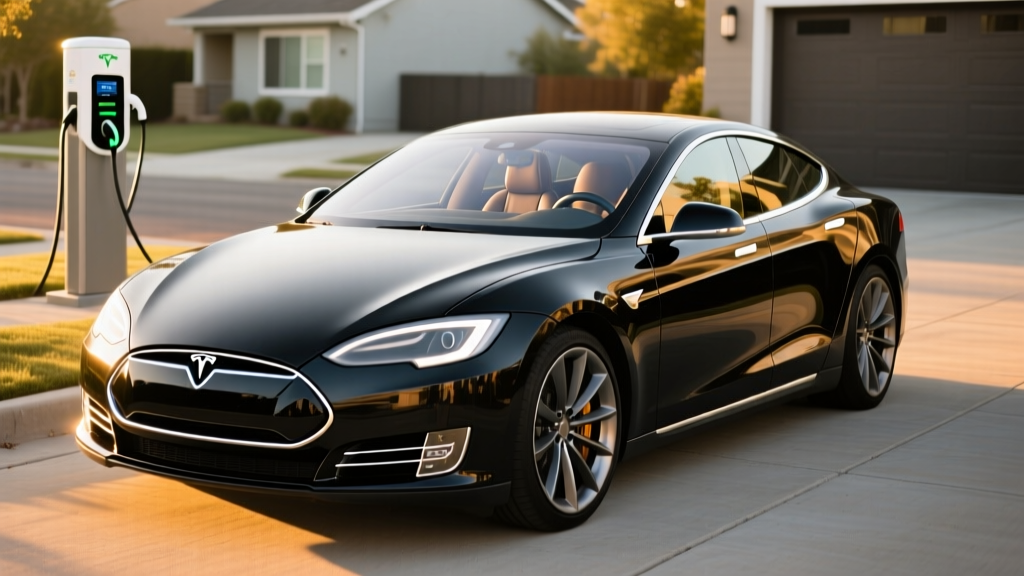
The 2015 Tesla Model S AWD 70D occupies a specific niche in the used EV market: it was Tesla's first mass-produced dual-motor, all-wheel-drive sedan, offering a compelling blend of range, performance, and practicality when new. In 2026, it remains a popular choice for budget-conscious buyers seeking a premium electric sedan — but with batteries now 10+ years old, prospective owners need hard data on degradation, real-world range, charging infrastructure compatibility, and total cost of ownership before signing any paperwork.
This review covers the 70D trim specifically — the mid-range AWD variant with a ~70 kWh battery pack — examining what it delivers today, what to watch for in a used example, and how it stacks up against newer, cheaper EVs flooding the market.
2015 Tesla Model S AWD 70D: Core Specifications
| Specification | Value |
|---|---|
| EPA Range (original) | 240 miles |
| Battery Capacity (usable) | ~70 kWh (NMC chemistry) |
| Drivetrain | Dual-motor AWD |
| Horsepower | 328 hp (combined) |
| 0–60 mph | 5.2 seconds |
| Top Speed | 140 mph |
| MPGe (combined) | 101 MPGe |
| Energy Consumption | 33 kWh/100 mi |
| DC Fast Charge (max) | ~120 kW (Supercharger V2) |
| Level 2 Charge Rate | 10 kW (40A) / ~29 mi/hr |
| Cargo Volume | 26.3 cu ft (rear) + 5.3 cu ft (frunk) |
| Seating | 5 passengers (optional 7 with rear-facing jump seats) |
| Original Base MSRP | $75,000 |
| Typical Used Price (2026) | $14,000–$22,000 |
| Battery Warranty (original) | 8 years / 125,000 miles |
Real-World Range: What to Expect From an 11-Year-Old Battery
Real-World Expectation (2026, average degradation): 180–210 miles (depending on battery State of Health)
Highway (70 mph, moderate climate): ~170–195 miles
Cold Weather (below 32°F, highway): ~140–165 miles
The 70D's 240-mile EPA rating was impressive in 2015, but battery degradation is the single biggest variable for any used Model S. Tesla's NMC (nickel manganese cobalt) chemistry in the 70 kWh pack typically loses 10–15% of its original capacity over 10 years and 100,000+ miles, based on fleet data aggregated by sources like Teslanomics and owner forums. A well-maintained 70D with 85,000 miles might still deliver 200–210 miles of real range in mixed driving; a high-mileage or frequently Supercharged example could be closer to 175–185 miles.
The Model S 70D lacks a heat pump (standard on post-2021 Teslas), relying instead on resistive cabin heating. This draws significantly from the traction battery in cold weather, cutting range by 25–35% in sub-freezing conditions. If you live in a northern climate, plan for ~150 miles of usable winter range and precondition the cabin while plugged in to mitigate losses.
Before purchasing any used 70D, request a battery State of Health (SoH) reading. Tesla Service Centers can pull this data, or you can estimate it via the car's energy graph and rated-range display at 100% charge. A SoH below 80% means you're looking at roughly 190 miles or less on a full charge — acceptable for commuting, limiting for road trips.
Charging Speeds: Supercharger Access and Home Charging
| Charging Level | Power / Rate | Miles Added per Hour | Notes |
|---|---|---|---|
| Level 1 (120V, 12A) | ~1.4 kW | ~3–4 mi/hr | Emergency/trickle only |
| Level 2 (240V, 40A) | 10 kW | ~29 mi/hr | Full charge in ~7.5 hours |
| Level 2 (240V, 48A, dual charger option) | 12 kW | ~35 mi/hr | Optional upgrade when new |
| DC Fast (Tesla Supercharger V2) | Up to ~120 kW peak | ~300 mi/hr at peak | 10–80% in ~40 minutes |
| DC Fast (CHAdeMO adapter) | ~50 kW | ~145 mi/hr | Requires aftermarket adapter |
The 2015 Model S 70D charges exclusively via Tesla's proprietary connector — the same physical port used on all Teslas sold through 2024. With Tesla now opening Superchargers to NACS-equipped non-Tesla EVs, the Tesla connector remains the most robust DC fast-charging network in North America, which is a major ownership advantage.
On a V2 Supercharger (150 kW capable), the 70D peaks around 110–120 kW at low State of Charge, tapering to ~60 kW by 60% SoC and ~30 kW above 80%. A realistic 10–80% session takes approximately 35–45 minutes. This is considerably slower than modern 800V architectures (Hyundai Ioniq 5, Porsche Taycan) that achieve 10–80% in 18 minutes, but it remains practical for road-trip meal or rest stops.
For home charging, the onboard charger accepts up to 10 kW on a 40-amp circuit (or 12 kW with the optional dual-charger configuration some 70Ds were built with). A standard NEMA 14-50 outlet with a Tesla Mobile Connector delivers ~29 miles of range per hour — sufficient to replenish a full day's driving overnight. Budget $500–$1,500 for a professional Level 2 home installation (240V/50A circuit), depending on your electrical panel's proximity to the parking spot.
Performance and Driving Dynamics
The dual-motor AWD powertrain produces 328 combined horsepower and launches the 70D from 0–60 mph in 5.2 seconds — quick by any measure, though noticeably a step below the 85D and P85D variants. The instant torque delivery and low center of gravity (battery pack mounted under the floor) give the Model S a planted, confident feel that still impresses against newer EVs.
Ride quality is firm but compliant, with adaptive air suspension available as an option (check whether it's equipped and functional — air strut replacement costs $1,500–$2,500 per corner). Steering is precise, and the regenerative braking offers two modes (Standard and Low), though it does not enable true one-pedal driving to a full stop as newer Teslas and competitors do.
The AWD system is fully electronic, with no mechanical linkage between front and rear motors. Traction in rain and light snow is excellent, though ground clearance (4.6 inches at standard ride height) limits serious winter-road capability. Winter tires are strongly recommended in snow-belt states.
Tech, Interior, and Driver Assistance
The 2015 Model S interior was minimalist for its era and shows its age in 2026. The 17-inch center touchscreen remains the primary interface for nearly all vehicle controls — climate, media, navigation, and vehicle settings. The infotainment system received incremental over-the-air updates for years, but hardware limitations mean it lacks the responsiveness of Tesla's current MCU3/Autopilot Hardware 4 systems.
Autopilot (Hardware 1): Most 2015 Model S vehicles were built with Mobileye-based Autopilot Hardware 1, which supports basic Traffic-Aware Cruise Control and Autosteer (lane centering). This is an SAE Level 2 driver-assistance system — the driver must remain fully engaged, hands on or near the wheel, eyes on the road at all times. It is not self-driving. Hardware 1 does not support Tesla's Full Self-Driving (FSD) software, and Tesla has ended major feature updates for this generation.
Notable tech features:
- Over-the-air software updates (though diminishing in scope for HW1 vehicles)
- 17-inch capacitive touchscreen with navigation
- Premium audio system (optional, 12-speaker)
- Power liftgate, keyless entry, panoramic glass roof
- Optional third-row rear-facing jump seats (small children only)
- Frunk (front trunk) with 5.3 cu ft of storage
Drawbacks to note:
- No Apple CarPlay or Android Auto (Tesla's closed ecosystem)
- MCU1 (first-gen media control unit) is prone to failure; replacement or upgrade to MCU2 costs $1,500–$2,500
- Autopilot Hardware 1 is functionally obsolete compared to HW3/HW4
- Door handles are a known failure point (warranty campaign covered some; check recall status)
- No heat pump — resistive heating significantly reduces winter range
Used Pricing and Federal Tax Credit Eligibility
The 2015 Model S 70D originally started at $75,000 before incentives. In the 2026 used market, examples typically sell for $14,000 to $22,000, depending on mileage, condition, battery SoH, and whether Autopilot/air suspension are equipped. Low-mileage, well-maintained examples with documented battery health command the upper end of that range.
- Sale price must be $25,000 or less
- Buyer income caps: $75,000 (single), $112,500 (head of household), $150,000 (joint)
- Vehicle must be at least 2 model years old (2015 qualifies)
- Must be purchased from a licensed dealer (private-party sales do not qualify)
- Credit equals 30% of sale price, capped at $4,000
- Vehicle must not have been previously transferred to a buyer after August 16, 2022 (check VIN history)
A $16,000 Model S 70D from a qualifying dealer could yield a $4,000 credit (30% × $16,000 = $4,800, capped at $4,000), bringing effective cost to ~$12,000. Always verify eligibility with your tax professional and consult IRS §25E guidelines.
Note: The §30D new vehicle credit does not apply to a 2015 model. Only the §25E used-vehicle credit is relevant here.
Ownership Costs: What Budgets Should Expect
Buying a used 2015 Model S 70D is only the beginning. Ownership costs differ meaningfully from a new EV:
- Insurance: Model S premiums are elevated due to repair costs and aluminum body panels. Expect $2,000–$3,200/year depending on your state, driving record, and coverage level.
- Maintenance: No oil changes, but plan for cabin air filters, brake fluid, wiper blades, and tire rotation (~$300–$500/year). The 70D has fewer moving parts than an ICE sedan, but out-of-warranty repairs (drive unit, MCU, air suspension, door handles) can be costly.
- Battery replacement: If the battery fails outside the 8-year/125,000-mile warranty (which most 2015 examples have exceeded by 2026), a refurbished replacement pack costs $12,000–$16,000 installed at a Tesla Service Center. This is the single largest financial risk.
- Charging costs: Home charging at $0.14/kWh averages ~$4.60 per 100 miles. Supercharger rates vary ($0.25–$0.40/kWh), averaging $8–$13 per 100 miles on the road.
- Tires: The 70D's weight (~4,800 lbs) and instant torque wear tires faster than ICE sedans. Budget $1,200–$1,800 for a set of quality all-season or touring tires every 25,000–35,000 miles.
2015 Model S 70D vs. the Competition
In the $14,000–$22,000 used EV market, the 70D competes with several newer, smaller EVs and older luxury alternatives:
| Vehicle | Typical Price | EPA Range | DC Fast Charge | Key Advantage |
|---|---|---|---|---|
| 2015 Tesla Model S 70D | $14,000–$22,000 | 240 mi | ~120 kW | Space, Supercharger network, AWD |
| 2018–2019 Chevrolet Bolt EV | $12,000–$17,000 | 238 mi | ~55 kW | Low cost, low operating expense |
| 2017–2018 Tesla Model 3 Long Range | $18,000–$25,000 | 310 mi | ~170 kW | Newer platform, better efficiency |
| 2019–2020 Nissan Leaf Plus | $13,000–$18,000 | 226 mi | ~50 kW (CHAdeMO) | Affordable, widely available |
| 2017 BMW i3 (94 Ah) | $12,000–$16,000 | 114 mi | ~50 kW | City agility, unique design |
The 70D wins on interior space, highway comfort, and Supercharger network access. It loses on charging speed (modern EVs charge 2–3× faster), tech freshness, and out-of-warranty risk. A 2018 Model 3 Long Range offers 70 more miles of EPA range, faster charging, and newer hardware for a modest price premium — making it the stronger choice for buyers prioritizing range and tech. The Bolt EV is the value pick for commuting, though its slow DC charging and smaller cabin are trade-offs.
Pros
- Spacious sedan with 31.6 cu ft total cargo (rear + frunk)
- Dual-motor AWD with confident all-weather traction
- Access to Tesla Supercharger network (most reliable DC charging in the US)
- Strong performance (5.2s 0–60) and composed ride
- Eligible for up to $4,000 used EV tax credit (§25E)
- Premium build materials, panoramic roof, air suspension option
Cons
- Battery warranty expired; replacement costs $12,000–$16,000
- Slow DC charging vs. modern EVs (~40 min 10–80%)
- Autopilot Hardware 1 is obsolete; no FSD support
- No Apple CarPlay/Android Auto
- MCU1 failure risk ($1,500–$2,500 to repair/upgrade)
- No heat pump — significant winter range loss
- Insurance premiums above average for the price segment
Who Should Buy the 2015 Model S 70D?
Choose the 70D if:
- You need a spacious, comfortable sedan for daily commuting and occasional road trips under 200 miles
- You value AWD traction and have access to home Level 2 charging
- You want Supercharger network access for longer trips
- You can budget $2,000–$4,000/year for potential out-of-warranty repairs
- You find a well-maintained example with documented battery SoH above 85%
Look elsewhere if:
- You regularly drive 250+ miles between charges (consider a used Model 3 LR or Model Y)
- You need the latest driver-assistance tech (Hardware 1 is limited)
- You want fast DC charging for frequent road trips (modern EVs are 2–3× faster)
- You're on a tight budget and can't absorb a potential $12,000+ battery replacement
- You rely on Apple CarPlay or Android Auto for navigation and media
Frequently Asked Questions
What is the real-world range of the 2015 Tesla Model S AWD 70D?
Originally rated at 240 miles EPA, expect 180–210 miles in 2026 depending on battery degradation. Highway driving at 70 mph yields ~170–195 miles; cold weather (below freezing) drops that to 140–165 miles due to resistive cabin heating and battery chemistry limitations.
How fast does the 70D charge at home and on DC fast chargers?
At home on a 240V/40A Level 2 charger, the 70D adds ~29 miles per hour (10 kW), fully recharging in about 7.5 hours. On a Tesla Supercharger V2, it peaks at ~120 kW and achieves a 10–80% charge in approximately 35–45 minutes, tapering significantly above 80%.
Does the 2015 Model S 70D qualify for the federal EV tax credit?
It may qualify for the §25E Used Clean Vehicle Credit of up to $4,000, provided the sale price is $25,000 or less, the buyer meets income caps ($75K single / $150K joint), and the vehicle is purchased from a licensed dealer. The §30D new-vehicle credit does not apply. Consult IRS guidelines and a tax professional.
Is the 2015 Model S 70D worth buying vs. newer used EVs?
It offers exceptional space, AWD, and Supercharger access at a low entry price. However, battery warranty has expired, charging is slow by modern standards, and Autopilot hardware is obsolete. A 2018+ Model 3 Long Range is a stronger all-around pick if your budget allows; the Bolt EV is better for pure value commuting.
What are the biggest risks of buying a used 2015 Model S?
Out-of-warranty battery replacement ($12,000–$16,000), MCU1 screen failure ($1,500–$2,500), air suspension strut failure ($1,500–$2,500 per corner), and door handle mechanism issues. A pre-purchase inspection by a Tesla Service Center or qualified EV mechanic is strongly recommended.
Can I use non-Tesla charging networks with the 70D?
The 70D uses Tesla's proprietary connector. You can charge at non-Tesla Level 2 stations using the Tesla J1772 adapter (included with the car). For DC fast charging outside the Supercharger network, an aftermarket CHAdeMO adapter (~$400–$600) enables ~50 kW charging at compatible stations, though the CHAdeMO network is shrinking in favor of CCS and NACS.
What is the battery warranty status on a 2015 Model S in 2026?
The original battery warranty was 8 years/125,000 miles. As of 2026, all 2015 Model S vehicles have exceeded the time limit. If the vehicle has under 125,000 miles and the battery has degraded below 70% of original capacity, a warranty claim may still be possible — but most examples are now out of warranty. Budget accordingly.