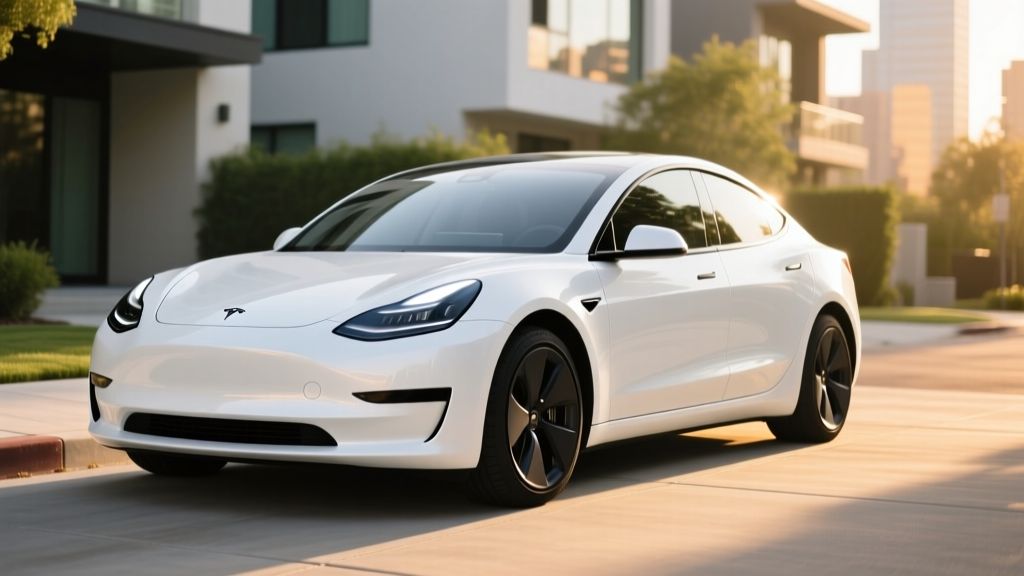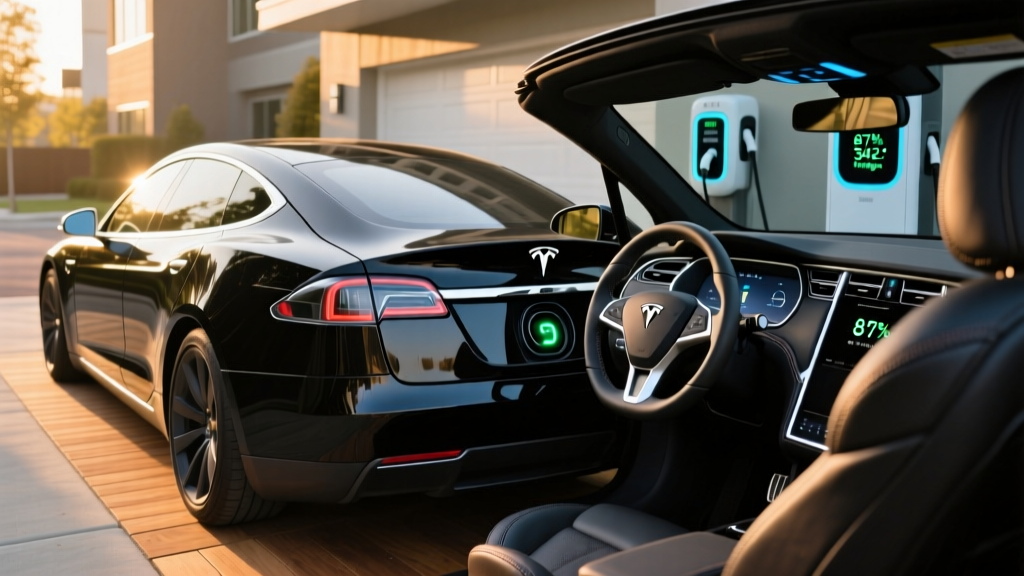
The 2015 Tesla Model S 85D at a Glance
The 2015 Tesla Model S 85D was a watershed vehicle — the first dual-motor, all-wheel-drive sedan from Tesla to reach volume production, and one of the earliest EVs to crack the 270-mile EPA range barrier. Over a decade later, it remains one of the most common used EVs on the secondary market. For 2026 buyers considering a pre-owned electric sedan, the 85D offers a compelling mix of Supercharger network access, spacious liftback practicality, and a driving experience that still feels modern. But battery degradation, aging hardware, and the complete absence of federal tax credit eligibility for used purchases of this vintage demand a clear-eyed assessment before you sign any paperwork.
| Specification | 2015 Tesla Model S 85D |
|---|---|
| EPA Range (Original) | 270 miles |
| Battery Capacity (Usable) | ~81 kWh usable (85 kWh nominal), NMC |
| Drivetrain | Dual-motor AWD |
| Horsepower | ~417 hp (combined) |
| 0–60 mph | 5.2 seconds |
| DC Fast Charge (Peak) | ~120 kW (V2 Supercharger) |
| 10–80% DC Charge Time | ~40–50 minutes |
| Level 2 Charge Rate | 10 kW (onboard charger, single); 20 kW (twin charger option) |
| Efficiency (EPA) | 101 MPGe combined / 33 kWh/100 mi |
| Cargo Volume | 26.3 cu ft (rear) + 5.3 cu ft (frunk) |
| Original MSRP | ~$85,000 (base); ~$95,000–$110,000 as-tested |
| Used Price Range (2026) | $16,000–$28,000 depending on mileage and battery SoH |
| Battery Warranty (Original) | 8 years / 125,000 miles |
Real-World Range: What to Actually Expect
Real-World Highway (70 mph, moderate temps): ~220–240 miles
Real-World City/Mixed: ~235–255 miles
Cold Weather (below 32°F): ~175–200 miles (30–35% reduction common)
The 2015 Model S 85D originally earned a 270-mile EPA combined range rating, which was class-leading at the time. However, two major factors compress that number in practice.
First, battery degradation. A 2015 model with its original pack will have experienced 10–18% capacity loss depending on charging habits, mileage, and climate exposure. Tesla's NMC (nickel-manganese-cobalt) chemistry from this era degrades more noticeably in the first 50,000 miles and then tapers, but a decade-old pack that was frequently charged to 100% or exposed to sustained high temperatures will sit at the worse end of that range. Expect a typical 85D with 80,000–120,000 miles to deliver roughly 210–240 miles of usable range at 80% state of charge in moderate conditions.
Second, the Model S is a large, heavy sedan with a drag coefficient of 0.24 and no heat pump — it uses resistive cabin heating, which is a significant energy draw in winter. Cold-weather range loss of 30–35% is well-documented for this generation. If you live in the Upper Midwest or Northeast, plan your trips around 175–200 miles of real winter range.
On the positive side, the 85D's regenerative braking system and efficient dual-motor torque distribution make it surprisingly efficient in stop-and-go traffic, often exceeding its EPA rating in warm-weather city driving.
Charging Speeds: Supercharger Access and Home Charging
| Charging Level | Power (kW) | Rate | Notes |
|---|---|---|---|
| Level 1 (120V) | ~1.4 kW | ~3–4 mi/hr | Emergency/trickle only |
| Level 2 (240V, single charger) | 10 kW | ~29 mi/hr | Standard onboard charger |
| Level 2 (240V, twin charger option) | 20 kW | ~58 mi/hr | Optional; requires 100A circuit |
| DC Fast Charge (Tesla V2 Supercharger) | Peak ~120 kW | ~170 mi/hr (peak) | 10–80% in ~40–50 min; tapers sharply above 80% |
| DC Fast Charge (CHAdeMO adapter) | ~50 kW | ~100 mi/hr (peak) | Rare; adapter discontinued by Tesla |
The 2015 85D uses Tesla's proprietary connector (pre-NACS standardization) and charges natively on the Tesla Supercharger network — still the most reliable DC fast-charging ecosystem in the US. On a V2 Supercharger (150 kW rated), the 85D peaks around 120 kW but cannot sustain that rate. The charge curve drops significantly after 50–60% SoC, meaning a 10–80% session takes roughly 40–50 minutes. A 10–90% session, more practical for road trips, can stretch to 65–75 minutes.
At home on a standard 240V / 40A NEMA 14-50 outlet or Tesla Wall Connector, the single onboard charger limits you to 10 kW, adding roughly 29 miles of range per hour. A full overnight charge from 20% to 90% takes approximately 7 hours. Some 85D examples were optioned with the twin charger package (20 kW capable), which cuts Level 2 time roughly in half but requires a 100-amp dedicated circuit — a $500–$1,500 electrical upgrade in most homes.
Important note for 2026: Tesla has opened the Supercharger network to non-Tesla EVs via the NACS standard, but the 2015 Model S 85D uses the legacy Tesla connector, which remains fully compatible with all existing Supercharger stalls. No adapter is needed for Superchargers, but you cannot use CCS-equipped public chargers (Electrify America, EVgo CCS stalls) without an adapter that Tesla no longer officially produces.
Performance, Efficiency, and Daily Drivability
The 85D's dual-motor all-wheel-drive powertrain produces approximately 417 horsepower and launches the 4,600-pound sedan to 60 mph in 5.2 seconds — quick by any standard and remarkably smooth. Unlike the later Ludicrous and Plaid variants, the 85D prioritizes linear, accessible acceleration over shock-and-awe. It's a confident highway cruiser with minimal body roll and precise steering, though the air suspension option (standard on many 85D builds) can develop costly leaks at this age.
Efficiency lands at an EPA-rated 101 MPGe combined, or 33 kWh per 100 miles. In real-world mixed driving, expect 31–36 kWh/100 mi depending on speed and temperature. At the 2026 national average electricity rate of roughly $0.16/kWh, that translates to approximately $5.00–$5.75 per 100 miles — roughly a third of what a comparable gasoline sedan would cost at current fuel prices.
Ride quality is firm but composed, and the cabin is impressively quiet at speed. The 17-inch center touchscreen was revolutionary in 2015 but shows its age in 2026 — the resolution, processing speed, and interface lag noticeably behind modern EV infotainment systems. Navigation and over-the-air updates still function, but don't expect wireless CarPlay or Android Auto (neither was ever added to this generation).
Interior Space, Cargo, and Practicality
The Model S remains one of the most practical electric sedans ever built. The rear hatchback design opens to reveal 26.3 cubic feet of cargo space behind the rear seats — more than most midsize SUVs — and folds flat for longer items. The front trunk (frunk) adds 5.3 cubic feet, useful for charging cables or a small bag. Total interior volume including passenger space is approximately 135 cubic feet.
Passenger comfort is strong in the front seats with ample legroom (42.7 inches front, 35.4 inches rear), though the rear seat cushion is relatively flat and the low roofline compromises headroom for taller passengers. The optional rear-facing third-row jump seats (rated for children only) were available in 2015 but are rarely found and not recommended for modern safety expectations.
Build quality on 2015 examples varies. Early Model S vehicles are known for panel gap inconsistencies, door handle failures (the motorized handles are a common repair), and window regulator issues. Interior materials — while attractive in design — used some hard plastics and synthetic leather that may show wear at higher mileages.
Used Pricing, Tax Credits, and Ownership Costs
| Cost Factor | Details |
|---|---|
| Used Price Range (2026) | $16,000–$28,000 (varies by mileage, battery SoH, condition) |
| Federal §30D New EV Tax Credit | Not applicable — vehicle is used |
| Federal Used EV Tax Credit (§25E) | Potentially up to $4,000, but only if purchased from a licensed dealer for ≤$25,000 and buyer meets income caps ($75k single / $150k joint). Many 85D examples exceed the $25,000 price cap. |
| Average Annual Insurance | $1,800–$2,600 (varies by state, driver profile) |
| Estimated Annual Maintenance | $800–$1,500 (suspension, door handles, coolant service, cabin filter) |
| Estimated Annual Charging Cost (12,000 mi) | $600–$750 (home charging dominant) |
The IRS §25E used EV tax credit offers up to $4,000 (30% of sale price, capped at $4,000) for qualified used electric vehicles purchased from a licensed dealer. However, the vehicle must sell for $25,000 or less, and buyer income cannot exceed $75,000 (single) or $150,000 (joint). Many well-maintained 85D examples price above the $25,000 cap, and private-party purchases do not qualify. Always confirm eligibility with a tax professional before relying on this credit.
The original 8-year/125,000-mile battery and drive unit warranty has expired for all 2015 examples. Tesla does offer paid battery replacement, which currently runs $12,000–$16,000 for a remanufactured pack — a cost that must factor into any purchase decision. Third-party EV battery shops are increasingly offering module-level repairs for $3,000–$6,000, which can restore meaningful capacity without a full pack swap.
Battery Health, Degradation, and Long-Term Ownership
The 85D's 85 kWh nominal pack (approximately 81 kWh usable when new) uses NMC lithium-ion cells supplied primarily by Panasonic. This chemistry offers high energy density but is more susceptible to calendar degradation than the LFP (lithium iron phosphate) packs Tesla later adopted in Standard Range vehicles.
Based on aggregated owner data and Tesla's own fleet statistics, a 2015 85D at 100,000 miles typically retains 82–88% of its original capacity — meaning roughly 66–71 kWh usable. This translates to the real-world ranges discussed above. Vehicles that were consistently charged to 100%, frequently Supercharged, or operated in hot climates (Arizona, Southern California, Texas) tend to cluster at the lower end.
Before purchasing, request a battery health reading. The vehicle's touchscreen displays rated range at full charge, which you can cross-reference against the original 270-mile EPA figure. A more precise State of Health (SoH) percentage can be pulled via third-party apps like TeslaFi or Tessie, or during a pre-purchase inspection at a Tesla Service Center. An SoH below 80% is a negotiating point — and potentially a $10,000+ liability.
Autopilot, Safety, and Driver Assistance
All 2015 Model S driver-assistance features require continuous driver attention. This is not autonomous or self-driving capability. The driver must keep hands on the wheel and eyes on the road at all times.
2015 was the year Tesla introduced Hardware 1 Autopilot (HW1), which includes adaptive cruise control, lane-keeping assist, and automatic emergency braking. Vehicles built after approximately October 2014 include the necessary sensor suite. HW1 Autopilot is functional but rudimentary by 2026 standards — lane centering is less confident, phantom braking events are more common, and the system lacks the camera-based perception of Tesla's current HW4/FSD stack.
Full Self-Driving (FSD) capability was not available on HW1 vehicles and cannot be retrofitted. If a listing advertises "FSD," verify the hardware generation — only HW2.5 and later vehicles received FSD updates, and many of those features have been stripped from or limited on older hardware.
The 2015 Model S earned a 5-star overall rating from NHTSA and was an IIHS Top Safety Pick, though it was not tested in the more rigorous small-overlap and updated side-impact protocols introduced in later years.
Who Should Buy the 2015 Model S 85D?
- Supercharger network access (still the most reliable DC charging ecosystem)
- Spacious liftback cargo area (26.3 cu ft) — more practical than most EV sedans
- Dual-motor AWD provides confident all-weather traction
- Low running costs (~$0.05/mi on home electricity)
- Strong acceleration and composed ride quality
- Over-the-air updates still supported
- Battery warranty expired — replacement costs $12,000–$16,000
- Real-world range often 200–230 mi after degradation
- Resistive heating causes severe cold-weather range loss
- Aging touchscreen and infotainment hardware
- Air suspension failures common and expensive ($2,000–$4,000 per corner)
- No modern FSD or HW3+ driver assist capability
- Federal tax credits largely unavailable at this price point
- You need a spacious, comfortable EV sedan with Supercharger access for under $25,000
- You live in a moderate climate where cold-weather range loss is manageable
- You can verify battery SoH above 82% and have a pre-purchase inspection done
- You value cargo practicality and AWD over cutting-edge tech
- You need reliable 250+ mile range in all conditions (consider a newer Model 3, Hyundai Ioniq 5, or Chevrolet Blazer EV)
- You live in a cold climate and cannot charge at home daily
- You want modern driver-assist features or Apple CarPlay/Android Auto
- A potential $12,000+ battery replacement would be financially devastating
Competitor Comparison: 2015 Model S 85D vs Alternatives
| Attribute | 2015 Tesla Model S 85D | 2017 Chevrolet Bolt EV | 2018 Nissan Leaf Plus (62 kWh) |
|---|---|---|---|
| EPA Range | 270 mi | 238 mi | 226 mi |
| Battery | 85 kWh NMC | 60 kWh NMC | 62 kWh NMC |
| DC Fast Charge | ~120 kW peak | ~50 kW (CCS) | ~100 kW (CHAdeMO) |
| 0–60 mph | 5.2 sec | 6.5 sec | 6.9 sec |
| Cargo | 26.3 cu ft | 16.9 cu ft | 23.6 cu ft |
| Typical Used Price (2026) | $16,000–$28,000 | $10,000–$15,000 | $12,000–$17,000 |
| Charging Network | Tesla Supercharger | CCS (EA, EVgo) | CHAdeMO (declining) |
The Model S 85D wins on range, performance, charging infrastructure, and cargo space. The Bolt EV is a budget play with lower range but much lower entry cost and cheaper maintenance. The Leaf Plus is a compromise — decent range but CHAdeMO charging infrastructure is rapidly disappearing in the US, making it a risky long-term bet. For buyers prioritizing range confidence and road-trip capability, the 85D remains the strongest choice in this used-price bracket.
Frequently Asked Questions
What is the real-world range of a 2015 Tesla Model S 85D today?
Expect 210–240 miles in moderate temperatures with mixed driving, assuming typical battery degradation (82–88% SoH). Highway driving at 75+ mph reduces this to roughly 200–220 miles. Cold weather (below freezing) can drop range to 175–200 miles due to resistive cabin heating and battery impedance.
How fast does the 2015 Model S 85D charge?
On a Tesla V2 Supercharger, it peaks at approximately 120 kW and charges from 10–80% in roughly 40–50 minutes. At home on a 240V/40A outlet with the standard single charger, it adds about 29 miles per hour (10 kW). The optional twin charger doubles this to 58 miles per hour (20 kW).
Does the 2015 Tesla Model S 85D qualify for any federal tax credit?
Not the new-vehicle §30D credit. The used-vehicle §25E credit (up to $4,000) may apply if the car sells for $25,000 or less through a licensed dealer and the buyer's income falls below IRS thresholds ($75,000 single / $150,000 joint). Many 85D listings exceed the price cap. Consult a tax professional and review current IRS §25E guidance before purchasing.
Is it worth buying a 2015 Model S 85D vs a newer used EV?
It depends on budget and risk tolerance. The 85D offers more range, space, and performance than almost any used EV in the $16,000–$25,000 range. However, the expired battery warranty means a $12,000–$16,000 replacement risk. A newer (2020+) Model 3 or Chevrolet Bolt EUV may offer less range and prestige but greater peace of mind with remaining warranty coverage.
What are the most common problems with the 2015 Model S 85D?
The most frequent issues include air suspension failure ($2,000–$4,000 per corner), motorized door handle mechanism failure ($400–$800 per handle), MCU1 (original touchscreen) failure or yellow tinting ($1,500–$2,500 replacement), 12V battery replacement every 3–4 years, and coolant system leaks. Budget $1,500–$2,500 annually for maintenance and repairs.
Can the 2015 Model S 85D use non-Tesla chargers?
Not natively. The 2015 85D uses Tesla's proprietary connector and cannot plug into CCS or CHAdeMO stations without an adapter. Tesla's CHAdeMO adapter was discontinued, and no official CCS adapter exists for pre-2021 Tesla vehicles. You are effectively locked into the Tesla Supercharger and Tesla Destination Charger network — which, to be fair, remains the most extensive and reliable in the US.