Quick Verdict: The 2015 Tesla 85D a Decade Later
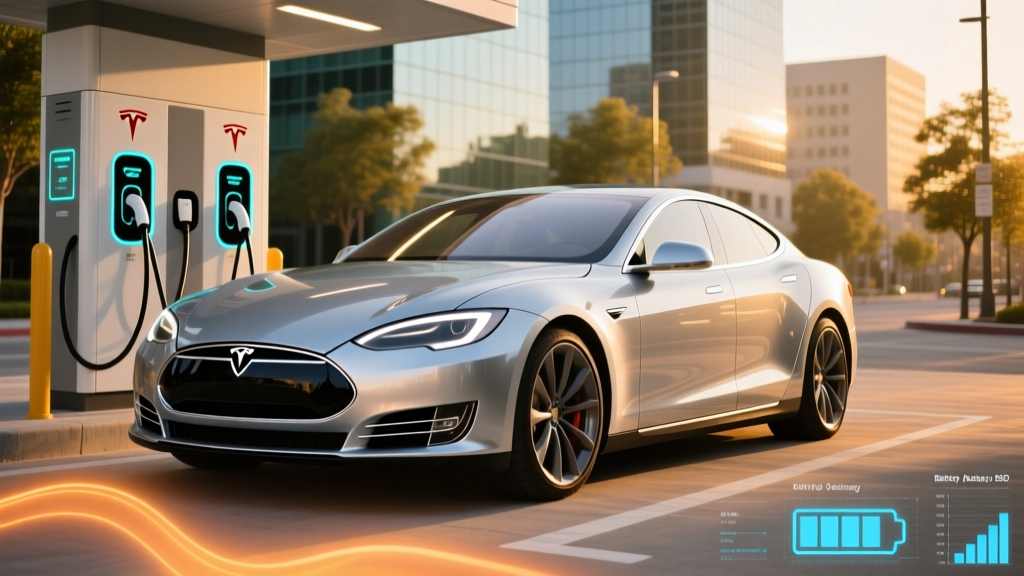
The 2015 Tesla Model S 85D was a watershed vehicle — the first dual-motor, all-wheel-drive sedan to prove that a battery-electric car could deliver 270 miles of EPA-rated range, sub-6-second 0-60 acceleration, and genuine cross-country road-trip capability. In 2026, it exists exclusively on the used market, where examples typically trade between $14,000 and $22,000 depending on mileage, battery state of health (SoH), and service history. It no longer qualifies for any federal EV tax credit, but it remains one of the most compelling budget entries into long-range electric ownership — provided buyers understand the battery degradation curve, aging suspension components, and the reality of charging a 2015-era pack in a world that has moved to 350 kW chargers.
Range Reality Check
EPA Rated Range: 270 miles (original sticker, 2015)
Real-World Expectation in 2026: Expect 210–240 miles on a full charge with a healthy battery (85–90% SoH). Highway driving at 75 mph drops this to roughly 190–210 miles. In freezing temperatures (below 32°F), plan for 170–200 miles due to cabin heating loads and increased battery internal resistance. Vehicles with significant degradation (below 80% SoH) may see 160–180 miles usable.
Spec Table: 2015 Tesla Model S 85D at a Glance
| Specification | Value |
|---|---|
| EPA Range (original) | 270 miles |
| Battery Capacity (gross / usable) | ~85 kWh gross / ~81 kWh usable |
| Battery Chemistry | NMC (Nickel Manganese Cobalt) — Panasonic 18650 cells |
| Drivetrain | Dual-motor AWD |
| Horsepower (combined) | ~383 hp (rated); ~518 hp (max battery output, SAE net) |
| 0–60 mph | 5.2 seconds |
| Top Speed | 155 mph |
| DC Fast Charge (peak) | ~120 kW (V2 Supercharger); ~90 kW sustained average to 80% |
| 10–80% DC Charge Time | ~40 minutes (at V2 Supercharger) |
| Level 2 Home Charge Rate | 10 kW (dual onboard chargers); ~29 miles/hr |
| Level 1 (120V) Charge Rate | ~1 kW; ~3 miles/hr |
| Efficiency (EPA) | 101 MPGe combined; 33 kWh/100 mi |
| Cargo Volume | 26.3 cu ft (rear trunk) + 5.3 cu ft (frunk) = 31.6 cu ft total |
| Seating | 5 passengers (optional rear-facing 3rd-row child seats) |
| Curb Weight | ~4,963 lbs |
| Original MSRP (base 85D) | $82,200 (before incentives) |
| Used Market Price (2026) | $14,000–$22,000 |
| Battery Warranty (original) | 8 years / unlimited miles |
| Powertrain Warranty (original) | 8 years / unlimited miles (drive units) |
Battery Health: The Single Most Important Factor
The 85 kWh NMC pack in the 2015 Model S 85D uses Panasonic 18650-format cylindrical cells — the same cell format later used in the Model 3 and Model Y, though in a different module configuration. This pack is now 11 years old, and degradation is the defining ownership variable.
Based on aggregated fleet data from Tesla owners' forums and third-party tracking services like Teslanomics, the average 85 kWh pack retains approximately 85–90% of its original capacity at the 10-year mark, assuming typical usage patterns (roughly 12,000–15,000 miles/year, mix of daily charging to 80–90% SoC with occasional 100% charges for road trips). Vehicles that were consistently charged to 100% and left sitting at high SoC in hot climates (Arizona, Texas, Southern California) may show 75–82% retention.
The original 8-year/unlimited-mile battery warranty has expired for all 2015 vehicles as of 2023. Tesla does not offer an extended battery warranty for out-of-warranty vehicles. A replacement 85 kWh refurbished pack from Tesla Service currently costs approximately $14,000–$18,000 installed, though third-party refurbishers like Electrified Garage and Gruber Motors offer cell-level module replacements for $5,000–$9,000 depending on how many modules need swapping.
Buyer action item: Before purchasing, request the vehicle's battery SoH reading from the service menu (Settings → Software → Additional Vehicle Information, or via a Tesla Service Center diagnostic). A reading below 82% should factor into price negotiation — every percentage point of degradation below 90% represents roughly 2.7 miles of lost range.
Charging: 2015 Hardware in a 2026 Charging World
The 2015 Model S 85D charges via Tesla's proprietary connector (pre-NACS standardization) and supports Tesla Supercharger V2 stations at up to ~120 kW peak. It does not natively support CCS or the newer V3/V4 Superchargers at their full rated speed, though Tesla has rolled out firmware updates enabling limited V3 compatibility at capped rates.
| Charging Method | Power (kW) | Speed (mi/hr added) | 10–80% Time |
|---|---|---|---|
| Level 1 (120V household) | ~1 kW | ~3 mi/hr | ~55 hours |
| Level 2 (240V, single charger) | ~5 kW | ~15 mi/hr | ~14 hours |
| Level 2 (240V, dual chargers) | ~10 kW | ~29 mi/hr | ~7 hours |
| DC Fast (V2 Supercharger) | ~120 kW peak / ~90 kW avg | ~250 mi/hr (peak) | ~40 minutes |
| DC Fast (V3 Supercharger, capped) | ~120 kW (firmware-limited) | ~250 mi/hr (peak) | ~40 minutes |
| CHAdeMO (with adapter) | ~50 kW | ~140 mi/hr | ~65 minutes |
Charging curve reality: The 85 kWh pack peaks near 120 kW only between roughly 10–30% SoC. From 30–60%, it sustains around 80–95 kW. Above 60%, it tapers sharply — 60–80% takes nearly as long as 10–60%. This means a 10–80% session takes roughly 40 minutes at a V2 Supercharger. Plan road-trip stops accordingly; newer EVs with 800V architectures (Hyundai Ioniq 5, Porsche Taycan) complete 10–80% in 18 minutes.
CCS adapter note: Tesla began selling a CCS adapter for older Model S/X vehicles, but availability has been inconsistent. As of 2026, most Tesla Superchargers in the U.S. have been converted to NACS (the open North American Charging Standard), and the 2015 Model S uses the legacy Tesla connector — which is now functionally identical to NACS on most new Supercharger stalls. For non-Tesla DC fast chargers (Electrify America, EVgo, ChargePoint), a CCS-to-Tesla adapter (such as the Lectron or A2Z adapter, ~$150–$200) is required.
Performance and Driving Dynamics
The 85D's dual-motor setup — one AC induction motor on each axle — delivers 383 rated horsepower and all-wheel-drive traction. The 5.2-second 0–60 mph time was class-leading for a luxury sedan in 2015 and remains genuinely quick by 2026 standards. Instant torque delivery makes the 85D feel faster than its numbers suggest in urban driving; merging onto highways and passing at speed is effortless.
Ride quality is firm but well-damped, though 11-year-old examples often need suspension refreshes. The air suspension option (standard on most 85D trims) is a known wear item — replacement air struts run $800–$1,200 each, and a full four-corner replacement can cost $3,500–$5,000. Many owners convert to aftermarket coil-over springs (e.g., Mountain Pass Performance or Unplugged Performance) for $2,000–$3,000 to eliminate air suspension failure risk.
Regenerative braking on the 85D is strong and provides meaningful one-pedal driving in most conditions, though it lacks the adjustable regen settings found in newer EVs. The friction brakes (ventilated discs all around) rarely see heavy use in daily driving and often last 80,000+ miles before pad replacement.
Interior, Tech, and Cargo
The 2015 Model S interior features a minimalist design dominated by the 17-inch center touchscreen — enormous by 2015 standards, though the resolution and responsiveness feel dated compared to 2026 infotainment systems. The instrument cluster is a 12.3-inch digital display. Key tech features include:
- Autopilot (Hardware 1): The 2015 85D uses Tesla's first-generation Autopilot hardware (HW1), built by Mobileye. It supports basic Traffic-Aware Cruise Control and Autosteer (lane-centering). This is SAE Level 2 driver-assist — the driver must remain fully engaged with hands on the wheel and eyes on the road at all times. It does not support Full Self-Driving (FSD) features, which require HW3 or later.
- Over-the-air updates: Tesla continues to push software updates to HW1 vehicles, though feature additions have largely ceased. Navigation, media streaming, and basic vehicle settings remain supported.
- Panoramic roof: Standard on most 85D trims; known for creaking and water sealing issues on high-mileage examples.
- Audio: The Ultra High Fidelity Sound system (12 speakers) is standard and remains impressive.
Cargo space is generous: 26.3 cubic feet in the rear trunk (with a wide, flat load floor and a deep sub-trunk well) plus 5.3 cubic feet in the front trunk (frunk). Total: 31.6 cubic feet — more than many midsize SUVs. The rear seats fold 60/40 for longer items. Rear legroom measures 35.4 inches, which is adequate but tighter than competitors like the Mercedes E-Class.
Pricing, Tax Credits, and Total Cost of Ownership
Because the 2015 Tesla Model S 85D is a used vehicle, it does not qualify for the new-vehicle federal tax credit under IRS §30D. It may qualify for the Used Clean Vehicle Credit (up to $4,000 or 30% of the sale price, whichever is less) if all of the following conditions are met:
- Sale price is $25,000 or less (most 85D examples qualify)
- Buyer's modified adjusted gross income is ≤ $75,000 (single), $112,500 (head of household), or $150,000 (joint)
- The vehicle is purchased from a licensed dealer (not a private party)
- The buyer has not claimed the used EV credit in the prior 3 years
- The vehicle has not previously been transferred to a qualified buyer after August 16, 2022 (this rule limits eligibility — verify VIN history on IRS.gov)
| Cost Item | Amount |
|---|---|
| Used Purchase Price (typical) | $14,000–$22,000 |
| Used EV Tax Credit (potential) | Up to $4,000 (if eligible) |
| Effective Purchase Price (after credit) | $10,000–$22,000 |
| Annual Insurance (avg, national) | $1,800–$2,600 |
| Annual Electricity Cost (12,000 mi @ $0.15/kWh) | ~$594 |
| Annual Maintenance (tires, cabin filter, fluid top-offs) | $400–$800 |
| Estimated 5-Year Total Cost (purchase + operating) | $22,000–$38,000 |
For context, the 85D's 33 kWh/100 mi efficiency means a full charge at home (81 kWh usable) costs roughly $12.15 at $0.15/kWh — yielding a fuel cost of about $0.05/mile. Compare that to a 2015 BMW 535i averaging 23 MPG at $3.50/gallon: $0.15/mile. Over 12,000 annual miles, the 85D saves approximately $1,200/year in fuel alone.
Biggest Pros and Cons
Pros
- 270-mile EPA range (new) still competitive for daily use; 200+ miles real-world with healthy pack
- Dual-motor AWD provides excellent all-weather traction
- 31.6 cu ft cargo space exceeds most sedans and rivals crossovers
- Access to Tesla Supercharger network (adapter needed for CCS chargers)
- Low running costs: ~$0.05/mile electricity, minimal maintenance
- Strong performance: 5.2-sec 0–60, instant torque, smooth power delivery
- Over-the-air software updates still supported for core functions
Cons
- Battery degradation is the #1 risk — replacement costs $14,000–$18,000
- Air suspension failure is common and expensive ($3,500–$5,000 full replacement)
- HW1 Autopilot is limited; no FSD support, no automatic lane changes
- DC fast charging capped at ~120 kW — 40 min for 10–80% vs 18 min on modern EVs
- 17-inch touchscreen is dim and slow by 2026 standards
- No native CCS charging; adapter required for non-Tesla DC fast chargers
- Interior materials (door handles, window switches) prone to wear and breakage
- 8-year battery/drive unit warranty has expired
Who Should Buy the 2015 Tesla 85D?
Choose the 2015 Tesla 85D if:
- You want a long-range electric sedan under $20,000 and can accept battery risk
- You primarily drive in moderate climates (reduces battery degradation and range loss)
- You have reliable home Level 2 charging and rarely need public DC fast charging
- You value cargo space, AWD traction, and strong performance in a sedan package
- You're mechanically inclined or have access to an independent EV specialist for maintenance
Look elsewhere if:
- You need guaranteed 250+ mile range in all conditions — consider a 2020+ Model 3 Long Range or Hyundai Ioniq 6
- You take frequent 300+ mile road trips and want sub-20-minute charge stops
- You want modern ADAS features (automatic lane changes, intersection assist, etc.)
- You cannot absorb a potential $10,000–$18,000 battery replacement cost
The strongest competitors on the used market include the 2017–2018 Chevrolet Bolt EV (238-mile range, $12,000–$16,000, but no DC fast charging to speak of), the 2018–2019 Nissan Leaf Plus (226-mile range, CHAdeMO charging, $14,000–$18,000), and the 2018–2019 Tesla Model 3 Long Range RWD (310-mile EPA, newer hardware, $18,000–$25,000). The 85D wins on cargo space, AWD, and Supercharger access; it loses on battery age, charging speed, and tech freshness.
Frequently Asked Questions
What is the real-world range of the 2015 Tesla 85D?
With a healthy battery (85–90% SoH), expect 210–240 miles in mixed driving. Highway-only at 75 mph drops to 190–210 miles. In sub-freezing temperatures, plan for 170–200 miles. These figures assume the battery has not suffered significant degradation beyond the typical 10–15% loss at the 10-year mark.
How fast does the 2015 Tesla 85D charge?
On a Tesla V2 Supercharger, the 85D peaks at ~120 kW and averages ~90 kW to 80%, taking approximately 40 minutes for a 10–80% session. At home on a 240V Level 2 charger with dual onboard chargers, it adds ~29 miles per hour (10 kW), fully recharging overnight in about 7 hours. On a standard 120V outlet, expect ~3 miles per hour.
Does the 2015 Tesla 85D qualify for the federal EV tax credit?
It does not qualify for the new-vehicle §30D credit. It may qualify for the Used Clean Vehicle Credit (up to $4,000) if the sale price is under $25,000, the buyer meets income limits, the purchase is from a licensed dealer, and the vehicle has not been previously transferred to a qualified buyer after August 16, 2022. Verify eligibility on IRS.gov before purchasing.
What is the biggest risk of buying a 2015 Tesla 85D?
Battery replacement cost. The 8-year/unlimited-mile battery warranty expired in 2023. A refurbished replacement pack costs $14,000–$18,000 from Tesla, or $5,000–$9,000 from third-party refurbishers for module-level repair. Air suspension failure is the second most common expensive repair ($3,500–$5,000 for all four corners).
Can the 2015 Tesla 85D use CCS chargers?
Not natively. The 85D uses Tesla's proprietary connector (now aligned with NACS). For non-Tesla DC fast chargers (Electrify America, EVgo), you need a CCS-to-Tesla adapter (~$150–$200). Tesla Superchargers work without any adapter, though V3/V4 stalls may cap the 85D at ~120 kW regardless of the charger's rated speed.
Is the 2015 Tesla 85D self-driving?
No. The HW1 Autopilot system is an SAE Level 2 driver-assist feature. It provides adaptive cruise control and lane-centering on divided highways, but the driver must remain fully attentive with hands on the wheel and eyes on the road at all times. It does not support Tesla's Full Self-Driving (FSD) software, which itself is also Level 2 and requires continuous driver supervision.
What should I check before buying a used 2015 Tesla 85D?
Request the battery SoH percentage from the service menu or a Tesla diagnostic report. Inspect the air suspension for leaks or uneven ride height. Check door handles (a known failure point — ~$500 each to replace). Verify the MCU (Media Control Unit) has been upgraded to MCU2 if possible (MCU1 is prone to failure and costs ~$1,500–$2,000 to replace). Review service records for drive unit replacements and battery contactor recalls (the 2015 Model S had a recall for high-voltage contactors).