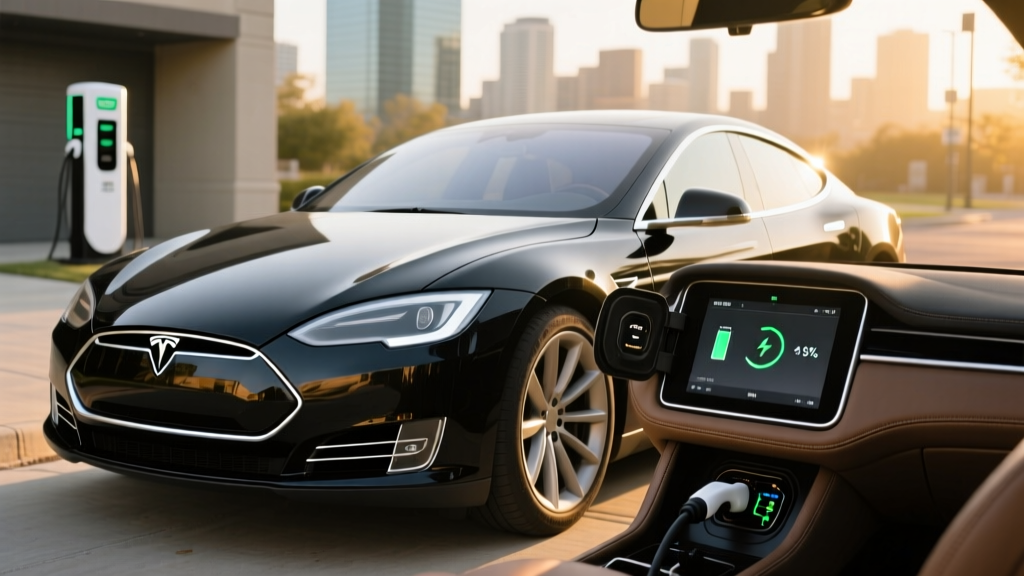
The 2015 Tesla Model S 85D occupies a unique space in the used EV market. As Tesla's first dual-motor, all-wheel-drive sedan equipped with an 85 kWh battery pack, it introduced a level of range and all-weather capability that reshaped expectations for electric luxury cars. Now, more than a decade later, it remains a compelling used buy — but only if you understand what you're actually getting in terms of battery health, charging speed, and long-term ownership costs.
This review covers the 2015 Model S 85D from a 2026 ownership perspective: real-world range after typical battery degradation, DC fast-charge limitations by modern standards, used-market pricing, and whether it qualifies for the federal used-EV tax credit under current IRS rules.
2015 Tesla Model S 85D: Core Specifications at a Glance
| Attribute | Value |
|---|---|
| EPA Range (original) | 270 miles |
| Battery Capacity (usable) | ~80.8 kWh (85 kWh nominal, NMC) |
| Drivetrain | Dual-motor AWD |
| Horsepower | 383 hp (combined) |
| 0–60 mph | 5.2 seconds |
| Top Speed | 155 mph |
| DC Fast-Charge Peak | ~120 kW (V2 Supercharger) |
| Level 2 Charge Rate | 10 kW (single onboard charger) / 20 kW (dual optional) |
| EPA Efficiency | 95 MPGe combined (35 kWh/100 mi) |
| Cargo Volume | 26.3 cu ft (rear) + 5.3 cu ft (frunk) |
| Original Base MSRP | ~$81,200 (before incentives) |
| Battery Warranty (original) | 8 years / 125,000 miles |
Real-World Range: What to Expect in 2026
Real-World Expectation (2026): 200–240 miles depending on battery State of Health (SoH), driving style, and climate.
Cold-Weather Impact: Expect 25–35% range loss at freezing temperatures, yielding as low as 140–170 miles on a full charge in winter highway driving.
The original 270-mile EPA estimate assumed a brand-new battery in moderate conditions. By 2026, most 85D packs are 10–11 years old and will have experienced measurable degradation. Tesla's NMC (nickel-manganese-cobalt) chemistry in this generation typically retains 75–85% of original capacity at this age, depending on charging habits and climate exposure.
Owners who predominantly charged to 80–90% daily and avoided frequent 100% charges or DC fast-charging in extreme heat tend to see better State of Health. Highway driving at 70–80 mph will consume roughly 34–38 kWh/100 mi, which translates to about 210–230 miles of range on a pack at 80% SoH. City driving with regenerative braking can push that closer to 240 miles.
Before purchasing any used 2015 85D, request a battery health report from Tesla Service or use the car's built-in energy graph to estimate remaining capacity. A pack below 70% SoH is a negotiation point — or a walk-away.
Charging Speed: DC Fast and Home Level 2
| Charging Level | Power / Rate | Estimated Time / Miles Added |
|---|---|---|
| Level 1 (120V outlet) | ~1.4 kW | ~3–4 miles per hour |
| Level 2 (240V, single charger) | 10 kW | ~29 miles per hour / ~8.5 hrs (10–80%) |
| Level 2 (240V, dual chargers) | 20 kW | ~58 miles per hour / ~4.5 hrs (10–80%) |
| DC Fast (Tesla V2 Supercharger) | Peak ~120 kW | 10–80% in ~40–45 minutes |
| DC Fast (V3/V4 Supercharger) | Limited to ~120–140 kW | No meaningful speed gain over V2 |
The 2015 Model S 85D uses Tesla's proprietary connector (now being phased in favor of NACS, which is the same physical plug but standardized). On V2 Superchargers, the 85D peaks at roughly 120 kW but tapers significantly above 60% State of Charge. A realistic 10–80% session takes 40–45 minutes — acceptable for road-trip stops but noticeably slower than modern EVs like the Hyundai Ioniq 5 or Tesla Model Y, which can do 10–80% in under 20 minutes.
Crucially, the 85D cannot take full advantage of V3 Superchargers (250 kW) because its battery management system and pack architecture limit peak charge rate. You'll see roughly the same speed on a V3 stall as on a V2.
For home charging, the single onboard charger (10 kW) adds about 29 miles of range per hour — adequate for overnight replenishment. Some 2015 85D models were optioned with dual onboard chargers (20 kW), which cuts Level 2 time nearly in half. Verify which configuration the car has before purchase; it's not easily or cheaply retrofitted.
Note: kW (kilowatts) measures charging power — how fast energy flows into the battery. kWh (kilowatt-hours) measures battery capacity — how much energy the battery stores. These are not interchangeable.
Performance and Driving Dynamics
The dual-motor AWD setup in the 85D was a milestone for Tesla in 2015. The front and rear motors combine for 383 horsepower and deliver a 5.2-second 0–60 mph time — still brisk by any standard. The instant torque delivery characteristic of electric motors makes the 85D feel quicker in daily driving than the numbers suggest, particularly in stoplight-to-stoplight acceleration.
The all-wheel-drive system provides confident traction in rain and light snow, a significant upgrade over the rear-wheel-drive 85 kWh model. However, the 85D lacks the adaptive air suspension refinement of later Model S generations, and the steering feel is notably numb compared to German luxury competitors.
Ride quality is firm but composed. Road noise is more prominent than in a contemporary Mercedes S-Class or BMW 5 Series, and the regenerative braking — while effective — offers only one strong mode in this model year (no adjustable regen levels as in newer Teslas).
Interior, Tech, and Cargo Space
The 2015 Model S interior reflects Tesla's minimalist approach, centered on a 17-inch touchscreen that controls nearly every vehicle function. While the screen was impressive in 2015, it shows its age in 2026: slower response times, older-generation navigation maps, and no wireless Apple CarPlay or Android Auto (neither is supported natively in any Tesla, though browser-based workarounds exist).
Notable tech features include:
- Autopilot Hardware 1 (AP1): Basic adaptive cruise control and lane-keeping assist. This is SAE Level 2 driver assistance — the driver must remain fully engaged at all times. AP1 does not support Full Self-Driving (FSD) features and cannot be upgraded to newer Autopilot hardware.
- Over-the-air updates: The 2015 85D still receives occasional firmware updates, though feature additions have largely ceased for AP1 vehicles.
- Panoramic glass roof: Standard on most 85D configurations, providing an airy cabin feel.
- Frunk (front trunk): 5.3 cu ft of additional storage — useful for charging cables or groceries.
Passenger space is generous for a sedan: 42.7 inches of front legroom and 35.4 inches of rear legroom. The rear seat fits three adults comfortably for short trips. Total cargo capacity of 26.3 cu ft behind the rear seats (plus 5.3 cu ft in the frunk) rivals many midsize SUVs, aided by the hatchback-style liftgate.
Used Pricing and Federal Tax Credit Eligibility
The 2015 Model S 85D originally started around $81,200 before incentives. In the 2026 used market, examples typically sell for $14,000–$22,000 depending on mileage, condition, and battery State of Health.
| Scenario | Amount |
|---|---|
| Typical used price (private party) | $14,000–$18,000 |
| Typical used price (dealer) | $17,000–$22,000 |
| Federal used-EV tax credit (§25E) | Up to $4,000 (30% of sale price, max $4,000) |
| Effective price after credit | As low as ~$10,000–$18,000 |
Federal used-EV tax credit (IRS §25E): This is distinct from the new-vehicle §30D credit. The used-EV credit provides 30% of the sale price, up to a maximum of $4,000, for qualified plug-in vehicles purchased from a licensed dealer. Key eligibility requirements for the buyer:
- Income caps: Modified adjusted gross income (MAGI) must not exceed $75,000 (single), $112,500 (head of household), or $150,000 (joint filers).
- Vehicle price cap: Sale price must be $25,000 or less.
- Dealer requirement: Must be purchased from a licensed dealer (private-party sales do not qualify).
- Model eligibility: The vehicle must be a qualified plug-in EV with a battery capacity of at least 7 kWh — the 85D's ~81 kWh pack easily meets this.
- First transfer since August 16, 2022: The credit applies only to the first qualified sale of the vehicle after that date. If the specific car has already been sold with the credit claimed, it cannot be claimed again.
- No battery-sourcing requirements: Unlike the new-vehicle §30D credit, §25E does not impose critical-mineral or battery-component rules.
Verify current rules at IRS.gov's used clean vehicle credit page before purchase. State and local incentives may also apply — check AFDC's state incentive database for your jurisdiction.
Pros and Cons of the 2015 Model S 85D
Pros
- Strong real-world range (200–240 mi) even with moderate battery degradation
- Dual-motor AWD provides all-weather confidence
- Hatchback cargo versatility (26.3 cu ft + frunk)
- Access to Tesla Supercharger network (adapter-free with NACS)
- Low used pricing; eligible for up to $4,000 federal used-EV credit
- Brisk 5.2-second 0–60 mph acceleration
Cons
- DC fast-charging peaks at ~120 kW — slow by 2026 standards
- Battery warranty (8 yr/125,000 mi) is expired on all 2015 examples
- Autopilot Hardware 1 is outdated; no FSD upgrade path
- Out-of-warranty battery replacement costs $12,000–$18,000+
- Interior materials and infotainment show their age
- No CCS adapter support for non-Tesla DC fast chargers without third-party solutions
Who Should Buy the 2015 Tesla Model S 85D?
Choose the 2015 Model S 85D if:
- You need a spacious, comfortable daily commuter with 200+ miles of usable range and AWD for inclement weather.
- You can charge at home (Level 2) and primarily use the car for commuting and errands rather than frequent long road trips.
- You want Tesla Supercharger access for occasional road trips without buying a new vehicle.
- You qualify for the §25E used-EV credit and can find a dealer-listed example under $25,000.
Look elsewhere if:
- You frequently drive 300+ mile routes and need fast DC charging (consider a used 2021+ Model 3 Long Range or Hyundai Ioniq 5).
- You want modern driver-assistance features beyond basic adaptive cruise (the AP1 system is a dead end).
- You cannot absorb the risk of an out-of-warranty battery or drive-unit repair ($5,000–$18,000).
- You prioritize interior luxury and build quality over performance and tech.
Frequently Asked Questions
What is the real-world range of the 2015 Tesla Model S 85D in 2026?
Expect 200–240 miles on a full charge with a typical degraded battery (75–85% State of Health). Highway driving at 75+ mph and cold weather will reduce this further — as low as 140–170 miles in freezing conditions.
How fast does the 2015 Model S 85D charge?
On a Tesla V2 Supercharger, it peaks at roughly 120 kW, taking about 40–45 minutes from 10–80%. On a Level 2 home charger with the single onboard charger (10 kW), expect about 8.5 hours from 10–80%, adding roughly 29 miles per hour.
Does the 2015 Model S 85D qualify for a federal tax credit?
Not the new-vehicle §30D credit — it's long expired for this model. However, it may qualify for the IRS §25E used-EV credit: up to $4,000 (30% of sale price) if purchased from a dealer for $25,000 or less and your income is within the caps ($75K single / $150K joint).
Is the 2015 Model S 85D worth buying vs. competitors?
Against a used 2015–2017 BMW i3, the 85D offers far more range and practicality. Against a used 2018+ Chevrolet Bolt EV, the 85D has better performance and Supercharger access but higher maintenance risk. The best alternative in this price range is a used 2018–2020 Tesla Model 3 Long Range, which charges faster, has newer Autopilot hardware, and typically has less battery degradation.
What happens if the battery fails out of warranty?
Out-of-warranty battery replacement for the 85 kWh pack typically costs $12,000–$18,000 through Tesla, or $8,000–$14,000 through independent EV shops using refurbished packs. Third-party warranties (e.g., from dealers or aftermarket providers) may be available at purchase. Always factor this risk into your total cost of ownership.
Can the 2015 Model S 85D use non-Tesla DC fast chargers?
Natively, no — it uses the Tesla connector. However, Tesla has opened some Supercharger locations to non-Tesla EVs, and third-party CCS-to-Tesla adapters exist (though they are not officially endorsed by Tesla for all scenarios). For practical purposes, plan your road trips around the Supercharger network, which remains the most reliable DC fast-charging option in the U.S.