Quick Verdict: The 2015 Tesla Model S 70D in 2026
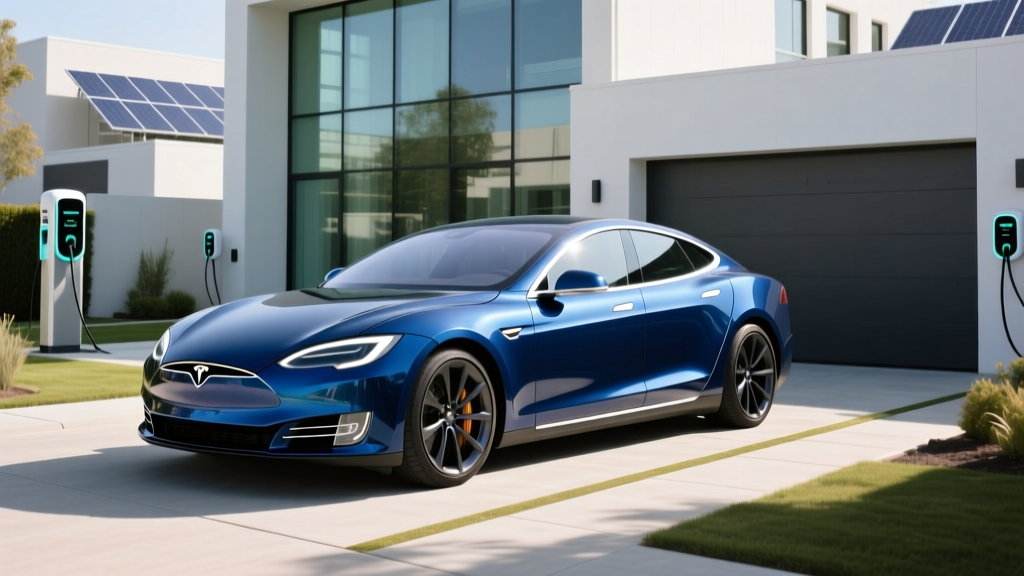
The 2015 Tesla Model S 70D was a landmark EV when it launched — dual-motor all-wheel drive, 240 miles of EPA-rated range, and access to Tesla's Supercharger network made it the first truly practical long-distance electric sedan. In 2026, this car exists exclusively on the used market, and it presents a compelling but nuanced value proposition for budget-conscious EV buyers willing to accept the realities of an 11-year-old battery pack.
Used examples now trade between $14,000 and $22,000 depending on mileage, condition, and crucially, battery state of health (SoH). If you find one with a well-preserved pack and confirmed service history, the 70D delivers luxury-sedan space, respectable range, and Supercharger access at a fraction of a new EV's price. But buyers must budget for potential battery replacement, aging suspension components, and an infotainment system that feels dated by modern standards.
| Spec | Value |
|---|---|
| EPA Range | 240 miles |
| Battery Capacity (usable) | ~70 kWh (NMC chemistry) |
| Drivetrain | Dual-motor AWD |
| Horsepower | 328 hp (combined) |
| 0-60 mph | 5.2 seconds |
| DC Fast Charge (peak) | ~120 kW (Supercharger V2) |
| Level 2 Charge Rate | 10 kW (single charger) / 20 kW (twin chargers) |
| EPA Efficiency | 101 MPGe combined (33 kWh/100 mi) |
| Cargo Volume | 26.3 cu ft (rear trunk) + 5.3 cu ft (frunk) |
| Original MSRP | $75,000 (before incentives) |
| Used Price Range (2026) | $14,000–$22,000 |
| Battery Warranty (original) | 8 years / 125,000 miles |
Range and Efficiency: What to Expect From an Aging Pack
When new, the EPA rated the 2015 Model S 70D at 240 miles of combined range. That figure was competitive in 2015, when most EVs struggled to crack 100 miles. The 70 kWh battery pack uses NMC (nickel manganese cobalt) lithium-ion cells supplied by Panasonic — the same chemistry Tesla used across most Model S variants before the industry's later shift toward LFP for standard-range vehicles.
Real-World Range Reality Check
EPA sticker: 240 miles
Expect today (11-year-old pack): 175–210 miles, depending on battery degradation (typically 10–20% capacity loss at this age).
Highway driving at 75 mph: ~160–185 miles on a degraded pack.
Cold weather (below 32°F): Subtract another 20–30%, yielding as little as 120–150 miles in freezing conditions without preconditioning.
The 70D's efficiency rated at 101 MPGe combined (approximately 33 kWh per 100 miles) was strong for a 4,600-pound luxury sedan. On fueleconomy.gov, the city rating sits at 101 MPGe and highway at 102 MPGe — remarkably flat, which is typical of dual-motor Teslas that can optimize front/rear motor usage across speed ranges.
For context, a 2026 Tesla Model 3 Long Range achieves roughly 132 MPGe combined with 363 miles of range. The 70D's efficiency isn't embarrassing, but a decade of battery and powertrain advancement shows clearly in the gap.
Charging Speeds: Supercharger Access Is the 70D's Ace
The 2015 Model S 70D charges via Tesla's proprietary connector (pre-NACS standardization) and retains free Supercharger access on many original-owner vehicles — though Tesla has altered transferability policies over the years, so always confirm Supercharger eligibility with Tesla directly before purchasing. Some used 70Ds lost free Supercharging when resold.
| Charging Level | Power (kW) | Speed | Notes |
|---|---|---|---|
| Level 1 (120V household) | ~1.4 kW | ~3–4 miles/hour | Emergency/top-up only |
| Level 2 (240V, single charger) | 10 kW | ~29 miles/hour | Standard onboard charger |
| Level 2 (240V, twin chargers) | 20 kW | ~58 miles/hour | Optional; ~7 hours for full charge |
| DC Fast (Supercharger V2) | ~120 kW peak | 10–80% in ~40 min | Tapers significantly above 80% |
The 70D's peak DC fast-charge rate of roughly 120 kW was impressive in 2015 but trails modern EVs that routinely sustain 200–250 kW. On a V2 Supercharger, expect a 10–80% session to take approximately 40 minutes. The charge curve tapers noticeably past 60% state of charge, and charging above 80% is slow enough that you should plan to unplug and drive rather than wait for a full pack on road trips.
At home on a 240V / 40-amp circuit (common Level 2 installation), the single-charger 70D adds about 29 miles per hour — enough to fully replenish overnight. The optional twin-charger setup doubles this rate but requires a 100-amp circuit, which most homes don't have without panel upgrades. Most used 70Ds on the market have the single charger.
For CCS or CHAdeMO public networks, you'll need a Tesla-to-J1772 adapter (included with the car for Level 2) or a third-party CHAdeMO adapter (expensive and increasingly rare). With Tesla opening Superchargers to NACS-equipped non-Tesla EVs and the industry adopting NACS, the 70D's proprietary port is less of a liability than it was a few years ago — it remains native to the largest fast-charging network in North America.
Performance and Driving Dynamics
The 70D's dual-motor setup produces 328 horsepower and delivers a 5.2-second 0-60 mph time. That's quick by any sedan standard, and the instant torque delivery makes it feel quicker in real-world driving than the number suggests. The all-wheel-drive system provides confident traction in rain and light snow, though the 70D is not a performance variant — the P85D and later P90D fill that role with Ludicrous-mode acceleration.
Ride quality is a highlight. The 2015 Model S uses a conventional steel-spring suspension (air suspension was optional), and the car's low center of gravity from the floor-mounted battery pack keeps body roll well-controlled. Steering is precise if somewhat numb. At highway speeds, cabin noise is low — there's no engine drone, though wind and tire noise become noticeable above 70 mph.
Regenerative braking on the 70D is strong enough for one-pedal driving in most city conditions. The "Standard" regen setting provides aggressive deceleration when you lift off the accelerator, while "Low" allows more coasting. There is no adjustable regen via paddles as in some competing EVs.
Interior, Tech, and Cargo Space
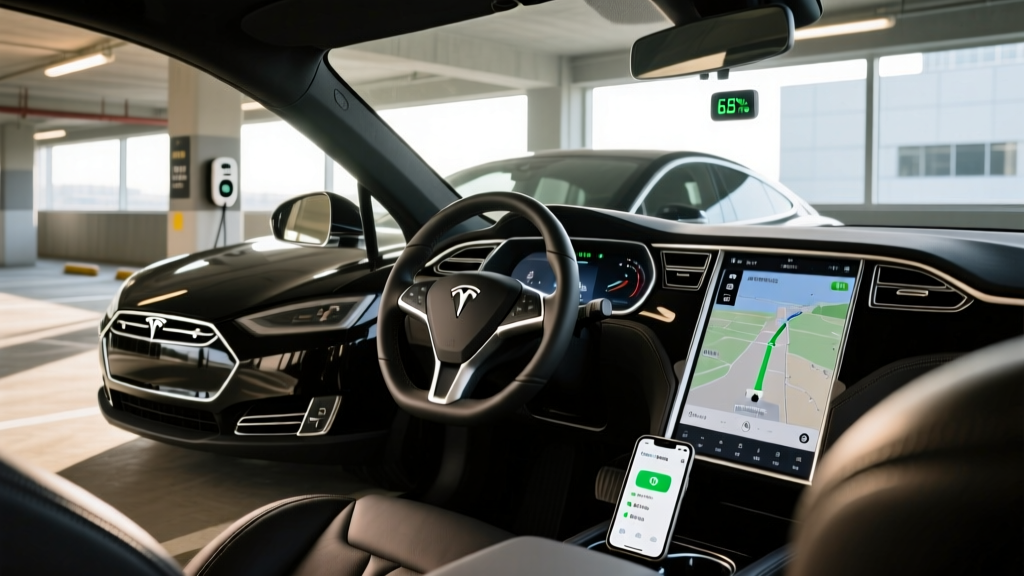
The 2015 Model S interior was polarizing at launch and shows its age in 2026. The centerpiece is a 17-inch touchscreen that controlled nearly every vehicle function — climate, navigation, media, vehicle settings — with minimal physical buttons. The screen's resolution and responsiveness were class-leading in 2015 but feel sluggish compared to modern Tesla hardware (MCU2 and MCU3). Many 2015 models shipped with the older MCU1 (NVIDIA Tegra-based), which is prone to failure and was subject to a recall. Tesla offered an MCU upgrade program to replace the Tegra unit with a faster Intel Atom-based MCU2 — check whether the used car you're evaluating has received this upgrade.
Passenger space remains generous:
- Front legroom: 42.7 inches
- Rear legroom: 35.4 inches
- Rear trunk: 26.3 cubic feet
- Front trunk (frunk): 5.3 cubic feet
- Total cargo with rear seats folded: ~58 cubic feet (with optional rear-facing third-row child seats removed)
The optional rear-facing third-row seat (for small children only) was a quirky differentiator but is rarely found on used examples. Build quality on 2015 Model S vehicles varies — panel gaps, rattles, and premature wear on seat bolsters and door handles are common complaints on owner forums.
Autopilot and Driver Assistance: Level 2, Not Self-Driving
SAE Automation Level: Level 2
The 2015 Model S 70D's Autopilot hardware (HW1, Mobileye-based) provides SAE Level 2 driver assistance. This means the car can steer, accelerate, and brake under certain conditions, but the driver must remain fully engaged, hands on the wheel, and eyes on the road at all times. This is not self-driving. Vehicles with Level 2 systems require continuous human supervision.
Autopilot on HW1 vehicles includes basic adaptive cruise control, lane-keeping assist, and automatic emergency braking. It does not support Full Self-Driving (FSD) capability — Tesla's FSD software requires HW3 or later hardware, and no upgrade path from HW1 to HW3 exists for the 2015 Model S. This is a significant limitation: you will never receive FSD features, navigate-on-Autopilot, or Smart Summon on this hardware.
What Autopilot HW1 Cannot Do
- No Full Self-Driving (FSD) capability — ever
- No automatic lane changes
- No traffic-light or stop-sign recognition
- No Navigate on Autopilot
- Lane-keeping is basic and struggles on faded markings
- HW1 cameras are lower resolution than HW2+ systems
Used Pricing, Ownership Costs, and Tax Credit Eligibility
The 2015 Model S 70D originally started at $75,000 before incentives. In the 2026 used market, expect to pay:
| Condition / Mileage | Price Range |
|---|---|
| High mileage (120k+ mi), fair condition | $14,000–$16,000 |
| Average mileage (80k–120k mi), good condition | $16,000–$19,000 |
| Low mileage (under 80k mi), excellent condition | $19,000–$22,000 |
Does the 2015 Model S 70D Qualify for the Federal Used EV Tax Credit?
Yes — the 2015 Model S 70D may qualify for the IRS §25E Used Clean Vehicle Credit, which provides up to $4,000 (or 30% of the sale price, whichever is less) for qualifying used EVs. Key eligibility rules:
- Sale price must be $25,000 or less — most 70D examples qualify at current market prices
- Buyer income caps: $75,000 single / $112,500 head of household / $150,000 joint (modified AGI)
- Vehicle must be at least 2 model years old — the 2015 model year satisfies this
- Must purchase from a licensed dealer — private-party sales do not qualify
- First time the vehicle has been transferred as a used EV to you (some restrictions apply on prior credit claims)
- The credit is non-refundable — it can reduce your tax liability to zero but won't generate a refund beyond that
At a typical $17,000 purchase price, 30% equals $5,100, but the credit caps at $4,000. That effectively drops the net cost to around $13,000 for eligible buyers — exceptional value for a dual-motor AWD luxury sedan with Supercharger access. Always consult a tax professional and verify current IRS rules, as credit provisions can change.
Battery Replacement: The Elephant in the Room
The original battery warranty on the 70D was 8 years / 125,000 miles — meaning every 2015 70D has been out of battery warranty since 2023 at the latest. If the pack fails outside warranty, replacement costs range from $12,000 to $20,000+ through Tesla or third-party EV repair shops. Some owners have sourced refurbished packs for $10,000–$14,000.
Before buying, request a battery health report from Tesla (accessible through the car's service menu or a Tesla Service Center). Look for a state of health (SoH) above 80%. Packs that have been regularly charged to 100% or frequently DC fast-charged may show accelerated degradation. NMC chemistry prefers daily charging limits of 80–90% for longevity.
Pros and Cons: The Honest Scorecard
Pros
- Supercharger network access — the largest, most reliable DC fast-charging network in North America
- Dual-motor AWD with confident all-weather traction
- Spacious interior with generous cargo capacity (26.3 cu ft trunk + frunk)
- Over-the-air software updates still add features (within HW1 limits)
- Eligible for up to $4,000 federal used-EV tax credit
- Strong regenerative braking enables one-pedal city driving
- Luxury-sedan ride quality and low center of gravity
Cons
- Battery warranty expired — replacement costs $12,000–$20,000+ if the pack fails
- HW1 Autopilot is outdated; no FSD upgrade path exists
- MCU1 infotainment is slow and failure-prone (check for MCU2 upgrade)
- Real-world range on a degraded pack may be only 175–210 miles
- DC fast charging peaks at ~120 kW — slow by 2026 standards
- Build quality inconsistencies (panel gaps, rattles, interior wear)
- No CCS/NACS adapter included for non-Tesla public chargers
- Insurance costs can be elevated for older Tesla vehicles
Who Should Buy the 2015 Tesla Model S 70D?
Choose the 2015 Model S 70D if:
- You want a spacious AWD EV sedan under $20,000 (after tax credit)
- Your daily commute is under 80 miles round-trip with home charging
- You value Supercharger access for occasional road trips
- You're comfortable budgeting $1,000–$2,000/year for potential repairs
- You don't need cutting-edge driver-assist features
Look elsewhere if:
- You need 300+ miles of range for frequent long-distance driving
- You want modern FSD-capable hardware or advanced driver assists
- You can't absorb a potential $15,000+ battery replacement
- You prioritize the latest infotainment and UI responsiveness
- You need a warranty-backed, worry-free ownership experience
Best use case: A commuter or small family with Level 2 home charging who wants luxury-sedan space, AWD capability, and Supercharger road-trip access on a tight budget. The 70D makes an excellent second car or a first EV for buyers who understand the risks of purchasing an out-of-warranty battery.
Key competitors to cross-shop: The 2015–2017 BMW i3 (shorter range, quirky design, cheaper), the 2016–2018 Chevrolet Bolt EV (238-mile range, no DC fast charging on early models, far cheaper), and the 2017–2019 Tesla Model 3 (more modern, better range, but higher used prices). None match the 70D's combination of size, AWD, and Supercharger access at this price point.
Frequently Asked Questions
What is the real-world range of the 2015 Tesla Model S 70D?
The EPA rated the 70D at 240 miles when new. In 2026, with typical battery degradation of 10–20%, expect 175–210 miles in mixed driving. Highway driving at 75 mph reduces this to roughly 160–185 miles, and freezing temperatures can drop range by an additional 20–30%. Always check the specific vehicle's battery health report before purchasing.
How fast does the 2015 Model S 70D charge?
On a Tesla Supercharger V2, the 70D peaks at roughly 120 kW and charges from 10–80% in approximately 40 minutes. At home on a 240V Level 2 charger, the standard single onboard charger delivers 10 kW (~29 miles/hour), while the optional twin-charger setup provides 20 kW (~58 miles/hour). A full Level 2 charge takes 7–14 hours depending on charger configuration.
Does the 2015 Tesla Model S 70D qualify for any tax credits?
The 70D is no longer eligible for the new-vehicle §30D credit. However, it may qualify for the §25E Used Clean Vehicle Credit of up to $4,000 if purchased from a licensed dealer for $25,000 or less, and if the buyer meets income caps ($75,000 single / $150,000 joint). Consult a tax professional and review current IRS guidelines before relying on credit eligibility.
Is the 2015 Model S 70D worth buying vs. a newer used EV?
It depends on priorities. The 70D offers more space, AWD, and Supercharger access than similarly priced used EVs like the Chevy Bolt or Nissan Leaf. However, a 2018–2020 Model 3 Long Range (~$22,000–$28,000 used) delivers more range, modern Autopilot hardware, and better efficiency. If budget is the primary constraint and you need AWD and cargo space, the 70D is hard to beat. If reliability and modern tech matter more, spend more on a newer Model 3.
What are the biggest risks of buying a 2015 Model S 70D?
The primary risk is battery failure outside warranty, which can cost $12,000–$20,000+ to replace. Secondary concerns include MCU1 infotainment failure (check for the MCU2 upgrade), air suspension issues if equipped (~$2,000–$3,000 per corner), drive unit wear, and general aging of seals, bushings, and interior materials. A pre-purchase inspection by a Tesla-qualified independent shop is strongly recommended.
Can I upgrade the Autopilot hardware on a 2015 Model S 70D?
No. Tesla does not offer a hardware upgrade path from HW1 (Mobileye) to HW3 or HW4 for the 2015 Model S. This means Full Self-Driving capability, Navigate on Autopilot, and other advanced features are permanently unavailable on this vehicle. You are limited to basic HW1 Autopilot functionality (adaptive cruise, lane-keeping, AEB).
Does the 2015 Model S 70D support Tesla's NACS charging standard?
The 2015 Model S 70D uses Tesla's proprietary connector, which pre-dates the formal NACS standard. It charges natively at all Tesla Superchargers. For non-Tesla public chargers using CCS or CHAdeMO, you would need a third-party adapter. Tesla's newer vehicles ship with a standardized NACS port; the 2015 model's connector is functionally compatible with Tesla's network but not identical to the published NACS specification.