The Quick Verdict on the 2015 Smart Fortwo Electric Drive
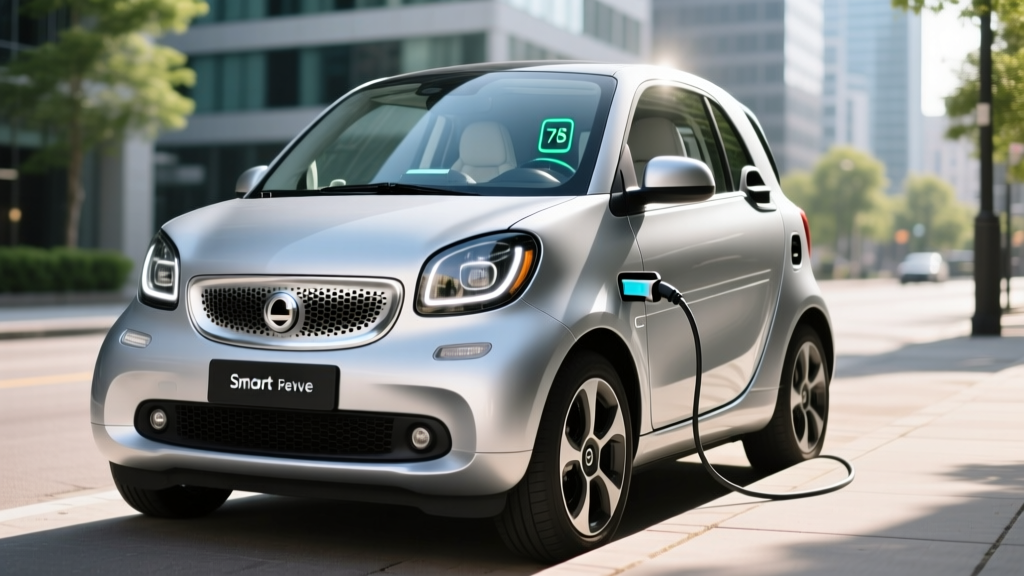
The 2015 Smart Fortwo Electric Drive (ED) delivers an EPA-rated 68 miles of range from its 17.6 kWh lithium-ion battery, making it strictly a city commuter and errand runner. In 2026, used examples typically sell for $5,000–$9,000 depending on mileage and battery health. It can be a compelling ultra-cheap second car for urban drivers with home charging access — but its limited range, slow DC charging (3.3 kW max), and aging battery chemistry mean you need to go in with eyes wide open. If your daily round-trip commute exceeds 40 miles, or you lack reliable Level 2 home charging, look elsewhere.
Range, Battery, and Efficiency: The Numbers That Matter
The 2015 Smart Fortwo ED uses a 17.6 kWh lithium-ion battery pack (NMC chemistry) mounted between the axles. Of that, roughly 15.5 kWh is usable — the rest is a buffer to protect longevity. The EPA rated it at 68 miles combined, with an efficiency of 122 MPGe city / 93 MPGe highway / 107 MPGe combined, according to fueleconomy.gov.
Real-World Range vs. EPA Sticker
EPA Estimate: 68 miles
Real-World Expectation (2026): Expect 50–60 miles on a mix of city and highway driving with a 10-year-old battery. In cold weather (below 40°F), plan for 40–50 miles. Battery degradation of 15–25% over a decade is typical for early NMC packs that weren't thermally managed as aggressively as modern systems.
The electric motor produces 74 horsepower (55 kW) and 96 lb-ft of torque. That's enough for a 0–60 mph time of approximately 11.5 seconds — leisurely by modern EV standards, but perfectly adequate for city merging. Top speed is electronically limited to 78 mph.
| Spec | Value |
|---|---|
| EPA Range | 68 miles |
| Battery Capacity | 17.6 kWh total / ~15.5 kWh usable |
| Battery Chemistry | NMC (lithium-ion) |
| Motor Output | 74 hp (55 kW) / 96 lb-ft |
| 0–60 mph | ~11.5 seconds |
| Top Speed | 78 mph (limited) |
| EPA Efficiency | 107 MPGe combined |
| Max AC Charge Rate | 3.3 kW (Level 2) |
| DC Fast Charging | Not available |
| Curb Weight | ~2,480 lbs |
| Original MSRP (2015) | ~$25,000 (before incentives) |
| Used Price Range (2026) | $5,000–$9,000 |
Charging: Slow by Any Standard
Here's where the Fortwo ED shows its age most clearly. The onboard charger maxes out at 3.3 kW on Level 2 (240V). There is no DC fast-charging capability whatsoever — no CCS, no CHAdeMO, nothing. This means every charge happens at Level 1 or Level 2 speeds.
| Charging Level | Power | Time (Empty to Full) | Miles Added per Hour |
|---|---|---|---|
| Level 1 (120V household) | ~1.4 kW | ~12–14 hours | ~5–6 miles |
| Level 2 (240V, 16A) | 3.3 kW | ~5–6 hours | ~12–14 miles |
| DC Fast Charge | N/A | N/A | N/A |
For a daily commuter who plugs in overnight at home, Level 2 is perfectly sufficient — 5 hours easily replenishes a full day's driving. But if you're relying on public Level 2 chargers during the day, the slow rate means you'll need to park and plug for most of a work shift. And without DC fast charging, road trips are effectively off the table.
Home charging cost: At the US average residential electricity rate of roughly $0.16/kWh (varies by state), a full charge from empty costs about $2.82. That works out to approximately $0.04 per mile — dramatically cheaper than gasoline.
Used EV Cost Breakdown: Purchase, Fuel, Maintenance, and Insurance
Buying a decade-old EV is a different calculus than buying new. The upfront price is low, but you need to budget for battery risk and understand where the savings come from.
| Cost Category | Smart Fortwo ED | 2015 Honda Fit (Gas) |
|---|---|---|
| Purchase Price (2026 used) | $5,000–$9,000 | $8,000–$12,000 |
| Annual Fuel/Energy (8,000 mi/yr) | ~$320 (electricity) | ~$1,050 (gas at $3.30/gal, 33 MPG) |
| Annual Maintenance | ~$200–$350 | ~$500–$700 |
| Annual Insurance | ~$900–$1,200 | ~$1,000–$1,300 |
| Battery Replacement Reserve | $5,000–$8,000 (if needed) | N/A |
| Estimated Annual Total (excl. battery) | ~$1,420–$1,870 | ~$2,550–$3,050 |
The Fortwo ED saves roughly $700–$1,200 per year in fuel and maintenance compared to a similar-age gas subcompact — if the battery holds up. That's the central risk. Smart's original battery warranty was 8 years / 100,000 miles, meaning every 2015 model is now out of warranty. A replacement battery pack, if one can even be sourced through Mercedes-Benz/Smart channels, could cost $5,000–$8,000 installed — potentially exceeding the car's value.
Federal tax credit note: The §30D new EV credit does not apply to a 2015 model purchased in 2026. The IRS used-EV credit (§25E) offers up to $4,000 or 30% of the sale price (whichever is less) for qualifying used EVs — but the vehicle must be at least two model years old and sold through a dealer, and income caps apply ($75,000 single / $150,000 joint). At a $7,000 purchase price, 30% equals $2,100, which would be your credit. Confirm eligibility with a tax professional.
Smart Fortwo ED vs. Gas and Hybrid Alternatives
How does this micro-EV stack up against other options in the used sub-$10,000 commuter car market?
| Vehicle | Powertrain | EPA Range / MPG | Annual Fuel Cost* | Maintenance Risk |
|---|---|---|---|---|
| 2015 Smart Fortwo ED | BEV | 68 mi range / 107 MPGe | ~$320 | High (battery) |
| 2015 Honda Fit | Gas | 33 MPG combined | ~$1,050 | Low |
| 2015 Toyota Prius c | HEV | 50 MPG combined | ~$690 | Low–Medium |
| 2014 Nissan Leaf (24 kWh) | BEV | 84 mi range / 114 MPGe | ~$310 | High (battery) |
| 2015 Fiat 500e | BEV | 87 mi range / 112 MPGe | ~$315 | High (battery) |
*Based on 8,000 miles/year. Gas at $3.30/gal, electricity at $0.16/kWh.
The Fortwo ED has the lowest range in this group by a wide margin. The 2014 Leaf gives you 84 miles and a larger cabin; the Fiat 500e offers 87 miles with a more engaging drive. Where the Smart wins is purchase price (it depreciated harder than the Leaf or 500e), parking ease (8.8 feet long), and the absolute lowest running costs if your commute fits within its envelope.
Against a hybrid like the Prius c, the Fortwo ED saves about $370/year in fuel but introduces battery replacement risk that the Prius's proven hybrid system largely avoids. For drivers who occasionally need to exceed 70 miles in a day, the hybrid is the safer choice.
Real-World Ownership: Who Should Buy This Car?
After evaluating the data, the 2015 Smart Fortwo ED works for a very specific buyer profile. Here's the decision framework:
Should You Buy the 2015 Smart Fortwo Electric Drive?
Buy it if:
- Your daily round-trip commute is under 40 miles (leaving a safety buffer)
- You have reliable Level 2 home charging (garage or driveway with 240V access)
- This is a second car — you have another vehicle for longer trips
- You live in a mild climate (cold weather shaves 20–30% off range)
- You can get a pre-purchase battery health check showing less than 20% degradation
- You value the lowest possible per-mile fuel cost and easy urban parking
Skip it if:
- Your commute exceeds 40 miles round-trip or varies significantly
- You rely on apartment/street parking without charging access
- You live in a region with sustained sub-freezing winters
- This would be your only vehicle
- You can't absorb a potential $5,000–$8,000 battery replacement
- You need to carry more than one passenger or any significant cargo
Critical Pre-Purchase Steps
Before buying any 10-year-old EV, take these steps:
- Request a battery State of Health (SoH) report. Some Mercedes-Benz dealers can pull this via OBD-II. Look for a pack that still holds at least 80% of its original 17.6 kWh capacity (≥14 kWh).
- Check for recall completion. Verify on NHTSA.gov using the VIN that all recalls were addressed.
- Inspect the charging port and cable. The J1772 inlet on a 2015 car has seen a decade of plug/unplug cycles. Look for burn marks, loose pins, or cracked housings.
- Test the climate control. The Fortwo ED uses a resistive heater (no heat pump), which draws heavily from the small battery. Run it on high and watch how quickly the range estimate drops.
- Confirm parts availability. Smart exited the US market after 2019. Body panels and EV-specific components may require sourcing from European suppliers or salvage yards.
Common Misconceptions About the 2015 Fortwo ED
| Myth | Fact |
|---|---|
| "It can use any public fast charger." | False. The Fortwo ED has no DC fast-charging hardware. It can only use Level 1 (120V) and Level 2 (240V) AC chargers via its J1772 port. |
| "68 miles of range means I can drive 68 miles." | Misleading. That's the EPA combined figure with a new battery. A 2026-used example with degradation and real-world conditions will deliver 50–60 miles — less in cold or at highway speeds. |
| "The battery will definitely need replacing." | Not guaranteed. NMC packs from this era can last 150,000+ miles with moderate degradation if they weren't repeatedly fast-charged or stored at 100% SoC in heat. But the risk is real and the warranty is expired. |
| "It qualifies for the $7,500 federal tax credit." | False. The §30D new-vehicle credit doesn't apply to used purchases. The §25E used-EV credit may offer up to $2,100 (30% of sale price) if you meet IRS income and dealer-sale requirements. |
| "Maintenance is basically free since it's electric." | Overstated. You save on oil changes and exhaust repairs, but tires, brakes, cabin filters, 12V battery, suspension bushings, and the cooling system still need attention. Budget $200–$350/year. |
First-Time Used EV Buyer Checklist
If the 2015 Fortwo ED would be your first EV, here's what to know before signing the title:
- kWh vs. kW: The battery holds 17.6 kWh (energy, like gallons in a tank). The charger delivers up to 3.3 kW (power, like the flow rate of a hose). Don't confuse them.
- Level 2 home charging is essential. A basic 240V Level 2 charger (like a ChargePoint Home Flex or Emporia Vue) costs $400–$700 for the unit, plus $500–$1,500 for electrician installation, depending on whether your panel needs an upgrade. Without it, Level 1 charging takes 12+ hours — workable for overnight but inflexible.
- Plan for winter. Lithium-ion batteries lose efficiency in cold weather, and resistive cabin heating is a major energy draw. If you live in Minnesota, this car's winter range could drop to 40 miles.
- Insurance may surprise you. Even cheap used EVs can carry higher premiums than equivalent gas cars due to battery replacement cost in total-loss calculations. Get a quote before buying.
- The Smart brand is gone from the US. Mercedes-Benz discontinued Smart in America after the 2019 model year. Dealership service is still possible through Mercedes, but dedicated Smart expertise is thinning.
Frequently Asked Questions
Can I take the 2015 Smart Fortwo ED on a road trip?
Realistically, no. With 50–60 miles of real-world range, no DC fast charging, and a 5–6 hour Level 2 charge time, anything beyond a 25-mile one-way trip requires careful planning and extended stops. This is a city car.
What happens if the battery fails?
You're looking at a $5,000–$8,000 replacement — if a pack is available through Mercedes-Benz parts channels. Given the car's $5,000–$9,000 market value, a battery failure often means the car is effectively totaled economically. This is why a pre-purchase SoH check is non-negotiable.
Does the 2015 Fortwo ED support regenerative braking?
Yes, it has regenerative braking, but it's not strong enough for true one-pedal driving like modern EVs. You'll still use the brake pedal regularly.
Is the 2015 Smart Fortwo ED safe?
The Smart Fortwo earned mixed crash-test results during its generation. Its tiny size is a disadvantage in multi-vehicle collisions. Check IIHS and NHTSA ratings for the specific model year, and consider that modern small cars and crossovers offer significantly better protection.
How does the Fortwo ED compare to a 2015 Nissan Leaf?
The Leaf offers 84 miles of EPA range (vs. 68), a usable back seat, more cargo space, and CHAdeMO DC fast charging (on higher trims). Used Leaf prices run $7,000–$11,000 — slightly more, but substantially more capable. If you can stretch the budget, the Leaf is the more versatile used EV.
Should I buy a 2015 Fortwo ED or a newer used EV?
If your budget tops out at $9,000, the Fortwo ED is one of the cheapest BEVs available. But if you can spend $12,000–$18,000, a 2018–2020 Chevy Bolt EV gives you 238 miles of range, DC fast charging, and a much more practical cabin — a dramatically better long-term value.