Quick Verdict: The 2015 Nissan Leaf SV as a Used EV in 2026
The 2015 Nissan Leaf SV was one of the most accessible battery-electric vehicles of its era, offering a practical commuter package with zero tailpipe emissions and low running costs. More than a decade later, it remains a popular entry on the used EV market — but buying a decade-old Leaf requires understanding battery degradation, the quirks of passive thermal management, and the realities of CHAdeMO charging in a NACS-dominated world.
If you're considering a 2015 Leaf SV as a second car, city commuter, or budget EV entry point, this review covers every spec, real-world expectation, and ownership cost you need to evaluate before signing the paperwork.
2015 Nissan Leaf SV: Core Specifications
| Spec | 2015 Nissan Leaf SV |
|---|---|
| EPA Range | 84 miles |
| Battery Capacity | 24 kWh total / ~21.6 kWh usable (NMC lithium-ion) |
| Motor Output | 80 kW (107 hp), 187 lb-ft torque |
| Drivetrain | Front-wheel drive (single motor) |
| 0–60 mph | ~10.2 seconds |
| EPA Efficiency | 114 MPGe combined / 30 kWh/100 mi |
| DC Fast Charge (Peak) | ~44 kW (CHAdeMO) |
| Level 2 Charge Rate | 6.6 kW (J1772) |
| Cargo Volume | 24.0 cu ft (rear seats up) / 30.0 cu ft (folded) |
| Original MSRP | $34,200 (before incentives) |
| Battery Warranty (Original) | 8 years / 100,000 miles (capacity loss below 4/12 bars) |
Sources: EPA fueleconomy.gov, Nissan USA archival specifications.
Real-World Range: What 84 EPA Miles Actually Means
EPA Estimate: 84 miles
Real-World City (mild weather): 70–85 miles
Real-World Highway (70 mph): 55–65 miles
Cold Weather (below 30°F): 45–60 miles (30–40% loss)
With Degraded Battery (9 bars): Subtract 20–25% from all figures above
The 2015 Leaf SV's 84-mile EPA range was competitive among affordable EVs in 2015, but it demands realistic expectations. The EPA test cycle blends city and highway driving under moderate temperatures. In practice, the Leaf's passive air-cooled battery thermal management system is its Achilles' heel.
City driving is where the Leaf shines. Regenerative braking recovers energy in stop-and-go traffic, and the 30 kWh/100 mi efficiency rating translates to low per-mile costs. Expect 70–85 miles on a full charge in spring or fall conditions around town.
Highway driving at sustained 70+ mph speeds is a different story. The Leaf's aerodynamic profile and small battery mean range drops sharply — plan on 55–65 miles before needing a charge. This makes it a poor choice for intercity commuting without reliable fast-charging along your route.
Cold weather is the biggest range killer. Without a battery thermal management system (the Leaf relies on passive air cooling), the battery's internal resistance increases in cold temperatures. Combine that with resistive cabin heating (the 2015 SV did not include a heat pump — that arrived on later models), and you can lose 30–40% of your range. A fully charged Leaf in January in Chicago might deliver only 45–55 miles of usable range.
Battery degradation compounds all of this. A 2015 Leaf in 2026 is over 10 years old. NMC cells without active thermal management degrade faster, especially in hot climates. Check the battery health bars on the dashboard — 12 bars is ideal, 10 bars is acceptable, 9 bars or fewer means significantly reduced range. (See the battery health section below.)
Charging: CHAdeMO in a NACS World
| Charging Level | Connector | Power (kW) | Speed / Time |
|---|---|---|---|
| Level 1 (120V) | Standard outlet (J1772 adapter) | ~1.4 kW | ~4–5 miles/hour (full charge: ~20 hrs) |
| Level 2 (240V) | J1772 | 6.6 kW | ~22 miles/hour (full charge: ~4 hrs) |
| DC Fast Charge | CHAdeMO | ~44 kW peak | ~30 min (0–80%); tapers sharply above 80% |
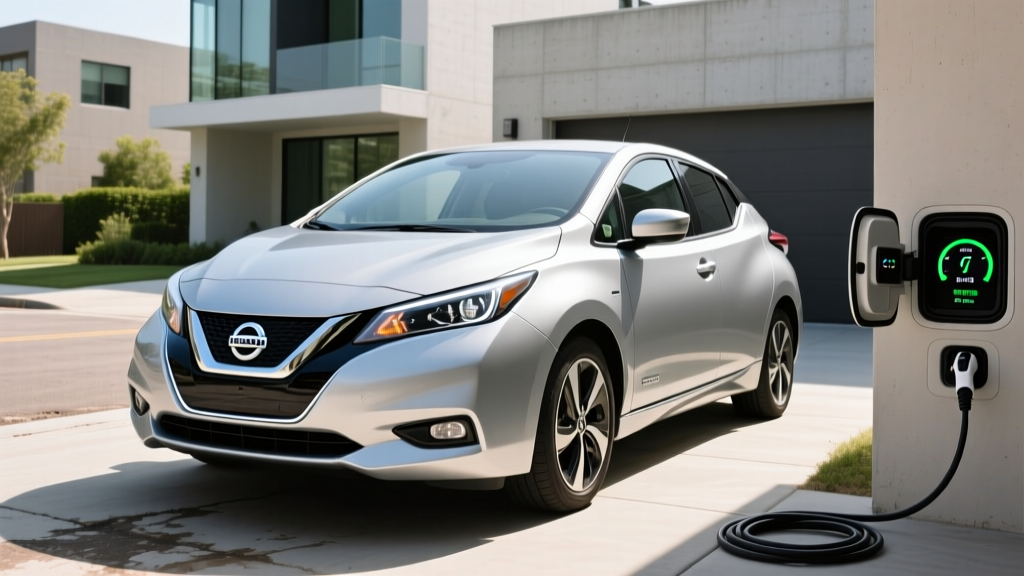
The 2015 Leaf SV came standard with a 6.6 kW onboard charger for Level 2 charging — an upgrade over the base S trim's 3.3 kW charger. This means a full charge from empty takes roughly 4 hours on a 240V Level 2 home charger, which is practical for overnight charging.
DC fast charging uses the CHAdeMO connector, which was the dominant non-Tesla fast-charging standard in 2015. Here's the problem in 2026: the North American charging industry has overwhelmingly adopted the NACS (J3400) connector, led by Tesla's Supercharger network opening to other brands. CHAdeMO stations are declining in number. Networks like Electrify America and EVgo still maintain some CHAdeMO stalls, but availability is shrinking. This is a real ownership consideration — verify that your local fast-charging stations still have CHAdeMO cables before relying on public DC charging.
The ~44 kW peak charge rate was respectable in 2015 but is slow by 2026 standards (modern EVs commonly hit 150–350 kW). The Leaf's charge curve also tapers aggressively above 80% State of Charge (SoC), meaning that last 20% can take nearly as long as the first 80%. Plan your fast-charging stops around 0–80% sessions of roughly 30 minutes.
Home charging tip: The 6.6 kW onboard charger pairs well with a 32-amp or 40-amp Level 2 home station (such as a ChargePoint Home Flex or Emporia Vue). Installation typically requires a 240V/50A circuit. Budget $500–$1,500 for professional installation depending on your electrical panel's proximity to the parking spot.
Battery Health & Degradation: What to Check Before Buying
The 2015 Leaf uses a 24 kWh NMC (nickel manganese cobalt) lithium-ion battery pack composed of 48 modules with 4 laminated cells each (192 cells total). Unlike most modern EVs, the Leaf has no active liquid thermal management — it relies on passive air cooling. This design choice keeps costs and weight down but accelerates degradation in hot climates and during repeated fast-charging sessions.
The 2015 Leaf displays battery capacity as a row of bars on the far right of the instrument cluster. Originally, there were 12 bars.
12 bars: Excellent — minimal degradation (rare for a 2015 model)
11 bars: Good — ~8–10% capacity loss
10 bars: Acceptable — ~15–20% loss; expect ~65–70 miles real-world range
9 bars or fewer: Significant degradation — range below 60 miles; negotiate price accordingly
Nissan's original battery warranty covered capacity loss below 4 bars (out of 12) within 8 years/100,000 miles. For a 2015 model, this warranty expired in 2023 at the latest.
What causes Leaf battery degradation?
- Heat exposure: Cars in Arizona, Texas, and the Southeast degrade faster. Battery temperatures above 90°F accelerate cell aging.
- Frequent DC fast charging: Repeated 44 kW CHAdeMO sessions without liquid cooling heat the cells. "Rapidgate" — Nissan's term for charge-speed throttling due to heat — was a known issue on later Leafs but the thermal fundamentals apply to 2015 models too.
- High state of charge storage: Regularly storing the battery at 100% SoC accelerates degradation. Ideal daily charging target: 80%.
- Age: Even garage-kept Leafs experience calendar aging. Expect 15–30% total capacity loss over 10 years depending on climate and usage patterns.
Battery replacement cost: As of 2026, a refurbished 24 kWh Leaf battery pack costs approximately $5,000–$7,000 installed through Nissan or third-party EV shops. A newer 40 kWh or 62 kWh retrofit is possible through some specialty shops but costs $10,000–$15,000 and is not officially supported by Nissan. For most buyers, the replacement cost approaches or exceeds the vehicle's value — factor this into your purchase decision.
Performance, Ride, and Daily Drivability
The 2015 Leaf SV is powered by an 80 kW (107 hp) AC synchronous electric motor driving the front wheels through a single-speed reduction gear. Torque is rated at 187 lb-ft, available from zero RPM — the hallmark instant torque of an EV.
The 0–60 mph time of approximately 10.2 seconds is leisurely by 2026 EV standards (many modern EVs hit 60 in under 5 seconds), but the Leaf feels peppier than the number suggests in city driving. The instant torque delivery makes it responsive off the line and confident in merging situations up to about 45 mph. Above that, acceleration tapers noticeably.
Ride quality is comfortable and compliant, tuned for comfort over sportiness. The 3,200-pound curb weight (heavier than a comparable gas hatchback due to the battery) gives it a planted feel. Road noise is moderate — there's no engine noise to mask it, so tire and wind noise are more apparent at highway speeds.
Regenerative braking on the 2015 Leaf is moderate. The "B" mode on the shift lever increases regen but does not enable true one-pedal driving (the car will creep at low speeds). You'll still use the friction brakes regularly, though they last far longer than on a gas car thanks to regen handling most deceleration.
Interior, Cargo, and Technology
The 2015 Leaf SV's interior is functional but dated by 2026 standards. Key dimensions:
- Front legroom: 42.5 inches
- Rear legroom: 33.3 inches
- Front headroom: 40.9 inches
- Cargo behind rear seats: 24.0 cu ft
- Cargo with rear seats folded: 30.0 cu ft
The cargo area is practical for groceries, luggage for two, or a stroller. The rear seats fold in a 60/40 split but don't lay completely flat due to the battery pack beneath the floor.
SV trim tech features (upgrades over the base S trim):
- 6.6 kW onboard charger (vs. 3.3 kW on S trim)
- CHAdeMO DC fast-charge port (standard on SV; optional on S)
- Navigation system with 7-inch touchscreen
- Carwings telematics (remote charging status, climate pre-conditioning via smartphone — note: Nissan discontinued Carwings connectivity for 2011–2015 Leafs, so this feature may no longer function)
- Quick charge port indicator LED
- Cruise control
- Heated front and rear seats, heated steering wheel
Notable drawbacks:
- No Apple CarPlay or Android Auto (aftermarket head unit swap is common)
- Carwings telematics largely non-functional for this model year
- Halogen headlights (adequate but dim compared to modern LED units)
- No advanced driver-assistance systems (no automatic emergency braking, no lane-keeping assist)
- Resistive cabin heater draws significant battery power in winter
Pricing, Tax Credits, and Used EV Economics
The 2015 Nissan Leaf SV originally carried an MSRP of $34,200 before the $7,500 federal tax credit and any state incentives. In 2026, these vehicles trade on the used market at dramatically lower prices.
| Condition | Battery Bars | Typical Used Price (2026) |
|---|---|---|
| Excellent (low miles, 12 bars) | 12/12 | $9,000–$11,000 |
| Good (average miles, 11 bars) | 11/12 | $7,000–$9,000 |
| Fair (higher miles, 10 bars) | 10/12 | $5,500–$7,000 |
| Degraded (9 bars or fewer) | ≤9/12 | $3,500–$5,500 |
Federal Tax Credit on a Used 2015 Leaf
Under IRS §30D rules, the new EV tax credit of up to $7,500 does not apply to used vehicles. However, the used clean vehicle credit (IRC §25E) offers up to $4,000 or 30% of the sale price (whichever is less) for qualifying used EVs. Key requirements as of 2026:
- Sale price cap: The vehicle must sell for $25,000 or less (most 2015 Leafs qualify easily)
- Buyer income caps: AGI must not exceed $75,000 (single), $112,500 (head of household), or $150,000 (joint)
- Dealer requirement: Must be purchased from a licensed dealer (private-party sales don't qualify)
- Model year requirement: Vehicle must be at least 2 model years old (a 2015 qualifies)
- One-time use: The specific VIN can only claim the used credit once; verify with the dealer that it hasn't been claimed previously
- Point-of-sale transfer: The credit can be applied at the point of sale, reducing your out-of-pocket cost immediately
Source: IRS Used Clean Vehicle Credit. Tax rules change — consult a tax professional before relying on credit eligibility.
On a $7,000 used Leaf SV, the 30% calculation yields $2,100 — well under the $4,000 cap. This effectively brings your net cost to around $4,900, making it one of the cheapest ways to get into a battery-electric vehicle in 2026.
2015 Leaf SV vs. Key Used EV Competitors
| Spec | 2015 Nissan Leaf SV | 2015 Fiat 500e | 2015 BMW i3 (BEV) | 2016 Chevy Spark EV |
|---|---|---|---|---|
| EPA Range | 84 mi | 84 mi | 81 mi | 82 mi |
| Battery (kWh) | 24 kWh | 24 kWh | 22 kWh | 19 kWh |
| DC Fast Charge | CHAdeMO ~44 kW | None (CCS optional rare) | CCS ~50 kW | CCS ~50 kW |
| Thermal Mgmt | Passive air | Active liquid | Active liquid | Active liquid |
| Cargo (cu ft) | 24.0 | 9.5 | 15.1 | 9.6 |
| Typical Used Price | $5,500–$11,000 | $6,000–$9,000 | $8,000–$13,000 | $5,000–$8,000 |
Choose the BMW i3 if: You want active liquid battery thermal management (better long-term degradation), CCS fast charging, and premium build quality — at a higher used price.
Choose the Fiat 500e if: You want a fun, nimble city car with liquid-cooled battery and don't need cargo space or DC fast charging.
Choose the Spark EV if: You want the lowest entry price and CCS charging — but cargo space is tiny.
Pros and Cons of the 2015 Nissan Leaf SV
- Very low used purchase price ($5,500–$11,000)
- Excellent efficiency (114 MPGe / 30 kWh/100 mi)
- Low cost per mile to operate (~$0.04–$0.06/mi on home charging)
- Spacious cargo area for its class (24 cu ft)
- Heated seats and steering wheel standard on SV
- 6.6 kW Level 2 onboard charger standard
- Eligible for up to $4,000 used EV tax credit
- Simple mechanicals — minimal maintenance required
- CHAdeMO connector — declining station availability
- No active battery thermal management (accelerated degradation in heat)
- 84-mile EPA range limits utility to city commuting
- Cold-weather range loss of 30–40%
- No DC fast charging on base S trim (SV has it)
- Carwings telematics discontinued for this model year
- No modern ADAS features (AEB, lane-keep, etc.)
- Battery replacement cost ($5,000–$7,000) may exceed vehicle value
- Resistive heater drains battery quickly in winter
Who Should Buy a 2015 Nissan Leaf SV?
The 2015 Leaf SV fits a narrow but real use case in 2026:
Ideal buyer profile:
- You need a second car for commuting, school runs, and errands within a 30-mile round trip
- You can charge at home (Level 2 preferred) every night
- You live in a moderate climate (not extreme heat or extreme cold)
- You want the lowest possible cost-per-mile vehicle
- You're comfortable with the CHAdeMO charging situation in your area
- You've verified the battery health bars and factored degradation into the price
Not the right vehicle if:
- You need to drive more than 60 miles round-trip regularly
- You live in a very hot climate (Arizona, Nevada, Texas) where degradation is accelerated
- You need a primary vehicle for road trips or highway commuting
- You rely on public DC fast charging as your primary charging method
- You need modern safety features like automatic emergency braking
Frequently Asked Questions
What is the real-world range of the 2015 Nissan Leaf SV?
The EPA rated the 2015 Leaf SV at 84 miles. In real-world city driving in mild weather, expect 70–85 miles. Highway driving at 70 mph drops to 55–65 miles. Cold weather (below 30°F) can reduce range to 45–60 miles. A degraded battery (10 bars or fewer) will reduce all of these figures by 15–25%.
How fast does the 2015 Leaf SV charge at home and on DC fast chargers?
On a 240V Level 2 home charger, the 6.6 kW onboard charger delivers roughly 22 miles of range per hour, with a full charge taking about 4 hours. On a CHAdeMO DC fast charger, it peaks at approximately 44 kW, reaching 80% in roughly 30 minutes. Note that CHAdeMO stations are becoming less common as the industry shifts to NACS.
Does the 2015 Nissan Leaf qualify for the federal EV tax credit?
Not the new-vehicle §30D credit (which expired for the Leaf years ago and applies only to new vehicles). However, the used clean vehicle credit (§25E) can provide up to $4,000 or 30% of the sale price when purchased from a licensed dealer. Income caps apply: $75,000 single / $150,000 joint. The vehicle must sell for $25,000 or less. Verify with the IRS or a tax professional — rules can change. Source: IRS.gov.
Is the 2015 Leaf SV worth buying vs. competitors?
It depends on your priorities. The Leaf SV offers the best cargo space (24 cu ft) and a practical 4-door layout at a low used price. However, its passive battery thermal management and CHAdeMO connector are significant drawbacks. The BMW i3 offers liquid-cooled battery longevity and CCS charging at a higher price. If CHAdeMO availability in your area is strong and you prioritize value and space, the Leaf SV is a solid choice.
How long will a 2015 Leaf battery last?
Most 2015 Leafs in 2026 show 10–11 battery health bars, representing 10–20% capacity loss. In hot climates with frequent fast charging, some show 9 bars or fewer. The battery is not "dead" at 10 bars — it simply holds less energy, reducing range proportionally. With proper care (avoiding 100% SoC storage, minimizing DC fast charging in hot weather), the pack can serve for several more years as a city commuter. Budget for eventual replacement ($5,000–$7,000) or factor it into your purchase price negotiation.
Can I upgrade the 2015 Leaf's battery to a larger pack?
Some specialty EV shops offer 40 kWh or 62 kWh battery retrofits from later-model Leafs, increasing range to 120–170+ miles. However, these conversions cost $10,000–$15,000 — often more than the car is worth — and are not officially supported by Nissan. For most buyers, it makes more financial sense to purchase a newer used Leaf (2018+, 40 kWh) or a different EV with more range rather than retrofit an older pack.
For the latest EPA efficiency data, visit fueleconomy.gov. For federal tax credit rules, see IRS.gov. Safety ratings: NHTSA.