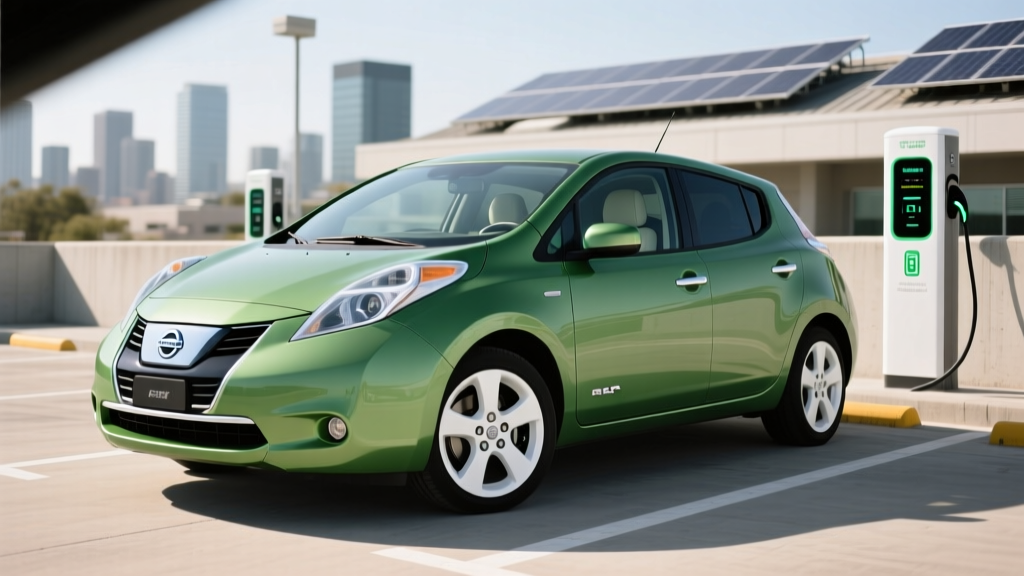
The 2015 Nissan Leaf SL at a Glance
The 2015 Nissan Leaf SL was the top-trim, fully electric hatchback that helped define the early mass-market EV segment. With its 24 kWh lithium-ion battery pack, 84-mile EPA range, and available DC fast charging via CHAdeMO, it served as a practical commuter for early EV adopters. Now, over a decade later, the 2015 Leaf SL lives exclusively on the used market — and prospective buyers need clear data on battery degradation, real-world range, charging practicality, and whether this pioneering EV still makes sense as a budget-friendly daily driver in 2026.
This profile covers every spec that matters for a used purchase: original EPA figures, real-world range expectations with a degraded pack, CHAdeMO charging speeds, the SL trim's tech features, and ownership economics including the federal used-EV tax credit.
| Spec | Value |
|---|---|
| EPA Range (new) | 84 miles |
| Battery Capacity (usable) | ~21.6 kWh usable / 24 kWh gross |
| Battery Chemistry | Lithium manganese oxide (LMO) with NMC blend |
| Motor Output | 80 kW (107 hp), 187 lb-ft torque |
| Drivetrain | Front-wheel drive (FWD) |
| 0–60 mph | ~11.5 seconds |
| MPGe (combined) | 114 MPGe (29 kWh/100 mi) |
| DC Fast Charge (max) | ~50 kW (CHAdeMO) |
| Level 2 Charge Rate | 6.6 kW (onboard charger) |
| Cargo Volume | 24.0 cu ft (rear seats up) / 30.0 cu ft (folded) |
| Original MSRP (SL trim) | $35,050 (before incentives) |
| Battery Warranty (original) | 8 years / 100,000 miles (capacity loss) |
Real-World Range: What 84 EPA Miles Means Today
Real-world (new, mixed driving): ~70–80 miles
Real-world (2026, typical used pack at ~75% SoH): ~55–65 miles mixed
Cold weather / highway (degraded pack): ~40–50 miles
The 2015 Leaf's 84-mile EPA rating was modest even at launch, and a decade of battery aging makes range the single most important variable for used buyers. Nissan's 24 kWh pack uses a passive air-cooling system — no active liquid thermal management — which accelerates degradation in hot climates and under frequent DC fast-charging use.
According to data aggregated by EV owners and testing by fueleconomy.gov, a 2015 Leaf in moderate climates typically shows 70–85% State of Health (SoH) on the dashboard "capacity bars" after 8–10 years. In hot regions like Arizona or Texas, SoH can drop below 70%, cutting usable range to roughly 50 miles or less.
Highway driving at 70+ mph reduces range by approximately 15–20% compared to city use, where regenerative braking recaptures energy. In winter temperatures below 32°F, expect an additional 25–35% range loss due to cabin heating demands and reduced battery chemistry efficiency. A degraded 2015 Leaf in a cold Midwestern winter may realistically deliver only 40–50 miles before needing a charge.
Charging: CHAdeMO, Level 2, and Network Reality
| Level | Connector | Max Power | Speed / Time |
|---|---|---|---|
| Level 1 (120V) | J1772 | ~1.4 kW | ~4–5 miles/hour; full charge ~18–20 hrs |
| Level 2 (240V) | J1772 | 6.6 kW | ~22 miles/hour; full charge ~4–5 hrs |
| DC Fast Charge | CHAdeMO | ~50 kW peak | 0–80% in ~30 minutes (new battery) |
The 2015 Leaf SL came standard with a 6.6 kW onboard charger, a meaningful upgrade over the base S trim's 3.3 kW unit. On a Level 2 home charger or public 240V station, you can add roughly 22 miles of range per hour — making overnight replenishment practical for daily commuting.
DC fast charging uses the CHAdeMO connector, which was the dominant non-Tesla standard in 2015. At peak, the Leaf accepts roughly 50 kW, reaching 80% State of Charge in about 30 minutes on a healthy pack. However, the charge curve tapers significantly above 80%, and a degraded battery with reduced capacity will reach lower absolute energy totals. Additionally, Nissan's passive air-cooling means consecutive DC fast charges in warm weather trigger "rapidgate" — the car throttles charge speed to protect the battery, sometimes cutting peak power to 20–30 kW on the second or third session.
CHAdeMO network reality in 2026: The North American charging infrastructure has overwhelmingly shifted to NACS (Tesla's connector) and CCS1. CHAdeMO stations still exist — Electrify America and EVgo maintain some legacy units — but new installations are rare. Used Leaf buyers should map their local CHAdeMO availability before committing to the car. Adapters from CHAdeMO to CCS or NACS exist but are expensive ($300–$600) and not universally reliable.
Performance, Efficiency, and Driving Impressions
The 2015 Leaf's 80 kW (107 hp) AC synchronous electric motor delivers 187 lb-ft of torque to the front wheels. The 0–60 mph time of approximately 11.5 seconds is leisurely by modern EV standards, but the instant torque delivery makes the Leaf feel responsive in city traffic and at stoplights up to about 40 mph. Highway passing power is adequate but not confident — plan your merges accordingly.
Efficiency is a genuine strength: the EPA rates the 2015 Leaf at 114 MPGe combined (126 city / 101 highway), translating to roughly 29 kWh per 100 miles. That's among the most efficient EVs ever sold, meaning even a degraded pack stretches its electrons further than less efficient competitors. At the national average residential electricity rate of ~$0.16/kWh, driving 100 miles costs approximately $4.64 — a fraction of gasoline commuting costs.
Ride quality is comfortable and compliant, with a soft suspension tuned for urban streets. The low center of gravity (battery pack under the floor) gives the Leaf stable handling, though the narrow, low-rolling-resistance tires prioritize efficiency over grip. Cabin noise is well-managed at city speeds; wind and tire noise become noticeable above 65 mph.
SL Trim Tech, Interior, and Practicality
The SL was the top trim for 2015, adding meaningful equipment over the base S and mid-level SV:
- Infotainment: 7-inch touchscreen with navigation, Bluetooth, USB, and a 360° Around View Monitor (a standout feature for parking)
- Audio: 7-speaker Bose premium system with subwoofer
- Comfort: Leather-trimmed heated front and rear seats, heated steering wheel
- Exterior: LED headlights, 17-inch alloy wheels, quick-charge port (CHAdeMO) standard
- Driver assist: Rearview camera, cruise control (no adaptive cruise), no lane-keeping or automatic emergency braking
- Unique feature: CARWINGS telematics with remote climate preconditioning via smartphone app
The interior materials are hard-plastic-heavy but durable. Front seats are comfortable for long commutes; rear seats accommodate adults adequately with 33.3 inches of legroom. The cargo area offers 24.0 cu ft behind the rear seats and 30.0 cu ft with them folded — competitive with compact hatchbacks like the Honda Fit.
Notable drawbacks: The infotainment system lacks Apple CarPlay and Android Auto (not available in 2015). The CARWINGS telematics service has been discontinued by Nissan, so remote preconditioning via app no longer functions on most 2015 models. The absence of active safety features (AEB, lane-keeping) reflects the era, not the car's class.
Pros
- Exceptional efficiency (114 MPGe combined) — low per-mile electricity cost
- SL trim includes premium features: Bose audio, leather, 360° camera, heated everything
- 6.6 kW onboard charger enables practical Level 2 home charging
- Comfortable ride, easy to park, excellent visibility
- Low used-market pricing ($5,000–$9,000 typical in 2026)
- Eligible for up to $4,000 used-EV federal tax credit (§25E)
Cons
- Severely limited range, especially with battery degradation (40–65 miles real-world)
- Passive air-cooled battery — accelerated degradation in heat and with DC fast charging
- CHAdeMO connector — shrinking public charging network in 2026
- No Apple CarPlay / Android Auto; discontinued telematics app
- No active safety features (AEB, lane-keeping) by modern standards
- Slow 0–60 time (11.5 sec); weak highway passing power
Battery Health, Degradation, and Replacement Costs
Battery health is the make-or-break factor for any used 2015 Leaf purchase. The 24 kWh pack lacks liquid thermal management, making it more susceptible to heat-driven degradation and rapid-charge stress than liquid-cooled competitors like the BMW i3 or later Chevrolet Bolt.
Nissan's original battery warranty covered capacity loss below 9 bars (out of 12) on the dashboard capacity gauge within 8 years / 100,000 miles. For a 2015 model, this warranty expired in 2023 at the latest. Buyers are now fully responsible for battery replacement costs.
Replacement options in 2026:
- Nissan OEM 24 kWh pack: ~$6,500–$8,500 installed (limited availability)
- Nissan 40 kWh upgrade pack (from 2018+ Leaf): ~$8,000–$11,000 installed via authorized dealers — extends range to ~120–140 EPA miles with a healthy pack
- Aftermarket/refurbished packs: ~$4,000–$6,500 from specialty EV shops — quality and warranty vary significantly
Before purchasing, insist on seeing the Leaf's dashboard capacity bars (top-right of the instrument cluster). A car showing 12/12 bars is exceptional and likely garage-kept in a cool climate. Expect 10–11 bars for a typical well-maintained example. Below 9 bars, budget for a replacement or negotiate the price down by at least $3,000.
Pricing and Federal Used-EV Tax Credit
| Item | Amount |
|---|---|
| Original MSRP (SL trim, 2015) | $35,050 |
| Typical used price (2026, 60k–90k mi) | $5,000–$9,000 |
| Federal used-EV tax credit (§25E) | Up to $4,000 (30% of sale price, max $4,000) |
| Effective price after credit | ~$2,000–$6,000 |
| Home Level 2 charger installation | $500–$1,500 (240V outlet + electrician) |
The 2015 Leaf SL does not qualify for the new-vehicle §30D federal tax credit (the car is no longer sold new). However, it can qualify for the §25E used clean vehicle credit, which provides 30% of the sale price up to a maximum of $4,000 for qualifying used EVs.
§25E eligibility requirements:
- Sale price must be $25,000 or less (the Leaf easily qualifies)
- Buyer income caps: $75,000 single / $112,500 head of household / $150,000 married filing jointly (modified AGI)
- Vehicle must be at least 2 model years old (a 2015 qualifies)
- Must purchase from a licensed dealer (private-party sales do not qualify)
- Buyer must not have claimed the used-EV credit in the prior 3 years
- Credit is non-refundable — you need sufficient tax liability to benefit
At a typical dealer price of $7,500, the maximum credit would be $2,250 (30% of $7,500). At $9,000, you'd receive $2,700. To hit the full $4,000, the sale price would need to be $13,333 or more — unlikely for a 2015 Leaf in 2026.
Who Should Buy the 2015 Leaf SL?
- Your daily round-trip commute is under 35 miles and you can charge at home overnight
- You live in a moderate climate (Pacific Northwest, coastal California) where battery degradation is slower
- You want the lowest possible entry cost into EV ownership ($2,000–$6,000 after credit)
- You primarily drive in the city, where regenerative braking maximizes efficiency
- You want a comfortable, well-equipped commuter with premium SL features
- Your commute exceeds 50 miles round-trip
- You live in a hot climate (Arizona, Texas, Florida) — battery degradation is severe
- You need DC fast charging for road trips — CHAdeMO availability is dwindling
- You need modern active safety features or Apple CarPlay/Android Auto
- You cannot install a Level 2 home charger — Level 1 charging is impractically slow for daily use
How It Compares to Key Used-EV Alternatives
At the $5,000–$9,000 price point, the 2015 Leaf SL competes with several other used EVs. Here's how the key rivals stack up:
2015–2016 BMW i3 (60 Ah): 81-mile EPA range, but liquid-cooled battery holds health better. More engaging to drive, premium interior, CCS fast charging. Typically $7,000–$11,000 used. Narrower cargo area and no DC fast charge on base models.
2017–2018 Chevrolet Bolt EV: 238-mile EPA range — a generational leap. Liquid-cooled 60 kWh pack, CCS charging, far more practical for varied use. However, used prices are higher ($12,000–$17,000). The Bolt is the better car if budget allows.
2015 Fiat 500e: 87-mile EPA range, fun to drive, but tiny back seat and cargo area. CHAdeMO charging. Best as a strict city runabout. Typically $5,000–$8,000.
The Leaf SL wins on value, efficiency, and interior space at this price point. It loses on range, battery longevity, and charging-standard future-proofing.
Frequently Asked Questions
What is the real-world range of a 2015 Nissan Leaf SL in 2026?
With typical battery degradation (75–85% State of Health), expect 55–65 miles of mixed driving range. In cold weather or sustained highway driving, that drops to 40–50 miles. Check the dashboard capacity bars before purchasing — each bar lost represents roughly 6–7% capacity reduction from new.
How fast does the 2015 Leaf charge at home and on DC fast chargers?
On a Level 2 (240V, 6.6 kW) home charger, the Leaf adds about 22 miles of range per hour, with a full charge taking 4–5 hours. On a CHAdeMO DC fast charger, it peaks at roughly 50 kW, reaching 80% in about 30 minutes on a healthy battery. Expect slower speeds on degraded packs and during repeated fast-charge sessions due to thermal throttling.
Does the 2015 Nissan Leaf qualify for any federal tax credit?
Not the new-vehicle §30D credit. However, it can qualify for the §25E used clean vehicle credit — 30% of the sale price, up to $4,000 — if purchased from a licensed dealer and the buyer meets income requirements ($75K single / $150K married). The sale price must be under $25,000.
Is the CHAdeMO connector a dealbreaker in 2026?
It's a significant concern, not a dealbreaker. CHAdeMO stations still exist on Electrify America, EVgo, and some regional networks, but new installations have largely stopped in favor of NACS and CCS. If you rely on public fast charging, map your local CHAdeMO availability first. For home-only charging, the connector type is irrelevant — Level 2 uses the universal J1772 plug.
What should I check before buying a used 2015 Leaf?
Three essentials: (1) Check the dashboard capacity bars — 11–12 bars is ideal, below 9 is a red flag. (2) Get a LeafSpy OBD-II reading for precise State of Health percentage. (3) Verify the car's climate history — hot-state cars degrade faster. Also confirm the 6.6 kW charger is functional and the CHAdeMO port (if equipped) works at a public station.
Can I upgrade the 2015 Leaf's battery for more range?
Yes. Nissan and authorized dealers can install a 40 kWh pack from the 2018+ Leaf, extending range to approximately 120–140 EPA miles. Cost is typically $8,000–$11,000 installed. Aftermarket shops also offer refurbished 30 kWh and 40 kWh packs at lower prices. This upgrade makes the Leaf significantly more practical but may exceed the car's market value.