Quick Verdict: The 2015 Leaf S as a Budget City EV
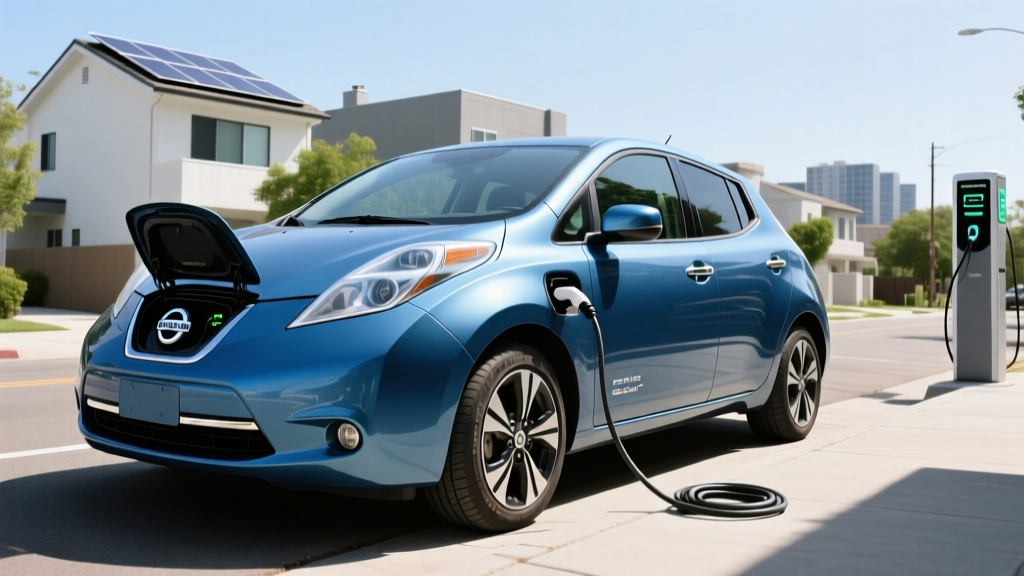
The 2015 Nissan Leaf S occupies a narrow but useful lane in the 2026 used-EV market: a no-frills, ultra-affordable electric commuter with an EPA-estimated 84 miles of range, passive battery cooling, and a CHAdeMO DC fast-charge port. For buyers with a predictable sub-40-mile round trip, access to home Level 2 charging, and a budget under $8,000, the Leaf S remains one of the cheapest ways to drive on electrons. For anyone expecting highway road-trip capability, modern ADAS, or fast DC charging, it falls well short of contemporary EVs.
This profile evaluates the 2015 Leaf S strictly as a used purchase in 2026, applying today's used-EV tax credit rules (§25E), real-world degradation expectations for an 11-year-old NMC pack, and current charging-infrastructure realities — including the ongoing decline of CHAdeMO networks.
Range, Battery, and Efficiency
Real-world expectation (2026 used example): 55–75 miles in mixed driving, depending on battery State of Health (SoH). Highway driving at 70 mph typically yields 50–65 miles. Cold-weather operation (below 32°F) without a heat pump can drop usable range to 40–55 miles.
The 2015 Leaf S uses a 24 kWh (nominal) lithium-ion battery pack with NMC (nickel-manganese-cobalt) chemistry. Usable capacity from the factory was approximately 21.6 kWh, with the remainder held as a top/bottom buffer. Unlike the Tesla Model 3 or later Nissan Ariya, the Leaf uses passive air cooling rather than active liquid thermal management. This design choice keeps cost and weight down but accelerates calendar and cycle degradation in hot climates and limits sustained DC fast-charge rates.
Nissan provides a 12-bar battery health indicator on the dash. A 2015 example in 2026 will typically show 9 to 11 bars depending on climate history and charging habits. Each lost bar represents roughly 6–8% of original capacity. A 10-bar pack retains approximately 75–80% of its original usable capacity — translating to around 60–70 real-world miles in moderate weather.
| Attribute | Value |
|---|---|
| Battery chemistry | NMC (nickel-manganese-cobalt) |
| Pack capacity (nominal) | 24 kWh |
| Usable capacity (new) | ~21.6 kWh |
| Thermal management | Passive air cooling |
| EPA range (new) | 84 miles |
| EPA efficiency | 114 MPGe combined / 30 kWh/100 mi |
| Real-world range (10-bar pack, 2026) | ~60–75 miles mixed |
Source: fueleconomy.gov — 2015 Nissan Leaf
Charging: CHAdeMO, Level 2, and the Infrastructure Problem
Charging is the 2015 Leaf S's most significant ownership friction point in 2026. The vehicle uses the CHAdeMO DC fast-charge standard, which has been losing ground in North America to CCS and the Tesla NACS connector. Electrify America stations never supported CHAdeMO, and EVgo — historically the largest CHAdeMO network — has been progressively replacing CHAdeMO stalls with CCS/NACS hardware.
| Level | Connector | Max Power | Speed | Notes |
|---|---|---|---|---|
| Level 1 (120V) | J1772 | ~1.4 kW | ~4–5 miles/hour | Full charge in ~20+ hours |
| Level 2 (240V) | J1772 | 6.6 kW (optional on S; 3.3 kW standard) | ~22 miles/hour (6.6 kW) or ~11 mi/hr (3.3 kW) | Full charge in ~4–7 hours |
| DC Fast | CHAdeMO | ~50 kW peak | 0–80% in ~30 minutes (new pack); 10–80% not officially rated | Passive cooling causes taper above ~60% SoC; CHAdeMO stations increasingly rare |
Charging-curve reality: The Leaf's passive cooling means DC fast charging slows significantly once the pack warms up. On a 50 kW CHAdeMO station, the car will pull close to peak rate from 0–50% SoC, then taper to 20–30 kW through the 50–80% band, and drop further above 80%. In hot weather, repeated DC fast charges in a single day trigger "Rapidgate" — Nissan's software limits charge rate to protect the uncooled pack, potentially doubling charge times on the second or third stop.
Home charging recommendation: A 240V, 32-amp Level 2 home station (7.7 kW supply; the Leaf will draw up to 6.6 kW if equipped with the optional onboard charger) is essentially mandatory for daily use. Budget $500–$800 for a ChargePoint Home Flex or Emporia Level 2 unit, plus $300–$1,500 for electrician installation depending on panel proximity and whether a 240V circuit already exists.
Performance and Drivetrain
The 2015 Leaf S is a front-wheel-drive commuter, not a performance EV. Its 80 kW (107 horsepower) AC synchronous motor produces 187 lb-ft of torque — adequate for city merging but strained at highway speeds with a full cabin. The 0–60 mph time is approximately 10.2 seconds, placing it well behind the 2026 crop of budget EVs like the Chevy Equinox EV (~8.0 sec).
| Metric | Value |
|---|---|
| Motor output | 80 kW / 107 hp |
| Torque | 187 lb-ft |
| Drivetrain | FWD, single-speed reduction gear |
| 0–60 mph | ~10.2 seconds |
| Top speed | ~90 mph (electronically limited) |
| Curb weight | ~3,256 lbs |
Regenerative braking on the 2015 Leaf is modest by modern standards. The "B" mode on the shift lever increases regen but does not enable true one-pedal driving to a full stop — the car creeps at low speed like a conventional automatic. This is a notable gap versus the Chevrolet Bolt EV or any Tesla, which bring the vehicle to a complete hold.
Interior, Cargo, and Technology
The Leaf S is the base trim, and it shows. Standard equipment includes a 4.3-inch color display (non-touch on early builds, with basic audio and trip data), cloth seating, manual climate control, and a 6-speaker audio system. Navigation and the larger 7-inch touchscreen with NissanConnect EV telematics were not standard on the S trim — they were bundled on the SV and SL.
Passenger and cargo dimensions:
- Front headroom: 40.9 in | Rear headroom: 38.3 in
- Front legroom: 42.1 in | Rear legroom: 33.5 in
- Cargo volume (rear seats up): 24.0 cu ft
- Cargo volume (rear seats folded): 30.0 cu ft
The cargo area is compromised by the battery's placement under the rear seat and trunk floor, creating a high load floor and no spare tire (a tire-repair kit is standard). Rear seats fold in a single piece on the S trim (60/40 split arrived on SV/SL), limiting flexibility for long-cargo hauling.
Driver assistance: The 2015 Leaf S has no advanced driver-assist features standard — no automatic emergency braking, no lane-keeping, no adaptive cruise. These were unavailable even as options on the S trim. Buyers prioritizing safety tech should cross-shop a 2017+ Chevrolet Bolt EV or 2018+ Nissan Leaf (second generation), which added Nissan ProPILOT Assist on higher trims.
Pricing, Used-EV Tax Credit, and Total Cost
As a used vehicle in 2026, the 2015 Leaf S is no longer eligible for the new-vehicle §30D federal tax credit. However, it may qualify for the §25E Used Clean Vehicle Credit, which provides up to $4,000 or 30% of the sale price (whichever is less) when purchased from a licensed dealer.
| Item | Amount |
|---|---|
| Original MSRP (2015, before incentives) | $29,010 |
| Typical 2026 dealer asking price (80k–100k mi) | $5,500–$8,500 |
| §25E credit (30% of $7,000 sale price) | $2,100 |
| Effective price after credit | ~$4,900 |
| Estimated home Level 2 install | $800–$2,300 |
| All-in budget to drive | ~$5,700–$7,200 |
§25E eligibility checklist (2026 rules — verify at IRS.gov):
- Vehicle must be purchased from a licensed dealer (private-party sales excluded)
- Sale price must be $25,000 or less
- Buyer income caps: $75,000 single / $112,500 head of household / $150,000 joint (modified AGI)
- Vehicle must be at least 2 model years old (2015 qualifies)
- Vehicle must have a battery capacity of at least 7 kWh (Leaf's 24 kWh qualifies)
- Credit can be claimed only once per vehicle (check VIN history via dealer)
- Point-of-sale transfer is available — apply the credit at purchase to reduce out-of-pocket cost
5-year operating cost estimate (80-mile daily commute, 15,000 mi/yr, $0.14/kWh home electricity):
- Annual electricity cost: ~630 kWh × $0.14 = ~$630 (assuming 30 kWh/100 mi and charging losses)
- Comparable gas car (30 MPG, $3.40/gal): ~$1,700/year
- 5-year fuel savings vs. gas: ~$5,350
- Insurance: typically $900–$1,300/year (varies by state and driver)
- Maintenance: minimal — no oil changes, cabin filter and brake fluid only; expect $200–$400/year
Warranty and Battery Replacement Outlook
Nissan's original battery warranty on the 2015 Leaf was 8 years / 100,000 miles against capacity loss below 9 bars (of 12) on the health indicator. For a 2015 model, this warranty expired no later than the end of 2023 — meaning any 2015 Leaf S purchased in 2026 is out of factory battery warranty.
This is the single largest financial risk of ownership. A refurbished or replacement 24 kWh Leaf battery from Nissan or a third-party supplier (such as Electrified Garage or a Leaf-specific rebuilder) typically costs $5,500–$8,500 installed as of 2026. That figure can approach or exceed the vehicle's value, making a pre-purchase battery health assessment essential.
Pre-purchase checklist:
- Check the 12-bar battery health indicator on the dash (12 = excellent; 11 = good; 10 = fair; 9 or below = degraded and replacement likely within 1–3 years)
- Request a LeafSpy Pro report (a third-party OBD-II app that reads actual pack capacity in kWh and cell voltage variance)
- Verify DC fast-charge history — frequent DCFC on passive-cooled packs accelerates degradation
- Confirm whether the battery has ever been replaced under warranty (a replaced pack resets the degradation clock)
Who the 2015 Leaf S Suits — and Who Should Skip It
- Lowest cost of entry to EV ownership in 2026 (~$5K–$8K used, potentially ~$4K after §25E credit)
- Cheap to operate — ~$0.04–$0.05/mile on home electricity
- Spacious hatchback cargo area for its footprint (24 cu ft)
- Simple, proven drivetrain with minimal maintenance needs
- Eligible for §25E used-EV tax credit (up to $4,000)
- Real-world range of 55–75 miles is inadequate for most non-commuter use
- CHAdeMO DC fast-charge standard is disappearing from public networks
- Passive battery cooling accelerates degradation in hot climates and causes Rapidgate
- No advanced driver-assist features (AEB, lane-keeping, ACC)
- Out of battery warranty — $5,500–$8,500 replacement exposure
- No Apple CarPlay / Android Auto; dated infotainment
- Your daily round trip is under 45 miles and you can charge at home every night
- You live in a temperate climate (Pacific Northwest, Northeast, moderate Southwest elevations)
- You want a second car for errands and commuting at the lowest possible cost
- You find a dealer-qualified example eligible for the §25E credit
- 2017–2019 Chevrolet Bolt EV — 238-mile EPA range, CCS charging, liquid-cooled battery, Apple CarPlay
- 2018+ Nissan Leaf (2nd gen, 40 kWh) — 151-mile EPA range, ProPILOT Assist available, improved thermal behavior
- 2020+ Tesla Model 3 Standard Range — 250+ mile range, NACS/Supercharger access, liquid-cooled, Autopilot standard
2015 Nissan Leaf S — FAQ
What is the real-world range of a 2015 Nissan Leaf S in 2026?
Expect 55–75 miles in mixed driving on a healthy 10–11 bar pack. Highway driving at 70 mph reduces this to roughly 50–65 miles. Cold weather (below freezing) without preconditioning can push range down to 40–55 miles. Always check the 12-bar health indicator and, ideally, pull a LeafSpy report before purchasing.
How fast does the 2015 Leaf S charge at home and on DC fast chargers?
On a 240V Level 2 home charger with the optional 6.6 kW onboard charger, expect ~22 miles of range per hour and a full charge in roughly 4 hours. On a 50 kW CHAdeMO DC fast charger, a 0–80% charge takes approximately 30 minutes on a cool pack — but passive cooling causes significant taper above 60% SoC, and repeated same-day fast charges trigger Rapidgate rate-limiting.
Does the 2015 Nissan Leaf qualify for any federal tax credit in 2026?
Not the new-vehicle §30D credit (that expired for Nissan in 2019 due to the manufacturer sales cap). However, a used 2015 Leaf S purchased from a licensed dealer for $25,000 or less may qualify for the §25E Used Clean Vehicle Credit — up to $4,000 or 30% of the sale price, subject to buyer income limits. Verify current rules at IRS.gov.
Is the 2015 Leaf S worth buying vs. a used Chevrolet Bolt EV or newer Leaf?
Only if your budget is strictly under $8,000 and your commute is short. A 2017–2019 Bolt EV offers 238 miles of EPA range, liquid battery cooling, CCS charging, and modern infotainment — typically for $10,000–$14,000 used. The extra $3,000–$6,000 buys dramatically more capability and lower battery-replacement risk. The 2015 Leaf S is best as a dedicated second car or ultra-budget commuter.
What is the biggest risk of buying a 2015 Leaf S in 2026?
Battery degradation with no remaining warranty. A replacement 24 kWh pack costs $5,500–$8,500 installed, which can exceed the car's value. Always verify battery health (bar count + LeafSpy kWh reading) before purchase, and factor potential replacement into your total cost of ownership.
Can I use Tesla Superchargers with a 2015 Nissan Leaf?
No. The 2015 Leaf uses CHAdeMO for DC fast charging and J1772 for Level 2. There is no commercially available adapter to CHAdeMO from NACS (Tesla's connector). Tesla's Supercharger network remains inaccessible to Leaf owners. Your DC fast-charge options are limited to the shrinking CHAdeMO infrastructure — primarily older EVgo stations and some ChargePoint locations.