Quick Verdict: The Pioneer That Shows Its Age
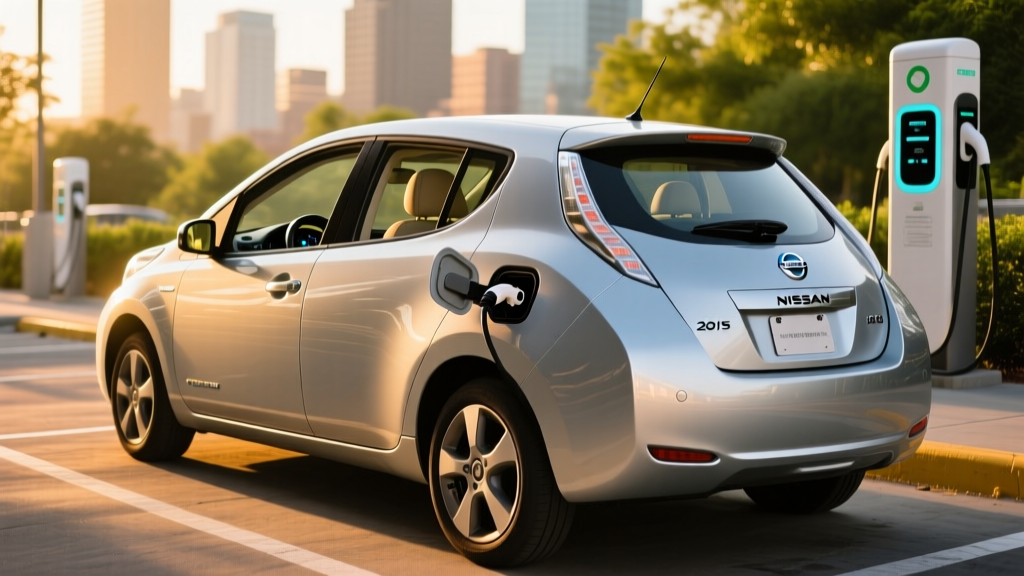
The 2015 Nissan Leaf was once the best-selling electric car on Earth, and it remains a fixture on the used-EV market. With a base price that originally started around $29,010 (before incentives), it introduced millions of drivers to battery-electric ownership. But in 2026, a decade-old Leaf is a very different proposition than when it rolled off the lot. Battery degradation, a modest 84-mile EPA range, and the fading CHAdeMO charging standard all demand scrutiny before you hand over cash. This review breaks down exactly what to expect — the numbers, the real-world limitations, and whether a used 2015 Leaf still makes sense as a budget commuter.
2015 Nissan Leaf Core Specifications
| Spec | Value |
|---|---|
| EPA Range (New) | 84 miles (24 kWh battery) |
| Battery Capacity | 24 kWh total / ~21.5 kWh usable (NMC chemistry) |
| Motor Output | 80 kW (107 hp), 187 lb-ft torque |
| 0-60 mph | ~11.5 seconds |
| Drivetrain | FWD (single front motor) |
| EPA Efficiency | 114 MPGe combined / 30 kWh/100 mi |
| DC Fast Charge (Max) | ~50 kW peak (CHAdeMO connector) |
| Level 2 Charge Rate | 6.6 kW onboard charger (approx. 22 mi/hr) |
| Cargo Volume | 24.0 cu ft (rear seats up) / 30.0 cu ft (folded) |
| Rear Legroom | 33.5 inches |
| Original Base MSRP | $29,010 (S trim) / $34,840 (SL trim) |
| Current Used Price (2026) | ~$4,000–$7,500 depending on battery health |
Range Reality: What 84 EPA Miles Means in 2026
When new, the 2015 Leaf's 84-mile EPA estimate was competitive for city commuting. But two forces have eroded that number for today's used buyers: natural battery degradation and the physics of real-world driving conditions.
EPA Sticker: 84 miles (when new, 24 kWh pack)
Real-World Expectations (used, moderate degradation ~15%):
• City/stop-and-go: 65–75 miles
• Highway (65+ mph): 50–60 miles
• Cold weather (below 32°F): 40–55 miles
Critical note: The 2015 Leaf uses passive air cooling for its battery, not liquid thermal management. This accelerates degradation in hot climates (Arizona, Texas, Southern California) and reduces charging speed and range in extreme cold. Always check the battery health bars on the dash before purchasing.
Nissan's dashboard displays battery State of Health (SoH) as a series of bars out of 12. A 2015 Leaf that still shows 10-11 bars in 2026 is in better-than-average shape; one showing 8 or fewer bars has lost significant capacity and may deliver only 50-60 usable miles in mixed driving. According to data aggregated by fueleconomy.gov, the 24 kWh Leaf achieves 114 MPGe combined, but that figure assumes a healthy pack under moderate conditions.
The absence of a heat pump (standard on newer EVs) means cabin heating draws directly from the traction battery via a resistive PTC heater, which can cut range by 25-35% in winter. If you live in a cold-weather state, plan for 40-50 miles of usable range from December through February.
Charging Speeds: CHAdeMO in a NACS/CCS World
Charging infrastructure compatibility is arguably the 2015 Leaf's biggest long-term liability. Nissan adopted the CHAdeMO DC fast-charging standard, which has steadily lost ground in North America to CCS1 and, increasingly, Tesla's NACS connector.
| Charging Level | Power (kW) | Speed / Time | Connector |
|---|---|---|---|
| Level 1 (120V household) | ~1.4 kW | ~4–5 miles per hour / ~18 hrs (0–100%) | J1772 |
| Level 2 (240V home/public) | 6.6 kW (onboard max) | ~22 miles per hour / ~4 hrs (0–100%) | J1772 |
| DC Fast Charge | ~50 kW peak | 0–80% in ~30–40 minutes | CHAdeMO |
The 6.6 kW onboard charger (standard on SV and SL trims; the base S trim had a 3.3 kW charger limiting Level 2 to ~11 mi/hr) is adequate for overnight home replenishment. A full charge from empty takes roughly four hours on a 240V Level 2 circuit.
DC fast charging at 50 kW via CHAdeMO sounds slow by 2026 standards — where modern EVs pull 150-350 kW — but the Leaf's small 24 kWh battery means 50 kW is actually a reasonably aggressive C-rate. In practice, you'll see peak rates near 40-48 kW tapering as the battery warms and SoC climbs. Expect a 10-80% session to take 30-40 minutes depending on battery temperature.
The CHAdeMO problem: Electrify America, the largest US DC fast-charging network, never widely deployed CHAdeMO connectors. Most EA stations offer CCS1 and NACS only. Your CHAdeMO options are largely limited to older Nissan-dealer chargers, some EVgo stations, and scattered legacy units. Before buying, map the CHAdeMO-compatible chargers in your daily route using apps like PlugShare. If reliable DC fast charging matters to you, this is a dealbreaker worth taking seriously.
Performance, Ride, and Daily Drivability
The 2015 Leaf's 107-horsepower, front-wheel-drive motor delivers 187 lb-ft of instant torque — the characteristic EV punch off the line that still feels lively around town. The 0-60 mph time of roughly 11.5 seconds is leisurely by modern EV standards (a 2026 Hyundai Ioniq 5 does it in about 5.1 seconds), but adequate for merging and city driving.
What the Leaf lacks in straight-line speed it partially makes up for in ride comfort and ease of use. The suspension is tuned softly for urban compliance, steering is light, and the regenerative braking system — while not offering true one-pedal driving like newer EVs — provides noticeable deceleration when you lift off the accelerator in "B" mode. The eco-driving modes and a heat-resistant eco pedal that physically pushes back against heavy acceleration encourage efficiency over performance.
Interior space is practical: 24.0 cubic feet of cargo room behind the rear seats expands to 30.0 cu ft with the 60/40 split rear bench folded. Rear legroom at 33.5 inches is tight for tall adults on longer trips but fine for children or shorter commutes. The infotainment system is a basic 5-inch touchscreen with Bluetooth and USB — no Apple CarPlay or Android Auto, which were not yet standard in 2015. Navigation was available on SV and SL trims via a 7-inch screen with Nissan's CarWings telematics (now largely deprecated).
Battery Health, Degradation, and Warranty Status
The 2015 Leaf's lithium-ion battery uses NMC (nickel manganese cobalt) chemistry, which offers decent energy density but is more susceptible to heat-related degradation than the LFP (lithium iron phosphate) packs now common in newer EVs. Nissan's passive air-cooling system — no liquid coolant loops — was a cost-saving measure that has proven to be the car's Achilles heel in warm climates.
Data from Leaf owner communities and battery-tracking tools like LeafSpy show that a 2015 Leaf in a moderate climate (Pacific Northwest, Northeast) typically retains 75-85% of its original capacity after 10 years. In hot climates (Phoenix, Houston, Las Vegas), retention can drop to 60-70% or lower, meaning real-world range shrinks to 50-60 miles or less.
Nissan's original battery warranty covered 8 years/100,000 miles against capacity loss below 9 bars (out of 12) on the capacity gauge. For a 2015 model, this warranty expired in 2023 at the latest. Any battery replacement or repair is now an out-of-pocket expense. A refurbished 24 kWh replacement pack typically costs $5,000–$8,000 installed, which can exceed the vehicle's resale value. Factor this risk into your purchase decision.
Before purchasing, use an OBD-II dongle with the LeafSpy app to read the actual battery State of Health percentage — don't rely solely on the dashboard bars, which are imprecise. A pack reading above 80% SoH is a reasonable buy; below 70% means imminent range limitations and potential replacement costs.
Pricing, Tax Credits, and Used EV Economics
The 2015 Nissan Leaf originally started at $29,010 for the S trim, rising to $34,840 for the fully equipped SL. The federal tax credit of $7,500 (under the pre-2023 rules) brought effective prices as low as ~$21,500 when new. That credit structure no longer applies.
| Item | Details |
|---|---|
| Current Used Price Range (2026) | $4,000–$7,500 (varies by battery health, mileage, region) |
| Federal Used EV Credit (§25E) | Up to $4,000 or 30% of sale price (whichever is lower) |
| Credit Eligibility Requirements | Sale price ≤ $25,000; buyer income ≤ $75K single / $150K joint; vehicle must be at least 2 model years old; purchased from a licensed dealer |
| New-Vehicle §30D Credit | Not applicable — discontinued model |
| Effective Price After §25E | As low as ~$1,200–$3,500 for qualifying buyers buying from a dealer |
The IRS §25E used clean vehicle credit is the relevant incentive here. If you buy a 2015 Leaf from a licensed dealer for $5,500 and meet the income caps, you could claim $1,650 (30% of $5,500) as a tax credit — or potentially transfer it at point of sale as a discount. Private-party purchases do not qualify. Always verify current-year eligibility rules with a tax professional, as IRS requirements can shift.
At $4,000–$7,500, the Leaf is one of the cheapest ways to get into an EV. But weigh the low purchase price against the potential $5,000+ battery replacement cost, limited range, and CHAdeMO charging constraints. Total cost of ownership can be favorable if the battery is healthy and your commute is short — electricity at $0.13/kWh means a full "tank" costs roughly $3.10 for 70+ miles of range.
Pros and Cons at a Glance
- Extremely low used purchase price ($4K–$7.5K)
- Cheap to "fuel" — ~$3 per full charge at home
- Comfortable ride, easy to park, great visibility
- Practical hatchback cargo space (24–30 cu ft)
- Eligible for up to $4,000 used EV tax credit (§25E)
- Strong owner community and aftermarket support (LeafSpy)
- 84-mile EPA range when new; expect 50–70 mi used
- Passive air-cooled battery degrades faster in heat
- CHAdeMO DC fast-charging standard is disappearing in the US
- No Apple CarPlay, Android Auto, or modern infotainment
- Original battery warranty expired — replacement costs $5K–$8K
- Slow 0-60 time (11.5 sec) and no highway passing confidence
- No liquid thermal management or heat pump
Who Should (and Shouldn't) Buy a Used 2015 Leaf
- Your daily round-trip commute is under 40 miles and you can charge at home overnight
- You live in a moderate climate (not extreme heat or cold)
- You want the cheapest possible entry into EV ownership and accept the range trade-off
- You have a second gas or hybrid car for longer trips
- You've verified battery SoH above 80% via LeafSpy before purchase
- You need reliable DC fast charging for road trips (CHAdeMO infrastructure is shrinking)
- You live in a hot climate where battery degradation will accelerate
- Your commute exceeds 50 miles round-trip, especially in winter
- You want modern safety tech, infotainment, or driver-assist features
- You can't absorb a potential $5,000–$8,000 battery replacement
For buyers willing to stretch the budget to $10,000–$15,000, a used 2018-2019 Leaf (with the 40 kWh pack, 151-mile EPA range, and improved battery management) or a used Chevrolet Bolt EV (238-mile range, CCS charging, liquid-cooled battery) offer dramatically better range and charging compatibility. But at the $4,000–$6,000 price point with a healthy battery, the 2015 Leaf is hard to beat as a pure city runabout.
Frequently Asked Questions
What is the real-world range of a used 2015 Nissan Leaf?
A 2015 Leaf with a healthy battery (80%+ SoH) typically delivers 60–75 miles in mixed city/highway driving. Highway-only driving at 70 mph drops that to 50–60 miles. In cold weather below freezing, expect 40–55 miles due to resistive cabin heating and reduced battery efficiency. Always verify battery health with LeafSpy before purchasing.
How fast does the 2015 Leaf charge at home and on DC fast chargers?
On a 240V Level 2 home charger, the 6.6 kW onboard charger adds about 22 miles of range per hour, fully replenishing the 24 kWh battery in roughly 4 hours. On a CHAdeMO DC fast charger, peak power reaches about 50 kW, taking the battery from 10% to 80% in approximately 30–40 minutes. However, CHAdeMO chargers are increasingly rare on public networks.
Does the 2015 Nissan Leaf qualify for any federal tax credit?
Not the new-vehicle §30D credit — the Leaf is discontinued. However, it may qualify for the IRS §25E used clean vehicle credit: up to $4,000 or 30% of the sale price (whichever is less). Requirements include a sale price of $25,000 or less, purchase from a licensed dealer, and buyer income below $75,000 (single) or $150,000 (joint). Verify current-year rules with a tax professional.
Is the 2015 Leaf worth buying compared to other used EVs?
It depends on your budget and use case. At $4,000–$6,000, it's the cheapest entry into EV ownership. But a used 2017-2019 Chevrolet Bolt EV (~$9,000–$12,000) offers 238 miles of EPA range, CCS fast charging, and a liquid-cooled battery — a dramatically more capable car for not much more money. If budget is the primary constraint and your commute is short, the Leaf is viable. If you need range or road-trip flexibility, spend more on a Bolt, a 2018+ Leaf (40 kWh), or a used Tesla Model 3.
How long will the 2015 Leaf battery last, and what does replacement cost?
Most 2015 Leaf batteries retain 65-85% of original capacity after 10 years depending on climate. In moderate climates, the pack may remain usable (60+ miles of range) for another 3-5 years. In hot climates, degradation accelerates. A refurbished 24 kWh replacement pack costs $5,000–$8,000 installed — often more than the car is worth. This is the single biggest financial risk of buying a used first-generation Leaf.
What are the biggest things to check before buying a used 2015 Leaf?
Use an OBD-II dongle with the LeafSpy app to read exact battery State of Health percentage. Check the dashboard capacity bars (10+ out of 12 is good). Inspect for signs of battery abuse: frequent CHAdeMO fast charging in hot climates accelerates degradation. Verify the onboard charger is the 6.6 kW version (SV/SL trims), not the slower 3.3 kW unit (base S trim). Test the regenerative braking and ensure no warning lights are present. Check NHTSA recall history for any outstanding service bulletins.