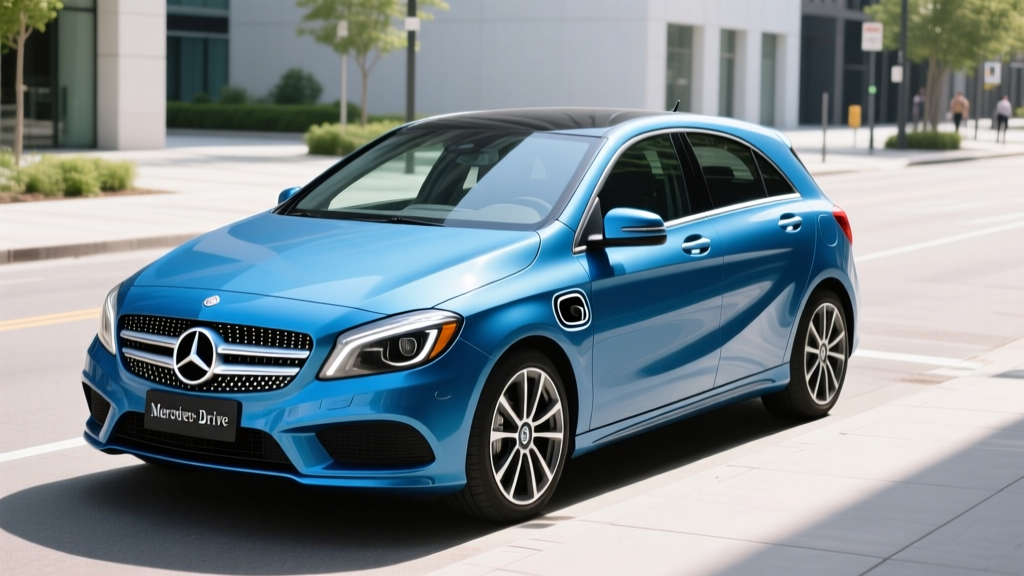
Quick Verdict: The 2015 Mercedes-Benz B-Class Electric Drive (badged as the B250e in later years) delivers premium interior quality and 177 hp in a practical hatchback, but its 87-mile EPA range and lack of DC fast charging make it strictly a city commuter or second car. Used prices hover between $9,000–$14,000 in 2026 depending on mileage and battery state of health. It's a compelling budget luxury EV if your daily driving stays under 60 miles round-trip and you have reliable Level 2 home charging.
What You Need to Know Before Buying a Used 2015 B-Class Electric Drive
Mercedes-Benz built the B-Class Electric Drive on a modified B-Class platform, partnering with Tesla to supply the powertrain components — a fact that gives this car an unusual pedigree. The electric motor produces 177 hp and 251 lb-ft of torque, paired with a 28 kWh usable battery (36 kWh gross capacity, with a substantial buffer to protect longevity). The result is a compact luxury hatchback that drives well but was constrained by the battery technology of its era.
If you're researching the 2015 Mercedes-Benz B-Class Electric Drive as a potential used EV purchase, the core decision comes down to range adequacy. The EPA rated this car at 87 miles of range and 115 MPGe combined. In real-world driving, expect roughly 70–80 miles on the highway, and potentially as low as 55–65 miles in freezing temperatures with the heater running. This is not a road-trip vehicle — it's a premium urban runabout.
Buyers should prioritize three pre-purchase checks: battery state of health (SoH) via a Mercedes diagnostic scan, confirmation that the onboard charger functions properly, and verification that the liquid-cooled thermal management system shows no fault codes. A degraded battery in this model can drop usable range below 60 miles, which fundamentally changes its utility.
Range, Battery, and Charging: The Numbers That Matter
Understanding the energy capacity and charging limitations is critical for this car. Here are the exact specifications:
| Specification | 2015 B-Class Electric Drive |
|---|---|
| Usable Battery Capacity | 28 kWh (36 kWh gross) |
| Battery Chemistry | NMC (Nickel Manganese Cobalt) |
| EPA Range | 87 miles |
| Real-World Range (mixed driving) | 65–80 miles |
| Cold-Weather Range (below 32°F) | 55–65 miles |
| EPA Efficiency | 115 MPGe (29 kWh/100 mi) |
| Max AC Charge Rate (Level 2) | 9.6 kW |
| DC Fast Charging | Not available |
| Level 2 Charge Time (0–100%) | ~3.5 hours at 9.6 kW |
| Level 1 Charge Time (120V) | ~30+ hours |
| Motor Output | 177 hp / 251 lb-ft torque |
| 0–60 mph | 7.3 seconds |
| Thermal Management | Liquid-cooled battery |
Real-World Range Reality: The EPA's 87-mile figure assumes mixed driving at moderate temperatures. On sustained 70 mph highway travel, expect closer to 72–78 miles. In winter conditions (below freezing), the range can drop to 55–65 miles due to cabin heating demands and increased battery internal resistance. The liquid thermal management system helps, but it cannot fully offset physics. Plan your commute around the lower number.
The absence of DC fast charging is the single biggest limitation of this vehicle. You cannot pull up to a 50 kW or 150 kW charger and add range in 20 minutes. Every charge session happens at Level 2 speeds or slower. For daily home charging this is perfectly adequate — plug in overnight and wake up to a full battery. But it means public charging infrastructure is largely irrelevant to this car's use case.
The 9.6 kW onboard charger is actually quite capable for its era. A full 0–100% charge takes approximately 3.5 hours on a 40-amp Level 2 circuit. If you're installing a home charger, any modern Level 2 unit delivering 32–48 amps (7.7–11.5 kW) will max out this car's acceptance rate.
Cost Breakdown: Purchase Price, Charging, and Total Ownership
One of the strongest arguments for the 2015 B-Class Electric Drive in 2026 is its low entry price. Depreciation has been steep — these cars originally stickered around $41,450 before incentives, and now trade in the $9,000–$14,000 range depending on mileage, condition, and battery health.
| Cost Factor | 2015 B-Class Electric Drive | Comparable Used Gas Hatchback (2015 Audi A3) |
|---|---|---|
| Used Purchase Price (2026) | $9,000–$14,000 | $12,000–$17,000 |
| Fuel/Energy Cost per Mile | ~$0.04–$0.06 (home charging) | ~$0.12–$0.15 (gas at $3.50/gal, 28 MPG) |
| Annual Energy Cost (12,000 mi) | $480–$720 | $1,440–$1,800 |
| Annual Maintenance | $300–$500 | $600–$1,000 |
| Insurance (annual avg.) | $1,100–$1,500 | $1,000–$1,400 |
| Federal Tax Credit (used EV, §25E) | Up to $4,000 (30% of sale price, income-capped) | None |
| 5-Year Estimated Total Cost | $14,000–$22,000 | $24,000–$32,000 |
The IRS §25E used clean vehicle credit can apply here: if you buy from a dealer for $25,000 or less and meet income thresholds (adjusted gross income below $75,000 single / $150,000 married filing jointly), you may qualify for 30% of the sale price up to $4,000. On a $12,000 B-Class Electric Drive, that's a potential $3,600 credit, bringing effective cost down to around $8,400. Consult a tax professional to confirm eligibility — income caps, dealer reporting requirements, and vehicle price limits all apply.
Maintenance savings are meaningful. There are no oil changes, no spark plugs, no transmission fluid, and brake wear is minimal thanks to regenerative braking. The primary maintenance items are cabin air filter replacement, brake fluid flushes (every 2 years), tire rotation, and wiper fluid. Budget roughly $300–$500 annually for these basics plus any Mercedes-specific diagnostic work.
How It Compares: Electric Drive vs. Gas and Other Used EVs
Placing the B-Class Electric Drive in context helps clarify who should buy it and who should look elsewhere.
| Attribute | 2015 B-Class Electric Drive | 2015 Mercedes-Benz B250 (Gas) | 2015 Nissan Leaf (30 kWh) |
|---|---|---|---|
| EPA Range | 87 miles | ~380 miles (15.8 gal tank) | 107 miles |
| MPGe / MPG Combined | 115 MPGe | 28 MPG | 114 MPGe |
| 0–60 mph | 7.3 sec | 7.2 sec | 9.5 sec |
| DC Fast Charging | No | N/A | Yes (CHAdeMO, 50 kW) |
| Cargo Volume | 14.3 cu ft (seats up) | 17.2 cu ft | 24.0 cu ft |
| Used Price Range (2026) | $9,000–$14,000 | $12,000–$17,000 | $7,000–$11,000 |
| Luxury Interior | Yes | Yes | No |
Against the gas B250, the Electric Drive sacrifices roughly 300 miles of range and some cargo space (the battery occupies area under the rear floor) but gains dramatically lower operating costs and a smoother, quieter driving experience. The torque delivery is immediate — 251 lb-ft from zero RPM makes the car feel quicker in city driving than the 0–60 time suggests.
Against the 2015 Nissan Leaf with the larger 30 kWh battery, the B-Class offers 20 fewer miles of EPA range but substantially better build quality, a quieter cabin, and Mercedes-Benz safety engineering. The Leaf does offer CHAdeMO DC fast charging, which the B-Class lacks entirely. If you ever need to drive more than 100 miles in a day and have access to CHAdeMO chargers, the Leaf is more flexible — though the CHAdeMO network has shrunk considerably as NACS becomes the North American standard.
Real-World Ownership: Charging at Home, Climate Impact, and Daily Use
Owning a 2015 B-Class Electric Drive in 2026 requires honest self-assessment about your driving patterns and charging access.
Home charging is essential. Without DC fast charging, this car lives and dies by your Level 2 setup. A 240V / 40-amp circuit with a quality EVSE (electric vehicle supply equipment) unit from brands like ChargePoint, Emporia, or Wallbox will replenish the battery fully in about 3.5 hours. Installation costs typically run $500–$1,500 if your electrical panel has capacity, or $2,000–$4,000+ if you need a panel upgrade. The car uses a standard J1772 connector, which is universally compatible with all Level 2 chargers sold in North America.
Climate matters significantly. If you live in Phoenix, Miami, or San Diego, you'll routinely see 80+ miles of range in mild weather. In Minneapolis, Chicago, or Boston, winter range loss of 25–35% is normal. The liquid thermal management system mitigates extreme battery stress but cannot prevent cabin-heating energy draw. The B-Class uses a resistive PTC heater rather than a heat pump, which consumes more energy in cold weather. Preconditioning the cabin while still plugged in is critical — it warms the car using grid power rather than battery power.
Daily driving patterns should stay under 60 miles round-trip to maintain a comfortable buffer. The 87-mile EPA range sounds adequate for a 40-mile commute, but accounting for highway speeds, climate control, battery age degradation, and the need to avoid running the battery to absolute zero, a 60-mile daily round-trip is the practical upper limit for stress-free ownership.
Public charging is largely irrelevant for this car. Without DC fast charging capability, stopping at an Electrify America or Tesla Supercharger station provides no benefit. You're limited to Level 2 destination chargers — useful for topping up at work or a shopping center, but not viable for extending range on a long trip. Accept that this is a one-car-for-commuting vehicle, not a primary family car for road trips.
Common Misconceptions About the B-Class Electric Drive
Several myths circulate about this model. Let's address them with data:
| Myth | Fact |
|---|---|
| "The Tesla-supplied powertrain means it can use Superchargers" | False. Tesla supplied the motor and battery components, but the car uses a J1772 port with no DC fast charge capability. It cannot access Superchargers or any DC network. |
| "87 miles of range is unusable in 2026" | Context-dependent. The average US one-way commute is ~16 miles (per Census data). For 60%+ of drivers, 65–80 real-world miles covers daily needs with margin — if you charge at home nightly. |
| "The battery will need expensive replacement" | Not necessarily. The NMC battery has an 8 kWh buffer (36 kWh gross vs. 28 kWh usable), which was designed to absorb degradation while maintaining usable range. Many 2015 units still show 85–92% state of health. A full replacement, if needed, runs $8,000–$12,000 at a Mercedes dealer — a significant cost relative to the car's value. |
| "It qualifies for the $7,500 federal tax credit" | Incorrect for used purchases in 2026. The §30D new-vehicle credit doesn't apply. The §25E used-vehicle credit offers up to $4,000 (30% of sale price) with income and dealer-sale requirements. |
| "Mercedes won't service a 10-year-old EV" | Most Mercedes-Benz dealerships can still perform diagnostics and basic service. However, specialized high-voltage battery work may require shipping to a regional center. Independent EV shops are increasingly viable alternatives. |
Battery Longevity and What to Inspect Before Purchase
The 2015 B-Class Electric Drive's battery pack is one of its more robust features. Mercedes and Tesla's joint engineering included a generous 8 kWh gross-to-usable buffer — meaning the car only accesses 28 of the 36 total kWh. This buffer absorbs degradation over time while preserving the driver's usable range. In practice, this means a battery that has degraded 15% in total capacity still delivers close to its original usable range because the buffer is being consumed first.
When evaluating a used example, request a battery state of health (SoH) report from a Mercedes-Benz diagnostic tool. Look for SoH above 85%. Below 80%, you'll start noticing meaningful range reduction — perhaps 65–70 real-world miles instead of 75–80. Below 75% SoH, the car's utility drops sharply, and battery replacement economics become questionable given the vehicle's resale value.
The original battery warranty was 8 years / 100,000 miles for capacity retention above 70%. Most 2015 models are now past the time limit but may still have mileage coverage if under 100K miles. Check the specific vehicle's warranty status with Mercedes-Benz directly using the VIN.
The liquid-cooled thermal management system was advanced for 2015 and has proven reliable. Unlike the passively-cooled Nissan Leaf, the B-Class battery is actively managed, reducing the risk of heat-related degradation in hot climates. Verify the coolant system shows no leaks or pump failures during a pre-purchase inspection.
Decision Framework: Is the 2015 B-Class Electric Drive Right for You?
Buy the 2015 B-Class Electric Drive if:
- Your daily round-trip commute is under 60 miles
- You have (or can install) Level 2 home charging
- You want a luxury-badge EV at a budget price point
- This will be a second car — not your only vehicle for long trips
- You live in a mild or moderate climate (or accept winter range loss)
- You value low operating costs over long-range flexibility
Look elsewhere if:
- Your daily driving regularly exceeds 70 miles
- You rely on street parking with no charging access
- You need one car that handles both commuting and road trips
- You live in a region with harsh winters and need reliable 80+ mile range year-round
- You want DC fast charging for any reason
- You need more than 14.3 cu ft of cargo space
For buyers who fit the first profile, the 2015 Mercedes-Benz B-Class Electric Drive represents one of the best value-per-dollar entries in the used EV market. A $12,000 purchase price, potential $3,600 used-EV tax credit, $500 annual fuel savings over gas, and $500 annual maintenance savings create a compelling economic case. The car drives like a Mercedes — solid, quiet, well-damped — and the instant electric torque makes it genuinely enjoyable in stop-and-go traffic.
For those who need more range or flexibility, consider the 2017+ Chevrolet Bolt EV (238 miles EPA, DC fast charging, often available under $15,000 used) or the 2018+ Nissan Leaf Plus (226 miles EPA, CHAdeMO DC charging). Both sacrifice interior luxury for dramatically more practical range and charging capability.
Can I install a home charger for the 2015 B-Class Electric Drive?
Yes. The car uses a standard J1772 connector, compatible with every Level 2 home charger on the market. You'll need a 240V circuit (ideally 40 amps to match the car's 9.6 kW maximum acceptance rate). Installation costs range from $500–$1,500 for a simple circuit addition, or $2,000–$4,000+ if your electrical panel needs upgrading. Always hire a licensed electrician and pull the required local permits.
What happens if the battery degrades significantly?
The 8 kWh buffer between gross and usable capacity means degradation is absorbed gradually. Below 75% state of health, you'll notice range dropping below 60 real-world miles. Full battery replacement costs $8,000–$12,000 at a Mercedes dealer, which is difficult to justify on a car worth $10,000–$14,000. Some independent EV shops offer module-level repair for $3,000–$5,000, replacing only degraded cells rather than the entire pack.
Does the 2015 B-Class Electric Drive qualify for any tax credits in 2026?
The §25E used clean vehicle credit may apply: 30% of the purchase price up to $4,000, available to buyers with adjusted gross income below $75,000 (single) or $150,000 (married filing jointly), purchased through a licensed dealer. The vehicle must be sold for $25,000 or less. The original §30D new-vehicle credit no longer applies. Always verify current-year rules with the IRS or a tax professional, as credit provisions can change.
How does the B-Class Electric Drive compare to a modern budget EV?
A new 2026 Chevrolet Bolt EV or Nissan Leaf offers 200+ miles of range and DC fast charging starting around $28,000–$32,000 before incentives. The B-Class trades that range and charging flexibility for a lower upfront cost ($9,000–$14,000), Mercedes-Benz build quality, and lower annual operating costs. It's a different value proposition: luxury and low entry cost vs. range and versatility.
Is the Tesla connection meaningful for parts and service?
The Tesla-supplied motor and battery were custom-built for Mercedes-Benz and are not interchangeable with Tesla Model S or Model 3 components. Tesla does not service the B-Class Electric Drive. Parts availability goes through Mercedes-Benz channels, and while most components remain available, some high-voltage parts may have longer lead times given the car's age and low production volume (~3,600 units sold in the US).