Why the 2015 Jeep Wrangler Bolt Pattern Matters for EV Swaps
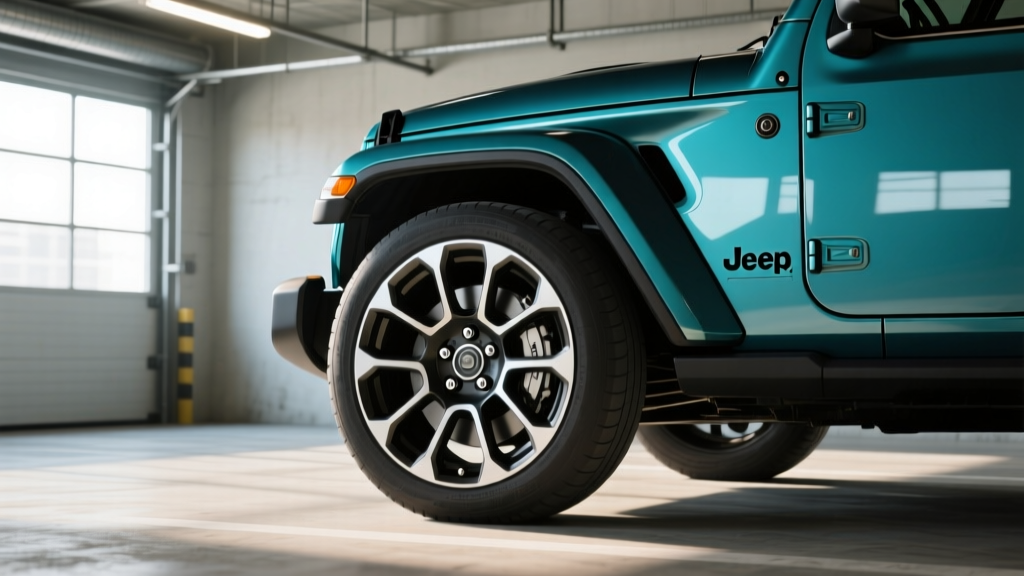
If you're researching the bolt pattern for 2015 Jeep Wrangler, you're likely planning a wheel upgrade — and increasingly, that upgrade is part of an electric-vehicle conversion or a donor-vehicle build. The 2015 Wrangler (JK generation, 2007–2018) rides on a 5×127 mm (5×5 inch) bolt pattern with a 71.5 mm center bore and 1/2″-20 UNF lug nuts. That spec governs which wheels physically mate to the hubs, and getting it wrong means a wheel that won't seat, vibrates at speed, or — worst case — separates under load.
For EV builders, the Wrangler's bolt pattern is a gateway question. Because the JK's Dana 30/44 axles are common in custom electric 4×4 builds (think Tesla drive-unit swaps, NetGain Hyper9 motor kits, or full Crate EV conversions), owners frequently reuse Wrangler wheels on custom EVs — or adapt EV wheels to Wrangler hubs. Understanding the 5×127 interface is step one.
Exact Bolt Pattern Specs for the 2015 Wrangler
| Parameter | 2015 Jeep Wrangler (JK) |
|---|---|
| Bolt pattern (PCD) | 5×127 mm (5×5 in) |
| Center bore | 71.5 mm |
| Lug thread | 1/2″-20 UNF |
| Lug seat type | Conical (60° taper) |
| Typical torque spec | 100 lb-ft (135 N·m) |
| Factory wheel sizes | 16″, 17″, 18″ |
| Typical offset range | +10 mm to +44 mm (varies by trim) |
The 5×127 pattern is shared with several other vehicles — older Grand Cherokees (WJ/WK), some Dodge Durango years, and certain Mercedes-Benz G-Wagen models — which opens up a wider used-wheel market for EV conversions sourcing parts on a budget.
Bolt Pattern Relevance in EV Conversions and Donor Builds
Electric conversions of body-on-frame trucks and SUVs have accelerated since 2023, driven by lower-cost salvaged Tesla drive units, the availability of Ford crate motors, and specialist kits from companies like EV West and Stealth EV. The JK Wrangler is a popular donor because:
- Its solid axles handle the instant torque of electric motors without the fragility concerns of independent front suspension.
- The frame rails accept battery boxes (typically 40–80 kWh of salvaged Nissan Leaf or Tesla modules) with minimal fabrication.
- The 5×127 bolt pattern has deep aftermarket wheel support — important when you need to fit larger brake calipers or accommodate heavier unsprung weight from hub motors.
Fitment Math: Offset, Backspacing, and EV Brake Clearance
Bolt pattern alone doesn't guarantee fitment. Three additional measurements determine whether a 5×127 wheel clears your EV conversion's brake calipers, hub motors, and suspension:
Offset (ET)
Offset is the distance in millimeters from the wheel's centerline to its mounting face. The 2015 Wrangler's factory 17″ Rubicon wheel runs approximately +43.5 mm offset with 6.25″ backspacing. Aftermarket 5×127 wheels for Wranglers commonly range from -12 mm to +20 mm offset to push the stance wider for stability — useful in EV builds where a lower center of gravity from under-floor batteries reduces rollover risk but wider track improves cornering feel.
Center Bore
The 71.5 mm hub bore must match or exceed the hub diameter. Wheels with a larger bore (e.g., 73.1 mm) can use hub-centric rings; wheels with a smaller bore will not physically fit without machining. For EV conversions using Tesla or Ford Performance hub assemblies, verify the hub OD before ordering 5×127 wheels.
Brake and Motor Clearance
Hub motors (e.g., Elaphe M700, Protean PD18) require wheels with specific inner-barrel profiles. A standard 17″ aftermarket 5×127 wheel may not clear a hub motor's diameter. Minimum 18″ wheels are typically required, and even then, you need the manufacturer's clearance drawing — not just the bolt pattern.
Torque Specs and Safety for Heavier EV Builds
Electric drivetrains deliver peak torque at 0 RPM. A Wrangler EV conversion producing 400+ lb-ft at the wheels places higher cyclic loads on lug studs than the stock 3.6L Pentastar V6 (260 lb-ft engine torque, multiplied through the transmission). This means:
- Re-torque after the first 50 miles of driving post-installation, then every 500 miles for the first 2,000 miles.
- Use a calibrated torque wrench set to 100 lb-ft — not an impact gun.
- Inspect studs for stretch if the conversion exceeds 5,500 lbs GVWR. Upgrading to ARP wheel studs (part #100-0101 for 1/2″-20) provides higher tensile strength.
- Never use lug nuts with damaged conical seats. The 60° taper must mate perfectly; any mismatch concentrates load on 2–3 studs.
The NHTSA tire safety guidelines emphasize proper lug torque regardless of drivetrain, but the higher torsional loads from electric motors make adherence even more critical.
Common 5×127 Wheel Options for Wrangler-Based EV Projects
| Wheel | Size | Offset | Load Rating | Notes |
|---|---|---|---|---|
| Factory Rubicon 17″ | 17×7.5 | +43.5 mm | ~2,200 lbs | Baseline; marginal for heavy EV builds |
| Method Race 701 | 17×8.5 | +0 mm | 2,500 lbs | Popular for off-road EV conversions |
| Black Rhino Arsenal | 18×9 | +12 mm | 2,750 lbs | Hub-motor clearance possible |
| KMC XD Series Grenade | 17×9 | -12 mm | 2,500 lbs | Wide stance; check fender clearance |
| Teraflex Delta 17″ | 17×8.5 | +6 mm | 2,300 lbs | Lightweight; verify load for EV weight |
Always cross-reference the wheel manufacturer's published load rating with your conversion's projected corner weights. A 5,200-lb EV Wrangler with 55/45 front/rear weight distribution loads the front corners at ~1,430 lbs each static — but dynamic loads in cornering and pothole impacts can exceed 2× static.
Frequently Asked Questions
Is the 2015 Wrangler bolt pattern the same as the 2024+ JL Wrangler?
No. The 2015 JK uses 5×127 mm. The 2018+ JL Wrangler switched to 5×127 mm as well — so the bolt pattern is actually identical across JK and JL generations. However, center bore, offset, and brake clearance differ significantly. JL wheels may not clear JK brakes and vice versa without adapters or spacers.
Can I use Tesla Model S/X wheels on a 2015 Wrangler?
Not directly. Tesla Model S and X use a 5×120 mm bolt pattern with a 64.1 mm center bore. That's incompatible with the Wrangler's 5×127 / 71.5 mm hub without a custom adapter plate — which adds unsprung weight, changes scrub radius, and introduces a potential failure point. Most EV conversion builders avoid adapters for safety reasons.
Will 5×5 (5×127) wheels from a Grand Cherokee fit my 2015 Wrangler?
Bolt pattern matches (5×127), and the WJ/WK Grand Cherokee shares the 71.5 mm center bore. However, Grand Cherokee wheels often have higher positive offset (+35 to +50 mm), which can cause the inner barrel to contact the Wrangler's steering knuckle or brake caliper. Test-fit one wheel before purchasing a full set.
Does switching to larger wheels affect my EV conversion's range?
Yes. Larger-diameter and wider wheels increase rotational mass and rolling resistance. In EV conversions, moving from a 17″ to a 20″ wheel/tire combo typically costs 5–12% of range depending on tire compound and weight gain. For a 150-mile-range Wrangler EV build, that's 7–18 fewer miles per charge.
What's the best way to verify bolt pattern before buying wheels online?
Measure the PCD yourself: on a 5-lug hub, measure from the center of one stud to the far edge of the stud two positions away (skip one). For 5×127, that distance should be approximately 152 mm (the chord length, not the bolt circle diameter). Alternatively, use a bolt-pattern gauge tool (under $15) for a direct read.
Bottom Line for EV Builders
The bolt pattern for 2015 Jeep Wrangler — 5×127 mm, 71.5 mm bore, 1/2″-20 studs — is well-supported in the aftermarket and compatible with a range of heavy-duty wheels suitable for electric conversions. The critical steps beyond bolt pattern are verifying load rating for increased EV weight, confirming offset for brake/motor clearance, and maintaining proper torque specs under the higher torsional loads that electric motors produce. Get those four variables right, and your wheel setup will handle the instant torque and extra mass of an EV build safely and reliably.