Why 'Battery for Hyundai Elantra 2015' Means Three Different Things
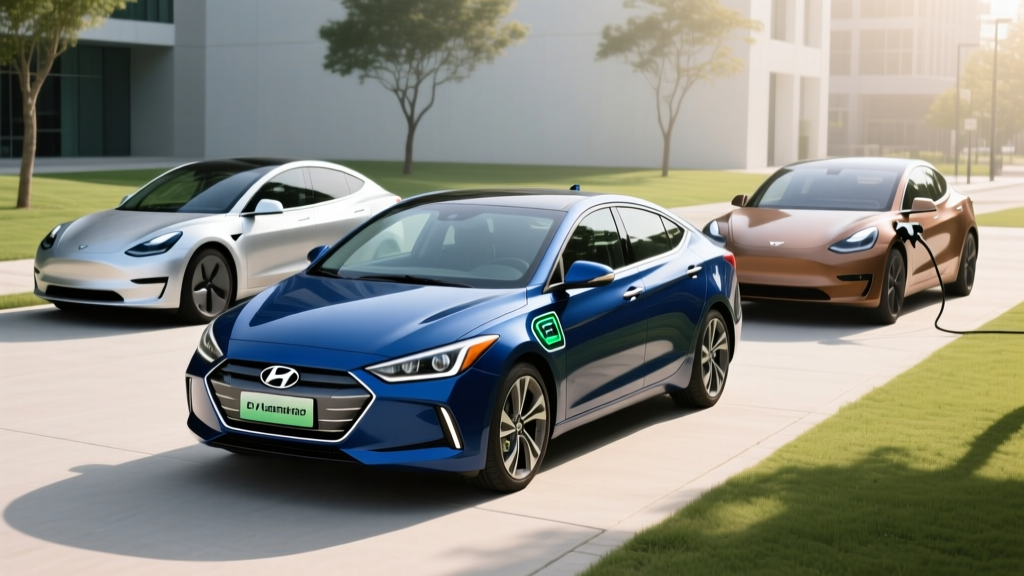
If you've typed "battery for Hyundai Elantra 2015" into a search engine, you're likely facing one of three very different problems. The 2015 Hyundai Elantra was sold as a conventional gasoline sedan, as the Elantra Hybrid (in select markets), and the broader Elantra lineage now includes the fully electric Ioniq and Kona EV platforms. Each uses a fundamentally different battery chemistry, architecture, and replacement pathway — and confusing them can cost you thousands.
This guide untangles what you actually need, whether you're swapping a 12V lead-acid starter battery in your gas Elantra, diagnosing high-voltage hybrid pack degradation, or researching how modern Hyundai EV traction batteries (LFP and NMC) hold up over 150,000+ miles. We'll cover real degradation data, warranty thresholds, replacement costs, and the care habits that determine whether your pack lasts 10 years or 15.
The 12V Auxiliary Battery: What Most 2015 Elantra Owners Actually Need
The vast majority of 2015 Hyundai Elantra owners searching for a replacement battery need a standard 12V lead-acid or AGM auxiliary battery. This is the under-hood unit that cranks the starter, powers the ECU, and runs accessories when the engine is off. It has nothing to do with a high-voltage traction battery.
For the 2015 Elantra (1.8L and 2.0L Nu engines), the OEM specification calls for a Group 47 (H5) or Group 121R battery with approximately 550–650 cold cranking amps (CCA). Replacement costs at major auto parts retailers typically run $120–$220 for a flooded lead-acill battery and $180–$280 for an AGM upgrade, which offers better vibration resistance and longer service life in stop-start or high-heat environments.
A conventional 12V battery in a gas Elantra should last 3–5 years. Heat is the primary killer — under-hood temperatures in Southern US summers can push internal corrosion and electrolyte loss well ahead of schedule. If your Elantra is slow to crank after sitting for a day or two, or the battery is over four years old, a load test at any parts store will confirm whether replacement is due.
High-Voltage Traction Batteries: Chemistry, Degradation, and Real-World Data
If your interest extends to Hyundai's electrified lineup — whether you own a later-model Ioniq Hybrid/PHEV/EV, a Kona Electric, or an Ioniq 5/6 — the high-voltage traction battery is the component that defines the vehicle's range, performance, and long-term value. Understanding how these batteries age is essential for any buyer considering a used or new electrified Hyundai.
LFP vs NMC/NCA: The Chemistry Trade-Off
Modern Hyundai EVs use two primary lithium-ion chemistries, each with distinct strengths:
| Attribute | LFP (Lithium Iron Phosphate) | NMC / NCA (Nickel Manganese Cobalt / Nickel Cobalt Aluminum) |
|---|---|---|
| Energy Density | Lower (~160 Wh/kg cell-level) | Higher (~220–260 Wh/kg cell-level) |
| Cycle Life | 3,000–5,000+ cycles to 80% SoH | 1,000–2,000 cycles to 80% SoH |
| Cold-Weather Performance | Reduced — slower charge acceptance below 32°F | Better low-temp charge/discharge |
| Thermal Stability | Excellent — lower runaway risk | Good, but requires active thermal management |
| Cost | Lower — no cobalt or nickel | Higher — commodity-sensitive metals |
| Typical Hyundai Use | Standard-range models, fleet-oriented trims | Long-range models (Ioniq 5/6 Long Range, Kona EV) |
LFP batteries tolerate daily 100% charging and deep cycling far better than NMC, making them ideal for commuters who charge nightly at home. NMC packs deliver more range per kilogram, which matters for long-range trims and highway-heavy drivers. Hyundai's current lineup (as of the 2026 model year) uses NMC for most Long Range and Performance variants, while LFP appears in Standard Range configurations where cost and cycle life take priority over maximum range.
Real Degradation Data: What Owners Actually See
Industry-wide data from fleet operators and owner surveys paints a reassuring picture. According to aggregated data published by Recurrent Auto, the average EV battery retains approximately 90–95% of its original capacity after 3 years and 50,000 miles, and roughly 85–90% after 8 years and 100,000 miles. Degradation is non-linear: the steepest drop occurs in the first 1–2 years (typically 2–5%), then the curve flattens significantly.
Typical EV Battery Degradation Curve (NMC Chemistry, Moderate Climate):
- Year 1 / 15,000 mi: ~96–98% State of Health (SoH)
- Year 3 / 45,000 mi: ~91–94% SoH
- Year 5 / 75,000 mi: ~88–91% SoH
- Year 8 / 120,000 mi: ~84–88% SoH
- Year 10 / 150,000 mi: ~80–85% SoH
LFP packs generally degrade more slowly, with many retaining 90%+ SoH beyond 100,000 miles under normal use. Hyundai's active liquid thermal management system — standard on the Ioniq 5, Ioniq 6, and Kona Electric — significantly mitigates heat-related degradation compared to older passively-cooled packs.
Battery Warranty Coverage: What Hyundai Actually Guarantees
Hyundai's high-voltage battery warranty is among the strongest in the industry, reflecting confidence in long-term pack durability. Here's what current coverage looks like:
| Coverage Element | Hyundai EV / Hybrid Battery Warranty |
|---|---|
| Duration | 10 years / 100,000 miles (whichever comes first) |
| Capacity Retention Threshold | 70% of original capacity (below this triggers warranty claim) |
| Covered Components | Traction battery pack, battery management system (BMS), related wiring and cooling |
| Transferable? | Yes — to subsequent owners (original 10yr/100k terms apply from original in-service date) |
| Exclusions | Damage from accidents, floods, improper modifications, or unauthorized service |
The 70% threshold is critical context: a battery that has degraded to 75% SoH after eight years — meaning you've lost 25% of your original range — is still considered "within spec" and would not trigger a warranty replacement. In practice, very few Hyundai EV batteries reach the 70% threshold under normal use. The warranty exists as a safety net, not a prediction.
For the original 2015 Elantra Hybrid (where available), the hybrid battery warranty was also 10 years/100,000 miles, though the NiMH chemistry used in that generation has different degradation characteristics than modern lithium-ion packs. If you own a 2015 Elantra Hybrid approaching 100,000 miles, a dealer diagnostic scan can confirm your pack's current SoH and warranty eligibility.
EV Battery Replacement Costs: When and How Much
Out-of-warranty traction battery replacement is the scenario that generates the most anxiety — and the most misinformation. Here's what the numbers actually look like for Hyundai's electrified models:
| Model | Battery Size (kWh) | Chemistry | Estimated Pack Replacement Cost |
|---|---|---|---|
| Kona Electric (2024–2026) | 65.4 kWh (Long Range) | NMC | $12,000–$16,000 |
| Ioniq 5 (2022–2026) | 77.4 kWh (Long Range) | NMC | $14,000–$20,000 |
| Ioniq 6 (2023–2026) | 77.4 kWh (Long Range) | NMC | $14,000–$20,000 |
| Ioniq 5 (Standard Range) | 58 kWh | LFP | $9,000–$13,000 |
| Elantra Hybrid (2015, NiMH) | 1.62 kWh | NiMH | $2,500–$4,000 |
These figures represent the battery pack itself plus dealer labor. Independent EV shops and refurbished pack options can reduce costs by 20–40%. However, the critical context is this: the vast majority of EV batteries never need replacement during the vehicle's useful life. Data from Consumer Reports and fleet studies indicate that fewer than 2–3% of EV batteries are replaced under warranty, and catastrophic failures outside warranty are rare. Most packs outlast the car's body, interior, and suspension components.
If you're considering a used Hyundai EV with 80,000–120,000 miles, a pre-purchase battery health check (available at any Hyundai dealer or via third-party OBD2 diagnostic tools) will tell you the exact SoH percentage. A pack showing 85–90% SoH at 100,000 miles is tracking well and should provide many more years of service.
Factors That Accelerate — or Extend — Battery Life
Battery longevity is not purely a function of time and mileage. Your charging habits, climate, and driving patterns have measurable impacts on degradation rate. Here's what the data supports:
Habits That Extend Battery Life
- Keep SoC between 20–80% for daily use. NMC batteries experience the least stress in this window. Reserve 100% charges for road trips.
- Use Level 2 home charging as your primary method. Slow, steady charging generates far less heat than repeated DC fast charging.
- Enable preconditioning. Hyundai's battery preconditioning feature warms the pack before DC fast charging in cold weather, reducing lithium plating risk and improving charge speed.
- Park in shade or a garage during extreme heat. Sustained high ambient temperatures (95°F+) accelerate calendar degradation, even when the car isn't driven.
- Drive it regularly. Batteries that sit at low SoC for weeks or months degrade faster than those in regular use.
Habits That Accelerate Degradation
- Frequent DC fast charging to 100%. The combination of high charge rate and high SoC generates significant heat and cell stress. Occasional fast charging is fine; daily reliance on it measurably increases degradation.
- Regularly draining below 10% SoC. Deep discharges stress the anode and can trigger protective buffer consumption.
- Leaving the car at 100% SoC for extended periods. If you must charge to full, drive within a few hours rather than letting it sit overnight at 100%.
- Ignoring thermal warnings. If the car's BMS limits power due to high battery temperature, let it cool before pushing hard again.
How to Check Your Battery's State of Health (SoH)
Hyundai provides several pathways to monitor traction battery health, depending on your model and model year:
- Hyundai Bluelink App (2017+ models): Newer Hyundai EVs display estimated range and battery status through the Bluelink connected services app. While it doesn't show a raw SoH percentage, a significant drop in estimated full-charge range over time indicates degradation.
- Dealer Diagnostic Scan: Any Hyundai service department can run a full battery health report using the GDS (Global Diagnostic System) tool. This provides cell-level voltage balance data, total energy capacity vs. original, and fault codes. Request this as part of any used-EV pre-purchase inspection.
- OBD2 Third-Party Tools: Devices like the OBDLink SX paired with apps such as Car Scanner or ABRP's OBD2 integration can read real-time SoH, cell voltages, and battery temperature from the BMS. These are inexpensive ($30–$60 for the adapter) and provide granular data the OEM app may not expose.
- Manual Range Tracking: Charge to 100% (on an NMC pack, do this only periodically for measurement) and compare the displayed estimated range to the original EPA sticker figure. A consistent 10–15% reduction after several years is normal and expected.
Looking Ahead: Solid-State and Silicon Anode Batteries
Hyundai Motor Group has publicly committed to commercializing solid-state battery technology, with prototype testing underway and pilot production targeted for the late 2020s. Solid-state batteries replace the liquid electrolyte in current lithium-ion cells with a solid ceramic or polymer layer, promising higher energy density (potentially 400+ Wh/kg at the cell level), faster charging, and inherent resistance to thermal runaway.
However, these batteries are not yet available in any production vehicle from Hyundai or any other automaker as of 2026. Manufacturing scale, cost, and yield challenges remain significant. Industry analysts project solid-state EVs may reach limited production by 2028–2030, with mainstream availability likely post-2030.
A nearer-term improvement is the adoption of silicon-dominant anodes, which increase energy density by 10–20% without requiring a full chemistry overhaul. Several suppliers are already shipping silicon-anode cells, and Hyundai's next-generation platforms may incorporate them within the 2027–2028 timeframe. For buyers today, current NMC and LFP chemistries are mature, well-understood, and demonstrably durable over hundreds of thousands of miles.
Frequently Asked Questions
How long do EV batteries last in years and miles?
Based on aggregated fleet and owner data, most modern lithium-ion EV batteries retain 80–90% of their original capacity after 10 years or 150,000 miles. LFP chemistry packs often exceed this, with some fleet vehicles showing 90%+ SoH beyond 200,000 miles. Hyundai's 10-year/100,000-mile warranty with a 70% capacity threshold reflects confidence that the vast majority of packs will remain well above that line throughout the coverage period.
How much does an EV battery cost to replace?
For Hyundai's current EV lineup, out-of-warranty traction battery replacement ranges from approximately $9,000 for a Standard Range LFP pack to $20,000 for a Long Range NMC pack, including labor. For the 2015 Elantra Hybrid's smaller NiMH pack, replacement runs $2,500–$4,000. In practice, fewer than 3% of EV batteries require replacement during the vehicle's life, and most failures occur within the warranty period.
What does the Hyundai battery warranty actually cover?
Hyundai warrants its high-voltage traction batteries for 10 years or 100,000 miles from the original in-service date. Coverage triggers if the pack falls below 70% of its original usable capacity. The warranty covers the battery pack, battery management system, and related cooling/wiring components. It is transferable to subsequent owners and excludes damage from accidents, flooding, or unauthorized modifications.
How do I check and maximize my battery's health?
Request a dealer diagnostic scan for a precise SoH percentage, or use an OBD2 adapter with a compatible app to read BMS data yourself. To maximize longevity: charge NMC packs to 80% for daily use (100% is fine for LFP), rely primarily on Level 2 home charging, avoid frequent DC fast charging, precondition in cold weather, and avoid leaving the car at very high or very low SoC for extended periods.
LFP vs NMC — which battery chemistry is better for me?
Choose LFP if you charge at home nightly, want maximum cycle life, don't need the longest possible range, and live in a moderate climate. Choose NMC if you need maximum range per charge, drive long highway routes, live in a cold climate where low-temperature performance matters, or prioritize the highest energy density. Neither is universally "better" — they optimize for different use cases.
Is the 2015 Elantra Hybrid battery the same as a modern Hyundai EV battery?
No. The 2015 Elantra Hybrid uses a small (~1.6 kWh) nickel-metal hydride (NiMH) pack designed to assist the gasoline engine during acceleration and capture regenerative braking energy. It cannot drive the car on electric power alone for meaningful distances. Modern Hyundai EVs like the Ioniq 5 use large (58–84 kWh) lithium-ion packs (NMC or LFP) that power the vehicle entirely. The chemistries, costs, and replacement procedures are completely different.