Quick Verdict: The 2015 Fiat 500e as a Used EV in 2026
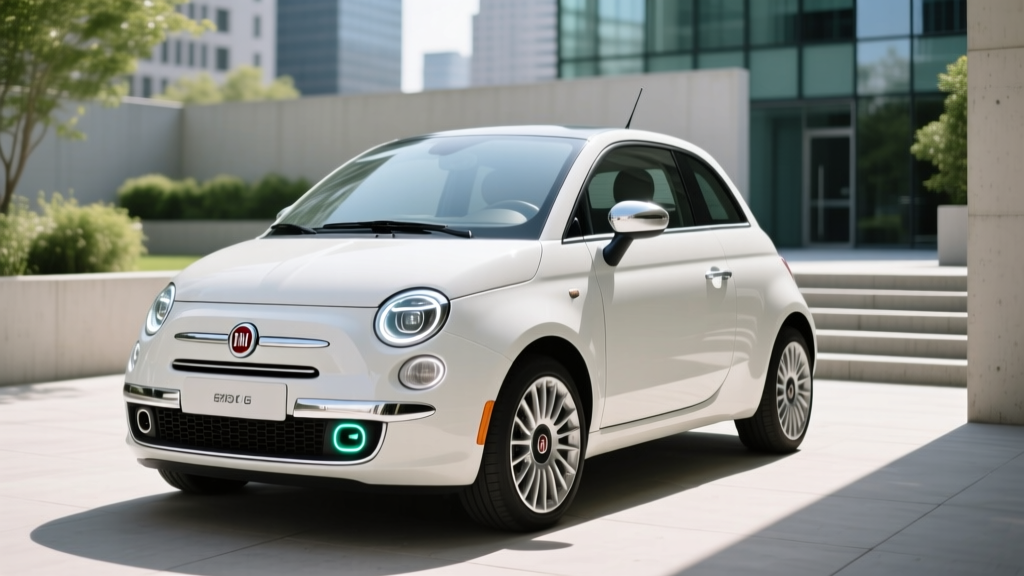
The 2015 Fiat 500e is a compliance-era electric city car with an EPA-estimated 87 miles of range from its 24 kWh lithium-ion battery. On the used market in 2026, examples typically sell for $6,000–$9,500 depending on mileage and battery health. It works as a budget-friendly second car for short urban commutes where home charging is available. It does not support DC fast charging, and real-world highway or cold-weather range drops to 55–70 miles. If your daily round-trip is under 50 miles and you can charge at home overnight, the 500e remains one of the cheapest ways into EV ownership. If you need highway capability, road-trip range, or rely on public charging, look elsewhere.
Range, Battery, and Efficiency: What the Numbers Actually Mean
The 2015 Fiat 500e was built during Fiat Chrysler's "compliance car" era — a vehicle engineered primarily to satisfy California's zero-emission vehicle (ZEV) credit requirements rather than to compete as a mainstream EV. That context matters when evaluating its specs.
| Specification | Value |
|---|---|
| EPA Range | 87 miles |
| Battery Capacity (total / usable) | 24 kWh / ~21 kWh usable |
| Battery Chemistry | NMC (Nickel Manganese Cobalt) |
| Battery Warranty (original) | 8 years / 100,000 miles (California: 10 yr / 150,000 mi) |
| Motor Output | 83 kW (111 hp) / 147 lb-ft torque |
| 0–60 mph | ~9.1 seconds |
| EPA Efficiency | 116 MPGe combined (112 city / 108 hwy) |
| Energy Consumption | 29 kWh/100 mi |
| Top Speed | 85 mph (electronically limited) |
| DC Fast Charging | Not supported |
| Level 2 Charge Rate (onboard charger) | 6.6 kW |
| Charge Port | J1772 (Level 1 & Level 2 only) |
| Cargo Volume | 7.0 cu ft (rear seats up) |
| Curb Weight | 2,980 lbs |
The 24 kWh pack was competitive in 2013–2015 (the contemporary Nissan Leaf offered a similar 24 kWh), but it is severely limited by 2026 standards. For context, the current base Nissan Leaf S provides 149 miles from a 40 kWh pack, and a Chevrolet Equinox EV starts above 300 miles.
Real-World Range Expectations
EPA Sticker: 87 miles
Real-world city driving (moderate temps): 75–85 miles
Highway driving (65–70 mph): 55–65 miles
Cold weather (below 32°F, with cabin heat): 50–60 miles
The 500e's small battery means any range loss hits hard. A 30% cold-weather reduction — typical for NMC chemistry without a heat pump — shaves 87 miles down to roughly 60. Plan your trips around the worst-case scenario, not the EPA sticker.
Charging: The Critical Limitation Every Buyer Must Know
Here is the single most important fact about owning a 2015 Fiat 500e: it cannot DC fast charge. There is no CCS, no CHAdeMO, no NACS port. The car accepts only AC charging through a J1772 port, capped at the vehicle's 6.6 kW onboard charger.
| Charging Level | Power (kW) | Miles Added per Hour | Full Charge Time (0–100%) |
|---|---|---|---|
| Level 1 (120V household outlet) | ~1.2 kW | ~4–5 mi/hr | ~18–22 hours |
| Level 2 (240V, 30A circuit) | 6.6 kW (onboard max) | ~22–25 mi/hr | ~3.5–4 hours |
| DC Fast Charge | N/A — not supported | N/A | N/A |
For daily use, a Level 2 home charger is essentially mandatory. Plugging into a standard 120V outlet overnight adds roughly 40–50 miles in 10 hours — enough for many commutes, but barely. If you drain the battery on a longer day, Level 1 won't recover a full charge by morning.
Level 2 installation costs vary. According to the U.S. Department of Energy, a typical 240V home charging station installation runs $500–$2,000 depending on panel proximity and local electrical code requirements. If your home's electrical panel is near the garage and has spare 240V capacity, expect the lower end. A panel upgrade can push costs to $3,000+.
Without DC fast charging, road trips in the 500e are impractical. You cannot pull into an Electrify America or Tesla Supercharger station and add 100 miles in 20 minutes. This car lives in the city and the suburbs.
Cost of Ownership: 2015 Fiat 500e vs. a Comparable Gas Car
The financial case for a used 500e hinges on low purchase price, cheap electricity, and minimal maintenance. Let's compare it against a realistic alternative: a 2015 Fiat 500 gasoline model (the non-electric version) or a similar used subcompact like a 2015 Honda Fit.
| Category | 2015 Fiat 500e (EV) | 2015 Fiat 500 Gas (1.4L, 34 MPG combined) |
|---|---|---|
| Used Purchase Price (2026 market) | $6,000–$9,500 | $5,500–$8,000 |
| Fuel/Energy Cost per Year (12,000 mi) | ~$420 (at $0.14/kWh) | ~$1,235 (at $3.50/gal, 34 MPG) |
| Annual Maintenance | ~$200–$350 (tires, cabin filter, brake fluid) | ~$600–$900 (oil, filters, brakes, spark plugs) |
| Insurance (avg. annual) | ~$1,100–$1,400 | ~$1,000–$1,300 |
| Estimated Annual Total (fuel + maintenance) | ~$620–$770 | ~$1,835–$2,135 |
Annual fuel and maintenance savings: roughly $1,100–$1,400. Over five years of ownership, that's $5,500–$7,000 in operating savings. The 500e typically costs slightly more upfront on the used market, but the payback period is short — often 2–3 years.
Key maintenance advantages of the 500e: no engine oil, no transmission fluid, no spark plugs, no timing belt, and regenerative braking dramatically extends brake pad life. The main wear items are tires (EVs tend to wear tires faster due to instant torque and heavier curb weight), cabin air filter, and brake fluid flushes every 2–3 years.
What About the Federal Tax Credit?
The IRS §30D federal tax credit of up to $7,500 applies only to new clean vehicles meeting strict battery-sourcing, MSRP, and buyer-income requirements. The 2015 Fiat 500e does not qualify for the new-vehicle credit.
However, the Used Clean Vehicle Credit (also under §25E) offers up to $4,000 or 30% of the sale price (whichever is less) for eligible used EVs purchased from a licensed dealer. To qualify:
- Sale price must be $25,000 or less (the 500e easily clears this)
- Buyer's adjusted gross income must not exceed $75,000 (single), $112,500 (head of household), or $150,000 (joint)
- The vehicle must be at least two model years old (the 2015 model qualifies)
- The vehicle must be purchased from a licensed dealer (private-party sales do not qualify)
- The credit can only be claimed once per vehicle VIN
On a $7,500 used 500e, the credit would be 30% × $7,500 = $2,250. That's a meaningful discount, bringing effective purchase cost down to roughly $5,250. Always confirm eligibility with a tax professional and verify the VIN hasn't already had the credit claimed.
Battery Degradation: What to Expect From a 10-Year-Old Pack
Battery health is the single biggest risk when buying any used EV, and the 500e is no exception. The 24 kWh NMC pack has been subject to roughly a decade of charge cycles, calendar aging, and thermal exposure.
Based on owner reports and industry data from sources like fueleconomy.gov, typical degradation for a 2013–2015 era NMC pack at 10 years is 10–20%, depending on climate and charging habits. A 500e that started at 87 EPA miles may now deliver 70–78 miles when new-to-you, potentially less if it spent years in a hot climate (Arizona, Texas) or was frequently charged to 100% on Level 1 in extreme heat.
How to Check Battery Health Before Buying
- OBD-II scan with Leaf Spy–compatible tool: While the 500e doesn't support Leaf Spy directly, an OBD-II reader with Fiat/Chrysler EV protocol access can report State of Health (SoH) percentage. Some independent EV shops offer this as a pre-purchase service.
- Dashboard range estimate: Fully charge the car and note the predicted range. If it reads significantly below 80 miles, the pack has degraded materially.
- Original warranty check: The battery warranty was 8 years/100,000 miles (10 years/150,000 miles in California and other CARB states). A 2015 model's standard warranty expired in 2023; in CARB states, it may extend through 2025. If you're buying in early 2026, the battery is likely out of warranty everywhere.
- Replacement cost: A refurbished or used 500e battery pack replacement runs approximately $5,000–$8,000 including labor at independent EV shops. This can easily exceed the car's value, making a degraded pack a potential total-loss scenario.
Driving Experience and Daily Usability
The 500e is genuinely fun around town. The 111-hp electric motor delivers 147 lb-ft of torque instantly from zero RPM, making it feel considerably quicker than the gas 500e's 101-hp 1.4L engine. The low center of gravity (battery pack under the floor) reduces body roll, and the car darts through urban traffic with a go-kart character that owners consistently praise.
However, practicality is limited:
- Cargo space: 7.0 cubic feet with rear seats up — enough for groceries, not furniture. The battery packaging eliminated the gas 500's already-tight trunk.
- Rear seats: Technically present, realistically usable only for small children or packages.
- Highway comfort: The short wheelbase and firm suspension make highway driving noisy and choppy. The 85-mph speed limiter means you won't be passing anyone on the interstate.
- Regenerative braking: The 500e offers moderate regen but not true one-pedal driving. You'll still use the friction brake pedal regularly, unlike modern EVs with stronger regen systems.
- Preconditioning: The 500e does not support remote battery preconditioning. In cold weather, you'll lose range to cabin heating and battery warm-up with no way to mitigate it while plugged in beyond using the basic scheduled charging/delayed departure features.
Common Misconceptions About the 2015 Fiat 500e
| Myth | Fact |
|---|---|
| "It can use Tesla Superchargers with an adapter." | False. The 500e has no DC fast-charge capability at all. Even a NACS-to-J1772 adapter only works for AC Level 2 charging at Tesla Destination Chargers, not Superchargers. |
| "The battery will need replacing soon and cost $15,000." | Replacement is expensive ($5,000–$8,000), but most 500e packs are lasting 10+ years with moderate degradation. Catastrophic failure is uncommon. The risk is real but not a certainty. |
| "It qualifies for the $7,500 federal EV tax credit." | Not the new-vehicle credit. It may qualify for the used EV credit of up to $4,000 (30% of sale price) under §25E, subject to income and dealer-sale requirements. |
| "87 miles of range is enough for anyone's commute." | It's enough for many urban commutes under 40 miles round-trip, but highway driving, cold weather, and battery degradation all reduce that number significantly. Always plan around worst-case range. |
| "It's basically a converted gas car." | Partly true. Fiat engineered the 500e on a modified 500 platform, but the electric powertrain, battery placement, and chassis tuning were purpose-developed with Bosch supplying the motor and power electronics. It drives better than a simple conversion. |
Decision Framework: Should You Buy the 2015 Fiat 500e?
Buy the 2015 Fiat 500e IF:
- Your daily driving is under 50 miles round-trip, mostly on surface streets
- You have access to Level 2 home charging (or can install it)
- You want the cheapest possible entry into EV ownership (under $10K purchase + used EV credit)
- You already have another vehicle for road trips and longer drives
- You live in a mild climate where cold-weather range loss is minimal
- You value low operating costs and minimal maintenance over range and tech
Skip the 2015 Fiat 500e IF:
- You need more than 70 miles of reliable daily range (highway, cold weather, or degradation may leave you short)
- You cannot install or access Level 2 charging at home or work
- You plan to drive on highways regularly (85 mph limiter, short wheelbase, rapid range loss at speed)
- You live in a cold climate where winter range drops below 55 miles
- This would be your only vehicle
- You want modern EV features like over-the-air updates, DC fast charging, advanced ADAS, or app-based preconditioning
Alternatives to Consider
If the 500e's limitations are dealbreakers, these used EVs from the same era offer more range or capability at slightly higher prices:
- 2015–2017 Nissan Leaf (24–30 kWh): Similar range (84–107 mi EPA), but with CHAdeMO DC fast charging. Slightly more practical hatchback cargo space.
- 2016–2018 Chevrolet Bolt EV (used, post-recall): 238 miles EPA, 60 kWh pack, CCS DC fast charging. Significantly more capable, but used prices typically $12,000–$18,000.
- 2015–2017 Volkswagen e-Golf: 83–125 miles EPA depending on model year, CCS DC fast charging available on some trims, more refined driving dynamics.
Frequently Asked Questions
Is the 2015 Fiat 500e still a good buy in 2026?
It can be — as a budget second car for short urban commutes with home charging. At $6,000–$9,500 on the used market, it's one of the cheapest EVs available. But its 87-mile EPA range (less in real-world conditions), lack of DC fast charging, and aging battery make it unsuitable as a primary vehicle or for anyone with a longer commute.
How much does it cost to charge a Fiat 500e at home?
A full charge from empty to 100% uses roughly 21–24 kWh of electricity. At the U.S. average residential rate of ~$0.14/kWh, that's approximately $3.00–$3.40 per full charge. Driving 12,000 miles per year at 29 kWh/100 mi costs roughly $420–$500 annually in electricity — about one-third the fuel cost of the gas Fiat 500.
Can I road-trip in the 2015 Fiat 500e?
Realistically, no. Without DC fast charging, you're limited to Level 2 AC charging at 6.6 kW, which takes about 3.5–4 hours for a full charge. That means adding roughly 25 miles of range per hour of charging. Road trips would require multi-hour stops and meticulous planning around Level 2 locations.
What happens if the battery fails?
The original 8-year/100,000-mile battery warranty has expired for all 2015 models (except possibly in CARB states with 10-year coverage, ending in 2025). A replacement battery costs $5,000–$8,000 at independent shops. Because this can exceed the car's total value, a pre-purchase battery health check is strongly recommended. Some owners have sourced used packs from salvage yards for $2,000–$4,000, but this carries risk.
Does the Fiat 500e qualify for any tax credits in 2026?
Not the new-vehicle §30D credit. It may qualify for the Used Clean Vehicle Credit (§25E) of up to $4,000 or 30% of the sale price when purchased from a licensed dealer, subject to buyer income limits ($75K single / $150K joint). On a $7,500 purchase, the credit would be approximately $2,250. Confirm eligibility with a tax professional and check that the VIN hasn't previously been claimed.
How does the 500e compare to the gas Fiat 500?
The 500e is quicker off the line (111 hp and instant torque vs. 101 hp with a laggy 1.4L engine), far cheaper to fuel ($420/yr vs. ~$1,235/yr), and requires less maintenance. The trade-offs are significantly less range (87 mi vs. ~300+ mi on a tank), no fast refueling, less cargo space, and a higher used purchase price. If your driving fits within the 500e's range envelope, the electric version is the better financial choice.