The Bottom Line on the 2015 Chevy Spark EV
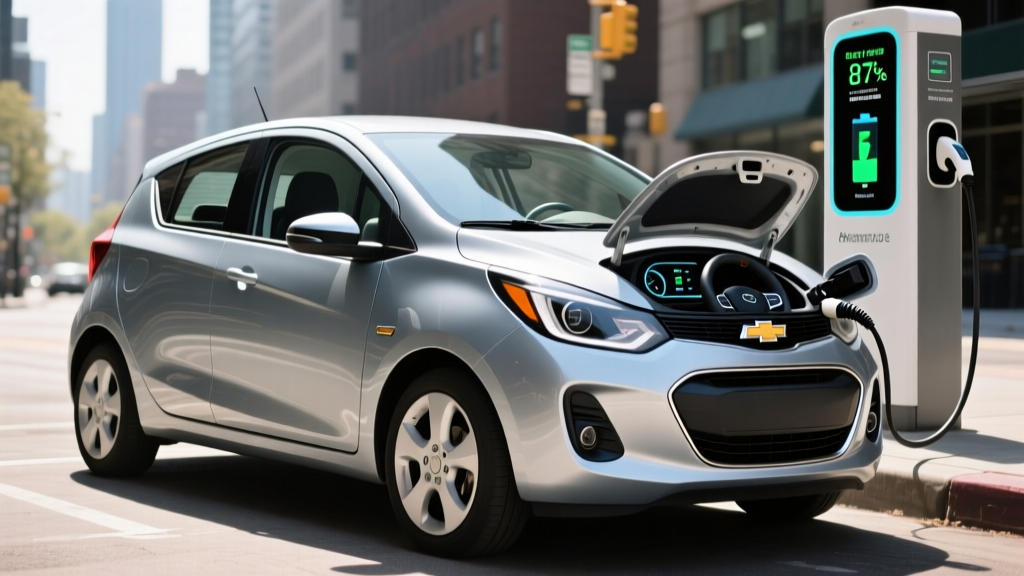
The 2015 Chevrolet Spark EV is a discontinued, used-market-only subcompact electric hatchback with an EPA-rated 82 miles of range from its 19 kWh lithium-ion battery. In 2026, expect to pay between $4,500 and $8,000 depending on mileage and battery state of health. It works as a low-cost city commuter if you can charge at home and your daily round trip stays under 50 miles. It is not viable as a sole household vehicle for anyone with highway commutes, frequent cold-weather driving, or no home charging access. The 2015 model year received a battery upgrade over the 2014 (19 kWh vs. 21.3 kWh gross but with better usable capacity and LG Chem cells), making it the preferred early Spark EV to target on the used market.
Range and Battery: What 82 EPA Miles Actually Means in 2026
The EPA rated the 2015 Spark EV at 82 miles of combined range, with an efficiency of 119 MPGe (28 kWh/100 mi). That sticker number was achievable in mild weather with mixed city-highway driving when the car was new. In 2026, with most examples carrying 60,000–110,000 miles, real-world range depends heavily on battery degradation.
2015 Spark EV: EPA vs. Real-World Range
| Condition | Estimated Range |
|---|---|
| EPA sticker (new) | 82 miles |
| Real-world, mild weather, city (new battery) | 70–80 miles |
| Highway at 70 mph (new battery) | 55–65 miles |
| Cold weather, 20°F, with heater (new battery) | 45–55 miles |
| 2026 typical, ~85% battery SoH, city | 55–70 miles |
| 2026 typical, ~85% SoH, cold highway | 35–45 miles |
The 2015 Spark EV uses an LG Chem lithium-ion pack rated at 19 kWh total capacity (approximately 17 kWh usable thanks to a buffer that protects against deep discharge). Unlike modern EVs with active liquid thermal management systems spanning the full pack, the Spark EV relies on a simpler cooling approach. Over 10+ years and thousands of charge cycles, expect 10–20% capacity loss depending on climate history. Cars that spent their lives in Arizona or Texas heat will typically show more degradation than those from the Pacific Northwest.
What to check before buying: Use the car's driver information center to view the estimated range at full charge. A healthy 2015 Spark EV should show 70–82 miles at 100% state of charge. If it reads below 60 miles fully charged, the battery has degraded significantly, and you should negotiate the price down or walk away.
Charging Speeds: DC Fast Charge and Level 2 Reality
The Spark EV was one of the few affordable EVs of its era to offer optional SAE Combo (CCS1) DC fast charging. This is a critical differentiator because the competing Nissan Leaf of the same vintage used CHAdeMO, a connector now largely abandoned by the North American market in favor of CCS and NACS.
| Level | Power (kW) | Connector | Time / Rate |
|---|---|---|---|
| Level 1 (120V household) | ~1.2 kW | J1772 | ~14–17 hours for full charge; ~4 mi/hr |
| Level 2 (240V, 3.3 kW onboard) | 3.3 kW | J1772 | ~6–7 hours for full charge; ~13 mi/hr |
| DC Fast Charge (optional) | ~50 kW peak | CCS1 | 0–80% in ~30 min; ~20 mi in 10 min |
Two important caveats. First, the onboard AC charger is only 3.3 kW, meaning even if you plug into a 7.2 kW or 11.5 kW Level 2 public station, the car can only accept 3.3 kW. A full Level 2 charge takes about 6–7 hours. Second, the DC fast charge option was not standard on every 2015 Spark EV. Many base-trim examples were sold without it. Verify the presence of the CCS port below the standard J1772 port on the driver-side front fender before purchasing. Without DC fast charging, this car is strictly a home-charge-and-commute vehicle.
The DC fast charging curve on the Spark EV peaks around 50 kW but tapers significantly above 80% state of charge. Plan for 30 minutes to reach 80% and an additional 20–30 minutes for the final 20%. On a road trip — which we don't recommend in this car — that taper makes longer journeys painfully slow.
Performance and Driving Experience
The 2015 Spark EV produces 143 horsepower and an impressive 414 lb-ft of torque from its permanent-magnet electric motor. That torque figure sounds absurd for a 2,967-pound subcompact, and it is — the Spark EV hits 0–60 mph in approximately 7.2 seconds, which genuinely surprised first-time drivers accustomed to the 98-hp gasoline Spark.
| Spec | 2015 Spark EV | 2015 Spark (Gas, 1.2L) |
|---|---|---|
| Horsepower | 143 hp | 84 hp |
| Torque | 414 lb-ft | 83 lb-ft |
| 0–60 mph | ~7.2 sec | ~11.5 sec |
| EPA Efficiency | 119 MPGe (28 kWh/100mi) | 34 MPG combined |
| EPA Range | 82 miles | ~296 miles (8.7-gal tank) |
| Cargo Volume | 9.6 cu ft (23.5 with seats folded) | 11.4 cu ft (31.2 with seats folded) |
| Curb Weight | 2,967 lbs | 2,269 lbs |
Handling is nimble around town, and the low center of gravity from the under-floor battery gives it better cornering composure than the gas Spark. The regenerative braking is aggressive enough for one-pedal-style driving in city traffic, though it doesn't bring the car to a complete hold without touching the brake pedal.
Where the Spark EV falls short: highway stability at speeds above 70 mph feels unsettled due to the short wheelbase, cabin noise is significant, and the battery weight eats into cargo space (9.6 cu ft behind the rear seats vs. 11.4 in the gas model).
Cost Breakdown: Buying, Charging, and Owning a Used Spark EV
The 2015 Spark EV was discontinued after the 2016 model year, so you're shopping the used market exclusively. The federal §30D new clean vehicle credit does not apply, but the used clean vehicle credit (up to $4,000 or 30% of sale price, whichever is lower) may be available through a licensed dealer, subject to income caps and the requirement that the vehicle's MSRP when new was under $25,000 — which the Spark EV's original ~$27,000 MSRP before incentives may not satisfy. Consult IRS Publication and a tax professional for your specific eligibility.
| Category | Spark EV (Used) | Spark Gasoline (Used) |
|---|---|---|
| Purchase price (2026 market) | $4,500–$8,000 | $5,000–$9,000 |
| Fuel / electricity (10,000 mi/yr) | $280–$400 (home charging) | $1,000–$1,200 (gas at $3.20/gal) |
| Maintenance (annual avg) | $150–$300 | $500–$800 |
| Insurance (annual avg) | $900–$1,300 | $800–$1,100 |
| Battery replacement risk | $5,000–$8,000 if needed (rare) | N/A |
| Estimated annual total (excl. purchase) | $1,330–$2,000 | $2,300–$3,100 |
The Spark EV's electricity cost assumes home Level 1 or Level 2 charging at a national average of $0.14/kWh. At 28 kWh per 100 miles, 10,000 miles costs roughly $392 per year. If you rely entirely on public DC fast charging at $0.40/kWh, that jumps to about $1,120 — which erases most of the fuel-cost advantage. Home charging access is essential to making the economics work.
Maintenance is minimal: no oil changes, no spark plugs, no transmission fluid. Budget for cabin air filter replacement, brake fluid flushes (regenerative braking saves pad life significantly), tire rotation, and eventual 12V battery replacement. The gasoline Spark requires regular oil changes, air filters, and more frequent brake service.
Common Misconceptions About the Spark EV
| Myth | Fact |
|---|---|
| "The battery will need replacing soon and cost $15,000." | GM's LG Chem pack in the Spark EV has shown relatively slow degradation. Most 2015 examples retain 80–90% capacity after 10 years. Full replacement, if ever needed, runs $5,000–$8,000 through independent EV shops — not $15,000. |
| "82 miles of range is useless." | The average American one-way commute is under 17 miles (FHWA NHTS data). For a dedicated city commuter with home charging, 55–70 real-world miles covers most daily needs with margin. |
| "I can use it as my only car." | You can, if your lifestyle genuinely fits within ~50 daily miles and you never need to drive in extreme cold or take road trips. For most households, it works best as a second car paired with a gas or hybrid vehicle for longer trips. |
| "The federal tax credit applies to this used car." | The $7,500 new-vehicle §30D credit does not apply. The used-vehicle credit (up to $4,000) has strict eligibility requirements including MSRP caps and income limits. Verify with IRS rules and a tax professional. |
| "Any mechanic can service it." | High-voltage system diagnostics and battery work require an EV-qualified technician. Routine maintenance (tires, wipers, brakes) can be done anywhere, but electrical faults need a Chevy dealer or EV specialist. |
Decision Framework: Is the 2015 Spark EV Right for You?
Buy the 2015 Spark EV if:
- Your daily round-trip commute is under 50 miles, mostly city/suburban driving
- You have reliable access to Level 1 or Level 2 home charging (a standard 120V outlet works overnight)
- You want the cheapest possible entry into EV ownership (under $8,000 total)
- You already own or have access to a gas/hybrid vehicle for longer trips
- You live in a mild climate (rarely below 30°F in winter)
- The specific car you're inspecting has the optional CCS DC fast-charge port
Skip the 2015 Spark EV and consider alternatives if:
- Your daily commute exceeds 60 miles round trip or includes sustained highway driving above 65 mph
- You live in a region with harsh winters (Minnesota, Montana, upstate New York) where cold range loss could drop usable range below 40 miles
- You have no access to home or workplace charging and would rely solely on public infrastructure
- This would be your only vehicle and you regularly take trips over 100 miles
- You need cargo space for more than groceries — the 9.6 cu ft trunk is very small
- The example you're considering lacks the CCS fast-charge port and you ever need mid-day top-ups
Stronger alternatives in the $6,000–$12,000 used range: A 2017–2018 Nissan Leaf (30 kWh, 107 mi EPA) offers more range but uses the now-deprecated CHAdeMO connector. A 2017 Chevy Bolt EV (60 kWh, 238 mi EPA) is a dramatically more capable car but typically costs $10,000–$15,000 used. A 2016–2018 BMW i3 (60 Ah, 81 mi EPA) has similar range but a more premium interior and available range-extender option.
Frequently Asked Questions
What is the battery warranty status on a 2015 Spark EV in 2026?
GM's original high-voltage battery warranty was 8 years/100,000 miles. For a 2015 model, that warranty expired no later than 2023 by time, or earlier if the car exceeded 100,000 miles. You are purchasing this car with no remaining factory battery coverage. Some states with California Air Resources Board (CARB) emissions warranty extensions may offer slightly longer coverage, but this is unlikely to apply in 2026 for a 2015 model year.
Can I charge a 2015 Spark EV at a Tesla Supercharger?
No. The Spark EV uses either a J1772 (Level 2) or CCS1 (DC fast charge) connector. Tesla Superchargers use the NACS connector, and there is no adapter available that converts NACS to the Spark EV's CCS1 port for DC fast charging. You can use a Tesla-to-J1772 adapter for Level 2 destination charging at some locations, but not Superchargers. The broader CCS1 public charging network (Electrify America, EVgo, ChargePoint) is accessible directly.
How do I check the battery state of health before buying?
The Spark EV does not display a battery health percentage on the dash like some modern EVs. Your best indicators are: (1) the estimated range shown at full charge — anything above 70 miles suggests healthy cells; (2) an OBD-II scan tool with EV-capable software can read cell voltage variance and pack capacity estimates; (3) a pre-purchase inspection at a Chevy dealer can pull the battery diagnostic report. Budget $100–$150 for this inspection — it's worth it.
Does the 2015 Spark EV have a heat pump?
No. The Spark EV uses a conventional resistive electric heater for cabin warmth. Resistive heating draws significant power from the traction battery — expect 20–35% range loss in sustained cold-weather driving with the heater on. Modern EVs like the Hyundai Ioniq 5 and Tesla Model Y use heat pumps that consume roughly half the energy for the same cabin heat. This is a key reason the Spark EV's winter range drops so sharply.
Is the 2015 Spark EV safe?
The Spark EV earned a 4-star overall rating from NHTSA, with 4 stars in frontal crash and 3 stars in side crash. It includes standard stability control, anti-lock brakes, and 10 airbags. It was not tested by IIHS. By 2026 standards, it lacks modern ADAS features — no automatic emergency braking, no lane-keeping assist, no adaptive cruise control. It is a basic, driver-focused vehicle.
What maintenance does a used Spark EV need?
Minimal compared to a gasoline car. Plan for: tire rotation every 7,500 miles; cabin air filter replacement annually; brake fluid flush every 2–3 years (brake pads last well beyond 80,000 miles thanks to regenerative braking); windshield washer fluid; and a 12V auxiliary battery replacement every 4–5 years. There is no engine oil, transmission fluid, timing belt, or exhaust system to maintain.