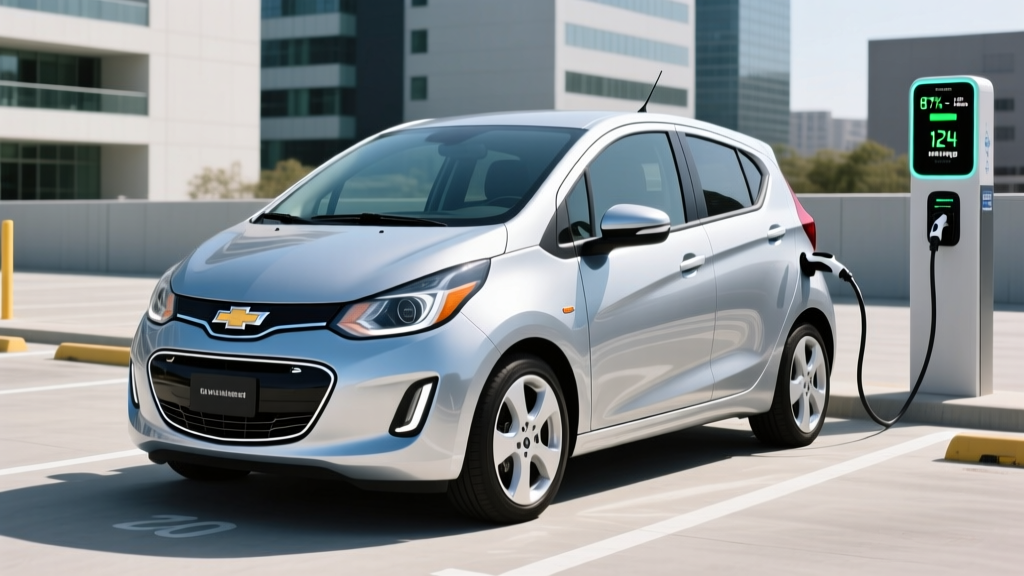
If you're searching for a 2015 Chevy Spark Electric in 2026, you're likely looking at one of the most affordable entry points into EV ownership on the used market. With prices typically ranging from $5,000 to $8,500 depending on mileage and battery condition, this compliance-era EV can serve as a capable city commuter — but only if your driving pattern fits its 82-mile EPA range and you have reliable home charging access.
Quick Verdict
The 2015 Chevy Spark EV is a viable used EV for single-car households with short commutes or two-car households needing a city runabout. Expect 65–75 miles of real-world range in mixed driving, dropping to 50–55 miles in cold weather. You must have Level 2 home charging to make it practical. Skip it if you need highway road-trip capability or live in an apartment without charging access.
Range, Battery, and What to Expect in 2026
The 2015 Spark EV came equipped with a 19 kWh lithium-ion battery pack (NMC chemistry, supplied by LG Chem), delivering an EPA-rated range of 82 miles and an efficiency rating of 119 MPGe combined (fueleconomy.gov). That was competitive for a compliance car in 2015. In 2026, after roughly a decade of battery aging, the picture changes.
EPA Range (New): 82 miles
Expected 2026 Range (10-year-old battery): 60–75 miles depending on battery State of Health (SoH)
Cold Weather (below 32°F): 45–55 miles — resistive cabin heating draws heavily from a small pack
Highway (70 mph sustained): 55–65 miles — the Spark EV's aerodynamics and short gearing hurt efficiency at speed
Lithium-ion degradation for NMC chemistry typically runs 1.5–2.5% per year in moderate climates, but a 2015 pack in 2026 has likely lost 15–25% of its original capacity depending on thermal history. A Spark EV that spent its life in Phoenix will have degraded more than one from Portland. Before purchasing, request a battery health diagnostic from a Chevy dealer or use an OBD-II reader with EV-compatible software to check remaining kWh capacity.
| Spec | Value |
|---|---|
| Battery Capacity (original) | 19 kWh (NMC, LG Chem) |
| EPA Range (new) | 82 miles |
| Expected 2026 Range | 60–75 miles |
| Motor Output | 104 kW (140 hp) / 327 lb-ft torque |
| 0–60 mph | |
| EPA Efficiency | 119 MPGe combined (28 kWh/100 mi) |
| DC Fast Charge (CCS Combo) | Up to 50 kW peak (SAE Combo standard on 2015 model) |
| Level 2 Charge Rate | 3.3 kW onboard charger |
| Level 2 Charge Time (0–100%) | ~6–7 hours |
| DC Fast Charge (10–80%) | ~20–30 minutes at 50 kW |
| Cargo Volume | 9.6 cu ft (rear seats up) |
| Battery Warranty (original) | 8 years / 100,000 miles (expired or expiring in 2023–2025) |
Charging the Spark EV: What You Need to Know
The 2015 model year was significant because Chevy added SAE Combo (CCS1) DC fast-charging capability as an option on the Spark EV. If you're buying used, confirm whether the specific car has the CCS port — some 2014 models and base 2015 trims shipped with CHAdeMO or no DC fast-charge at all. This matters enormously in 2026, as the CCS network (Electrify America, EVgo) is far more widespread than CHAdeMO.
| Level | Power | Miles Added per Hour | Notes |
|---|---|---|---|
| Level 1 (120V household) | ~1.2 kW | ~4–5 miles/hr | Full charge in ~16–18 hours; impractical as primary method |
| Level 2 (240V home) | 3.3 kW (onboard limit) | ~12–14 miles/hr | Full charge in ~6–7 hours; recommended daily method |
| DC Fast (CCS1) | Up to 50 kW peak | ~150–180 miles/hr (at peak) | 10–80% in ~20–30 min; tapers significantly above 80% |
The 3.3 kW onboard charger is a real limitation. Even if you install a 48-amp Level 2 home charger ($500–$800 for equipment, plus $400–$1,500 for electrician installation), the Spark EV can only accept 3.3 kW. That means overnight charging is mandatory — you cannot top up quickly at a public Level 2 station during a lunch break the way a newer EV with an 11.5 kW charger can.
On DC fast charging, the 50 kW peak rate was respectable in 2015 but is slow by 2026 standards. Modern EVs like the Hyundai Ioniq 5 accept 240+ kW. The Spark EV's charge curve also tapers hard above 80% State of Charge (SoC), so the last 20% can take as long as the first 80%. Plan DC fast-charging stops accordingly.
Real Costs: Buying, Charging, and Maintaining a Used Spark EV
The financial case for a 2015 Spark EV hinges on its ultra-low purchase price and minimal operating costs. Here's a realistic breakdown for 2026 ownership:
| Cost Category | 2015 Spark EV | 2015 Spark Gas (1.2L) |
|---|---|---|
| Purchase Price (typical) | $5,000–$8,500 | $6,000–$9,500 |
| Fuel/Energy (12,000 mi/yr) | $360–$540 (home charging at $0.13–$0.18/kWh) | $1,200–$1,500 (gas at $3.20/gal, 30 MPG combined) |
| Maintenance (annual avg) | $200–$400 (no oil, fewer brake jobs due to regen) | $600–$900 (oil changes, filters, brake pads) |
| Insurance (annual avg) | $900–$1,300 | $800–$1,200 |
| Battery Replacement Risk | $4,000–$7,000 if needed (out of warranty) | N/A |
| Federal Tax Credit | Up to $4,000 (used EV credit, income-dependent) | None |
| Year 1 Total (incl. purchase) | $6,460–$10,740 | $8,600–$13,100 |
| Ongoing Annual Cost (Yr 2+) | $1,460–$2,240 | $2,600–$3,600 |
Key cost detail — the used EV tax credit: Under IRS §30D rules extended to used vehicles (Section 25E), you may qualify for up to $4,000 or 30% of the sale price (whichever is less) if you buy from a licensed dealer, your income falls below IRS thresholds ($75,000 single / $150,000 joint for used EVs), and the vehicle sale price is under $25,000 (irs.gov). The Spark EV easily clears the price cap. Private-party sales do not qualify. Confirm current-year rules with a tax professional before relying on this credit.
How the Spark EV Compares to Gas and Hybrid Alternatives
The 2015 Spark EV wasn't designed to compete with today's long-range EVs. Its true rivals in the used market are other short-range compliance EVs and efficient gas/hybrid city cars. Here's how the numbers stack up:
| Vehicle | EPA Range / MPG | Typical Used Price | Annual Fuel/Energy Cost | Best For |
|---|---|---|---|---|
| 2015 Chevy Spark EV | 82 mi (new) / ~65–75 mi (2026) | $5,000–$8,500 | $360–$540 | Budget EV commuter with home charging |
| 2015 Nissan Leaf (24 kWh) | 84 mi (new) / ~60–70 mi (2026) | $5,500–$9,000 | $370–$560 | Similar use case; CHAdeMO limits DC network |
| 2015 Fiat 500e | 87 mi (new) / ~65–75 mi (2026) | $6,000–$9,500 | $350–$530 | Stylish city EV; no DC fast charge |
| 2015 Toyota Prius (HEV) | 50 MPG combined | $8,000–$12,000 | $770–$960 | No charging needed; longer trips possible |
| 2017 Chevy Bolt EV (if budget allows) | 238 mi | $11,000–$15,000 | $430–$650 | Real road-trip capability; far more versatile |
The Spark EV's advantage is purely financial: it's among the cheapest ways to get into a battery-electric vehicle. The Prius, meanwhile, eliminates range concerns entirely and is the better choice if you lack home charging or regularly drive more than 80 miles in a day. If your budget can stretch to $12,000–$15,000, a used 2017–2019 Chevy Bolt EV offers nearly triple the range and a more modern charging system — a dramatically more versatile vehicle.
Common Misconceptions About the 2015 Spark EV
| Myth | Fact |
|---|---|
| "The battery will need replacing and cost $15,000." | Replacement packs for the Spark EV typically cost $4,000–$7,000 from independent EV shops. Many packs retain 75–85% capacity at 10 years if not heat-stressed. Most owners won't need a full replacement. |
| "It qualifies for the $7,500 federal tax credit." | The $7,500 new-vehicle credit (§30D) no longer applies. The used-EV credit (Section 25E) offers up to $4,000 with income and dealer-sale requirements. The original buyer claimed the new-vehicle credit in 2015. |
| "82 miles of range is useless." | The average American drives ~37 miles per day (FHWA data). With home charging every night, 65–75 real-world miles covers most daily commutes comfortably. |
| "I can use any fast charger." | The 2015 Spark EV uses CCS1 for DC fast charging (if equipped). It cannot use Tesla Superchargers (NACS) without an adapter, and adapter compatibility with older CCS vehicles is limited. Verify the car has the CCS port before purchase. |
| "Electric cars need no maintenance." | You'll still need tire rotations, cabin air filter changes, brake fluid checks, coolant top-offs for the battery thermal system, and eventually a 12V auxiliary battery replacement. Budget $200–$400/year. |
Who Should Buy the 2015 Spark EV — And Who Shouldn't
Decision Framework
Buy the 2015 Spark EV if:
- Your daily round-trip commute is under 50 miles
- You have access to Level 2 home charging (garage or driveway with a 240V outlet)
- This is a second vehicle in a multi-car household
- You live in a mild climate (Pacific Northwest, coastal California, Southeast)
- Your budget is under $8,000 and you want the lowest operating costs possible
- You can verify battery SoH above 75% before purchase
Skip the 2015 Spark EV if:
- You regularly drive more than 70 miles in a single day
- You live in an apartment or street-park without charging access
- You experience winters below 20°F regularly (Minnesota, Montana, New England)
- You need to take highway road trips of 150+ miles
- The battery SoH reads below 70% on a diagnostic check
- This would be your only vehicle
Pre-Purchase Checklist for a Used 2015 Spark EV
Before handing over cash, run through these steps to avoid buying someone else's battery problem:
- Get a battery health report. Ask a Chevy dealer to pull the battery State of Health (SoH) percentage via GDS2 diagnostic tool. Acceptable: above 75%. Walk away: below 65%.
- Verify the CCS port. Open the charge door and look for the two extra DC pins below the standard J1772 connector. If they're absent, the car lacks DC fast charging — a major practicality hit in 2026.
- Check for open recalls. The Spark EV had a recall related to the charging system and potential battery cell issues. Search the VIN at nhtsa.gov/recalls to confirm all recall work was completed.
- Test the charging cable. The original portable Level 1 cord should be included. Inspect it for damage. Replacing it costs $200–$350.
- Drive it on the highway. Note the range drop at 65–70 mph. If the car loses more than 3 miles per actual mile driven at highway speed, the battery is in poor health.
- Check the title. Salvage or rebuilt titles on a 10-year-old EV are a hard pass — battery replacement economics don't pencil out on a $6,000 car with a branded title.
Frequently Asked Questions
Is the 2015 Chevy Spark EV a good used car buy in 2026?
It can be — specifically for budget-conscious buyers with short commutes and home charging. At $5,000–$8,500 with annual energy costs under $550, it's one of the cheapest ways to drive electric. But its 60–75 mile real-world range in 2026 (after battery aging) limits it to city and suburban use. It's not a do-everything vehicle.
How long does the battery last on a 2015 Spark EV?
NMC lithium-ion batteries in liquid-cooled packs like the Spark EV's typically retain 75–85% capacity after 10 years in moderate climates. In hot climates (Arizona, Texas), degradation may be steeper — closer to 65–75% retained. The original 8-year/100,000-mile battery warranty has expired or is expiring for most 2015 models, meaning replacement costs ($4,000–$7,000) fall entirely on the owner.
Can I charge the 2015 Spark EV at Tesla Superchargers?
No, not natively. The Spark EV uses the CCS1 standard for DC fast charging. Tesla Superchargers use NACS (North American Charging Standard). While Tesla has opened some Superchargers to non-Tesla EVs via a built-in adapter at the station or a Magic Dock, compatibility with older, lower-power CCS vehicles like the Spark EV is inconsistent. Rely on Electrify America, EVgo, and ChargePoint DC stations instead.
How much does it cost to charge the Spark EV at home?
With the 19 kWh battery and typical home electricity rates of $0.13–$0.18 per kWh, a full charge costs approximately $2.50–$3.40. Driving 12,000 miles per year at the Spark EV's efficiency of roughly 28 kWh/100 mi, expect to spend $360–$540 annually on electricity — compared to $1,200–$1,500 for gas in an equivalent Spark gasoline model.
Should I buy a used Spark EV or a used Prius instead?
If you have home charging and drive under 60 miles daily, the Spark EV saves $800–$1,000 per year in fuel and maintenance versus a Prius. If you lack home charging, drive long distances, or live in extreme cold, the Prius (50 MPG, no plug needed, no range limit) is the more practical and less risky choice. The Prius also holds resale value better.
What should a first-time EV buyer know before purchasing the Spark EV?
Three things: First, home charging is essentially mandatory — public DC fast-charging a 50 kW-limited car with an aged battery is slow and frustrating as a daily routine. Second, always check battery health before buying a used EV; the battery is the most expensive component and its condition determines the car's usable range. Third, understand that cold weather will cut your already-limited range by 25–35%, so plan accordingly in winter.