Quick Verdict: The 2015 BMW i3 a Decade Later
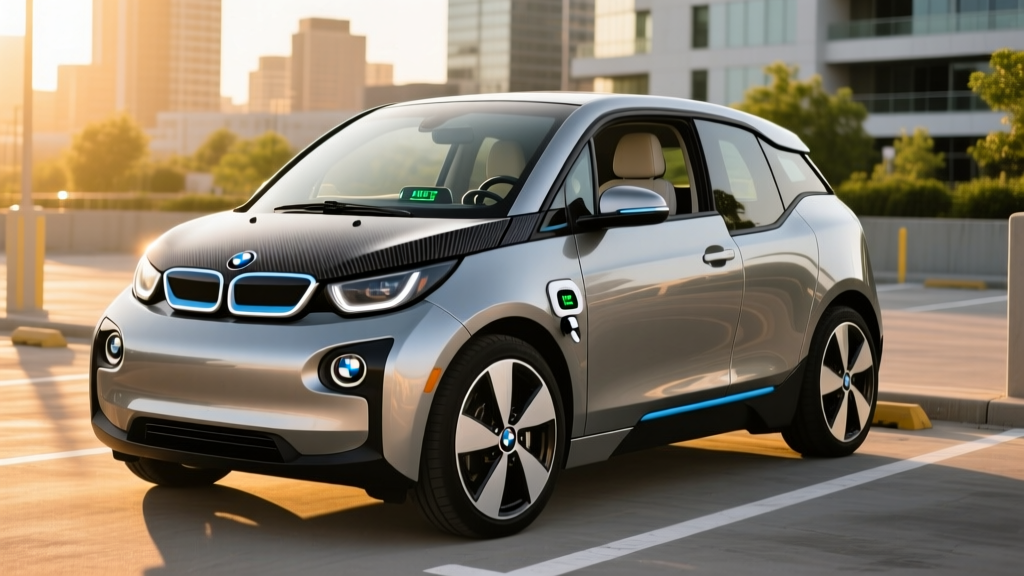
The 2015 BMW i3 was an engineering moonshot — a carbon-fiber-reinforced plastic (CFRP) passenger cell, a rear-mounted electric motor, and a radical urban design that still turns heads. But in 2026, buying one on the used market means confronting a hard truth: its original 81-mile EPA range has only gotten shorter as the 22 kWh lithium-ion battery ages. For the right buyer — a single commuter with reliable home charging, a sub-30-mile round trip, and a taste for quirky design — a well-maintained 2015 i3 at $8,000–$13,000 can still be a compelling, cheap-to-run city runabout. For everyone else, newer used EVs with 200+ miles of range are a safer bet.
EPA Estimated Range (new): 81 miles (BEV model); 72 miles electric + 80 miles gasoline (REx range-extender model)
Real-World Range in 2026 (with battery degradation): Expect 55–70 miles on a full charge for a typical 10-year-old pack at ~75% state of health. Highway driving at 70 mph drops this to 45–55 miles. In cold weather (below 32°F), plan on 35–50 miles due to cabin heating demand and reduced battery chemistry efficiency. The REx model extends total range to ~150 miles but carries gasoline maintenance overhead.
Core Specifications at a Glance
| Spec | 2015 BMW i3 BEV | 2015 BMW i3 REx |
|---|---|---|
| EPA Range (new) | 81 miles | 72 mi electric + ~80 mi gas |
| Battery (gross / usable) | 22 kWh / 18.8 kWh | 22 kWh / 18.8 kWh |
| Battery Chemistry | NMC (Samsung SDI cells) | NMC (Samsung SDI cells) |
| Motor Output | 170 hp / 184 lb-ft | 170 hp / 184 lb-ft |
| Drivetrain | Rear-wheel drive | Rear-wheel drive |
| 0–60 mph | 7.0 seconds | 7.7 seconds |
| EPA Efficiency | 137 MPGe (combined) | 117 MPGe (combined) |
| Energy Consumption | 27 kWh/100 mi | 31 kWh/100 mi (EV mode) |
| Max DC Fast Charge | 50 kW (CCS Combo 1) | 50 kW (CCS Combo 1) |
| Level 2 Charge Rate | 7.4 kW (onboard charger) | 7.4 kW (onboard charger) |
| Cargo Volume | 15.1 cu ft (rear seats up) | 15.1 cu ft (rear seats up) |
| Curb Weight | 2,630 lbs | 2,903 lbs |
| Original MSRP | $42,400 (Mega World) | $46,250 (Mega World) |
Source: EPA Fuel Economy
Charging Speed: DC Fast and Home Level 2
The 2015 i3 was one of the first mainstream EVs to offer optional CCS Combo 1 DC fast charging — a significant advantage over the CHAdeMO-only Nissan Leaf of the same era. However, its 50 kW peak charge rate is modest by 2026 standards, and the small 18.8 kWh usable battery means charging sessions are short but frequent.
| Charging Level | Power (kW) | 0–80% Time | Miles Added Per Hour |
|---|---|---|---|
| Level 1 (120V household) | ~1.4 kW | ~14 hours | ~5 mi/hr |
| Level 2 (240V, 32A) | 7.4 kW | ~2.5 hours | ~25 mi/hr |
| DC Fast (CCS, 50 kW peak) | 50 kW → tapers to ~20 kW above 80% | ~28 min (0–80%) | N/A |
Charging curve reality: The i3 holds close to its 50 kW peak from roughly 5% to 50% state of charge, then begins a gradual taper. Above 80% SoC, charge speed drops sharply to protect the NMC cells — expect 15–20 kW in the final stretch. A 10–80% DC fast charge takes approximately 25–28 minutes at a properly functioning 50 kW station. On Electrify America or EVgo networks with 150+ kW chargers, the i3 will still only pull 50 kW max; you won't benefit from newer ultra-fast infrastructure.
Important note: Not all 2015 i3 models were equipped with DC fast charging — it was a $750 option. When shopping used, verify the presence of the CCS port (it has two additional DC pins below the J1772 connector). Without it, you're limited to Level 2 charging, which is fine for overnight home use but impractical for any mid-trip top-up.
Battery Health and Degradation: What to Expect at 10+ Years
The 2015 i3 uses a 22 kWh gross (18.8 kWh usable) Samsung SDI NMC battery pack with 8 modules totaling 96 cells. BMW engineered a conservative buffer — roughly 3.2 kWh is locked above and below the usable window to protect longevity. Even so, NMC chemistry from this era degrades measurably over time and thermal cycles.
Typical degradation at 10 years: Based on owner-reported data from BMW i3 forums and fleet studies, a 2015 i3 battery in a moderate climate (60–80°F average) retains approximately 70–80% of its original capacity. In hot climates (Arizona, Texas), degradation can push toward 60–70%. That translates to:
- 75% SoH: ~14.1 kWh usable → approximately 58–65 real-world miles
- 85% SoH: ~16.0 kWh usable → approximately 65–73 real-world miles
- 65% SoH (hot climate/high cycle): ~12.2 kWh usable → approximately 45–55 real-world miles
How to check before buying: The i3's iDrive system does not display state of health directly. Use an OBD-II dongle with the LeafSpy-equivalent app BMW i Remote or a third-party tool like Carly for BMW to read battery capacity (Ah) and compare to the original 60 Ah nominal. A reading below 48 Ah signals significant degradation. Alternatively, a BMW dealer can run a battery diagnostic for $100–$150.
Warranty status: BMW's original high-voltage battery warranty was 8 years / 100,000 miles (with a capacity retention threshold of 70%). For a 2015 model, this warranty expired in 2023 at the latest. Any battery failure is now an out-of-pocket expense. A replacement pack from BMW costs $12,000–$16,000 installed, though third-party rebuilds from shops like Electrified Automotive run $6,000–$9,000. Factor this risk into your purchase price.
Driving Experience, Tech, and Interior
The i3 drives like nothing else in BMW's lineup — and that's mostly a compliment for city use. The 170 hp electric motor delivers instant torque to the rear wheels through a single-speed transmission. The 0–60 mph time of 7.0 seconds (BEV) feels quicker than the number suggests because torque is immediate. The narrow 155/70R19 tires and ultra-light CFRP/aluminum chassis make the car feel agile and tossable in urban traffic, though they limit grip on wet roads.
One-pedal driving: The i3 was a pioneer of strong regenerative braking. Lift off the accelerator and the car decelerates briskly — enough to come to a complete stop in most city driving without touching the brake pedal. This remains one of the most intuitive regen implementations in any EV.
Interior and cargo: The cabin seats four (not five) with rear-hinged "coach doors" for back-seat access. Materials are distinctive — recycled plastics, eucalyptus wood trim, and wool-blend upholstery in higher trims. The 15.1 cu ft cargo area is modest (comparable to a Honda Fit) but features a flat load floor with the rear seatbacks folded. Rear legroom is 31.9 inches — tight for adults on longer trips.
Infotainment: The 2015 i3 uses BMW's iDrive 4.0 system with a 6.5-inch display (upgradable to 8.8 inches with the Technology + Driving Assistant package). Navigation includes an EV-specific range map that accounts for terrain and driving style. There is no Apple CarPlay or Android Auto — you'll rely on Bluetooth audio and the BMW ConnectedDrive app for remote preconditioning and charge monitoring.
Driver assists: Available adaptive cruise control and collision warning were advanced for 2015, but this is a basic SAE Level 1 system. There is no lane-keeping assist, no automatic emergency braking, and no hands-free driving capability. The Driving Assistant Plus package adds traffic jam assistant (stop-and-go ACC up to ~40 mph), which is useful but requires hands on the wheel at all times.
Pricing and Federal Tax Credit Eligibility
The 2015 BMW i3 is no longer eligible for the federal §30D new-vehicle EV tax credit, as that applies only to new purchases. However, it may qualify for the used-EV tax credit (IRC §25E), which offers up to $4,000 or 30% of the sale price (whichever is less) for qualifying pre-owned EVs purchased from a dealer.
| Scenario | Price |
|---|---|
| Original MSRP (Mega World BEV) | $42,400 |
| Original MSRP (Tera World BEV, as tested) | ~$51,000 |
| Used market range (2026, private party) | $7,500–$11,000 |
| Used market range (2026, dealer) | $9,000–$13,500 |
| Max §25E used-EV credit (30% of price, cap $4,000) | Up to $4,000 (dealer sale only) |
| Effective price after credit (dealer, $12K car) | ~$8,400 |
§25E Used-EV Credit Requirements (2026 rules, per IRS.gov):
- Sale price must be $25,000 or less (the i3 easily qualifies)
- Buyer AGI must not exceed $75,000 (single), $112,500 (head of household), or $150,000 (joint)
- Vehicle must be purchased from a licensed dealer (not private party)
- Vehicle must be at least 2 model years old (2015 qualifies)
- Buyer cannot have claimed the used-EV credit in the prior 3 years
- Credit is non-refundable (you need tax liability to benefit) — point-of-sale transfer available at participating dealers
Eligibility varies by individual tax situation. Consult a tax professional before relying on credit estimates.
Who Should Buy the 2015 BMW i3 (and Who Shouldn't)
- Your daily round-trip commute is under 35 miles
- You have reliable Level 2 home charging
- You want a unique, head-turning city car with premium materials
- You value one-pedal driving and zippy urban acceleration
- You can buy one under $10K and claim the $4K used-EV credit
- You appreciate the lightweight CFRP construction and BMW build quality
- You need more than 60 miles of real-world range
- You regularly drive highways at 70+ mph (range drops sharply)
- You live in a cold climate and lack garage charging
- You need seating for more than 4 or significant cargo space
- You want modern driver assists (AEB, lane-keeping, CarPlay)
- You can't absorb a potential $7,000–$16,000 battery replacement
- You rely on public DC fast charging (50 kW is slow by 2026 standards)
Best use case: A second car for city commuting, grocery runs, and local errands — paired with a longer-range vehicle for road trips. The i3 excels as an ultra-efficient urban runabout where its limited range is never tested.
2015 BMW i3 vs. Key Used-EV Competitors
| Metric | 2015 BMW i3 | 2015 Nissan Leaf (30 kWh) | 2017 Chevy Bolt EV | 2016 VW e-Golf |
|---|---|---|---|---|
| EPA Range (new) | 81 mi | 107 mi | 238 mi | 83 mi |
| Battery (usable) | 18.8 kWh | 28 kWh | 57 kWh | 21.2 kWh |
| DC Fast Charge | 50 kW (CCS) | 50 kW (CHAdeMO) | 55 kW (CCS) | 50 kW (CCS) |
| 0–60 mph | 7.0 sec | 10.0 sec | 6.5 sec | 9.6 sec |
| Cargo Space | 15.1 cu ft | 24.0 cu ft | 56.6 cu ft | 22.8 cu ft |
| 2026 Used Price | $7.5K–$13.5K | $6K–$10K | $12K–$17K | $8K–$12K |
Source: fueleconomy.gov
Bottom line: The 2017+ Chevy Bolt EV is the clear winner if range and cargo matter — it offers nearly 3× the range for only modestly more on the used market. The Nissan Leaf is cheaper and roomier but uses CHAdeMO (a dying standard) and has passive air-cooled batteries that degrade faster in heat. The e-Golf is the closest competitor in driving refinement but is similarly range-limited. The i3 wins on style, lightweight engineering, and one-pedal driving feel — but only if its range limitations fit your life.
Frequently Asked Questions
What is the real-world range of a 2015 BMW i3 in 2026?
With typical battery degradation to 70–80% state of health, expect 55–70 miles on a full charge in moderate weather with city driving. Highway speeds above 65 mph and cold temperatures below freezing can reduce this to 35–55 miles. The REx (range extender) model adds a 2-cylinder gasoline engine for approximately 80 additional miles of total range.
Does the 2015 BMW i3 qualify for any federal tax credit?
It does not qualify for the §30D new-vehicle credit. However, it can qualify for the §25E used clean vehicle credit — up to $4,000 or 30% of the sale price — if purchased from a dealer for $25,000 or less, and if the buyer meets IRS income limits ($75K single / $150K joint). Always verify current rules at IRS.gov and consult a tax professional.
How much does a battery replacement cost for the 2015 i3?
A new OEM battery from BMW costs approximately $12,000–$16,000 installed. Third-party rebuilt packs range from $6,000–$9,000. Given the car's current used value of $8K–$13K, a full battery replacement often exceeds the vehicle's worth — which is why buying an i3 with verified high battery health is critical.
Is the 2015 BMW i3 reliable?
The electric powertrain is generally robust, with few reported motor or inverter failures. The main reliability risk is battery degradation, which is a function of age, heat exposure, and charge cycles. The REx model adds a 647cc BMW motorcycle engine as a generator, which requires oil changes, coolant service, and occasional fuel-system maintenance — adding complexity the BEV model avoids. Build quality (interior, electronics) is solid and typical of BMW.
Can I charge the 2015 i3 on Tesla Superchargers?
Not directly. The 2015 i3 uses the CCS Combo 1 standard (or J1772 for AC). Tesla's NACS connector is not compatible without an adapter, and as of 2026, Tesla's CCS-to-NACS adapter is designed for Tesla vehicles charging at CCS stations, not the reverse. You'll use Electrify America, EVgo, ChargePoint, and other CCS networks. At home, any J1772 Level 2 charger works.
Is the 2015 i3 worth buying vs. a newer used EV?
It depends on budget and use case. At $8,000–$10,000 after the used-EV credit, it's one of the cheapest ways into a premium-brand EV with excellent city manners. But if you can stretch to $14,000–$17,000, a 2017–2019 Chevy Bolt EV gives you 238 miles of range, more cargo space, and DC fast charging — a far more versatile daily driver. The i3 is a deliberate compromise: buy it for its charm and efficiency, not its practicality.