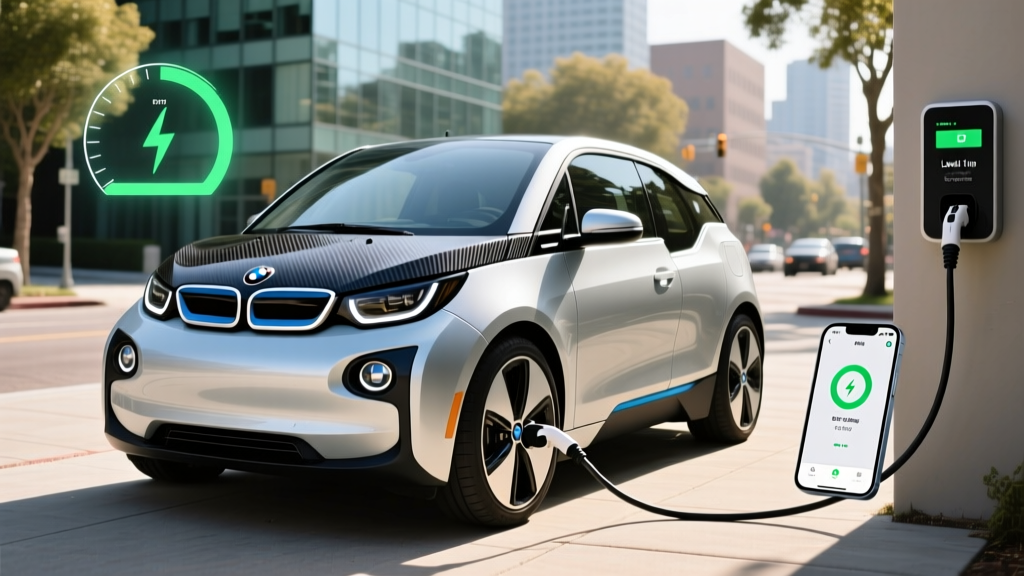
The 2015 BMW i3 RWD was one of the first mass-market electric vehicles built from the ground up on a dedicated EV platform. Its carbon-fiber-reinforced plastic (CFRP) passenger cell, aluminum chassis, and quirky coach-style rear doors made it unlike anything else on the road. More than a decade later, this compact hatchback remains a popular entry point into EV ownership on the used market, often trading between $7,000 and $12,000 depending on mileage and battery health. But with an EPA-rated range of just 81 miles, is the 2015 BMW i3 RWD still a practical daily driver in 2026? This review breaks down the real numbers.
Quick Verdict: A City Commuter With Character
The 2015 BMW i3 RWD is best understood as an urban runabout — not a road-trip machine. Its 81-mile EPA range, tight turning circle, and peppy 170-horsepower electric motor make it brilliant for stop-and-go commuting, while the upright seating position and surprising cargo volume give it practicality well beyond its footprint. The trade-offs are real: limited highway range, modest DC fast-charging speeds by modern standards, and a battery that has likely degraded 15–25% after 11 years of service. For buyers who can charge at home and whose daily driving stays under 50 miles round-trip, the i3 remains one of the most engaging and efficient used EVs available.
Range, Efficiency, and Real-World Expectations
EPA Estimated Range: 81 miles
Real-World Expectation (2026, with battery degradation): 55–70 miles typical; as low as 45 miles in cold weather or sustained highway driving at 70+ mph.
Original EPA MPGe: 124 MPGe combined (137 city / 111 highway)
Energy Consumption: 27 kWh per 100 miles
The 2015 BMW i3 RWD carries a 22 kWh total battery capacity (approximately 18.8 kWh usable), using Samsung SDI lithium-ion cells with NMC (nickel manganese cobalt) chemistry. BMW deliberately limited the usable buffer to protect long-term battery health, but even with that buffer, owners should expect meaningful degradation after a decade of use.
According to fueleconomy.gov, the original EPA combined range was 81 miles when new. In practice, most 2015 i3 owners in 2026 report State of Health (SoH) readings between 75% and 85%, meaning effective range on a full charge is closer to 60–70 miles in mild weather. Highway driving at 75 mph reduces efficiency significantly — the i3's tall, boxy shape creates substantial aerodynamic drag, and real-world highway range can drop to 50 miles or less. Cold weather (below 32°F) without preconditioning can push that figure down to 40–45 miles, since the i3 uses a resistive cabin heater that draws heavily from the traction battery.
The i3 does feature an optional Range Extender (REx) variant with a 647cc two-cylinder BMW Motorrad gasoline engine that acts as a generator, adding roughly 65–70 miles of range. However, this review focuses on the pure battery-electric RWD model.
| Spec | Value |
|---|---|
| EPA Range (new) | 81 miles |
| Battery Total / Usable | 22 kWh / 18.8 kWh |
| Battery Chemistry | NMC (Samsung SDI) |
| Motor Output | 170 hp / 184 lb-ft torque |
| 0–60 mph | 7.0 seconds |
| Drivetrain | Rear-wheel drive (single motor) |
| EPA MPGe (combined) | 124 MPGe |
| Energy Consumption | 27 kWh/100 mi |
| Max DC Fast Charge | 50 kW (CCS Combo 1) |
| Level 2 Charge Rate | 7.4 kW (onboard charger) |
| Curb Weight | 2,799 lbs |
| Cargo Volume (rear seats up) | 15.1 cu ft |
| Cargo Volume (rear seats folded) | 39.2 cu ft |
| Original Base MSRP | $42,400 (BEV) |
| 2026 Used Market Range | $7,000–$12,000 |
Charging Speed: DC Fast and Home Level 2
| Level | Power | Time / Rate |
|---|---|---|
| Level 1 (120V) | ~1.4 kW | ~13–15 hours (0–100%) |
| Level 2 (240V) | 7.4 kW | ~3 hours (0–100%); ~22 mi/hr |
| DC Fast Charge (CCS) | 50 kW peak | ~28–30 min (10–80%) |
The 2015 i3 supports DC fast charging via the CCS Combo 1 connector, but only at a peak rate of 50 kW. This was adequate in 2015 when most public chargers were 50 kW units, but it falls well short of modern EVs that accept 150–350 kW. On a 50 kW station, the i3 charges from 10% to 80% in roughly 28–30 minutes. The charge curve is relatively flat between 10% and 60% SoC, then tapers noticeably above 80% — BMW's battery management system is conservative to protect cell longevity.
For home charging, the i3's 7.4 kW onboard charger is a bright spot. On a 32-amp Level 2 home station (240V), a full charge takes about three hours, which is more than sufficient for overnight replenishment. Level 1 charging from a standard 120V outlet is painfully slow at roughly 1.4 kW — expect 13 to 15 hours for a full charge, making it impractical as a primary charging method unless daily driving is under 20 miles.
Important note for 2026 buyers: The CCS1 connector is being phased out in favor of the NACS (Tesla) standard. While most Electrify America and EVgo stations still carry CCS1 cables, new installations increasingly favor NACS. Adapters (CCS-to-NACS) are available from BMW and third-party suppliers, typically costing $150–$250.
Performance and Driving Dynamics
The 2015 i3 RWD is powered by a single rear-mounted electric motor producing 170 horsepower and 184 lb-ft of torque. BMW quotes a 0–60 mph time of 7.0 seconds, which feels brisk in a car weighing just 2,799 pounds. Instant torque delivery makes the i3 genuinely quick off the line, and it holds its own in urban merging situations up to about 50 mph.
Where the i3 truly shines is its handling. The CFRP construction keeps weight low and centered, the narrow 155/70R19 tires minimize rolling resistance while providing surprisingly competent grip, and the tight 32.3-foot turning circle makes it a parking-lot champion. The steering is direct and communicative — rare for an EV of this era. Regenerative braking is aggressive and essentially enables one-pedal driving in most city conditions; lifting off the accelerator brings the car to a near-stop without touching the brake pedal.
Highway manners are the i3's weakest dynamic trait. The tall, narrow body and skinny tires generate noticeable crosswind sensitivity above 65 mph, and the ride becomes firm over expansion joints. This is a car engineered for urban environments, and it shows when asked to cruise at interstate speeds for extended periods.
Interior, Cargo, and Technology
The i3's interior was genuinely innovative in 2015 and still feels distinctive today. The dashboard is constructed from eucalyptus wood and recycled materials, giving it an eco-luxe aesthetic that contrasts with the utilitarian cabins of the Nissan Leaf or Fiat 500e of the same era. The upright seating position provides excellent outward visibility, and the rear-hinged coach doors (suicide doors) create a wide opening for rear-seat access.
Practical dimensions:
- Front legroom: 40.5 inches
- Rear legroom: 31.9 inches (tight for adults on longer trips)
- Cargo (seats up): 15.1 cubic feet
- Cargo (seats folded): 39.2 cubic feet
- No front trunk (frunk): The space under the hood houses power electronics
The infotainment system is BMW's iDrive with a 6.5-inch display (10.25-inch navigation screen on higher trims). It supports Bluetooth audio and phone connectivity but lacks Apple CarPlay and Android Auto — a notable gap by 2026 standards. The available Driving Assistant Plus package includes forward collision warning, pedestrian detection, and traffic jam assistant (a basic Level 2 SAE system that handles low-speed steering and acceleration on marked highways). This is a driver-assist feature, not autonomous driving — the driver must remain fully engaged.
Standard features include automatic climate control, a leather-wrapped steering wheel, BMW ConnectedDrive services, and a tire-repair kit (no spare tire). The optional Mega World and Giga World trim packages add leather upholstery, heated seats, LED headlights, and the larger navigation display.
Pricing and Federal Tax Credit Eligibility
The 2015 BMW i3 RWD originally started at $42,400 (before destination). In the 2026 used market, examples typically sell for $7,000–$12,000 depending on mileage, condition, and battery State of Health. Well-maintained examples with SoH above 85% command a premium.
Federal tax credit — used EV credit (§25E): The 2015 i3 may qualify for the federal used clean vehicle credit of up to $4,000 (30% of the sale price, capped at $4,000) under IRS §25E rules, which are separate from the new-vehicle §30D credit. Key eligibility requirements as of 2026:
- Sale price must be $25,000 or less (virtually all 2015 i3s qualify)
- Buyer's adjusted gross income must not exceed $75,000 (single) / $150,000 (joint)
- Vehicle must be at least two model years old (2015 easily qualifies)
- Must be purchased from a licensed dealer (private-party sales do not qualify)
- Credit can be transferred to the dealer as a point-of-sale discount
- Buyer can only claim the used-EV credit once every three years
This means a $9,000 i3 purchased from a qualifying dealer could effectively cost $6,300 after the 30% ($2,700) credit, or up to $4,000 off if the sale price is high enough. Always verify current rules at irs.gov and consult a tax professional, as incentive rules are subject to legislative change.
Note: The new-vehicle §30D credit of up to $7,500 no longer applies to the 2015 i3, as it is a used vehicle. The §30D credit also has its own MSRP caps, income limits, and battery-sourcing requirements that are irrelevant for this model year on the secondary market.
Battery Health, Warranty, and Long-Term Ownership
BMW originally warranted the i3's high-voltage battery for 8 years or 100,000 miles, covering defects and capacity loss below 70% of original capacity. As of 2026, nearly all 2015 i3s have aged out of this warranty coverage (the 8-year window expired in 2023). This is the single most important factor for prospective buyers.
Battery degradation reality: Most 2015 i3s show SoH readings between 75% and 85% based on owner reports and diagnostic scans. A unit at 80% SoH will deliver roughly 65 miles of real-world range in moderate weather — adequate for commuting but limiting for anything beyond. Before purchasing, request a battery diagnostic report from a BMW dealer or use an OBD-II app like BimmerCode or LeafSpy (with appropriate adapter) to read the actual SoH.
Battery replacement cost: If the battery fails or degrades beyond usability, a replacement 22 kWh pack from BMW costs approximately $10,000–$13,000 including labor. Third-party refurbishment services exist at lower cost ($5,000–$8,000), but availability varies by region. Given that a used 2015 i3 costs $7,000–$12,000, a battery replacement can exceed the vehicle's value — making pre-purchase SoH verification essential.
Other long-term ownership considerations:
- 12V battery: The i3 uses a conventional 12V auxiliary battery that should be replaced every 4–5 years; failure can prevent the car from starting even if the traction battery is full
- AC refrigerant: The heat pump system uses R134a refrigerant; leaks are uncommon but costly to repair
- Tires: The 155/70R19 tire size is uncommon; replacement tires from Bridgestone (Ecopia EP600) or Michelin cost $200–$280 each
- Insurance: Typically $80–$120/month depending on region and driving record, competitive with other compact EVs
Pros, Cons, and Who Should Buy the 2015 BMW i3 RWD
- Ultra-efficient: 124 MPGe combined, low charging cost
- Quick and engaging to drive (170 hp, 7.0s 0–60)
- Tight turning circle, easy city parking
- Unique, premium interior with sustainable materials
- Strong Level 2 home charging (7.4 kW, ~3 hr full charge)
- Eligible for up to $4,000 used-EV federal tax credit
- Low used purchase price ($7K–$12K)
- Lightweight CFRP construction resists corrosion
- Very limited range: 81 mi EPA, ~60–70 mi real-world (degraded)
- Slow DC fast charging (50 kW peak, 30 min 10–80%)
- Highway stability compromised by tall/narrow design
- No Apple CarPlay or Android Auto
- Rear seats tight for adults (31.9" legroom)
- Original battery warranty expired; replacement costs $10K+
- No frunk; cargo area is rear-only
- CCS1 connector being phased out for NACS
Best for: Urban commuters with home charging access, daily round-trips under 50 miles, second-car households, and EV-curious buyers who want a premium badge at a low entry price. The i3 also appeals to eco-conscious buyers who value its sustainable construction and exceptional efficiency.
Not ideal for: Households needing a single primary vehicle, frequent highway travelers, cold-climate drivers without garage charging, or anyone regularly carrying rear-seat passengers. If your commute exceeds 60 miles round-trip or you lack reliable home charging, look at a used Chevrolet Bolt EV (238-mile range) or a second-generation Nissan Leaf (150+ mile range) instead.
Frequently Asked Questions
What is the real-world range of the 2015 BMW i3 RWD in 2026?
With typical battery degradation (75–85% SoH after 11 years), expect 55–70 miles in mild weather and 45–55 miles in cold conditions or at sustained highway speeds. The original EPA rating was 81 miles when new.
How fast does the 2015 BMW i3 charge?
On a 50 kW DC fast charger (CCS1), the i3 reaches 10–80% in approximately 28–30 minutes. On a 7.4 kW Level 2 home charger, a full charge takes about 3 hours. Level 1 (120V) charging takes 13–15 hours.
Does the 2015 BMW i3 qualify for any federal tax credit?
It does not qualify for the new-vehicle §30D credit, but it may qualify for the used clean vehicle credit (§25E) of up to $4,000 if purchased from a licensed dealer for $25,000 or less, subject to buyer income caps. Verify current eligibility at irs.gov.
Is the 2015 BMW i3 RWD worth buying over competitors?
It depends on your use case. Against the 2015 Nissan Leaf (84-mile EPA range, less engaging but more practical), the i3 wins on driving dynamics and build quality but loses on rear-seat space and charging network compatibility. Against the 2015 Fiat 500e (87-mile range, limited availability), the i3 offers more cargo space and a more premium cabin. For buyers prioritizing range above all else, a used 2017+ Chevrolet Bolt EV (238 miles) is a far more versatile choice, albeit at a higher used price ($12,000–$16,000).
What should I check before buying a used 2015 BMW i3?
Prioritize three items: (1) Battery State of Health via OBD-II diagnostic — aim for 80%+ SoH. (2) Service history for the 12V auxiliary battery and brake fluid flushes. (3) Condition of the 155/70R19 tires, which are expensive and slow to ship due to their uncommon size.
Can I install a NACS adapter on the 2015 BMW i3?
Yes. CCS-to-NACS adapters are available from BMW and third-party manufacturers, allowing the i3 to use Tesla Supercharger stations that have been retrofitted with CCS compatibility or Magic Dock adapters. Expect to pay $150–$250 for a quality adapter.