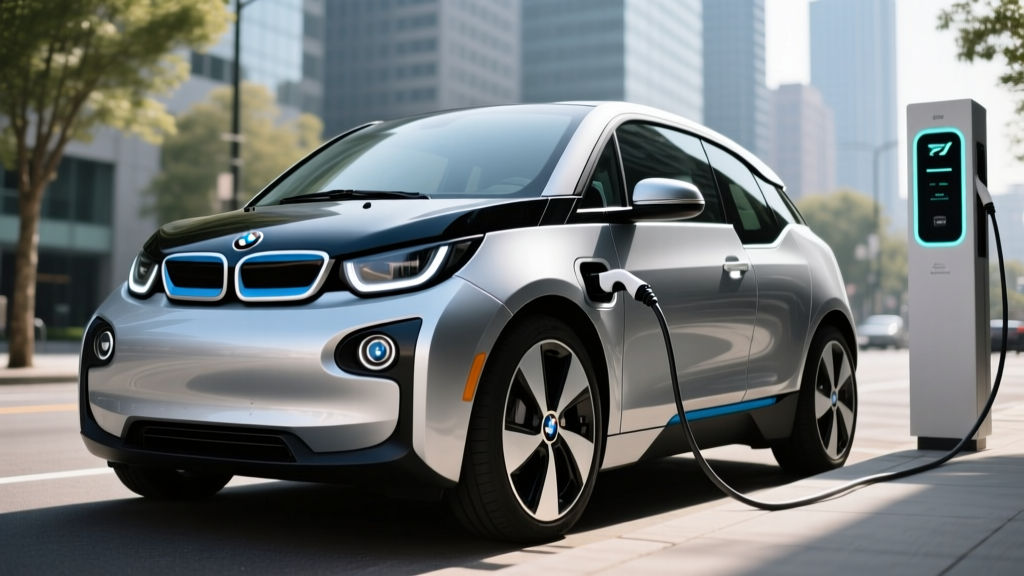
The 2015 BMW i3 base (BEV) was one of the first mass-produced electric vehicles to pair a carbon-fiber-reinforced plastic (CFRP) passenger cell with a purpose-built electric drivetrain. Over a decade later, it remains one of the most distinctive used EVs on the market — a lightweight, city-focused hatchback with a quirky design and surprisingly engaging dynamics. But with an EPA-estimated range of just 81 miles, is the 2015 BMW i3 base still a practical daily driver in 2026? This review breaks down every spec that matters to a used-EV buyer: real-world range, charging speeds, battery health considerations, and whether it qualifies for the federal used-EV tax credit.
2015 BMW i3 Base: Key Specifications at a Glance
| Spec | Value |
|---|---|
| EPA Range | 81 miles |
| Battery (Gross / Usable) | 22 kWh gross / ~18.8 kWh usable |
| Battery Chemistry | NMC (Nickel Manganese Cobalt) — Samsung SDI cells |
| Motor | Rear-wheel-drive AC synchronous, 170 hp / 184 lb-ft torque |
| 0–60 mph | 7.0 seconds |
| EPA Efficiency | 124 MPGe combined (27 kWh/100 mi) |
| DC Fast Charge (CCS) | 50 kW peak (optional on base; standard on later trims) |
| Level 2 Charge Rate | 7.4 kW (onboard charger) |
| Cargo Volume | 15.1 cu ft (rear seats up) / 36.9 cu ft (rear seats folded) |
| Curb Weight | 2,630 lbs (BEV) |
| Original Base MSRP | $42,275 (before incentives) |
| 2026 Used Market Price (est.) | $8,000 – $13,000 depending on mileage and battery SoH |
| Battery Warranty (Original) | 8 years / 100,000 miles (expired for 2015 models as of 2023) |
Real-World Range: What 81 EPA Miles Actually Means
Real-World Expectation: 65–75 miles highway; 75–90 miles city (mild weather)
Cold-Weather (below 32°F): 45–60 miles — expect 30–40% range loss without preconditioning
The 2015 BMW i3 base carries a 22 kWh gross battery pack, but only about 18.8 kWh is usable — BMW built in a conservative top and bottom buffer to protect the NMC cells from deep-cycle degradation. The EPA's 81-mile figure assumes a mixed driving cycle, but the i3's real-world range depends heavily on three factors: speed, temperature, and battery age.
Around town at 25–45 mph, the i3's regenerative braking system (which enables near one-pedal driving) and light 2,630-pound curb weight work in your favor. Expect 75–90 miles in mild conditions with a healthy battery. On the highway at 70 mph, aerodynamic drag and the lack of a multi-speed transmission push consumption higher — plan for 65–75 miles before the low-battery warnings begin.
Cold weather is the i3's biggest range enemy. The 2015 model uses a resistive PTC heater rather than a heat pump, which draws heavily from the already-small battery. In sub-freezing temperatures without battery preconditioning, real-world range drops to 45–60 miles. If your commute is a round-trip of 30 miles or less, the i3 handles winter fine. If you're pushing 50+ miles daily in cold climates, range anxiety becomes a legitimate concern.
Battery degradation is the wildcard for any used 2015 i3. After 10+ years, most packs have lost 15–25% of original capacity depending on charging habits and climate exposure. A 2015 i3 with 20% degradation and 81 original EPA miles effectively delivers ~65 miles when new-equivalent — less in winter. Always request a battery State of Health (SoH) reading from a BMW dealer or use an OBD-II dongle with the BMW-specific ENET cable and apps like BimmerCode or LeafSpy-style EV tools before purchasing.
Charging Speeds: DC Fast, Level 2, and Level 1
Charging infrastructure compatibility is critical for a used EV with a small battery. The 2015 i3 base supports three charging levels, but there's an important caveat: DC fast charging (CCS Combo) was a $750 option on the 2015 base model. Not every used i3 has it. Verify the presence of the CCS port (the larger, two-pin lower section below the J1772 connector) before buying.
| Charge Level | Power (kW) | Time (10–80%) | Miles Added per Hour |
|---|---|---|---|
| Level 1 (120V household) | ~1.4 kW | ~14+ hours (full) | ~4–5 mi/hr |
| Level 2 (240V, 32A) | 7.4 kW | ~2.5 hours (full) | ~25 mi/hr |
| DC Fast Charge (CCS)* | 50 kW peak | ~25–30 min (10–80%) | ~100+ mi/hr (first 20 min) |
*DC fast charging optional on 2015 base trim. Standard on Mega World and Giga World trims.
The 7.4 kW onboard AC charger is the i3's strongest charging asset for home use. On a Level 2 home station (240V, 32A circuit), a depleted i3 reaches full charge in roughly 2.5 hours — meaning you can easily top off during a work-from-home lunch break or overnight on a standard dryer-circuit installation. Home Level 2 installation typically costs $500–$1,500 for equipment and electrician labor if your panel has capacity; a panel upgrade can add $1,500–$3,000.
On DC fast charging, the i3 peaks at approximately 50 kW — modest by 2026 standards but adequate given the small 18.8 kWh usable battery. The charge curve is relatively flat from 10% to about 65% SoC, then tapers significantly above 80%. A 10–80% session takes roughly 25–30 minutes at a functioning 50 kW CCS station. For road trips, that means a 30-minute stop every 60–70 miles of driving — workable for short intercity hops, tedious for anything beyond 150 miles.
One practical note: the i3 uses the CCS1 connector standard, which remains widely supported at Electrify America, EVgo, and most non-Tesla public networks in 2026. However, some older 50 kW stations have degraded or been decommissioned, so plan routes using PlugShare or A Better Routeplanner.
Performance, Driving Dynamics, and Efficiency
The 2015 BMW i3 base sends 170 horsepower and 184 lb-ft of torque to the rear wheels through a single-speed reduction gear. BMW's electric synchronous motor delivers peak torque from 0 RPM, giving the i3 a punchy, responsive feel around town that belies its modest power output. The 0–60 mph sprint takes 7.0 seconds — quick enough for confident highway merging and genuinely fun in urban traffic.
What sets the i3 apart dynamically is its construction. The "LifeDrive" architecture pairs a CFRP passenger cell (the "Life" module) with an aluminum chassis (the "Drive" module) housing the motor and battery. The result is a curb weight of just 2,630 lbs — roughly 1,000 lbs lighter than a comparable Nissan Leaf of the same era. That low mass translates to exceptional efficiency: the EPA rates the 2015 i3 at 124 MPGe combined (27 kWh per 100 miles), making it one of the most energy-efficient EVs ever sold in the United States, per fueleconomy.gov.
The steering is quick and direct, the turning radius is remarkably tight (32.3 feet — ideal for urban parking), and the tall, narrow 155/70R19 tires minimize rolling resistance while providing surprisingly competent grip. The i3 doesn't feel like an appliance; it feels like a BMW that happens to be electric.
On the downside, the narrow tires and short wheelbase make the i3 nervous at highway speeds above 75 mph, especially in crosswinds. Ride quality is firm — you'll feel expansion joints and potholes more than in a heavier, longer-wheelbase EV. And the strong regenerative braking, while excellent for one-pedal city driving, requires an adjustment period for drivers accustomed to coasting.
Interior, Cargo, and Daily Practicality
The i3's interior was radical for 2015 and still looks distinctive today. BMW used sustainably sourced materials throughout: eucalyptus wood dash trim, kenaf (plant fiber) door panels, and recycled-plastic upholstery on the base Mega World trim. The cabin feels airy thanks to large windows and a tall roofline, and the rear-hinged "coach doors" (half-doors for rear passengers) create a wide opening when both front and rear doors are opened together.
Space is the trade-off. Front legroom is generous at 40.5 inches, but rear legroom is tight at 31.9 inches — fine for children or short trips, cramped for adults on longer rides. Cargo volume behind the rear seats is just 15.1 cubic feet (less than a Honda Fit), expanding to 36.9 cubic feet with the rear seatbacks folded. The split-fold rear seat is standard, but the load floor isn't flat, and there's no front trunk (frunk) — the space under the hood houses the power electronics and the optional range-extender engine on REx models.
Tech in the 2015 i3 centers on BMW's iDrive infotainment system with a 6.5-inch display (8.8-inch on higher trims with navigation). The system supports Bluetooth audio and phone connectivity but lacks Apple CarPlay and Android Auto — a notable omission by 2026 standards. A USB port and auxiliary input handle wired connections. The available ConnectedDrive services include remote preconditioning via smartphone app, which is essential for maximizing winter range.
Driver-assistance features are minimal compared to modern EVs. The 2015 i3 offers standard stability control, ABS, and multiple airbags but does not include automatic emergency braking, lane-keeping assist, or adaptive cruise control. It earned an IIHS "Good" rating in moderate overlap front and side crash tests, though it was not tested in the updated small-overlap protocol that became standard later. See full results at iihs.org.
Pricing, Used Market Value, and Tax Credit Eligibility
When new, the 2015 BMW i3 base started at $42,275 (including destination). The three available trims — Mega World (base), Giga World (+$1,700), and Tera World (+$2,700) — added features like leather upholstery, LED headlights, and upgraded interior materials. The DC fast-charge option was $750; the range-extender (REx) gasoline engine was a $3,850 add-on that boosted total range to approximately 150 miles combined.
In the 2026 used market, the 2015 i3 base typically sells for $8,000 to $13,000 depending on mileage, condition, trim level, and — most critically — battery State of Health. Examples with confirmed SoH above 85% command a premium; those below 75% should be priced at a significant discount to account for potential battery replacement costs ($8,000–$14,000 at a BMW dealer, though third-party refurbishment options exist for less).
Yes — potentially. Under IRS §25E (Previously Owned Clean Vehicle Credit), eligible buyers can claim up to $4,000 or 30% of the sale price (whichever is less) on a qualifying used EV purchased from a dealer. Key requirements:
- Sale price cap: Vehicle must sell for $25,000 or less (most 2015 i3s qualify)
- Income limits: Modified AGI ≤ $75,000 (single) / $112,500 (head of household) / $150,000 (joint)
- Dealer sale required: Private-party sales do not qualify
- First transfer since Aug 16, 2022: The vehicle must not have been transferred to a qualified buyer after that date previously
- Model year requirement: Must be at least 2 model years old (2015 qualifies)
Note: The §30D new-vehicle credit (up to $7,500) does not apply to used purchases. The §25E used-vehicle credit is the relevant provision, and it has distinct rules. Always verify current-year IRS guidance before relying on credit estimates.
Battery Longevity, Warranty Status, and Replacement Costs
The 2015 i3's Samsung SDI NMC battery pack was engineered with a generous thermal buffer — BMW limited usable capacity to ~18.8 kWh out of 22 kWh gross specifically to reduce degradation stress. This strategy has largely worked: real-world data from i3 owner communities shows typical capacity retention of 75–85% after 10 years and 80,000–100,000 miles, depending on climate and fast-charging frequency.
The original battery warranty — 8 years/100,000 miles against capacity loss below 70% — expired for all 2015 models in 2023. This means any battery failure or significant degradation is now an out-of-pocket expense. BMW dealer replacement costs for the full 22 kWh pack typically range from $10,000 to $14,000 including labor. However, independent EV repair shops and battery refurbishment services have emerged as a more affordable alternative, with module-level repairs (replacing only degraded cell modules rather than the entire pack) available for $3,000–$6,000 in many markets.
For buyers, the actionable advice is clear: get a battery health check before purchase. A BMW dealer can run a capacity test via ISTA diagnostic software, or you can use an OBD-II adapter with EV-specific diagnostic apps to read the battery's reported SoH. Avoid examples below 75% SoH unless priced accordingly. Also ask whether the previous owner relied primarily on DC fast charging (accelerates degradation) or Level 2 home charging (gentler on the cells).
Who Should Buy the 2015 BMW i3 Base in 2026?
- Your daily round-trip commute is under 40 miles
- You have reliable home Level 2 charging
- You want an affordable, efficient, fun-to-drive city EV
- You value unique design and premium materials over range
- You're a second-car household with a gas/hybrid option for long trips
- You regularly drive more than 60 miles between charges
- You live in a cold climate without garage parking
- You need rear-seat space for adults or significant cargo volume
- You want modern driver-assistance features (AEB, lane-keep, etc.)
- You can't verify battery SoH before purchase
The i3 excels as an urban commuter and errand-runner. Its efficiency, tight turning radius, and quick acceleration make it arguably the most fun sub-$12,000 EV you can buy in 2026. But its 81-mile EPA range — realistically 50–70 miles in mixed use with a degraded battery — means it works best as part of a multi-vehicle household or for drivers with predictable, short daily routes and home charging access.
Pros and Cons
- Outstanding efficiency: 124 MPGe combined
- Lightweight, engaging rear-wheel-drive dynamics
- Unique CFRP construction — no rust concerns on body structure
- Strong regenerative braking enables one-pedal driving
- Fast Level 2 charging (7.4 kW, ~2.5 hr full charge)
- Tight turning radius ideal for city parking
- Premium interior materials, distinctive design
- Qualifies for up to $4,000 used EV tax credit (§25E)
- 81-mile EPA range — limiting even for a city car
- Original battery warranty expired (2023)
- Battery replacement cost: $10,000–$14,000 at dealer
- DC fast charging was optional — not all used examples have CCS
- 50 kW DC fast charge is slow by 2026 standards
- No Apple CarPlay / Android Auto
- Minimal driver-assistance features (no AEB, no lane-keep)
- Cramped rear seat (31.9" legroom) and limited cargo space
- Resistive heater drains battery in cold weather (no heat pump)
- Narrow tires feel unstable at highway speed in crosswinds
Frequently Asked Questions
What is the real-world range of the 2015 BMW i3 base?
The EPA rates the 2015 i3 base at 81 miles. In real-world driving with a 10-year-old battery (assume ~80% State of Health), expect approximately 55–70 miles in mixed use, 45–55 miles in cold weather, and up to 80 miles in ideal city conditions with mild temperatures and gentle driving. Always verify the specific vehicle's battery SoH before purchase.
How fast does the 2015 BMW i3 charge at home and on DC fast chargers?
On a Level 2 home charger (240V, 32A), the i3 charges at 7.4 kW and reaches a full charge in about 2.5 hours. On a 50 kW DC fast charger (CCS — optional on base trim), a 10–80% session takes approximately 25–30 minutes. Level 1 (120V) charging adds roughly 4–5 miles per hour, requiring 14+ hours for a full charge.
Does the 2015 BMW i3 qualify for the federal EV tax credit?
Not the new-vehicle §30D credit. However, it can qualify for the §25E used-EV credit of up to $4,000 (or 30% of the sale price, whichever is less) if purchased from a dealer for $25,000 or less, the buyer's income is within limits ($75K single / $150K joint), and the vehicle hasn't been transferred under this credit since August 16, 2022. Confirm details with IRS.gov and a tax professional.
Is the 2015 BMW i3 worth buying vs. competitors like the Nissan Leaf or Fiat 500e?
The i3's advantages over the contemporaneous Nissan Leaf (2013–2015, 84-mile range) include lighter weight, better efficiency, rear-wheel-drive dynamics, and faster Level 2 charging. The Fiat 500e (87-mile range) is similarly city-focused but slower and less practical. The i3's main weakness vs. both is its higher battery replacement cost and the CCS fast-charging option that not all examples include. If you can verify a healthy battery and CCS capability, the i3 is the more engaging and efficient choice.
How much does a battery replacement cost for the 2015 BMW i3?
A full battery pack replacement at a BMW dealer typically costs $10,000–$14,000. Independent EV shops can sometimes perform module-level repairs for $3,000–$6,000. Given that many used 2015 i3s sell for $8,000–$13,000, a battery replacement can exceed the vehicle's value — making a pre-purchase SoH check essential.
Can I install Apple CarPlay in a 2015 BMW i3?
Not natively. The 2015 i3's iDrive system predates BMW's CarPlay integration (which arrived in the 2017 model year). Aftermarket solutions exist — including third-party iDrive retrofit modules ($400–$800 installed) that add CarPlay/Android Auto functionality — but they require professional installation and may affect the factory warranty on remaining electronic components.