Quick Verdict: Is the 2015 Mercedes-Benz B-Class Electric Drive Worth Buying in 2026?
The 2015 B-Class Electric Drive delivers an EPA-rated 87 miles of range from a 28 kWh usable lithium-ion battery, with 177 hp and a 0–60 mph time of 7.9 seconds. On the used market in 2026, expect to pay between $8,000 and $13,000 depending on mileage and battery health. It qualifies for the federal used-EV tax credit of up to $4,000 (IRC §25E) if purchased through a licensed dealer and you meet income caps. This car makes sense strictly as a second vehicle or city commuter for drivers with home Level 2 charging and daily round trips under 60 miles. It is not a viable primary vehicle for anyone with highway commutes, cold-weather driving, or no garage charging access.
The 2015 B-Class Electric Drive: What Mercedes Built (and Why It Matters Now)
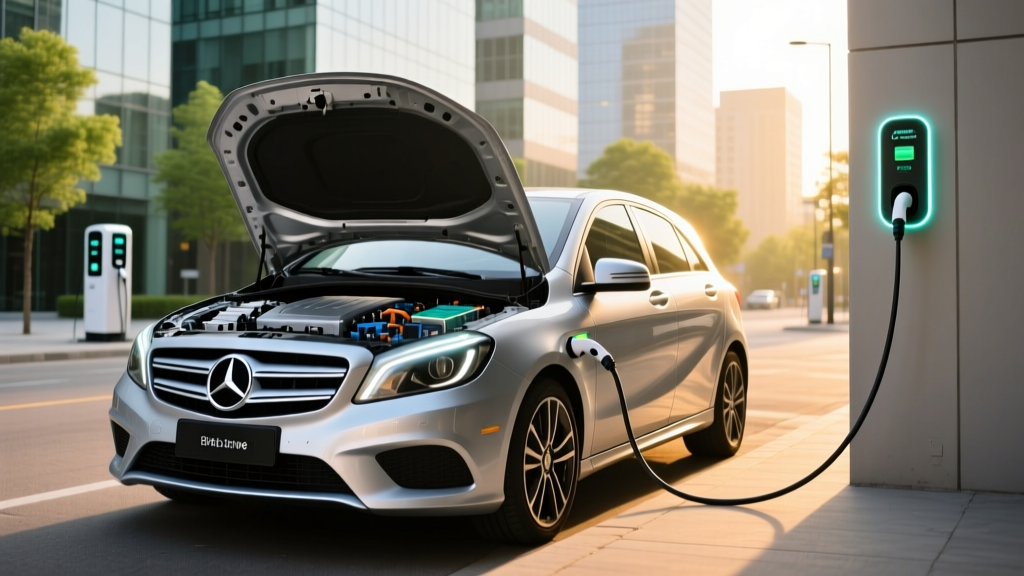
Mercedes-Benz developed the B-Class Electric Drive (later renamed the B250e for the 2016–2017 model years) using a Tesla-supplied powertrain. The electric motor and battery pack were sourced directly from Tesla's Fremont operations during the period when Daimler held a stake in Tesla. The result was a compact luxury hatchback with surprisingly competent acceleration and build quality but fundamentally limited range by today's standards.
The vehicle was only sold in California and a handful of ZEV-mandate states, making it a compliance car. Production ended after the 2017 model year. In 2026, surviving examples are hitting the used market at prices that make them one of the cheapest ways into a premium-brand EV — but the economics only work if you understand exactly what you're getting.
| Specification | Value |
|---|---|
| EPA Range | 87 miles |
| Battery Capacity (Usable) | 28 kWh (36 kWh gross) |
| Battery Chemistry | NMC (Nickel Manganese Cobalt) |
| Motor Output | 177 hp / 228 lb-ft torque |
| 0–60 mph | 7.9 seconds |
| EPA Efficiency | 84 MPGe combined (40 kWh/100 mi) |
| Level 2 Charging (AC) | Up to 10 kW (240V / ~40A) |
| DC Fast Charging | Not available |
| Charge Time 0–100% (Level 2) | ~3.5 hours at 10 kW |
| Original MSRP (2015) | $41,450 (before incentives) |
| 2026 Used Price Range | $8,000 – $13,000 |
| Battery/Powertrain Warranty (Original) | 8 years / 100,000 miles (expired for most) |
Real-World Range: What 87 EPA Miles Actually Means in 2026
The EPA sticker says 87 miles, but real-world range depends heavily on three factors: battery degradation, ambient temperature, and driving style. After 10+ years and typical mileage (60,000–100,000 miles), expect the battery's State of Health (SoH) to sit between 75% and 88% for well-maintained examples. That reduces effective capacity to roughly 21–25 kWh usable.
Real-World Range Expectations (2026 Used Example)
- Ideal conditions (70°F, city driving, 85% SoH battery): 70–78 miles
- Mixed driving (55–70 mph highway, moderate climate): 55–65 miles
- Cold weather (below 32°F, cabin heat on): 40–50 miles
- Worst case (cold, highway speeds, degraded battery at 75% SoH): 35–42 miles
The B-Class Electric Drive uses a resistive heater for cabin warmth — there is no heat pump. This means cold-weather range loss is severe, often 40–50% below the EPA figure. If you live in a climate with sustained freezing temperatures, this car becomes a 40-mile vehicle in winter. The battery does have a liquid thermal management system, which helps preserve long-term SoH, but it does not eliminate cold-range penalty.
Charging: The Biggest Limitation for Modern Buyers
Here's where the 2015 B-Class Electric Drive shows its age most clearly: it has no DC fast charging capability. There is no CCS port, no CHAdeMO port, no NACS port. The car charges exclusively via its J1772 AC port at up to 10 kW on Level 2.
| Level | Power | Miles Added per Hour | Full Charge Time |
|---|---|---|---|
| Level 1 (120V standard outlet) | ~1.4 kW | ~3–4 mi/hr | ~24 hours |
| Level 2 (240V, 40A circuit) | Up to 10 kW | ~25–28 mi/hr | ~3.5 hours |
| DC Fast Charging | N/A — Not supported | N/A | N/A |
This means the car is fundamentally a home-charge-and-commute vehicle. You cannot take it on road trips and "top up" at Electrify America or Tesla Superchargers. Every charge will take hours. For a daily commuter who plugs in at home every night, this is manageable. For anyone without a garage or dedicated parking spot with a 240V outlet, this car is impractical.
Home charging setup cost: If you need a Level 2 home charger installed, budget $500–$1,500 for a quality J1772 EVSE (like a ChargePoint Home Flex or Emporia Level 2) and $800–$2,500 for electrician labor and permitting, depending on your panel's capacity and the run distance. Total home charging setup: roughly $1,300–$4,000. Factor this into your purchase decision — it may represent 15–40% of the car's purchase price.
Cost Breakdown: 2015 B-Class Electric Drive vs. a Comparable Gas Car
Let's compare the real five-year ownership costs of a used 2015 B-Class Electric Drive against a typical used compact gas hatchback (e.g., a 2015–2017 Honda Fit or Toyota Yaris) purchased at a similar price point.
| Cost Category | 2015 B-Class ED (Used ~$10,000) | Used Gas Hatchback (~$10,000) |
|---|---|---|
| Purchase Price | $10,000 | $10,000 |
| Federal Used-EV Credit (§25E) | −$4,000 (if eligible) | $0 |
| Home Charger Install | $2,000 | $0 |
| Net Purchase Cost | $8,000 | $10,000 |
| Fuel/Energy (5 years, 60k mi) | $1,800 (at $0.14/kWh avg) | $6,750 (at $3.75/gal, 28 MPG avg) |
| Maintenance (5 years) | $1,200 (tires, cabin filter, fluid checks) | $3,500 (oil, brakes, filters, belts) |
| Insurance (5 years avg) | $7,500 ($125/mo avg) | $6,000 ($100/mo avg) |
| Battery Replacement Reserve | $3,000–$8,000 (if needed) | $0 |
| Total 5-Year Cost (Best Case) | $18,500 | $26,250 |
| Total 5-Year Cost (Worst Case) | $23,500+ | $26,250 |
The B-Class Electric Drive saves significantly on fuel and maintenance, but the savings can be wiped out by a battery replacement. A refurbished or replacement battery pack in 2026 runs $5,000–$10,000 through independent EV shops — and availability is limited given the car's rarity. Before purchasing, have the battery's State of Health checked via an OBD-II diagnostic tool or a Mercedes specialist.
Used-EV Tax Credit: Can You Claim $4,000?
The 2015 B-Class Electric Drive is eligible for the IRC §25E used-EV tax credit, which provides up to $4,000 or 30% of the sale price (whichever is less). However, eligibility has strict requirements:
§25E Used-EV Credit Requirements (2026)
- Sale price must be $25,000 or less — the B-Class ED qualifies easily at $8k–$13k
- Buyer income caps: $75,000 single / $112,500 head of household / $150,000 married filing jointly (modified AGI)
- Must purchase from a licensed dealer — private-party sales do not qualify
- Vehicle must be at least 2 model years old — a 2015 model qualifies
- Credit is non-refundable — you need sufficient tax liability to use it (or use the point-of-sale transfer option if the dealer participates)
- First transfer since August 16, 2022 — verify the vehicle hasn't already been claimed under §25E in a prior sale
At a $10,000 purchase price, the credit would be $3,000 (30% of $10,000), not the full $4,000. At $13,000, it would be $3,900. Always verify current rules at IRS.gov's used-EV credit page and consult a tax professional before relying on this credit.
Common Misconceptions About the B-Class Electric Drive
| Myth | Fact |
|---|---|
| "It's basically a Tesla underneath" | The powertrain was Tesla-sourced, but the battery management, thermal system, and vehicle integration are Mercedes. You cannot use Tesla Superchargers, and Tesla service centers will not work on it. |
| "87 miles is enough for anyone's commute" | The average American commute is ~16 miles one-way, but that excludes errands, detours, and climate effects. In winter, 87 miles becomes ~45. You need honest self-assessment of your daily driving. |
| "The battery will need replacing immediately" | NMC batteries from this era with liquid thermal management often retain 80%+ SoH at 100k miles. However, individual cell failures and module imbalance can occur. Get a pre-purchase SoH check. |
| "I can fast-charge it on road trips" | No DC fast charging hardware exists on this vehicle. Maximum charge rate is 10 kW AC. A "quick stop" adds about 25 miles per hour of charging. |
| "Maintenance-free means zero costs" | You still need tires (EVs wear tires faster due to torque and weight), cabin air filters, brake fluid checks, coolant for the battery thermal system, and 12V battery replacement every 3–5 years. |
Who Should Buy This Car (and Who Shouldn't)
Decision Framework: Is the 2015 B-Class Electric Drive Right for You?
Buy it IF:
- You need a second car for city commuting and errands under 50 miles round-trip
- You have home Level 2 charging (or can install it) and a garage or covered parking
- You live in a mild climate (rarely below 40°F) to minimize range loss
- You want a premium-brand EV at the lowest possible entry price
- You qualify for the §25E used-EV credit (income under caps, buying from a dealer)
- You understand this is a compliance-era EV with limited parts availability and no fast charging
Do NOT buy it IF:
- This will be your only vehicle and you drive more than 60 miles daily
- You live in a cold climate with sustained freezing winters
- You cannot install Level 2 charging at home (Level 1 at 1.4 kW is impractical for daily use)
- You take road trips more than a few times per year
- You need rear-seat space or cargo room beyond what a compact hatchback offers
- You want a vehicle with modern ADAS features (the B-Class ED has basic collision warning but no adaptive cruise, lane-keep, or any Level 2 driver-assist system)
Compared to Modern Budget EVs: What $10,000–$15,000 Gets You in 2026
The used-EV market in 2026 offers alternatives at similar price points that significantly outperform the B-Class Electric Drive on range and charging:
| Vehicle | EPA Range | DC Fast Charge | Approx. Used Price |
|---|---|---|---|
| 2015 B-Class Electric Drive | 87 mi | None | $8,000–$13,000 |
| 2018–2019 Chevy Bolt EV | 238 mi | 55 kW (CCS) | $11,000–$16,000 |
| 2018–2019 Nissan Leaf (60 kWh) | 226 mi | 100 kW (CHAdeMO) | $12,000–$17,000 |
| 2019–2020 Hyundai Kona Electric | 258 mi | 77 kW (CCS) | $14,000–$18,000 |
| 2017–2018 VW e-Golf | 125 mi | 50 kW (CCS) | $10,000–$14,000 |
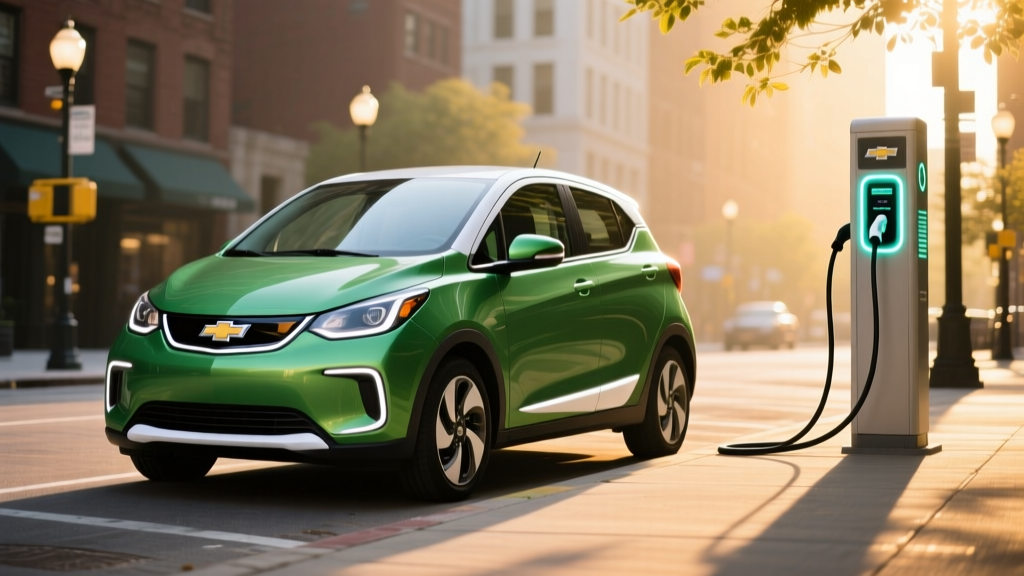
The Chevy Bolt EV is the strongest alternative: nearly triple the range, DC fast charging, and a similar or lower price. The B-Class ED's advantage is the Mercedes badge, interior materials, and ride refinement — but those luxuries come at the cost of functionality.
Frequently Asked Questions
Can I use a Tesla Supercharger with the 2015 B-Class Electric Drive?
No. Despite the Tesla-sourced powertrain, the B-Class Electric Drive uses a standard J1772 AC charging port. It has no DC fast-charge port of any kind. Tesla's Supercharger network (including the Magic Dock NACS adapter for CCS vehicles) is not compatible because the B-Class lacks DC charging hardware entirely.
How do I check the battery health before buying?
Use an OBD-II scanner with EV-specific software (such as LeafSpy-style tools adapted for the B-Class platform) or take the vehicle to a Mercedes-Benz dealer or independent EV specialist who can read the Battery Management System (BMS) data. Key metrics: State of Health percentage, cell voltage variance, and total charge cycles. Aim for SoH above 80% and cell variance below 0.1V.
What happens if the battery fails out of warranty?
The original 8-year/100,000-mile battery warranty has expired for all 2015 models. A full battery replacement through Mercedes-Benz in 2026 would likely exceed $10,000 and may not even be available as a new part. Independent EV repair shops can sometimes refurbish packs by replacing failed modules for $3,000–$6,000, but this is a specialized service with limited providers. Budget for this risk.
Is the B-Class Electric Drive safe?
The 2015 B-Class earned good ratings in its era, but it was not tested by IIHS or NHTSA in its electric variant specifically. It includes standard stability control, multiple airbags, and collision prevention assist. However, it lacks modern ADAS features like automatic emergency braking, lane-keeping assist, or blind-spot monitoring that are standard on most 2026 vehicles. For safety context on modern alternatives, check IIHS ratings.
How does the B-Class ED compare to a plug-in hybrid?
A used PHEV like the 2015–2017 Chevy Volt offers 53 miles of electric range (2017 model) plus a gas engine for unlimited range — making it far more versatile for drivers who can't commit to a pure EV with 87 miles of range. If range flexibility matters but you still want electric commuting, a used PHEV may be the smarter choice. See our EPA comparison tool for efficiency data on PHEV alternatives.
What are the annual insurance costs?
Insurance for a used B-Class Electric Drive typically runs $100–$150/month depending on your state, driving record, and coverage level. Mercedes parts costs keep premiums slightly higher than comparable non-luxury used EVs. Get quotes from multiple insurers before purchasing — some companies offer EV-specific discounts.
Can I tow with the B-Class Electric Drive?
No. The 2015 B-Class Electric Drive is not rated for towing. Attempting to tow will void any remaining drivetrain coverage and will severely reduce already-limited range.
Bottom Line: A Niche Used EV for the Right Buyer
The 2015 Mercedes-Benz B-Class Electric Drive occupies a specific niche in 2026: it's one of the cheapest ways to own a luxury-branded electric car, with solid build quality, a smooth ride, and adequate city performance. At $8,000–$13,000 before the potential $3,000–$4,000 used-EV credit, the effective entry price can dip below $6,000 — remarkable for a Mercedes.
But 87 miles of EPA range (closer to 45–65 in real-world use), no DC fast charging, an aging NMC battery with uncertain replacement logistics, and no modern driver-assist features make this a garage-kept second car for warm-climate city drivers — nothing more. If that describes your situation and you've verified battery SoH, it's a rational, economical choice. If you need versatility, cold-weather capability, or road-trip potential, spend $3,000–$5,000 more on a used Chevy Bolt EV or Hyundai Kona Electric instead.