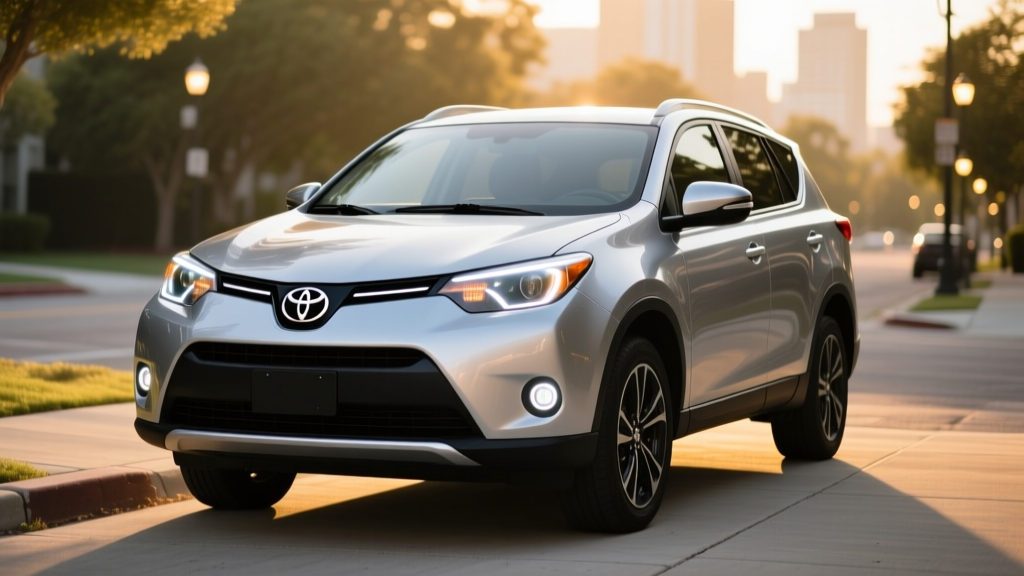
The Bottom Line on the 2014 Toyota RAV4 EV
The 2014 Toyota RAV4 EV is a discontinued, Tesla-powertrain electric SUV with a 103-mile EPA range, a 41.8 kWh lithium-ion battery (NMC chemistry), and a 50 kW DC fast-charge cap. In 2026, expect to pay $7,000–$13,000 on the used market. It qualifies for the up-to-$4,000 used EV tax credit (§25E) if purchased through a licensed dealer and income limits are met. It works as a budget commuter for drivers with home charging and sub-80-mile daily routes, but the 103-mile real-world range (often 75–85 miles in cold weather) and CHAdeMO connector make it a niche pick, not a primary family vehicle.
What Is the 2014 RAV4 EV and Why Does It Matter?
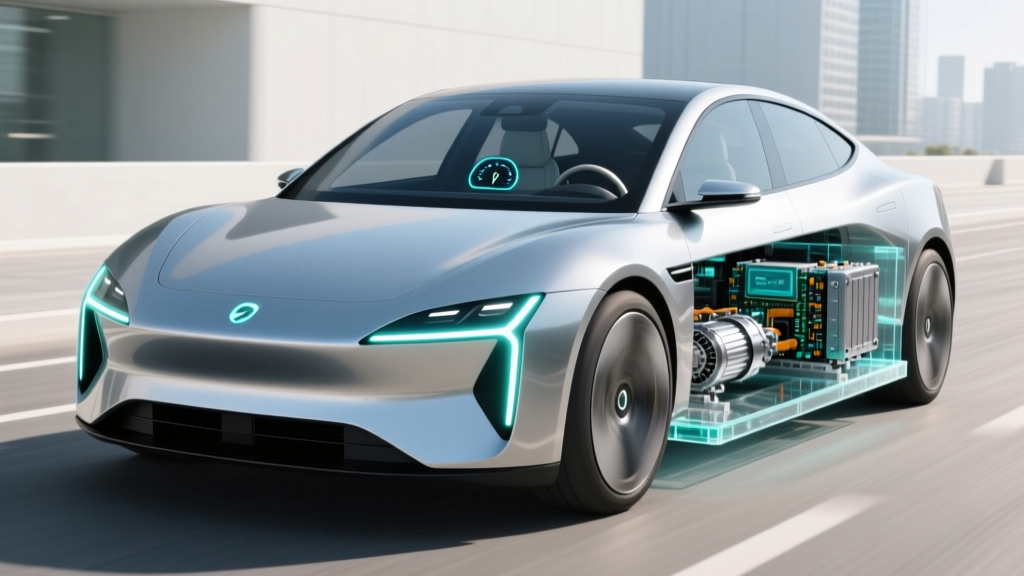
The 2014 Toyota RAV4 EV was the second and final model year of Toyota's battery-electric compact SUV, developed in partnership with Tesla. Under the skin, it uses a Tesla-derived electric powertrain — a 154-horsepower AC induction motor and a 41.8 kWh (usable ~35 kWh) lithium-ion NMC battery pack mounted low in the chassis. This was the same era of Tesla technology that powered the early Model S, making the RAV4 EV a fascinating artifact of a brief Toyota-Tesla collaboration.
Toyota sold roughly 3,000 units across the 2012–2014 model years, almost exclusively in California to satisfy ZEV mandate requirements. That low production volume means the 2014 RAV4 EV is uncommon on the used market today, and parts availability — particularly for the Tesla-sourced drivetrain components — requires planning.
Range, Battery, and Charging: The Numbers That Matter
For any used EV purchase, the battery is the single most important component. Here is what the 2014 RAV4 EV delivers on paper and in practice.
| Specification | Value |
|---|---|
| EPA Range (new) | 103 miles |
| Battery Capacity (total / usable) | 41.8 kWh / ~35 kWh |
| Battery Chemistry | NMC (Nickel Manganese Cobalt) |
| Motor Output | 154 hp / 273 lb-ft torque |
| 0–60 mph | ~8.6 seconds |
| EPA Efficiency | 76 MPGe combined |
| DC Fast Charge (max) | 50 kW (CHAdeMO) |
| Level 2 Charge Rate | 9.6 kW (240V, 40A) |
| Level 2 Charge Time (0–100%) | ~5 hours |
| Connector | J1772 (L2) / CHAdeMO (DCFC) |
| Battery Warranty (original) | 8 years / 100,000 miles |
Real-World Range vs. EPA Sticker
EPA: 103 miles. Expect 80–95 miles in mixed real-world driving at moderate temperatures. On the highway at 70+ mph, plan for 75–85 miles. In cold weather (below 40°F), the RAV4 EV lacks a heat pump and relies on resistive cabin heating, which can push range down to 60–75 miles. Battery degradation on a 12-year-old pack adds further reduction — see the degradation section below.
Charging in Practice
The 50 kW DC fast-charge cap means a 10–80% session takes roughly 35–45 minutes, which is slow by 2026 standards (modern EVs hit 150–350 kW). More critically, the CHAdeMO connector is effectively a dead standard in North America. Electrify America and most major networks have shifted to CCS1 and NACS. CHAdeMO stations are increasingly rare, which limits the RAV4 EV's road-trip viability to near-zero. This vehicle is, practically speaking, a home-charging commuter.
Level 2 charging at 9.6 kW is competent. A full charge from empty takes about 5 hours on a 40-amp Level 2 home station, which is sufficient for overnight replenishment.
Battery Degradation: What to Expect From a 12-Year-Old Pack
NMC batteries from this era typically lose 15–25% of original capacity over 10–12 years, depending on climate exposure, charging habits, and mileage. For a 2014 RAV4 EV with 80,000 miles in a moderate climate, expect roughly 80–85% State of Health (SoH), translating to an effective range of 70–85 miles on a full charge. Vehicles in hot climates (Arizona, Texas) or those frequently DC fast-charged may show SoH as low as 70–75%, cutting range to 60–70 miles.
Before buying, demand a battery health report. Ask the seller or a qualified EV technician to pull the pack's SoH via OBD-II diagnostics. The original 8-year/100,000-mile battery warranty has expired for all 2014 models, so any pack replacement is out-of-pocket. A replacement battery, if one can be sourced, would likely cost $5,000–$10,000+ — potentially exceeding the vehicle's value.
Cost Breakdown: Purchase, Charging, and Ownership
The 2014 RAV4 EV's appeal in 2026 is primarily financial: it is one of the cheapest ways into a battery-electric vehicle. But the full ownership picture requires honest math.
| Cost Factor | 2014 RAV4 EV | 2014 Toyota RAV4 LE (Gas) |
|---|---|---|
| Used Purchase Price (2026) | $7,000–$13,000 | $10,000–$15,000 |
| §25E Used EV Tax Credit | Up to $4,000 (30% of sale price, dealer transaction, income caps apply) | $0 |
| Effective Purchase Price | $3,000–$9,000 | $10,000–$15,000 |
| Fuel/Energy Cost per Mile | ~$0.04–$0.06 (home L2 at $0.14/kWh avg) | ~$0.12–$0.16 (gas at $3.40/gal, 26 MPG combined) |
| Annual Fuel/Energy (12,000 mi) | $480–$720 | $1,440–$1,920 |
| Annual Maintenance | $200–$400 (no oil, minimal brakes via regen) | $600–$1,000 (oil, filters, brakes) |
| Insurance (annual avg) | $900–$1,300 | $800–$1,100 |
| Estimated 5-Year Total Cost | $10,000–$20,500 (incl. purchase) | $19,000–$27,500 (incl. purchase) |
The per-mile energy savings are real: roughly $0.08–$0.10 per mile cheaper than the gas RAV4 when charging at home. Over 60,000 miles, that's $4,800–$6,000 in fuel savings. However, those savings can be erased instantly by a battery failure, which is the dominant financial risk of owning a 12-year-old EV with no remaining battery warranty.
Federal Used EV Tax Credit (§25E)
The IRS §25E credit provides 30% of the sale price, up to $4,000, for qualifying used EVs. Requirements include:
- Purchase from a licensed dealer (private-party sales do not qualify)
- Sale price must be $25,000 or less (the RAV4 EV easily meets this)
- Buyer AGI must not exceed $75,000 (single), $112,500 (head of household), or $150,000 (joint)
- Vehicle must be at least 2 model years old (met for all 2014 models)
- Vehicle must have a battery capacity of at least 7 kWh (the RAV4 EV's 41.8 kWh qualifies)
- Credit is claimed on your federal tax return; point-of-sale transfer availability depends on dealer participation
Always verify current-year eligibility on irs.gov or consult a tax professional before relying on this credit.
2014 RAV4 EV vs. Gas RAV4 and Modern Budget EVs
| Attribute | 2014 RAV4 EV | 2014 RAV4 Gas | 2026 Chevy Bolt EV (used) |
|---|---|---|---|
| EPA Range | 103 mi | ~380 mi (14.5-gal tank, 26 MPG) | 259 mi |
| Used Price (2026) | $7,000–$13,000 | $10,000–$15,000 | $15,000–$20,000 |
| DC Fast Charge | 50 kW (CHAdeMO) | N/A | 55 kW (CCS1) |
| Connector Ecosystem | CHAdeMO (declining) | N/A | CCS1 (widely supported) |
| Battery Warranty Remaining | Expired | N/A | May have 1–3 years remaining |
| Cargo Volume | 36.4 cu ft | 38.4 cu ft | 16.6 cu ft |
| Practical Daily Range | 60–85 mi | 350+ mi | 200–240 mi |
The RAV4 EV's cargo space is competitive with the gas RAV4 and significantly larger than a used Bolt EV. However, the Bolt's 259-mile EPA range and CCS1 connector make it far more versatile. If your budget can stretch to $15,000–$20,000, a used 2022–2023 Bolt EV or Bolt EUV is a dramatically more practical electric choice.
Real-World Ownership Considerations
Home Charging Is Non-Negotiable
The RAV4 EV's 103-mile range and dying CHAdeMO infrastructure make home Level 2 charging essential. Relying solely on public charging is not viable. Budget $500–$1,500 for a 240V/40A home Level 2 station (like a ChargePoint Home Flex) plus $300–$1,500 for electrician installation, depending on whether your panel needs an upgrade to support a 50-amp circuit. If you cannot charge at home, this vehicle is not a practical choice.
Climate Impact
The 2014 RAV4 EV uses resistive cabin heating — no heat pump. In cold climates, winter range loss of 30–40% is typical. If your round-trip commute exceeds 60 miles and you live in a region with freezing winters, the effective range may not cover your needs reliably. Preconditioning while plugged in helps, but the physics of a 41.8 kWh pack with resistive heating is unforgiving.
Parts and Service
Body panels, suspension, and interior parts are shared with the third-generation gas RAV4 (XA40) and remain available. However, the Tesla-derived powertrain components — the drive unit, inverter, and battery management system — are unique and increasingly difficult to source. Find a qualified EV technician in your area before purchasing. Standard Toyota dealerships generally cannot service the high-voltage system on this model.
Decision Framework: Should You Buy a 2014 RAV4 EV?
Buy It If:
- Your daily round-trip commute is under 60 miles and you can charge at home every night.
- You live in a mild climate (rarely below 40°F) to minimize winter range loss.
- You want the cheapest possible entry into EV ownership and understand the battery risk.
- You have a second gas or hybrid vehicle for longer trips and cold-weather days.
- You've confirmed battery SoH above 80% via a pre-purchase diagnostic.
Skip It If:
- Your commute exceeds 70 miles round-trip, especially with highway driving.
- You cannot install a Level 2 charger at home.
- You live in a cold climate and need reliable year-round range.
- You want road-trip capability — CHAdeMO infrastructure is functionally dead for long-distance travel.
- You cannot afford a potential $5,000–$10,000 battery replacement if the pack fails.
- Your budget can stretch to $15,000+ — a used Chevy Bolt EV or Nissan Leaf Plus offers far more range and better charging compatibility.
Common Misconceptions About the 2014 RAV4 EV
| Myth | Fact |
|---|---|
| "It's a Tesla, so Tesla can service it." | Tesla does not officially support the RAV4 EV. Service must come from independent EV shops or Toyota (for non-drivetrain issues). |
| "103 miles is enough for anyone." | That's the EPA figure when new. A degraded 12-year-old battery in cold weather may deliver only 60–70 miles. Plan around worst-case range, not best-case. |
| "CHAdeMO chargers are everywhere." | CHAdeMO has been abandoned by nearly all North American charging networks. As of 2026, finding a functioning public CHAdeMO station is increasingly difficult outside legacy installations. |
| "The battery warranty still applies." | The 8-year/100,000-mile warranty expired no later than 2022 for all 2014 models. All battery risk is on the owner. |
| "It qualifies for the $7,500 federal tax credit." | The §30D new-vehicle credit does not apply. The §25E used-EV credit offers up to $4,000, subject to income caps and dealer-sale requirements. |
Frequently Asked Questions
How long does the 2014 RAV4 EV battery last?
NMC packs from this era typically retain 75–85% capacity at 10–12 years with moderate use. Expect the battery to be functional but range-reduced. Catastrophic failure is uncommon but possible, and replacement costs are high relative to vehicle value. Always check SoH before purchasing.
Can I use Tesla Superchargers with the 2014 RAV4 EV?
No. Despite its Tesla powertrain, the RAV4 EV uses a CHAdeMO DC connector and is not compatible with Tesla's proprietary NACS connector or Supercharger network. No adapter exists to bridge this gap safely.
What is the real-world range of the 2014 RAV4 EV in 2026?
With a 12-year-old battery at ~80% SoH, expect 70–85 miles in mild weather and 60–75 miles in cold weather. These figures assume mixed city/highway driving. City-only driving with heavy regenerative braking may yield slightly better results.
Is the 2014 RAV4 EV safe?
The 2014 RAV4 EV was not crash-tested separately by the NHTSA or IIHS, but it shares the XA40 RAV4 platform, which earned Good ratings from IIHS in moderate overlap front and side impact tests. Standard safety features include stability control, antilock brakes, and six airbags. It lacks modern ADAS features like automatic emergency braking or lane-keeping assist.
How does the 2014 RAV4 EV compare to a used Tesla Model 3?
A 2018–2019 Model 3 Standard Range Plus costs roughly $15,000–$20,000 used in 2026 and offers 220+ miles of range, 170 kW DC fast charging (CCS1 via adapter or NACS natively), full Supercharger access, and modern safety tech. If your budget allows, the Model 3 is superior in every measurable metric. The RAV4 EV only wins on entry price and cargo volume.
What should a first-time EV buyer know before purchasing this car?
First, confirm you can charge at home — this is the single biggest determinant of EV satisfaction. Second, budget for a pre-purchase battery health inspection ($100–$200). Third, understand that this is a commuter-only vehicle; plan longer trips around a second car. Fourth, research CHAdeMO charger availability in your specific area using apps like PlugShare before committing. Fifth, factor in the §25E tax credit, which can reduce your effective purchase price by up to $4,000.