The Short Answer on the 2014 Toyota RAV4 Electric
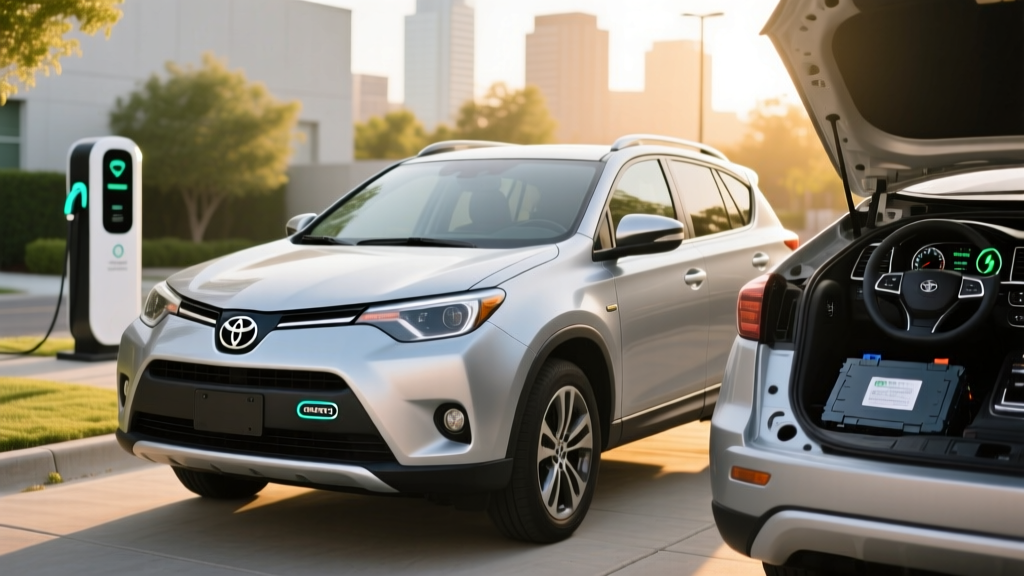
The 2014 Toyota RAV4 EV is a discontinued, Tesla-powered compact SUV with an EPA-rated range of 103 miles (later revised to ~92 mi in real-world mixed driving) from a 41.8 kWh usable lithium-ion battery. Only sold new in California, it charges at a modest 10 kW AC Level 2 (no DC fast charging) and 0-60 mph in about 7.0 seconds. In 2026, expect to pay $9,000–$15,000 on the used market depending on mileage and battery State of Health (SoH). It is not eligible for the federal §30D used-EV tax credit (income + MSRP + dealer registration requirements apply and this model rarely qualifies through registered dealers at the price cap). Buy it only if you have reliable home Level 2 charging, a sub-80-mile daily commute, and can verify battery health before purchase.
Why the 2014 RAV4 EV Still Gets Searched in 2026
Toyota built the second-generation RAV4 EV (2012–2014) under a partnership with Tesla, using a powertrain derived from the original Roadster and early Model S architecture. Roughly 2,600 units were sold before Toyota discontinued the program and pivoted toward hydrogen (Mirai) and hybrids. Today, it occupies a strange niche: one of the earliest mainstream-looking electric crossovers, with Tesla DNA, but stuck with 2012-era charging and battery tech.
Searches for the 2014 Toyota RAV4 electric typically come from three buyers:
- Budget-minded California shoppers looking at sub-$15K used EVs
- Toyota loyalists wondering if this is a "safe" electrified choice
- EV-curious drivers comparing older EVs to modern PHEVs like the current RAV4 Prime
Specs That Matter: Range, Battery, and Charging
| Spec | Value |
|---|---|
| EPA Range (original sticker) | 103 miles |
| Real-World Mixed Range (2026) | ~75–95 mi depending on SoH & climate |
| Battery Chemistry | NMC lithium-ion (Tesla-supplied) |
| Usable Battery Capacity | 41.8 kWh |
| Onboard Charger (AC) | 10 kW (J1772 connector) |
| DC Fast Charging | Not available |
| Level 2 Charge Time (0–100%) | ~5–6 hours on 10 kW; ~9 hours on 6.6 kW |
| Level 1 (120V) Charge Time | ~36+ hours (practically unusable for daily needs) |
| Motor Output | 154 hp / 273 lb-ft torque |
| 0–60 mph | ~7.0 seconds |
| EPA Efficiency | 76 MPGe combined |
| Battery Warranty (original) | 8 years / 100,000 miles (expired by 2022) |
Range Reality Check
The 103-mile EPA figure assumed a new battery in mild conditions. A decade-old NMC pack in 2026 has typically degraded 15–30%, meaning 75–90 miles is realistic for most surviving examples. Highway driving at 70+ mph, winter temperatures below 40°F, and HVAC use can push that down to 55–70 miles. There is no heat pump — cabin heating draws directly from the traction battery.
Cost Breakdown: Buying and Running a 2014 RAV4 EV
| Cost Category | 2014 RAV4 EV | 2014 RAV4 Gas (AWD) | 2026 RAV4 Prime PHEV |
|---|---|---|---|
| Purchase Price (typical) | $11,000 | $13,500 | $46,000 (new) |
| Fuel / Electricity | $480 (home charging @ $0.16/kWh) | $1,680 (26 MPG @ $3.65/gal) | $780 (mix of electric + gas) |
| Maintenance | $350 (tires, wipers, cabin filter, brake fluid) | $900 (oil, filters, brakes, belts) | $650 |
| Insurance (avg.) | $1,350 | $1,200 | $1,550 |
| Estimated Annual Total | ~$2,180 | ~$3,780 | ~$2,980 (excl. depreciation) |
The used RAV4 EV wins on pure running cost, but the purchase-price gap vs. a newer RAV4 Prime hides two risks: out-of-warranty battery replacement ($8,000–$14,000 if the pack fails) and limited resale liquidity outside California. Factor in a potential $300–$600 coolant service on the Tesla-derived thermal system before buying.
2014 RAV4 EV vs. Gas RAV4 vs. Modern EVs
| Attribute | 2014 RAV4 EV | 2014 RAV4 Gas | 2026 Hyundai Ioniq 5 (Std Range) |
|---|---|---|---|
| Real-World Range | ~80 mi | ~380 mi (15.9 gal tank) | ~220 mi (EPA 220) |
| Refuel/Recharge Time | 5–6 hrs (L2) | 5 min (gas station) | ~20 min 10–80% (DCFC) |
| DC Fast Charging | None | N/A | Yes (up to 180+ kW) |
| Cargo Volume | 36.4 cu ft | 38.4 cu ft | 27.2 cu ft |
| Safety Tech (ADAS) | Basic ABS/TC, no AEB | Basic ABS/TC | Level 2 AEB, LKA, ACC, BSM |
| Infotainment | 6.1" touchscreen, no CarPlay | 6.1" screen, no CarPlay | 12.3" w/ wireless CarPlay/AA |
The 2014 RAV4 EV is essentially a compliance-car time capsule. Against a modern EV like the Ioniq 5, Equinox EV, or even a used 2020 Bolt (259 mi range), it is dramatically outclassed on range, charging speed, safety tech, and connectivity. Its only advantages are low purchase price and Toyota body/interior durability.
Common Misconceptions — Myth vs. Fact
| Myth | Fact |
|---|---|
| "It's a Tesla underneath, so Supercharging works." | False. The RAV4 EV uses a J1772 AC port only. It cannot use Tesla Superchargers or any DC fast charger. |
| "The battery will last forever like a Tesla." | Early NMC cells with 2012 thermal management degrade noticeably after 10+ years. Expect 15–30% capacity loss. |
| "I qualify for the $4,000 used-EV tax credit." | Rarely. Per IRS §25E rules, the sale must be through a registered dealer, MSRP must stay under $25,000 (used), and buyer income caps apply ($75K single / $150K joint). Most private-party sales do not qualify. |
| "Toyota will replace the battery under warranty." | The 8yr/100k-mi battery warranty expired no later than 2022. Any replacement is owner-funded. |
| "It charges at any public station." | Only AC Level 2 J1772 stations. No CCS, no NACS, no CHAdeMO DC capability. |
Real-World Ownership Considerations
Home Charging Is Essentially Mandatory
With no DC fast charging and only 103 miles of EPA range, the RAV4 EV is impractical without a dedicated Level 2 home charger. A 240V / 40A circuit delivering ~9.6 kW will fully recharge the pack overnight. Budget $800–$2,000 for a quality Level 2 EVSE (e.g., ChargePoint Home Flex, Emporia Level 2) plus licensed electrician installation. Older homes may require a panel upgrade ($1,500–$3,500) to support a 40A circuit.
Climate Matters More Than You Think
NMC chemistry loses usable capacity in freezing temperatures, and the RAV4 EV's resistive cabin heater is a range killer. Owners in Minnesota, Michigan, or the Northeast should expect 30–40% range loss in winter — turning an 80-mile summer range into 50 miles. This vehicle makes most sense in coastal California, the Southeast, or mild Pacific Northwest climates.
Driving Patterns
Ideal buyer profile: a predictable commute under 60 miles round-trip, access to workplace or home Level 2 charging, and a second gas/hybrid vehicle for road trips. If your routine includes frequent 100+ mile days or apartment-only living with no charging access, skip this EV and consider a RAV4 Prime PHEV or a modern long-range BEV.
Decision Framework: Should You Buy One?
Buy the 2014 RAV4 EV if:
- You can install or already have a Level 2 home charger
- Your daily round-trip is under 70 miles
- You live in a mild climate (rarely below 35°F)
- You want the cheapest possible entry into a crossover-shaped EV
- You can verify battery SoH via OBD2 scan (e.g., Torque Pro + EV PID pack) showing <20% degradation
Skip it and consider alternatives if:
- You need road-trip flexibility (look at a used Bolt, Ioniq 5, or Model 3)
- You lack home charging (a RAV4 Prime PHEV or regular hybrid is safer)
- You need modern ADAS (AEB, lane-keep, blind-spot) — this generation has none
- The battery shows >25% degradation or coolant leak history
Pre-Purchase Checklist for a Used 2014 RAV4 EV
- Pull a battery SoH report — ask for a State of Health scan; reject anything below 75% remaining capacity.
- Check the Tesla drive unit service history — the electric motor and inverter are robust but not immune to coolant pump failures.
- Inspect the J1772 inlet for corrosion or melted pins, a known issue on high-mileage examples.
- Verify title status — many were sold as fleet/lease vehicles; clean California titles are preferred.
- Test the onboard 10 kW charger at a known-good Level 2 station; some units have failed charger modules (~$1,500 repair).
- Run a NHTSA VIN recall check for any open campaigns.
FAQ
Is the 2014 Toyota RAV4 Electric still a good buy in 2026?
Only for a narrow use case: short commutes, home Level 2 charging, mild climates, and buyers who can verify battery health. For most shoppers, a used Chevy Bolt (259 mi range), Nissan Leaf Plus, or a RAV4 Prime PHEV offers far more flexibility.
Can I DC fast charge the 2014 RAV4 EV?
No. The vehicle has no DC inlet — only a J1772 AC port. Public DC fast chargers (CCS, NACS, CHAdeMO) are physically incompatible.
What does a replacement battery cost?
Out-of-warranty replacement runs $8,000–$14,000 including labor, depending on whether you source a refurbished pack from an EV specialist or a new-old-stock unit. Given the vehicle's $11K average resale value, a failed battery often totals the car economically.
Does it qualify for any federal tax credit?
The original new-vehicle credit expired years ago. The §25E used-EV credit (up to $4,000) requires purchase from a registered dealer under current IRS rules, buyer income caps, and a sale price at or below $25,000. Most private-party sales do not qualify.
How does it compare to the RAV4 Prime plug-in hybrid?
The current RAV4 Prime offers 42 miles of electric-only range, 38 MPG on gas afterward, 302 hp, and full road-trip flexibility. It costs roughly 4× more new, but eliminates range anxiety, delivers modern ADAS, and retains strong resale value — a better choice for one-car households.
What is the real-world efficiency?
Expect roughly 32–36 kWh per 100 miles in mixed driving, which translates to about $0.05–$0.06 per mile on residential electricity at $0.16/kWh — roughly one-third the per-mile cost of the gas RAV4 at current fuel prices.