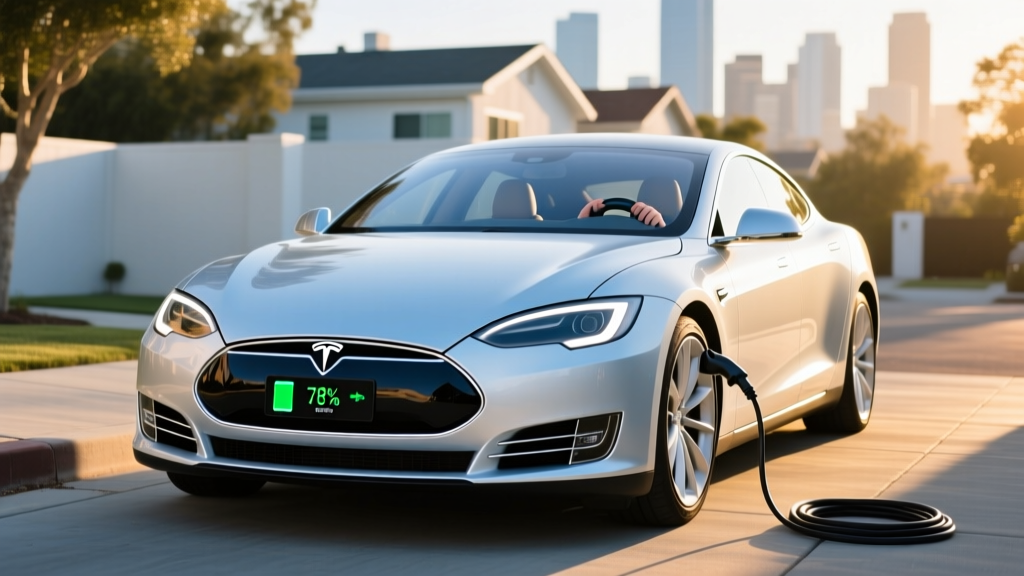
The 2014 Tesla Model S in 2026: Still Worth Considering?
When the 2014 Tesla Model S launched, it redefined what an electric sedan could be. Over a decade later, it remains one of the most common used EVs on the road — and one of the most searched. For budget-conscious EV shoppers eyeing the secondary market, the 2014 Model S presents a compelling but nuanced proposition: luxury-car performance and access to the Supercharger network at a fraction of its original $70,000+ sticker, offset by aging battery chemistry, limited DC fast-charging speeds by modern standards, and the realities of out-of-warranty ownership.
This guide covers every number you need to evaluate a used 2014 Model S today — EPA range versus real-world expectations, battery degradation data, charging speeds across Level 1, Level 2, and DC fast charging, and whether the IRS §25E used EV tax credit applies. Let's get into the data.
2014 Tesla Model S: Core Specifications at a Glance
| Specification | Model S 60 | Model S 85 | Model S P85/P85+ |
|---|---|---|---|
| EPA Range (original) | 208 mi | 265 mi | 265 mi |
| Battery Capacity (gross) | 60 kWh | 85 kWh | 85 kWh |
| Battery Chemistry | NMC (Panasonic) | NMC (Panasonic) | NMC (Panasonic) |
| Drivetrain | RWD | RWD | RWD |
| Horsepower | 302 hp | 362 hp | 416 hp |
| 0–60 mph | 5.9 sec | 5.4 sec | 4.2 sec (P85+) |
| EPA Efficiency | 95 MPGe | 89 MPGe | 89 MPGe |
| Cargo Volume | 26.3 cu ft (rear trunk) + 5.3 cu ft (frunk) = 31.6 cu ft total | ||
| Original MSRP | ~$69,900 | ~$79,900 | ~$93,400+ |
| Battery Warranty (new) | 8 yr / 125,000 mi | 8 yr / unlimited mi | 8 yr / unlimited mi |
Note: All 2014 Model S variants are rear-wheel drive. Dual-motor AWD (the "D" badge) was introduced for the 2015 model year. Autopilot hardware (HW1) was introduced in late September 2014 — so some 2014 models have it and some do not. Always verify by VIN.
Real-World Range: What to Expect From a Decade-Old Battery
EPA Estimated: 265 miles
Real-World Highway (70 mph, mild weather): ~220–240 miles
Real-World City/Mixed: ~240–260 miles
Cold Weather (below 32°F): ~170–200 miles
The 2014 Model S 85 was rated at 265 miles of EPA range when new — a benchmark figure at the time. But two factors compress that number significantly in 2026: battery degradation and real-world driving conditions.
Degradation expectations: Panasonic NMC cells in the 85 kWh pack typically show 10–18% capacity loss after 10–12 years, depending on charging habits and climate exposure. Recurrent Energy's fleet data suggests that a 2014 Model S 85 with ~120,000 miles might retain 82–90% of its original capacity — translating to roughly 215–240 miles of practical range in ideal conditions. The 60 kWh pack, with fewer cells and no unlimited-mileage warranty, tends to show more variance.
Highway and cold-weather impact: The Model S is a large, heavy sedan with a drag coefficient of 0.24. At sustained highway speeds (75+ mph), expect a 10–15% reduction from the EPA figure even with a healthy battery. In freezing temperatures, lithium-ion internal resistance increases and cabin heating draws significant energy — plan for 25–35% range loss. Unlike newer Teslas, the 2014 Model S lacks a heat pump; it uses resistive PTC heating, which is far more energy-intensive.
Bottom line: A well-maintained 2014 Model S 85 in 2026 realistically delivers 200–230 miles of usable range in mixed driving, and as little as 170 miles in winter highway conditions. If your daily commute exceeds 150 miles round-trip with no mid-day charging, this car will require careful planning.
Charging Speeds: Supercharger Access, But at a Slower Pace
| Charging Level | Power | Speed (mi/hr added) | Notes |
|---|---|---|---|
| Level 1 (120V outlet) | ~1.4 kW | ~3–4 mi/hr | Emergency/trickle only |
| Level 2 (240V, single charger) | 10 kW | ~29 mi/hr | Standard onboard charger |
| Level 2 (240V, dual charger option) | 20 kW | ~58 mi/hr | Optional upgrade; rare |
| DC Fast Charge (Supercharger V2) | ~120 kW peak | ~280 mi/hr (peak) | Tapers significantly above 60% |
| DC Fast Charge (CHAdeMO adapter) | ~50 kW | ~120 mi/hr | Requires Tesla CHAdeMO adapter (discontinued) |
kW vs. kWh refresher: kW (kilowatts) measures the rate of energy flow — think of it as the "speed" of charging. kWh (kilowatt-hours) measures the total energy stored in the battery — the "tank size." A 120 kW charger fills an 85 kWh battery faster than a 50 kW charger, but neither sustains peak rate for the entire session.
DC fast charging reality: The 2014 Model S can peak at roughly 120 kW on a V2 Supercharger, but only at low states of charge (below ~40%). The charge curve tapers progressively: by 60% SoC, you're likely seeing 60–70 kW; by 80%, drops to 30–40 kW. A realistic 10–80% session takes approximately 45–55 minutes — noticeably slower than modern EVs like the Hyundai Ioniq 5 (18 minutes) or the current Model 3 (under 25 minutes). V3 Superchargers (250 kW) are backward-compatible but the 2014 Model S cannot accept more than ~120 kW regardless of the station's capability.
Home Level 2 charging: The standard onboard charger accepts 10 kW (40 amps). A full charge from near-empty on a home Level 2 station (such as a Tesla Wall Connector or ChargePoint Home Flex) takes roughly 8.5 hours for the 85 kWh pack. This is adequate for overnight charging but slower than the 11.5–22 kW onboard chargers in newer EVs. If the vehicle was optioned with dual chargers (20 kW), a full charge drops to ~4.5 hours — but this was a $3,600 option and is uncommon.
Connector note: The 2014 Model S uses Tesla's proprietary connector, which is now being adopted industry-wide as NACS (North American Charging Standard). However, the 2014-era port is physically the same but may require a software update for full compatibility with newer NACS-equipped third-party chargers. Tesla Supercharger access is universal for all Model S vehicles.
Performance, Driving Dynamics, and Interior Space
Even by 2026 standards, the 2014 Model S P85+ is quick. Its 416 hp and 443 lb-ft of instant torque deliver a 4.2-second 0–60 mph time — faster than most gas-powered sports sedans of its era. The standard 85 kWh model hits 60 in 5.4 seconds with 362 hp, and the base 60 kWh model manages 5.9 seconds with 302 hp. All variants are rear-wheel drive; torque steer under hard acceleration is noticeable, especially in wet conditions.
Ride quality: The Model S uses an adaptive air suspension (standard on most trims, optional on base 60). In its softest setting, it absorbs highway imperpressions well, though the large 19- or 21-inch wheels transmit more road noise than a comparable Mercedes E-Class. The air suspension on 2014 models is a known wear item — replacement of a single air strut costs $800–$1,500, and compressors can fail around 80,000–120,000 miles.
Interior and cargo: The cabin seats five adults comfortably, with 35.4 inches of rear legroom — competitive with a BMW 5 Series. The 17-inch touchscreen was revolutionary in 2014 and remains functional, though the resolution and processor speed feel dated compared to the Ryzen-based systems in 2021+ Teslas. Total cargo space is 31.6 cubic feet (26.3 cu ft rear trunk + 5.3 cu ft front trunk/frunk), and the rear seats fold 60/40 for longer items.
Tech and driver assist: Early 2014 models have basic cruise control and lane-departure warning. Models built after September 2014 may include Autopilot Hardware 1 (HW1), enabling Traffic-Aware Cruise Control and Autosteer — but only on highways with clear lane markings. This is SAE Level 2 driver assistance: you must keep your hands on the wheel and eyes on the road at all times. HW1 does not support modern Full Self-Driving (Supervised) features and will not receive future Autopilot upgrades. No 2014 Model S is capable of hands-free or autonomous driving.
Used Pricing and the §25E Used EV Tax Credit
| Trim | Mileage Range | Typical Used Price | After §25E Credit (if eligible) |
|---|---|---|---|
| Model S 60 | 80,000–130,000 mi | $12,000–$16,000 | $8,000–$12,000 |
| Model S 85 | 70,000–120,000 mi | $15,000–$22,000 | $11,000–$18,000 |
| Model S P85/P85+ | 60,000–110,000 mi | $18,000–$25,000 | $14,000–$21,000 |
Used 2014 Model S prices have depreciated substantially from their original $70,000–$93,000+ MSRPs, reflecting both normal aging and the rapid pace of EV technology advancement. Prices vary significantly based on mileage, battery health (check the car's State of Health via the service menu or a third-party scan tool), accident history, and whether the vehicle includes free Supercharging transferability.
Does a used 2014 Model S qualify for a federal tax credit? The original §30D new vehicle credit does not apply — this is a used vehicle. However, the §25E Used Clean Vehicle Credit may provide up to $4,000 or 30% of the sale price (whichever is less) if all conditions are met:
- Sale price cap: The vehicle must sell for $25,000 or less from a licensed dealer (private-party sales do not qualify).
- Buyer income cap: Adjusted gross income must not exceed $75,000 (single), $112,500 (head of household), or $150,000 (joint) — based on the year of purchase or the prior year, whichever is lower.
- Vehicle age: Must be at least 2 model years old (2014 qualifies easily).
- First-time transfer: The credit can only be claimed once per vehicle after August 16, 2022. If a previous buyer already claimed the §25E credit on this specific VIN, it is no longer eligible.
- Dealer requirement: Must be purchased through a licensed dealer who reports the sale to the IRS via the IRS Energy Credits Online portal. Private-party and direct Tesla used sales may not qualify.
- One credit per 3 years: Each buyer can only claim the §25E credit once every three years.
Critical caveat: Tesla does not sell used vehicles through traditional dealerships in most states. To qualify for §25E, you'd likely need to purchase a 2014 Model S from an independent used-car dealer (e.g., CarMax, Carvana, or a local franchise dealer) — not directly from Tesla's used inventory or a private seller. Always confirm eligibility with a tax professional before relying on the credit.
Battery Health, Warranty Status, and Replacement Costs
The 2014 Model S 85 and P85 originally came with an 8-year, unlimited-mileage battery and drive unit warranty. The Model S 60 had an 8-year, 125,000-mile warranty. As of 2026, all 2014 Model S vehicles are past their original battery warranty expiration — the 8-year window closed in 2022 at the latest.
This is the single most important factor in evaluating a used 2014 Model S. Without warranty coverage, you bear full financial responsibility for battery or drive unit failure.
Expected degradation: According to fleet data from Recurrent and Tesla's own impact reports, NMC batteries in early Model S vehicles typically retain 82–90% of original capacity after 10–12 years / 100,000–150,000 miles. Vehicles that were frequently Supercharged to 100% or regularly exposed to extreme heat (Arizona, Texas) may show higher degradation — sometimes 15–25% loss. Request a battery health report (State of Health / SoH percentage) before purchase.
Replacement cost: A refurbished 85 kWh replacement battery from Tesla currently costs approximately $12,000–$16,000 including labor at a Tesla Service Center. Third-party EV shops may offer refurbished packs for $8,000–$12,000. The drive unit (motor) replacement runs $5,000–$8,000. These are significant expenses relative to the vehicle's current market value.
Pre-purchase checklist:
- Check battery SoH via the vehicle's service menu or a diagnostic scan tool
- Review charging history — frequent 100% charges and DC fast charging accelerate wear
- Inspect for coolant leaks near the battery (early packs had seal issues)
- Verify whether the battery has ever been replaced under warranty (a plus)
- Test the air suspension for leaks (car should raise/lower smoothly on command)
- Confirm the MCU (Media Control Unit) — the original Tegra-based MCU1 is prone to failure and yellowing; an MCU2 upgrade ($1,500–$2,500) is a common owner investment
Pros, Cons, and the Verdict
- Still quick — P85+ 0–60 in 4.2 sec beats most gas sedans
- Access to the Tesla Supercharger network (35,000+ stalls globally)
- Generous cargo space (31.6 cu ft) with frunk + trunk
- Premium build materials, air suspension, spacious cabin
- Low used pricing ($12K–$25K) vs. original MSRP
- Over-the-air updates still supported for core functions
- NACS connector compatible with the growing standard
- Battery warranty expired — replacement costs $12K–$16K
- DC fast charging peaks at ~120 kW; 10–80% takes 45–55 min
- No heat pump — significant winter range loss (25–35%)
- MCU1 infotainment is slow and failure-prone
- Air suspension is a known wear item ($800–$1,500 per strut)
- HW1 Autopilot is obsolete — no FSD upgrade path
- 10 kW Level 2 onboard charger is slow by modern standards
- §25E tax credit eligibility depends on dealer purchase and VIN history
Who Should (and Shouldn't) Buy a Used 2014 Tesla Model S
- You want a premium, spacious electric sedan under $20K (after credit)
- Your daily commute is under 120 miles round-trip with home charging
- You value Supercharger network access for occasional road trips
- You're comfortable budgeting $2,000–$5,000 for potential repairs (air suspension, MCU, 12V battery)
- You find a well-maintained example with documented battery health above 85% SoH
- You need reliable 250+ mile range in all weather conditions
- You want modern driver-assist features (consider a 2019+ Model 3 or a used Hyundai Ioniq 5)
- You cannot absorb a $12K–$16K battery replacement if needed
- Your region has limited Supercharger coverage
- You need fast DC charging for frequent road trips (modern EVs charge 2–3x faster)
Key competitors in the used EV market (2026): A 2017–2019 Chevrolet Bolt EV ($10K–$15K) offers similar range with a newer battery warranty. A 2018–2020 Nissan Leaf Plus ($12K–$18K) provides 226 miles EPA but uses CHAdeMO charging. A 2019 Tesla Model 3 Standard Range Plus ($18K–$24K) delivers better efficiency, faster charging, and modern Autopilot — and may still have remaining battery warranty. Each involves trade-offs in space, performance, and network access.
Frequently Asked Questions
What is the real-world range of a 2014 Tesla Model S in 2026?
A 2014 Model S 85 with average degradation (85–90% SoH) delivers approximately 200–230 miles in mixed driving, 180–210 miles on the highway, and 170–200 miles in cold weather (below freezing). The 60 kWh variant offers roughly 150–175 miles in practice. Always verify battery health before purchase.
How fast does the 2014 Model S charge at home and on road trips?
At home on a 240V Level 2 charger, it adds roughly 29 miles per hour (10 kW), taking about 8.5 hours for a full charge on the 85 kWh pack. On a Tesla Supercharger, it peaks at ~120 kW but tapers significantly — expect a 10–80% session to take 45–55 minutes. This is noticeably slower than modern EVs.
Does a used 2014 Tesla Model S qualify for a federal tax credit?
Not the new-vehicle §30D credit. However, the §25E Used Clean Vehicle Credit may provide up to $4,000 if you buy from a licensed dealer for $25,000 or less, meet income caps ($75K single / $150K joint), and the VIN hasn't previously been claimed under §25E. Tesla's own used sales may not qualify — confirm with a tax professional. See IRS §25E guidelines.
Is the 2014 Model S battery warranty still active?
No. The 8-year battery warranty on all 2014 Model S variants expired by 2022 at the latest. You are fully responsible for any battery or drive unit replacement costs, which range from $12,000–$16,000 for the battery and $5,000–$8,000 for the motor.
Can a 2014 Tesla Model S use FSD (Full Self-Driving)?
No. Vehicles with Autopilot Hardware 1 (HW1), which is what the 2014 Model S has, cannot run modern FSD (Supervised) software. HW1 supports only basic Traffic-Aware Cruise Control and Autosteer on well-marked highways. This is SAE Level 2 driver assistance — the driver must remain fully engaged at all times. There is no upgrade path to HW3/HW4 for FSD capability.
What are the most common expensive repairs on a 2014 Model S?
The top three cost risks are: (1) battery replacement at $12K–$16K if degradation is severe or cells fail, (2) air suspension strut replacement at $800–$1,500 per corner, and (3) MCU1 (original touchscreen computer) failure, with replacement or upgrade costing $1,500–$2,500. The 12V lead-acid auxiliary battery also requires replacement every 3–5 years (~$300–$500).
Is a 2014 Model S worth buying versus a newer used EV?
It depends on your priorities. The 2014 Model S offers more space, performance, and Supercharger access than most used EVs in the $12K–$20K range. However, the expired warranty, slower charging, and aging tech make a 2019+ Model 3 or a newer Chevy Bolt more practical for buyers who prioritize reliability and lower risk. If you find a low-mileage, well-maintained 85 kWh example with strong battery health, the 2014 Model S remains a compelling luxury EV bargain — just budget for the unknowns.