Quick Verdict: The Original Dual-Motor Beast
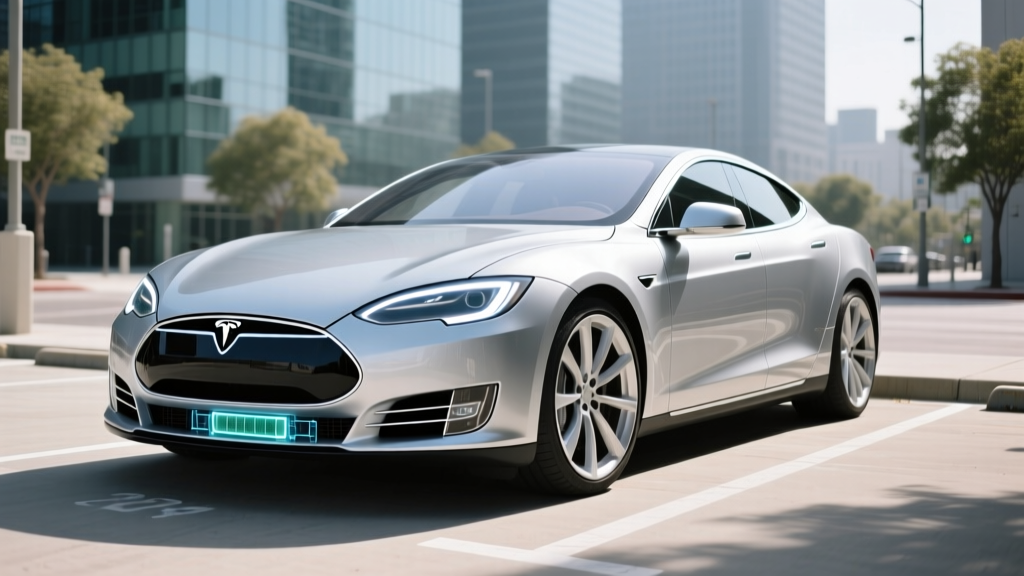
The 2014 Tesla Model S P85D was the car that made "Ludicrous" a household word (though Ludicrous Mode itself arrived with the 2015 firmware update). As Tesla's first dual-motor all-wheel-drive sedan, it paired a 691-horsepower powertrain with a then-class-leading 274-mile EPA range estimate. More than a decade later, the P85D remains one of the most compelling used EVs on the market — a 0-60 mph time of 3.2 seconds still embarrasses most new performance sedans, and the Supercharger network advantage is unmatched.
But buying a 2014 P85D in 2026 means navigating real concerns: battery degradation on a pack that's now 11–12 years old, the transition from Tesla's proprietary connector to the NACS industry standard, and the reality that federal tax credits for used EVs have strict income and price caps. This review breaks down every number you need to evaluate one.
Range, Battery & Efficiency: What to Expect in 2026
Real-World Expectation (2026): Expect 210–245 miles in mixed driving on a healthy pack. Highway-only driving at 70+ mph drops this to roughly 195–220 miles. In freezing temperatures (below 32°F), plan for 170–200 miles of usable range due to battery chemistry limitations and cabin heating load.
The P85D carries an 85 kWh battery pack (approximately 81 kWh usable) using NMC (nickel-manganese-cobalt) chemistry. This was Tesla's highest-capacity pack at the time, and it delivered an EPA-rated efficiency of 93 MPGe combined — roughly 36 kWh per 100 miles according to fueleconomy.gov.
| Spec | Value |
|---|---|
| EPA Range | 274 miles |
| Battery (Total / Usable) | 85 kWh / ~81 kWh |
| Battery Chemistry | NMC (Nickel-Manganese-Cobalt) |
| Drivetrain | Dual-Motor AWD |
| Horsepower (combined) | 691 hp |
| Torque | 687 lb-ft |
| 0–60 mph | 3.2 seconds |
| EPA Efficiency | 93 MPGe / 36 kWh/100 mi |
| Max DC Fast Charge | ~120 kW (Supercharger V2) |
| Level 2 Charge Rate | 10 kW (single onboard charger) or 20 kW (dual charger option) |
| Cargo Volume | 26.3 cu ft (rear) + 5.3 cu ft (frunk) |
| Rear Legroom | 35.4 inches |
| Curb Weight | ~4,936 lbs |
Battery Degradation: The Critical Used-Buyer Question
NMC chemistry in early Tesla packs typically shows 10–18% degradation after 100,000–150,000 miles, based on aggregated owner data. A P85D with 120,000 miles and 12% degradation would retain roughly 241 miles of EPA-equivalent range when new — but real-world range scales proportionally, so expect closer to 190–220 miles usable. Before purchasing, check the battery's State of Health (SoH) through the car's service menu or request a Tesla Service diagnostic report. The 8-year/unlimited-mile battery warranty was standard, meaning a 2014 P85D's battery warranty expired in 2022. Any battery failure is now an out-of-pocket expense — Tesla quotes approximately $12,000–$18,000 for a replacement pack, though third-party options exist for less.
Charging Speeds: Supercharger V2 and Home Level 2
| Charging Level | Max Power (kW) | Speed / Time |
|---|---|---|
| Level 1 (120V, 12A) | ~1.4 kW | ~3 miles per hour |
| Level 2 (240V, single charger) | 10 kW | ~29 miles per hour |
| Level 2 (240V, dual charger option) | 20 kW | ~58 miles per hour |
| DC Fast Charge (Supercharger V2) | ~120 kW peak | 10–80% in ~40 minutes |
| DC Fast Charge (CHAdeMO adapter) | ~50 kW | 10–80% in ~75 minutes |
The P85D's peak DC fast-charge rate of approximately 120 kW was impressive in 2014 but is modest by 2026 standards. The charge curve tapers noticeably above 60% State of Charge (SoC), with speeds dropping to roughly 60 kW by 80% and below 30 kW above 90%. This means a 10–80% session at a Supercharger V2 station takes about 40 minutes — acceptable for road trips but noticeably slower than modern EVs like the Hyundai Ioniq 5 (10–80% in ~18 minutes at 240 kW).
Connector Compatibility in 2026
The 2014 P85D uses Tesla's proprietary connector (the same physical design now adopted as the North American Charging Standard, or NACS). Tesla has opened Supercharger access to non-Tesla EVs with NACS ports, and the P85D retains full access to the Supercharger network — a significant used-EV advantage. For non-Tesla DC fast chargers using CCS1, you'll need a Tesla-to-CCS adapter (approximately $200–$250 aftermarket). Note that Tesla's CHAdeMO adapter, once sold officially, has been discontinued but is still available used.
Performance: 691 Horsepower That Still Stuns
The P85D's dual-motor setup places a larger induction motor on the rear axle and a smaller one up front, combining for 691 hp and 687 lb-ft of torque. The 3.2-second 0–60 mph time was supercar territory in 2014 and remains seriously quick today. The instantaneous torque delivery — no gear shifts, no turbo lag — makes the P85D feel even faster than the stopwatch suggests in real-world passing maneuvers.
The air suspension (standard on P85D) provides adjustable ride height and firmness, though early units are prone to air strut failures around 80,000–120,000 miles. Replacement air struts run $1,500–$2,500 per corner. The regenerative braking system is strong enough for one-pedal driving in most situations, and the brake pads and rotors typically last well beyond 100,000 miles thanks to regen handling most deceleration.
Pricing, Tax Credits & Total Cost of Ownership
| Item | Amount |
|---|---|
| Original MSRP (2014) | ~$120,000 (with typical options) |
| Used Market Price (2026, avg.) | $18,000–$28,000 |
| Federal Used EV Tax Credit (§25E) | Up to $4,000 (30% of sale price, max $4,000) |
| Credit-Adjusted Price (best case) | $14,000–$24,000 |
The 2014 P85D originally stickered at approximately $120,000 when equipped with common options (dual chargers, air suspension, Tech Package, panoramic roof). Depreciation has been steep — a blessing for used buyers. In 2026, expect to pay $18,000–$28,000 depending on mileage, battery health, and cosmetic condition.
Federal Used EV Tax Credit (IRS §25E)
The P85D may qualify for the federal used clean vehicle credit under IRS §25E, which provides 30% of the sale price up to a maximum of $4,000. Key eligibility requirements:
- Sale price must be $25,000 or less — this rules out low-mileage, premium-condition P85D listings
- Buyer income caps: AGI must not exceed $75,000 (single), $112,500 (head of household), or $150,000 (joint filers)
- Vehicle must be at least 2 model years old — the 2014 model year easily qualifies
- Must purchase from a licensed dealer — private-party sales do not qualify
- Vehicle must have a battery capacity of at least 7 kWh — the 85 kWh pack qualifies
- Credit is non-refundable — you must have sufficient tax liability to claim it (point-of-sale transfer is available for §25E as of 2024)
Note: This is the §25E used-vehicle credit, not the §30D new-vehicle credit. Consult a tax professional to confirm your eligibility, as IRS rules are subject to change and individual circumstances vary.
Estimated 5-Year Ownership Cost
Assuming a $22,000 purchase price and 12,000 miles/year:
- Electricity (charging): ~$3,600 over 5 years (at $0.14/kWh national average, 36 kWh/100 mi)
- Insurance: ~$10,000–$14,000 over 5 years (Model S premiums remain elevated due to repair costs)
- Maintenance: ~$3,000–$5,000 (tires, cabin air filter, wiper fluid, brake fluid; no oil changes)
- Potential major repairs: Air suspension struts ($1,500–$2,500 each), drive unit replacement ($3,000–$5,000), or battery ($12,000–$18,000) — budget accordingly
- Estimated 5-year total: $38,600–$62,000 including purchase price, heavily dependent on repair outcomes
Interior, Tech & Driver Assistance
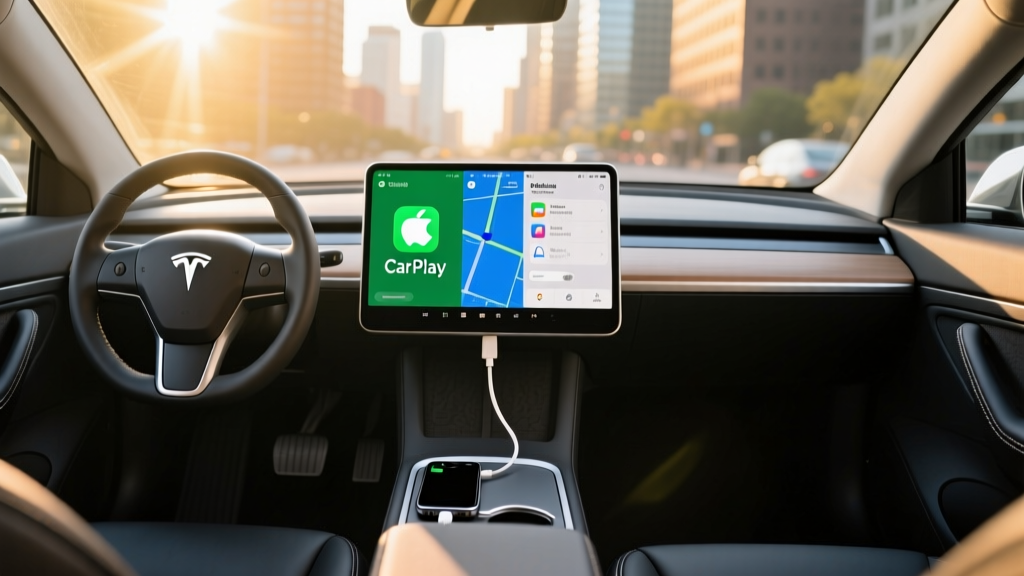
The P85D's interior centers on a 17-inch touchscreen that was revolutionary in 2014 and still looks large by 2026 standards. However, the screen uses an older capacitive technology that can develop yellowing edges or touch-unresponsive zones — a known issue that costs $1,500–$3,000 to replace. The instrument cluster is a 12.3-inch digital display behind the steering wheel.
Notable tech features include:
- Over-the-air (OTA) updates: Tesla continued pushing firmware updates to 2014 Model S vehicles through at least 2023, though newer features (like the redesigned UI) may not be supported on the older MCU1 hardware. Vehicles upgraded to MCU2 (a ~$2,000 retrofit) gain access to newer software, faster maps, and streaming media.
- Autopilot (Hardware 1): The P85D was available with the first-generation Autopilot hardware suite (single forward-facing camera, radar, ultrasonic sensors). This provides basic adaptive cruise control and lane-keeping — SAE Level 2 driver assistance. It is not self-driving and requires continuous driver supervision. FSD (Full Self-Driving) capability was not available on HW1 vehicles; these cannot be upgraded to current FSD hardware without a costly retrofit that Tesla has offered only intermittently.
- Panoramic glass roof: An optional feature that opens up the cabin but adds weight and can develop rattles or seal leaks over time.
- Frunk (front trunk): 5.3 cubic feet of additional storage where an engine would normally sit.
Who Should Buy a 2014 P85D (And Who Shouldn't)
Pros
- Supercar-level 3.2-second 0–60 mph for under $25,000
- Full Tesla Supercharger network access (NACS connector)
- Spacious liftback sedan with 26.3 cu ft cargo + 5.3 cu ft frunk
- Dual-motor AWD provides excellent all-weather traction
- Air suspension offers adjustable ride height
- Strong regenerative braking reduces brake wear
- OTA updates kept older vehicles relevant longer than typical cars
Cons
- Battery warranty expired in 2022; replacement costs $12,000–$18,000
- MCU1 infotainment is slow and may lose software support
- Air suspension struts commonly fail at this age ($1,500–$2,500 per corner)
- Autopilot HW1 is outdated; no path to current FSD without expensive retrofit
- 120 kW peak DC charge rate is slow by 2026 standards (~40 min 10–80%)
- Insurance premiums remain high relative to purchase price
- No heat pump — cabin heating draws significantly from the battery in cold weather
- 17-inch touchscreen prone to yellowing and touch failures
Best Use Cases
Ideal for: Performance enthusiasts who want supercar acceleration on a budget, daily commuters with home Level 2 charging who value the Supercharger network for occasional road trips, and buyers who want a spacious AWD sedan with low running costs.
Not ideal for: High-mileage road trippers who need the fastest DC charging, buyers in extreme cold climates who need maximum range reliability, those who want current-generation driver-assistance tech, or anyone uncomfortable with the risk of a $12,000+ battery replacement on a car worth $22,000.
How the P85D Compares to Used Alternatives
At the $18,000–$28,000 price point, the P85D's closest used competitors include:
- 2016–2017 Tesla Model S 75D: Similar dual-motor AWD layout, 259-mile EPA range, newer MCU2 hardware available, but significantly less power (518 hp vs 691 hp). Often priced similarly.
- 2017–2018 Chevrolet Bolt EV: 238-mile EPA range, much slower (0–60 in 6.5 sec), no DC fast-charge network advantage, but far cheaper to insure and maintain. Good for city commuting.
- 2018–2019 Nissan Leaf Plus: 226-mile range, CHAdeMO charging (declining network support), FWD only, but simpler mechanics and lower repair risk.
The P85D wins on performance, charging network access, and interior space. It loses on long-term repair predictability and insurance cost. For a detailed spec-by-spec comparison, cross-reference listings on fueleconomy.gov's side-by-side tool.
Frequently Asked Questions
What is the real-world range of a 2014 Tesla Model S P85D?
On a healthy battery, expect 210–245 miles in mixed driving. Highway-only at 75 mph drops this to roughly 195–220 miles. In sub-freezing temperatures, plan for 170–200 miles. Actual range depends heavily on battery State of Health — always check SoH before purchasing.
How fast does the P85D charge at home and on the road?
At home on a 240V Level 2 charger with the single onboard charger, the P85D adds about 29 miles per hour (10 kW). With the optional dual chargers, that doubles to 58 miles per hour (20 kW). On a Tesla Supercharger V2, peak charge rate is approximately 120 kW, and a 10–80% session takes about 40 minutes.
Does the 2014 P85D qualify for a federal tax credit?
It may qualify for the IRS §25E used clean vehicle credit of up to $4,000 (30% of sale price) if purchased from a dealer for $25,000 or less, and if the buyer meets income caps ($75K single / $150K joint). It does not qualify for the §30D new-vehicle credit. Check current IRS guidelines before purchasing.
What should I inspect before buying a used P85D?
Priority inspections: (1) Battery State of Health via Tesla Service diagnostic, (2) air suspension strut condition (listen for compressor cycling, check for sagging corners), (3) MCU1 screen for yellowing or dead zones, (4) drive unit noise (whining or grinding suggests bearing wear), (5) coolant system for leaks (early models had coolant line issues that could damage the battery).
Can the P85D use non-Tesla charging networks?
Yes, with adapters. The P85D natively uses Tesla's connector (now NACS). For CCS1 chargers (Electrify America, EVgo, most non-Tesla networks), you'll need a third-party Tesla-to-CCS adapter. CHAdeMO adapters exist but are discontinued. The Supercharger network remains the most seamless option.
Is the P85D's Autopilot still functional and safe?
Autopilot Hardware 1 provides basic adaptive cruise control and lane-centering on marked highways — it is an SAE Level 2 system requiring full driver attention. It lacks the sensor suite for city-street driving, automatic stop-sign/light handling, or any autonomous capability. It remains functional for highway cruising but is far behind current Tesla HW3/HW4 systems.