Quick Verdict: The Pioneer That Started It All
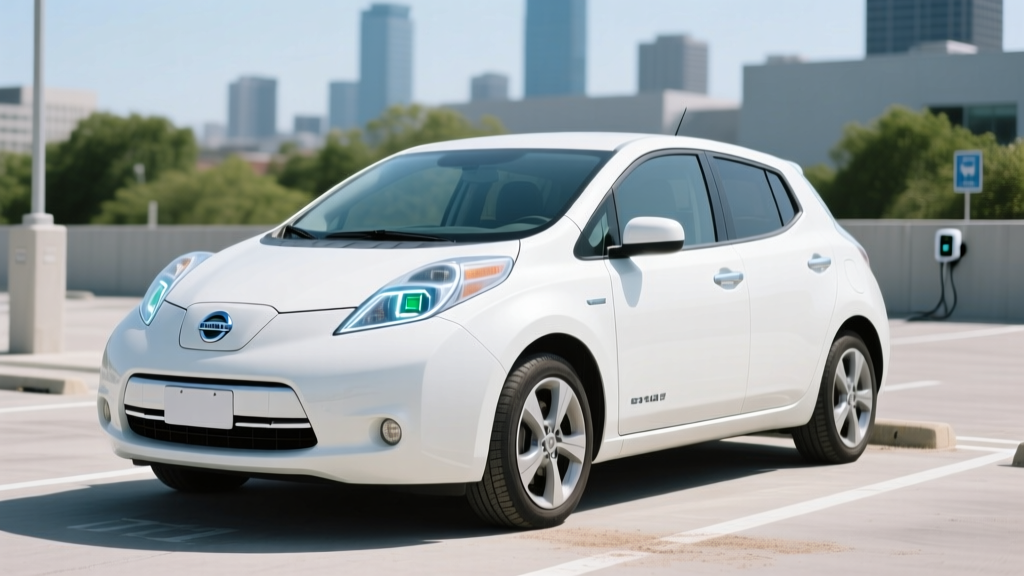
The 2014 Nissan Leaf hatchback was the best-selling electric car in the world when it debuted, and over a decade later it remains one of the most accessible entry points into EV ownership on the used market. With an EPA-estimated 84 miles of range, a 24 kWh lithium-ion battery, and widely available CHAdeMO DC fast charging, the first-generation Leaf is a pragmatic city commuter — not a road-trip machine. If you're shopping the used EV market in 2026 and can find one with a healthy battery, the Leaf delivers remarkably low running costs. But battery degradation is the single biggest variable, and buyers must check State of Health (SoH) before signing anything.
| Spec | Value |
|---|---|
| EPA Range | 84 miles (75 kWh battery pack, 2014 model year) |
| Battery Capacity | 24 kWh total / ~21.5 kWh usable (NMC lithium-ion) |
| Motor Output | 80 kW (107 hp), 187 lb-ft torque |
| 0–60 mph | ~11.5 seconds |
| Drivetrain | Front-wheel drive (single motor) |
| EPA Efficiency | 114 MPGe combined (29 kWh/100 mi) |
| DC Fast Charge (CHAdeMO) | ~50 kW peak |
| Level 2 Charge Rate | 6.6 kW (onboard charger) |
| Cargo Volume | 24.0 cu ft (rear seats up) / 30.0 cu ft (folded) |
| Original Base MSRP (2014) | $28,980 (before incentives) |
| Typical Used Price (2026) | $4,500–$8,500 depending on SoH and mileage |
| Battery Warranty (original) | 8 years / 100,000 miles (capacity loss coverage) |
Real-World Range: What 84 EPA Miles Actually Means
Real-World Expectation: 60–75 miles highway; 80–90 miles city (mild weather)
Cold Weather (below 32°F): 45–60 miles — expect 30–40% range loss without a heat pump
The 2014 Leaf's 84-mile EPA rating was competitive for its era, but it translates to a strictly local-use vehicle by today's standards. In real-world driving, range varies dramatically based on conditions. City driving with frequent regenerative braking opportunities can push you close to or even slightly above the EPA figure, especially in mild 60–75°F weather. Highway cruising at 70+ mph, however, cuts range significantly — the Leaf's aerodynamics and lack of a heat pump work against it.
The 2014 Leaf uses a resistive PTC heater rather than a heat pump, which draws heavily from the 24 kWh battery in winter. Owners in northern climates consistently report 30–40% range reduction in sub-freezing temperatures. If your daily round-trip commute exceeds 50 miles and you experience real winters, this car will require careful planning or midday top-ups.
One critical factor for used buyers: battery degradation. The 2014 Leaf's NMC (nickel manganese cobalt) battery pack is passively air-cooled — not liquid-cooled like modern EVs. This means it degrades faster in hot climates. A 2014 Leaf in Phoenix might show 60–65% State of Health (SoH) by 2026, giving you perhaps 50–55 usable miles. A garage-kept example in Portland could still show 80%+ SoH. Always check the battery health bars on the dashboard (the far-right gauge cluster shows 12 bars when new; count how many remain).
Charging: CHAdeMO, Level 2, and What You Need to Know
| Charging Level | Power / Rate | Time (Empty to Full or 80%) | Notes |
|---|---|---|---|
| Level 1 (120V household) | ~1.4 kW | ~20 hours (full) | Emergency/trickle only; adds ~5 mi/hr |
| Level 2 (240V, 6.6 kW onboard) | 6.6 kW | ~4 hours (full) | Adds ~22 mi/hr; standard home solution |
| DC Fast (CHAdeMO) | ~50 kW peak | ~30 min (0–80%) | CHAdeMO connector; network shrinking in US |
The 2014 Leaf charges via the CHAdeMO DC fast-charging standard on its quick-charge port (located at the front of the car alongside the J1772 Level 2 inlet). This is a critical consideration in 2026: the US charging landscape has shifted heavily toward NACS (Tesla's standard) and CCS1. CHAdeMO infrastructure, primarily Electrify America's legacy stations and some older EVgo locations, is shrinking. Before buying, map the CHAdeMO-compatible stations near your routes using PlugShare or A Better Routeplanner.
On a 50 kW CHAdeMO charger, the Leaf can add roughly 60–70 miles in 30 minutes under ideal conditions. However, the air-cooled battery is prone to rapidgate — Nissan's thermal management system throttles charging speed after repeated fast charges in a single day to prevent overheating. If you plan to DC fast-charge more than once daily, expect subsequent sessions to slow dramatically, sometimes to 20 kW or less.
For home charging, the 6.6 kW onboard charger is adequate. A full charge from empty takes about 4 hours on a Level 2 station, meaning overnight charging easily replenishes daily driving. Most Leaf owners find that home Level 2 charging covers 95%+ of their needs, making public fast charging a rare necessity for this particular vehicle.
Performance and Driving Experience
The 2014 Leaf's 80 kW (107 hp) AC synchronous motor delivers 187 lb-ft of torque to the front wheels. The instant electric torque makes it feel peppy around town — 0–30 mph is genuinely quick — but the 0–60 mph time of roughly 11.5 seconds reveals its limits during highway merging. This is a car optimized for efficiency, not performance.
Driving dynamics are comfortable and compliant. The low center of gravity from the under-floor battery pack keeps body roll reasonable, and the ride quality absorbs urban potholes well. The regenerative braking system offers two modes: standard Drive (D) with mild regen and Eco mode with stronger regen that approaches one-pedal driving at lower speeds, though it won't bring the car to a complete hold like modern EVs.
The 2014 model year introduced minor improvements over the 2011–2013 Leaf, including a slightly more efficient heater and the availability of the 6.6 kW onboard charger (earlier models were limited to 3.3 kW). If you're cross-shopping used Leafs, the 6.6 kW charger is a must-have — verify it's equipped, as the base S trim originally came with the slower 3.3 kW unit.
Interior, Cargo, and Technology
The 2014 Leaf's interior is practical if unremarkable. The hatchback body style provides 24.0 cubic feet of cargo space behind the rear seats and 30.0 cubic feet with the 60/40 split rear seats folded — competitive with compact hatchbacks like the Honda Fit of the same era. Rear-seat legroom measures 33.3 inches, adequate for adults on shorter trips.
Technology reflects its 2014 vintage. The center stack features a 7-inch touchscreen with navigation, Bluetooth, and a USB port. The CARWINGS telematics system (now rebranded as NissanConnect EV) provided remote charge monitoring and climate control pre-conditioning via a smartphone app — though app support for 2014 models has become unreliable as Nissan has shifted focus to newer vehicles.
Available driver-assist features were limited for the era: a rearview camera (standard on SV and SL trims), and the SL trim added a 360-degree Around View Monitor and LED headlights. There is no adaptive cruise control, lane-keeping assist, or automatic emergency braking on the 2014 Leaf — these features simply didn't exist in this price segment at the time.
Pricing, Tax Credits, and Used-Buying Economics
When new, the 2014 Leaf started at $28,980 for the S trim, $32,780 for the SV, and $35,020 for the SL — all before the $7,500 federal tax credit that was available at the time. In the 2026 used market, expect to pay:
- $4,500–$6,000 for high-mileage examples with degraded batteries (8–10 capacity bars remaining)
- $6,000–$8,500 for well-maintained examples with 11–12 capacity bars and under 60,000 miles
- $8,500–$11,000 for battery-replaced or exceptionally preserved low-mileage specimens
Does the 2014 Leaf Qualify for the Federal Used EV Tax Credit?
Yes — potentially. Under IRS §25E (the previously owned clean vehicle credit), you may qualify for up to $4,000 (30% of the sale price, capped at $4,000) when purchasing a qualifying used EV from a dealer. Key requirements:
- The vehicle must be at least two model years old (the 2014 Leaf qualifies)
- Sale price must be $25,000 or less (virtually all used Leafs meet this)
- Buyer income caps: $75,000 single / $112,500 head of household / $150,000 joint (modified AGI)
- The vehicle must not have been transferred to a qualifying buyer after 2022 claiming the same credit (check the vehicle's credit history)
- Must purchase from a licensed dealer (private-party sales do not qualify)
This means a $6,500 used Leaf purchased from a dealer by an income-eligible buyer could net a $1,950 tax credit (30% of $6,500), bringing effective cost to roughly $4,550 — making it one of the cheapest ways to go electric in 2026. Consult a tax professional to confirm your eligibility.
Battery Health, Warranty, and Longevity
The single most important factor when buying a used 2014 Leaf is battery State of Health (SoH). The original 24 kWh NMC battery pack is covered by Nissan's 8-year/100,000-mile battery capacity warranty, which guaranteed the battery would not fall below 9 of 12 capacity bars (roughly 70% SoH). For a 2014 model, this warranty expired in 2022 at the latest — meaning any remaining battery issues are out of pocket.
Battery replacement costs for the 2014 Leaf typically range from $6,500 to $9,000 (including labor) through Nissan dealerships, though some owners have sourced refurbished packs from salvage yards for $2,500–$4,000. A few third-party shops specialize in Leaf battery upgrades, including swaps to the 40 kWh pack from the second-generation Leaf, though this is a complex and costly procedure ($10,000+).
To assess battery health before purchase:
- Check the capacity bars on the dashboard gauge — 12/12 is ideal; anything below 10 means significant degradation
- Use LeafSpy (a third-party OBD-II app) to read exact SoH percentage, cell voltage variance, and lifetime charge cycles — this is the gold standard for used Leaf evaluation
- Avoid hot-climate cars — Leafs from Arizona, Texas, and Southern California tend to show worse degradation due to the air-cooled battery's vulnerability to heat
- Review charging history — cars that were primarily Level 2 home-charged typically have healthier packs than those repeatedly DC fast-charged
How the 2014 Leaf Stacks Up Against Competitors
Pros
- Extremely low used prices — one of the cheapest EVs available
- Proven, simple powertrain with abundant parts and community knowledge
- Hatchback practicality with 24 cu ft cargo space
- Very low operating cost (~3–4¢/mile on average US electricity)
- Eligible for up to $4,000 used EV tax credit (§25E)
- Widely available — over 165,000 sold in the US across first generation
Cons
- 84-mile EPA range is limiting even for city use in cold weather
- Air-cooled battery degrades faster than liquid-cooled competitors
- CHAdeMO fast-charging network is shrinking in the US
- No active safety features (AEB, lane-keep, blind-spot) available
- Rapidgate limits repeated DC fast charging
- Dated infotainment with unreliable app connectivity
Compared to a used 2014–2016 BMW i3, the Leaf offers more cargo space and a lower price, but the i3's liquid-cooled battery holds SoH better and its available range-extender (REx) gas engine eliminates range anxiety. Against a used 2015–2017 Kia Soul EV, the Soul offers similar range (~93 miles EPA) but with CCS charging and a slightly more modern interior. The Chevrolet Bolt EV (2017+) is a generational leap with 238 miles of range and liquid cooling, but commands $10,000–$14,000+ on the used market — well above the Leaf.
Who Should Buy the 2014 Nissan Leaf Hatchback?
Choose the 2014 Leaf if:
- You need a second car for local errands, school runs, and commutes under 40 miles round-trip
- You have reliable home Level 2 charging (garage or driveway with 240V access)
- You live in a mild climate (Pacific Northwest, coastal California) where cold-weather range loss is minimal
- Your budget is under $7,000 and you want the cheapest possible entry into EV ownership
- You're comfortable with basic tech and don't need modern driver assists
Look elsewhere if:
- Your daily commute exceeds 50 miles round-trip
- You live in extreme heat (Arizona, Texas) or extreme cold (Minnesota, Maine)
- You need highway-capable range for weekend road trips
- You don't have access to home charging
- You want modern safety features like automatic emergency braking
Frequently Asked Questions
What is the real-world range of the 2014 Nissan Leaf?
Expect 60–75 miles on the highway and 80–90 miles in city driving during mild weather. In winter (below freezing), range drops to 45–60 miles due to the resistive heater drawing from the 24 kWh battery. Actual range also depends heavily on battery State of Health — a degraded pack showing 9 of 12 bars may only deliver 50–55 total miles even in ideal conditions.
How fast does the 2014 Leaf charge at home and on DC fast chargers?
On a Level 2 home charger (240V), the 6.6 kW onboard charger adds roughly 22 miles of range per hour, reaching a full charge in about 4 hours. On a 50 kW CHAdeMO DC fast charger, it reaches 80% in approximately 30 minutes — but only if the battery is at an optimal temperature. Repeated fast charges trigger thermal throttling (rapidgate), slowing subsequent sessions.
Does the 2014 Nissan Leaf qualify for any EV tax credit in 2026?
Not the new-vehicle §30D credit, but it may qualify for the IRS §25E used clean vehicle credit — up to $4,000 (30% of the sale price, capped at $4,000) if purchased from a dealer for $25,000 or less and the buyer meets income limits ($75K single / $150K joint). Confirm eligibility with a tax professional, as prior credit claims on the vehicle can disqualify it.
Is the 2014 Leaf worth buying compared to other used EVs?
It depends on your budget and needs. At $5,000–$7,000, it's one of the cheapest EVs available and excels as a local commuter with home charging. But if you can stretch to $12,000–$15,000, a used 2017+ Chevrolet Bolt EV (238 miles EPA, liquid-cooled battery, CCS charging) is a dramatically more capable vehicle. The Leaf makes sense as a budget second car, not as a primary vehicle for most households.
How long does the 2014 Leaf battery last, and what does replacement cost?
Most 2014 Leafs show 70–85% State of Health after 10–12 years, depending on climate and charging habits. The original 8-year/100,000-mile battery warranty has expired for all 2014 models. A new replacement battery from Nissan costs $6,500–$9,000 installed. Refurbished packs are available for $2,500–$4,000, and some third-party shops offer upgraded 40 kWh swaps for $10,000+. Check SoH with LeafSpy before purchasing.
Can I use a Tesla Supercharger with the 2014 Nissan Leaf?
No. The 2014 Leaf uses the CHAdeMO DC fast-charging standard and J1772 for Level 2. Tesla Superchargers use the NACS connector, and Tesla has not released a CHAdeMO-to-NACS adapter. Third-party CHAdeMO-to-NACS adapters have been announced but are not widely available or certified as of early 2026. Your DC fast-charging options are limited to CHAdeMO-equipped stations from Electrify America, EVgo, and independent networks.
Sources: EPA Fuel Economy — 2014 Nissan Leaf, IRS §25E Used Clean Vehicle Credit, NHTSA 2014 Nissan Leaf Safety Ratings