The Quick Answer: 2014 Focus Electric at a Glance
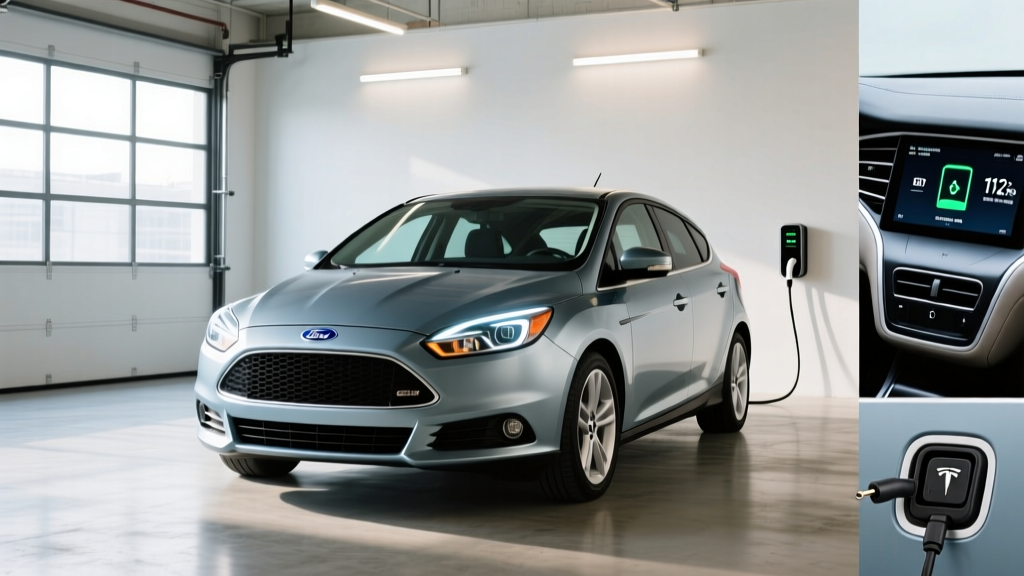
The 2014 Ford Focus Electric is a discontinued, early-generation battery-electric hatchback with an EPA-estimated 76 miles of range from a 23 kWh usable lithium-ion battery (liquid-cooled). It charges at a maximum of 6.6 kW on Level 2 and lacks DC fast charging entirely. On the used market in 2026, expect to pay roughly $5,000–$9,000 depending on mileage and battery health. It qualifies for the up-to-$4,000 used EV tax credit (IRS §25E) if you meet income and dealer requirements. It works best as a low-cost city commuter or second car — not a primary vehicle for anyone with a long commute or no home charging.
2014 Focus Electric: Full Specifications
| Specification | Value |
|---|---|
| EPA Range | 76 miles |
| Battery (Usable) | 23 kWh, lithium-ion (NMC), liquid-cooled |
| Onboard Charger (Level 2) | 6.6 kW (J1772 connector) |
| DC Fast Charging | Not available |
| Level 2 Charge Time (0–100%) | ~3.5–4 hours |
| Level 1 Charge Time (120V, 12A) | ~20+ hours |
| Motor Output | 107 kW (143 hp), 184 lb-ft torque |
| 0–60 mph | ~9.5 seconds |
| EPA Efficiency | 105 MPGe combined (city 110 / hwy 99) |
| Energy Consumption | 32 kWh/100 mi |
| Cargo Volume | 14.5 cu ft (reduced by battery packaging) |
| Original MSRP (2014) | $29,170 (before federal credit) |
| Used Price Range (2026) | $5,000–$9,000 |
| Battery Warranty (Original) | 8 years / 100,000 miles (expired) |
Source: EPA fueleconomy.gov — 2014 Ford Focus Electric
Real-World Range: What 76 EPA Miles Actually Means
EPA Sticker: 76 miles
Real-World Expectation: 55–70 miles in mixed driving; as low as 40–50 miles in freezing weather or sustained highway speeds above 70 mph.
The 2014 Focus Electric was built in an era when sub-100-mile EVs were the norm. Its 23 kWh usable battery is roughly a third the size of a 2025 Hyundai Ioniq 5's pack. In moderate temperatures (50–75°F) with city driving and liberal use of regenerative braking, owners consistently report achieving 65–72 miles before the low-battery warning. However, two factors crush that number in practice:
- Cold weather: Lithium-ion batteries lose efficiency in cold, and cabin heating draws heavily from the pack. Expect a 25–40% range reduction below freezing. A 76-mile EPA car becomes a 45–55-mile car at 20°F.
- Highway driving: EVs are least efficient at sustained high speeds. At 75 mph, expect roughly 55–60 miles of range even in mild weather.
After 10+ years on the road, battery degradation is a real variable. Ford's liquid-cooled thermal management system was a notable advantage over the passively cooled Nissan Leaf of the same era, and Focus Electric batteries have generally held up better than Leaf batteries. Still, expect 10–20% capacity loss on a 2014 model, meaning your usable range may start at 60–68 miles even in ideal conditions. Before purchasing, request a battery health diagnostic or use an OBD-II scanner with an app like LeafSpy-equivalent (Ford-specific tools are more limited) to assess state of health (SoH).
Charging: The Biggest Limitation
The 2014 Focus Electric's charging profile reflects its era — and it's the single biggest practical limitation for a 2026 buyer.
| Charging Level | Power | Connector | Time (Empty to Full) | Miles Added per Hour |
|---|---|---|---|---|
| Level 1 (120V household) | ~1.4 kW | J1772 | 20+ hours | ~3–4 mi/hr |
| Level 2 (240V home/public) | 6.6 kW | J1772 | ~3.5–4 hours | ~18–22 mi/hr |
| DC Fast Charging | N/A | N/A | Not supported | N/A |
No DC fast charging means this car cannot use any public fast-charger network — no Tesla Superchargers, no Electrify America, no EVgo. You are limited to Level 2 public chargers and home charging. For a car with 76 miles of range, this is manageable if your daily round-trip commute is under 50 miles and you charge at home every night. It becomes a serious constraint if you rely on public infrastructure or ever need to drive beyond the car's range in a single day.
Home charging setup: The Focus Electric's 6.6 kW onboard charger means a standard 240V / 30-amp circuit (like a dryer outlet) will fully replenish the battery overnight. A Level 2 home charger installation typically costs $500–$2,000 depending on your electrical panel and wiring run. If you only have access to a 120V outlet, Level 1 charging adds roughly 3–4 miles per hour — enough to recover a 40-mile commute overnight, but barely.
Used EV Costs: Purchase, Charging, and Maintenance Breakdown
| Cost Category | 2014 Focus Electric (Used) | Comparable Gas Car (2014 Focus Gas, Used) |
|---|---|---|
| Purchase Price (2026) | $5,000–$9,000 | $5,000–$8,000 |
| Federal Used EV Tax Credit (§25E) | Up to $4,000 (30% of sale price, income caps apply) | $0 |
| Effective Purchase Price | $3,000–$6,000 (after credit) | $5,000–$8,000 |
| Fuel/Energy Cost per Mile | ~$0.04–$0.06 (at $0.14/kWh avg) | ~$0.12–$0.15 (at $3.40/gal, 30 MPG) |
| Annual Fuel Cost (12,000 mi) | ~$480–$720 | ~$1,360–$1,800 |
| Annual Maintenance | ~$200–$400 (tires, wipers, cabin filter, brake fluid) | ~$600–$1,000 (oil, filters, belts, brakes) |
| Insurance (avg annual) | ~$900–$1,200 | ~$900–$1,200 |
| Battery Replacement Risk | $5,000–$8,000 (if needed; aftermarket options limited) | N/A (engine/transmission risk: $2,000–$4,000) |
The used EV tax credit under IRS §25E can make this car remarkably cheap. The credit equals 30% of the sale price, capped at $4,000, and is available for vehicles sold for $25,000 or less through a registered dealer. Income limits apply: modified AGI must not exceed $75,000 (single), $112,500 (head of household), or $150,000 (joint). The credit is non-refundable and can only be claimed once per buyer every three years.
Focus Electric vs. Gas Focus vs. Modern Used EVs
| Attribute | 2014 Focus Electric | 2014 Focus Gas (2.0L) | 2017–2018 Chevy Bolt EV (Used) |
|---|---|---|---|
| EPA Range | 76 miles | ~370 miles (12.4 gal tank, 30 MPG) | 238 miles |
| Annual Fuel Cost | ~$600 | ~$1,500 | ~$600 |
| DC Fast Charging | No | N/A | Yes (55 kW CCS) |
| Used Price (2026) | $5,000–$9,000 | $5,000–$8,000 | $10,000–$15,000 |
| Cargo Space | 14.5 cu ft | 23.8 cu ft | 16.9 cu ft |
| Battery Degradation Risk | Moderate (liquid-cooled) | N/A | Low (liquid-cooled, larger buffer) |
| Best Use Case | Short city commute, 2nd car | Daily driver, longer commutes | Primary EV, road-trip capable |
The Focus Electric's only compelling advantage over a used gas Focus is lower per-mile energy cost and reduced maintenance. But compared to a used Chevy Bolt EV (2017–2018), the Focus Electric falls far short on range, cargo space, and charging capability. If your budget can stretch to $12,000–$15,000, a Bolt EV is a dramatically more capable used EV. The Focus Electric makes sense only at the lowest end of the budget — ideally under $6,000 after the tax credit — and only as a dedicated short-range commuter.
Common Misconceptions About the Focus Electric
| Myth | Fact |
|---|---|
| "It qualifies for the $7,500 federal tax credit." | No. The new-vehicle §30D credit applies only to new EVs. The Focus Electric is eligible for the used EV credit (§25E), up to $4,000, with income and dealer requirements. |
| "The battery will need immediate replacement." | Ford's liquid-cooled thermal management has kept degradation moderate. Most 2014 examples retain 80–90% of original capacity. A pre-purchase diagnostic is still essential. |
| "I can fast-charge it on road trips." | The 2014 Focus Electric has no DC fast charging port. It cannot use any fast-charging network. Road trips beyond 76 miles require overnight stops with Level 2 access. |
| "It's basically the same as a gas Focus to drive." | Driving dynamics are similar (same chassis), but the electric motor delivers instant torque and the car is notably quieter. The heavy battery pack (mounted in the rear) affects cargo space and weight distribution. |
| "Any mechanic can service it." | Basic maintenance (tires, brakes, wipers) is standard. High-voltage system diagnostics require a Ford dealer or EV-specialist shop. Parts availability is declining as the model ages. |
Decision Framework: Should You Buy a 2014 Focus Electric?
Buy It If:
- Your round-trip commute is under 45 miles and mostly city/suburban driving
- You have reliable home Level 2 charging (garage or driveway with 240V access)
- You want the cheapest possible entry into EV ownership — ideally under $5,000 after the used-EV tax credit
- This will be a second car in your household, with a gas or longer-range vehicle available for trips
- You live in a mild climate where cold-weather range loss is minimal
Skip It If:
- Your commute exceeds 50 miles round-trip, especially with highway segments
- You cannot charge at home and must rely on public charging infrastructure
- You live in a region with harsh winters (regular sub-30°F temperatures)
- You need this as your only vehicle and occasionally drive longer distances
- You cannot verify battery health before purchase (no diagnostic available)
What First-Time EV Buyers Should Know Before Purchasing
If the 2014 Focus Electric is your first EV, understand these ownership realities before signing:
- Home charging is almost mandatory. Without it, a 76-mile-range car with no DC fast charging is impractical. Budget $500–$2,000 for a Level 2 home charger installation (consult a licensed electrician for your specific panel capacity).
- Plan for the worst-case range. Don't buy based on 76 EPA miles. Plan around 50 miles of usable range to account for degradation, weather, and a safety buffer.
- Verify battery health. Ask the seller for a state-of-health (SoH) reading. If buying from a dealer, request it in writing. A pack below 80% SoH on a car this old is a negotiation point — or a walk-away.
- The used EV tax credit has specific rules. You must buy from a registered dealer (not a private party), your income must be under the caps, and you can only use the credit once every three years. Review IRS §25E guidance or consult a tax professional before relying on the credit.
- Maintenance is lower but not zero. You'll save on oil changes and exhaust repairs, but tires wear faster on EVs (instant torque, heavier weight), and brake fluid still needs periodic flushing. The 12V auxiliary battery also needs replacement every 4–6 years, just like any car.
Frequently Asked Questions
What is the real-world range of a 2014 Focus Electric in 2026?
With typical battery degradation (10–20% over 12 years), expect 55–68 miles in mild weather with city driving. In cold weather or on the highway, that drops to 40–55 miles. Always test-drive with a full charge and monitor the guess-o-meter against your actual consumption.
Can I install DC fast charging on a Focus Electric aftermarket?
No. The 2014 Focus Electric was not designed with DC fast-charging hardware, and there is no practical aftermarket retrofit. You are limited to Level 1 (120V) and Level 2 (240V) AC charging via the J1772 port.
Is the 2014 Focus Electric eligible for any tax credits in 2026?
It is not eligible for the new-vehicle §30D credit. It may qualify for the used clean vehicle credit (§25E), which provides up to $4,000 (30% of the sale price). Requirements include: purchase price under $25,000, bought from a registered dealer, buyer income under IRS caps, and the vehicle must be at least two model years old. Confirm eligibility with your tax professional.
How does the Focus Electric compare to a used Nissan Leaf from the same era?
The 2014 Focus Electric (76 mi range, liquid-cooled battery) generally shows less battery degradation than the 2014 Nissan Leaf (84 mi range, passively cooled battery). The Leaf's air-cooled pack is more susceptible to heat-related degradation, especially in hot climates. However, the Leaf offers slightly more range and more cargo space. Both lack DC fast charging in their base configurations.
What happens if the battery fails out of warranty?
The original 8-year/100,000-mile battery warranty has expired on all 2014 models. A replacement battery pack, if available through Ford or a third-party rebuilder, would cost an estimated $5,000–$8,000 including labor. Given the car's used value, a battery failure could total the vehicle economically. This is the primary financial risk of buying any early-generation EV out of warranty.
Is the Focus Electric safe?
The 2014 Focus Electric earned a Top Safety Pick rating from IIHS with Good scores in moderate overlap front, side, roof strength, and head restraint tests. It includes standard stability control, anti-lock brakes, and six airbags. It lacks modern ADAS features like automatic emergency braking or lane-keeping assist, which are now common on newer vehicles.
Sources: EPA fueleconomy.gov, IRS Used Clean Vehicle Credit (§25E), IIHS 2014 Ford Focus Safety Ratings