Quick Verdict: The 2014 Chevy Spark EV at a Glance
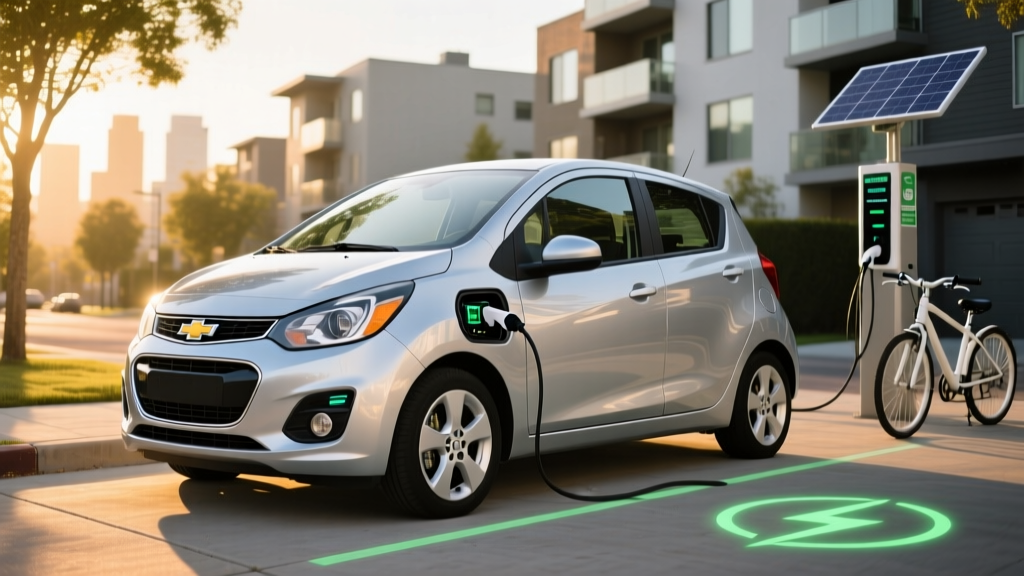
The 2014 Chevy Spark Electric (Spark EV) is a discontinued compliance car with an EPA-estimated 82 miles of range, a 21.3 kWh battery, and DC fast charging via CCS. In 2026, used examples sell for roughly $5,000–$9,000 depending on mileage and battery State of Health (SoH). It works as a low-cost urban commuter if you have home charging and a short daily drive. It does not work as a sole vehicle for anyone with a commute over 40 miles one-way, frequent highway travel, or no access to reliable Level 2 charging. Battery degradation on 12-year-old cells is the single biggest risk — always verify SoH before purchase.
Why the 2014 Spark EV Still Gets Searched in 2026
Chevrolet built the Spark EV only for the 2014–2016 model years, primarily to meet California's ZEV mandate. It was never a mass-market play. Yet it retains a cult following among budget-conscious EV buyers because it was one of the cheapest new EVs you could buy when it launched (starting around $26,685 before incentives) and it offered surprisingly punchy acceleration. In 2026, as used EV prices have settled and newer models remain expensive, the Spark EV surfaces as an entry point for buyers curious about electric driving without a five-figure commitment.
The search volume is small but persistent — people who find one locally want to know: Is this thing still viable? Will the battery leave me stranded? What does ownership actually cost? This guide answers those questions with real numbers.
Specs That Matter: Range, Battery, and Charging
| Specification | 2014 Chevy Spark EV |
|---|---|
| EPA Range | 82 miles |
| Battery Capacity (usable) | ~19 kWh (21.3 kWh gross) |
| Battery Chemistry | NMC (Nickel Manganese Cobalt) |
| Motor Output | 143 hp / 400 lb-ft torque |
| 0–60 mph | ~7.6 seconds |
| EPA Efficiency | 119 MPGe combined (28 kWh/100 mi) |
| Level 1 Charging (120V) | ~1.4 kW — adds ~5 mi/hr |
| Level 2 Charging (240V) | ~3.3 kW onboard — full charge ~6–7 hrs |
| DC Fast Charging | CCS Combo, ~50 kW peak, 0–80% in ~30 min |
| Original MSRP | $26,685 (before incentives) |
| 2026 Used Price Range | $5,000–$9,000 |
| Battery Warranty (original) | 8 years / 100,000 miles (expired) |
Real-World Range Reality Check
The EPA sticker says 82 miles. In practice, expect:
- Mild weather, city driving (30–45 mph): 75–85 miles achievable
- Highway (65–75 mph): 55–65 miles — small batteries punish high-speed driving hard
- Cold weather (below 35°F), no heat pump: 45–60 miles — the Spark EV uses resistive cabin heating, which draws directly from the traction battery
- With battery degradation (10–20% SoH loss): Subtract accordingly from all above figures
If your round-trip commute is 60 miles and you live anywhere with real winters, this car will cause range stress without diligent midday charging.
Battery Health: The Make-or-Break Factor
The Spark EV's 21.3 kWh NMC pack is now roughly 12 years old. NMC chemistry in early-2010s EVs typically shows 10–25% capacity loss over this timeframe, depending on climate exposure, charging habits, and mileage. A Spark EV that spent its life in Phoenix will likely have more degradation than one from Portland.
Before buying, demand a battery State of Health (SoH) reading. The Spark EV's onboard diagnostics don't surface a clean SoH percentage on the dash the way a Leaf does with its capacity bars. Your options:
- Use an OBD-II dongle with an app like SparkEV Battery or Torque Pro to pull SoH data from the BMS (Battery Management System).
- Have a Chevrolet dealer run a battery diagnostic (may cost $100–$150).
- Do a manual range test: charge to 100%, drive to near-empty under known conditions, and compare actual miles to the 82-mile EPA baseline.
If SoH is below 80%, you're working with roughly 65 miles or less of real-world range in good weather. Below 70%, the car becomes a strict neighborhood runabout.
Battery replacement cost: There is no new OEM replacement program. Used or refurbished packs, when available, run $3,500–$6,000 installed through independent EV shops — often approaching or exceeding the car's value. This is the primary financial risk of ownership.
Charging the Spark EV: What You Need to Know
The Spark EV's onboard AC charger maxes out at 3.3 kW. That means even if you plug into a 7.2 kW or 11.5 kW Level 2 station, the car will only accept 3.3 kW. A full 0–100% charge on Level 2 takes roughly 6–7 hours. On a standard 120V household outlet (Level 1), expect about 17–19 hours for a full charge — impractical for daily replenishment if you drive more than 20–30 miles.
DC fast charging uses the CCS Combo 1 connector. The Spark EV can accept up to about 50 kW, reaching 80% in roughly 30 minutes under ideal conditions. However, CCS infrastructure in 2026 is increasingly supplemented by NACS (Tesla's connector), and the Spark EV cannot use Tesla Superchargers without an adapter — and no reliable CCS-to-NACS adapter for older vehicles currently exists on the market.
Common Spark EV Misconceptions
| Myth | Fact |
|---|---|
| "It qualifies for the $7,500 federal tax credit." | No. The §30D clean vehicle credit applies only to new vehicles meeting current battery-sourcing, MSRP, and income requirements. Used EVs may qualify for up to $4,000 under the used clean vehicle credit, but the Spark EV's sale price often falls below the $25,000 maximum, and the credit is 30% of the sale price — meaning a $7,000 Spark EV nets roughly a $2,100 credit if you meet income limits. |
| "82 miles is enough for anyone's commute." | The average American one-way commute is ~16 miles (fueleconomy.gov), so a 32-mile round trip fits. But errands, detours, climate control, and degradation erode that buffer fast. Plan for 60 usable miles in mixed conditions. |
| "I can just use any public charger." | The Spark EV uses CCS for DC fast charging and J1772 for Level 2. Most public stations support these, but Tesla Superchargers (NACS) and older CHAdeMO-only stations will not work. |
| "The battery will last forever." | All lithium-ion batteries degrade. At 12 years old, expect 10–25% capacity loss. Budget for potential replacement or accept reduced range. |
Spark EV vs. Gas Car vs. Modern Used EV: Cost Comparison
Let's compare the Spark EV against a typical used gas subcompact (e.g., 2014 Chevrolet Spark gasoline) and a more capable used EV (e.g., 2017–2018 Nissan Leaf with 150-mile range) over a 5-year ownership period assuming 10,000 miles/year.
| Cost Factor (5 Years / 50,000 mi) | 2014 Spark EV | 2014 Spark Gas (31 MPG) | 2017 Nissan Leaf (150 mi) |
|---|---|---|---|
| Purchase Price | $7,000 | $6,000 | $12,000 |
| Fuel / Electricity | $2,100 ($0.14/kWh avg) | $5,650 ($3.50/gal avg) | $2,100 |
| Maintenance | $800 | $2,500 | $900 |
| Insurance (avg) | $4,500 | $4,000 | $5,000 |
| Potential Battery Replacement | $4,500 (risk) | $0 | $0 (likely) |
| Total (without battery failure) | $14,400 | $18,150 | $20,000 |
| Total (with battery failure) | $18,900 | $18,150 | $20,000 |
Key takeaway: If the battery holds up, the Spark EV saves you roughly $3,500–$5,500 over five years compared to its gas counterpart. If the battery fails, those savings evaporate and you may net a loss. The used Leaf costs more upfront but offers nearly double the range, a younger battery, and far less daily stress.
Real-World Ownership: Who This Car Actually Works For
The Spark EV is not a compromise-free vehicle. Here's an honest breakdown of who should and shouldn't consider it.
Decision Framework: Should You Buy the 2014 Spark EV?
Choose the Spark EV if ALL of these are true:
- Your daily round-trip driving is under 40 miles (including errands)
- You have access to Level 2 home charging (garage or driveway with 240V outlet)
- You live in a mild climate (rarely below 30°F) or have a second vehicle for cold days
- You're buying it as a second car or dedicated commuter, not a sole vehicle
- You can verify battery SoH above 80% before purchase
- You're comfortable with the risk of a $4,000+ battery replacement with no warranty backstop
Walk away if ANY of these are true:
- You need to drive 50+ miles daily without guaranteed midday charging
- You live in an apartment without charging access and rely solely on public infrastructure
- You regularly take highway trips over 60 miles one-way
- You live in a region with harsh winters and this is your only car
- The seller cannot provide or allow a battery SoH check
- You need to carry more than one passenger regularly (the back seat is extremely tight)
Charging Setup Costs for Spark EV Owners
If you're buying a Spark EV, you'll need a reliable Level 2 home setup. The 3.3 kW onboard charger means you don't need a high-amperage station — a basic 16-amp, 240V unit is sufficient.
| Item | Estimated Cost |
|---|---|
| Level 2 EVSE (16A, 240V — e.g., Emporia, Lectron) | $200–$400 |
| Electrician: 240V outlet (NEMA 14-50) or hardwire | $400–$1,200 |
| Electrical panel upgrade (if needed — 100A to 200A) | $1,500–$3,000 |
| Permit and inspection | $50–$200 |
| Total (no panel upgrade) | $650–$1,800 |
| Total (with panel upgrade) | $2,150–$4,800 |
Given the Spark EV's low purchase price, a panel upgrade can represent 30–60% of your total vehicle cost. Factor this into your budget before committing. If your home already has a 240V outlet (dryer, range, or existing EVSE), your incremental cost drops to just the charger unit itself.
First-Time EV Buyer Essentials
If the Spark EV is your introduction to electric vehicles, here's what the dealership or private seller won't tell you:
- kW vs. kWh: The Spark EV has a 21.3 kWh battery (energy capacity — like a gas tank size). It charges at up to 3.3 kW on AC or ~50 kW on DC fast charging (power — like the flow rate of a gas pump). These are not interchangeable.
- Charging curve taper: On DC fast charging, the Spark EV hits peak rate only at low SoC. Above 80%, charging slows significantly. Plan to charge to 80% on road trips and move on rather than waiting for 100%.
- Regenerative braking: The Spark EV has moderate regen but not true one-pedal driving like a Bolt or Tesla. You'll still use the friction brakes regularly.
- Tire wear: EVs are heavier than their gas counterparts and deliver instant torque. Expect tire wear 15–20% faster than on the gas Spark. Budget for replacement tires every 30,000–40,000 miles.
- No over-the-air updates: The 2014 Spark EV's software is frozen in time. There are no feature additions, no navigation map updates, and no remote diagnostics. What you see is what you get.
Frequently Asked Questions
Is the 2014 Chevy Spark Electric still a good car in 2026?
It depends entirely on your use case. For a short-commute city driver with home charging and realistic range expectations, it's a cheap, fun, low-running-cost runabout. For anyone needing flexibility, highway capability, or cold-weather reliability, it's a poor choice. The battery's age is the wildcard — verify SoH before spending a dollar.
Can I get a federal tax credit for buying a used 2014 Spark EV?
Possibly. Under the IRS used clean vehicle credit, you may qualify for 30% of the sale price up to $4,000, provided the sale price is $25,000 or less, you purchase from a licensed dealer, and your modified adjusted gross income falls within limits ($75,000 single / $150,000 joint). Consult a tax professional — rules are subject to change.
How long does the Spark EV battery last?
NMC batteries from this era typically retain 75–90% capacity at 10–12 years with moderate use. Some units have dropped below 70%. The original 8-year/100,000-mile battery warranty has expired for all 2014 models. There is no guaranteed remaining coverage.
Can the Spark EV use Tesla Superchargers?
No. The Spark EV uses CCS for DC fast charging. Tesla Superchargers use NACS. There is no commercially available, reliable adapter that allows a 2014 Spark EV to access the Supercharger network.
What's the top speed of the Spark EV?
Electronically limited to approximately 90 mph. It's not a highway cruiser — efficiency drops sharply above 65 mph, and the small battery means high-speed driving drains range at roughly 2 miles per actual mile driven.
Is the Spark EV safe?
The NHTSA gave the Spark EV a 4-star overall safety rating. It includes standard stability control, antilock brakes, and 10 airbags. However, it lacks modern ADAS features like automatic emergency braking, lane-keeping assist, or adaptive cruise control — all common on 2026 vehicles. Its small size also means less crash protection in collisions with larger vehicles.