Quick Verdict: The 2014 Chevrolet Spark EV Hatchback in 2026
The 2014 Chevrolet Spark EV hatchback is one of the cheapest used electric vehicles you can buy in 2026, with examples routinely selling for $4,500–$7,500 on the private-party market. Its 82-mile EPA range and 21 kWh usable battery make it strictly a city commuter or second car — not a road-trip vehicle. If you have home charging, drive under 50 miles round-trip, and live in a mild climate, it delivers genuine EV savings at rock-bottom entry cost. If you need highway range, DC fast charging flexibility, or cold-weather usability, look elsewhere.
Range, Battery, and Efficiency: What the Numbers Actually Mean
The 2014 Spark EV uses a 21.3 kWh lithium-ion battery pack (approximately 19 kWh usable, with a buffer to protect longevity) supplied by A123 Systems using NMC (nickel-manganese-cobalt) chemistry. The EPA rated it at 82 miles of combined range with an efficiency of 119 MPGe combined (28 kWh/100 miles), according to fueleconomy.gov.
Real-World Range Expectations
EPA Sticker: 82 miles combined
Real-world city driving (mild weather): 70–80 miles
Highway driving (65–70 mph): 55–65 miles
Cold weather (below 32°F): 45–60 miles (30–40% loss from cabin heating and battery resistance)
The Spark EV has no heat pump — it relies on resistive cabin heating, which is a major energy draw in winter. Preconditioning while plugged in helps preserve range.
The electric motor produces 140 horsepower and a robust 400 lb-ft of torque, giving the 2,989-lb hatchback a surprisingly quick 0–60 mph time of approximately 7.6 seconds. That torque makes it genuinely fun around town, even if the top speed is electronically limited to roughly 90 mph.
Charging Speed and Connector Reality
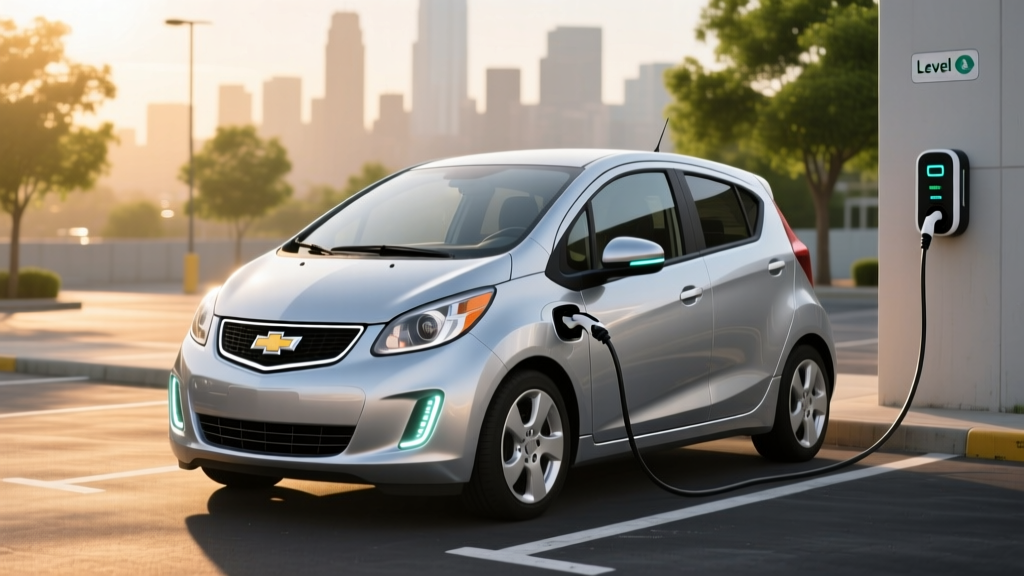
This is where the 2014 Spark EV requires careful consideration. It uses the SAE Combo (CCS1) connector for DC fast charging and a standard J1772 inlet for Level 1 and Level 2 AC charging.
| Charging Level | Power (kW) | Time (Empty to Full / 10–80%) | Miles Added per Hour |
|---|---|---|---|
| Level 1 (120V household) | ~1.2 kW | ~17 hours (full) | ~4–5 mi/hr |
| Level 2 (240V, 3.3 kW onboard) | 3.3 kW | ~6–7 hours (full) | ~13–14 mi/hr |
| DC Fast Charge (CCS1) | Up to ~50 kW peak | ~20–30 min (10–80%) | N/A (burst rate) |
Critical ownership note: The Spark EV's onboard charger is limited to 3.3 kW. Even if you plug into a 7.2 kW or 11.5 kW Level 2 station, the car will only accept 3.3 kW. That means a full charge from empty always takes 6–7 hours on Level 2, regardless of the station's capability. For overnight home charging, this is perfectly adequate — you'll wake up to a full battery every morning.
The DC fast charging tops out around 50 kW, which was respectable for 2014 but is slow by 2026 standards. Expect the charge curve to taper significantly above 80% state of charge (SoC), as is typical for NMC batteries. Plan to charge from 10–80% in about 20–30 minutes at a compatible CCS station — but note that CCS1 stations are becoming less common as the industry shifts to NACS (Tesla's connector standard). Check your local charging networks for CCS availability before buying.
Used Purchase Cost vs. Gas Car Comparison
Here's where the Spark EV makes its strongest case. At $4,500–$7,500 for a 2014 model in good condition, it undercuts nearly every other used EV and most used gas cars in the same price bracket.
| Cost Factor | 2014 Spark EV | Comparable Used Gas Car (e.g., 2014 Honda Fit) |
|---|---|---|
| Purchase Price (2026 used market) | $5,000–$7,500 | $7,000–$10,000 |
| Fuel / Electricity Cost per Mile | ~$0.04/mi (home charging at $0.13/kWh) | ~$0.13/mi (33 MPG at $3.50/gal) |
| Annual Fuel/Energy (12,000 mi) | ~$480 | ~$1,560 |
| Annual Maintenance | ~$200–$350 (no oil, fewer brakes) | ~$600–$900 |
| 5-Year Fuel + Maintenance Total | ~$3,400–$4,150 | ~$10,800–$12,300 |
Annual savings: Roughly $1,200–$1,600 per year in fuel and maintenance compared to a similar-age gas subcompact, assuming home charging at national-average electricity rates. Over five years, that's $6,000–$8,000 in savings — which often exceeds the purchase price of the car itself.
However, insurance costs can be slightly higher for EVs due to repair-cost assumptions. Expect quotes in the range of $1,200–$1,800/year depending on your state and driving record — shop around, as EV insurance pricing varies widely between carriers.
Battery Health: The #1 Thing to Check Before Buying
The 2014 Spark EV's battery is now over a decade old. NMC chemistry degrades with time, heat exposure, and charge cycling. Most 2014 examples will show 10–25% capacity loss depending on climate history and charging habits. That means a car originally rated at 82 miles may now deliver 62–74 miles of real-world range.
Before purchasing, demand a battery health check:
- Ask the seller or a Chevy dealer to pull the State of Health (SoH) reading via the onboard diagnostics or an OBD-II scanner with EV-compatible software (such as LeafSpy-equivalent tools for GM vehicles).
- Check for the original 8-year/100,000-mile battery warranty. The 2014 model year's warranty expires in 2022 by time — so most examples are now out of warranty unless they had very low mileage and a warranty-extension claim was filed. Some states (CARB states like California) mandated 10-year/150,000-mile coverage, which may still apply through 2024.
- A replacement battery pack, if needed, costs approximately $5,000–$8,000 installed — which can exceed the car's value. Factor this risk into your purchase price negotiation.
Common Misconceptions About the 2014 Spark EV
| Myth | Fact |
|---|---|
| "82 miles of range is useless." | The average American drives ~37 miles/day (FHWA data). For a dedicated commuter or second car, 82 miles covers most daily needs with margin — if you can charge at home nightly. |
| "The battery will need immediate replacement." | NMC packs from this era typically retain 75–90% capacity at 10–12 years. Degradation is real but not catastrophic in most cases. Always verify SoH before buying. |
| "It qualifies for the $7,500 federal tax credit." | The §30D new-vehicle credit does not apply to used purchases from private parties. The used EV credit (§25E) offers up to $4,000 or 30% of sale price (whichever is less) if purchased from a licensed dealer, subject to income caps ($75K single / $150K joint) and a sale price cap of $25,000. See IRS.gov §25E rules. |
| "Any mechanic can fix it." | EV-specific diagnostics (battery management system, inverter, onboard charger) require GM-trained technicians. Independent EV shops exist but are less common than gas-car mechanics. |
| "DC fast charging will ruin the battery." | Occasional DC fast charging is fine. The battery management system limits charge rates to protect the cells. Daily Level 2 home charging is gentler, but the pack is designed to handle fast charging. |
Who Should Buy the 2014 Spark EV — and Who Shouldn't
Actionable Decision Framework
Buy the 2014 Spark EV if:
- Your daily round-trip commute is under 50 miles
- You have access to Level 1 or Level 2 home charging (a standard 120V outlet works for overnight charging at ~5 mi/hr)
- You need an affordable second car for errands, school runs, or city driving
- You live in a mild-to-moderate climate (Southeast, Pacific Coast, Southwest)
- Your total used-car budget is under $8,000
- You want to experience EV ownership at minimal financial risk
Skip the 2014 Spark EV if:
- You regularly drive more than 60 miles in a day without mid-day charging access
- You live in a cold climate (Upper Midwest, Northeast, Mountain West) where winter range loss of 30–40% will drop usable range below 50 miles
- You have no home or workplace charging access — relying solely on public CCS chargers for an 82-mile car is impractical
- You need a primary vehicle for highway commuting or road trips
- You cannot absorb a potential $5,000–$8,000 battery replacement cost if the pack fails
Practical Ownership Tips for 2026 Buyers
Home charging setup: Most Spark EV owners charge on a standard 120V household outlet (Level 1), which adds roughly 4–5 miles of range per hour. For an overnight charge of 10–12 hours, that restores 40–60 miles — sufficient for most daily driving. If you want faster Level 2 charging, a 240V outlet installation typically costs $300–$800 if your electrical panel has capacity, or $1,500–$3,000+ if a panel upgrade is needed. Given the Spark EV's 3.3 kW onboard limit, even an inexpensive 16-amp Level 2 EVSE ($200–$350) will max out the car's charging capability.
Maintenance advantages: The Spark EV has no engine oil, transmission fluid, spark plugs, or exhaust system. Brake pads last significantly longer thanks to regenerative braking (many owners report original brake pads at 80,000+ miles). Your primary maintenance costs are tires, cabin air filter, windshield washer fluid, and the 12V auxiliary battery (replace every 4–5 years, ~$150–$250).
Tire note: The Spark EV uses a narrow 185/55R15 tire size that can be harder to find in premium EV-optimized compounds. Budget $400–$600 for a set of four all-season tires from mainstream brands.
Frequently Asked Questions
Does the 2014 Chevrolet Spark EV qualify for any tax credits in 2026?
The new-vehicle §30D credit does not apply. However, if you purchase from a licensed dealer for $25,000 or less and meet income limits ($75,000 single / $150,000 joint AGI), you may qualify for the §25E used clean vehicle credit — up to $4,000 or 30% of the sale price, whichever is lower. At a typical Spark EV price of $5,000–$7,500, the credit would be 30% of the sale price: roughly $1,500–$2,250. The credit can be transferred to the dealer at point of sale as an upfront discount. Confirm eligibility with a tax professional and review current rules at IRS.gov.
How long does the 2014 Spark EV battery last?
NMC lithium-ion packs from this era are lasting 10–15 years in real-world use, with gradual capacity loss of 1–3% per year depending on climate and charging habits. Most 2014 Spark EVs in 2026 retain 75–90% of original capacity. Battery failure before 150,000 miles is uncommon but not unheard of — always check State of Health before purchasing.
Can I take the Spark EV on road trips?
Technically yes, but practically it's painful. With 60–75 miles of real-world highway range and 20–30 minute DC fast-charge stops every hour, a 300-mile trip takes 5–6 hours of driving plus multiple charging breaks. CCS1 charger availability is also declining as networks add NACS connectors. This is a city and suburban car, not a road-trip vehicle.
Is the 2014 Spark EV safe?
The Spark EV earned a 4-star overall NHTSA safety rating (out of 5). It includes standard stability control, antilock brakes, and 10 airbags. However, it lacks modern ADAS features — no automatic emergency braking, no lane-keeping assist, no adaptive cruise control. As a small, lightweight vehicle, it is at a physics disadvantage in collisions with larger vehicles. Check NHTSA.gov for detailed crash-test results.
What should I look for when inspecting a used 2014 Spark EV?
Prioritize: (1) Battery State of Health reading — anything below 70% is a negotiation point or walk-away; (2) charging port condition — check for corrosion or loose connections on both the J1772 and CCS inlets; (3) service history — confirm the battery coolant system was serviced; (4) tire age and condition; (5) 12V battery age. A pre-purchase inspection by a GM-certified EV technician ($150–$250) is strongly recommended.