If you've landed here searching for the 2014 Camaro bolt pattern, you're likely either replacing wheels on your fifth-gen Camaro or weighing whether it's time to trade that V8 rumble for something electric. We'll give you the exact wheel specs you need — and then explore why a growing number of Camaro owners are cross-shopping performance EVs that deliver comparable thrills with far lower running costs.
2014 Camaro Bolt Pattern: The Exact Specs
The 2014 Chevrolet Camaro (fifth generation) uses a 5x120mm bolt pattern (also expressed as 5x4.72 inches). This is consistent across all trims — LS, LT, SS, ZL1, and Z/28. Here are the full wheel specifications:
| Spec | 2014 Camaro Measurement |
|---|---|
| Bolt Pattern | 5x120mm (5x4.72") |
| Center Bore | 66.9mm |
| Lug Nut Thread Size | M14 x 1.5 |
| Stock Wheel Sizes | 18" (LS/LT), 20" (SS), 20" (ZL1) |
| Offset Range (Stock) | +35mm to +42mm |
The 5x120 pattern is shared with several BMW models and older Pontiac GTO/G8 platforms, which expands your aftermarket wheel options. However, it's notably different from most modern EVs, which tend to use 5x114.3mm (Tesla, Hyundai, Ford) or 5x108mm patterns. This means your Camaro wheels won't transfer to a new EV — a small but real consideration if you've invested in a premium aftermarket wheel set.
Why Camaro Owners Are Cross-Shopping EVs
The fifth-gen Camaro SS delivers 426 horsepower, a 4.5-second 0-60 time, and an unmistakable V8 soundtrack. But ownership realities have shifted since 2014: fuel costs, insurance premiums for aging muscle cars, and the sheer daily-driver practicality gap have pushed enthusiasts toward electric alternatives that match or exceed the Camaro's straight-line performance.
Let's compare the 2014 Camaro SS against three modern performance EVs that frequently appear in cross-shopping conversations: the 2026 Tesla Model 3 Performance, the 2026 Hyundai Ioniq 5 N, and the 2026 Ford Mustang Mach-E GT.
| Spec | 2014 Camaro SS | 2026 Tesla Model 3 Performance | 2026 Ioniq 5 N | 2026 Mach-E GT |
|---|---|---|---|---|
| Powertrain | 6.2L V8 RWD | Dual-Motor AWD | Dual-Motor AWD | Dual-Motor AWD |
| Horsepower | 426 hp | 510 hp | 641 hp (N Active) | 480 hp |
| 0-60 mph | 4.5 sec | 2.9 sec | 3.25 sec | 3.5 sec |
| EPA Range | ~340 mi (16 gal tank) | 315 mi | 245 mi | 280 mi |
| Fuel/Energy Cost (annual) | ~$2,800 (gas) | ~$650 (electric) | ~$780 (electric) | ~$720 (electric) |
| Cargo Space | 11.3 cu ft trunk | 21 cu ft (rear + frunk) | 27.2 cu ft (rear + frunk) | 29.7 cu ft (rear + frunk) |
The performance gap is stark: every one of these EVs beats the Camaro SS to 60 mph while offering more cargo room and drastically lower fuel costs. The trade-off, of course, is the absence of engine sound and the mechanical engagement of a manual transmission — something no EV has replicated convincingly, though Hyundai's Ioniq 5 N comes closest with its simulated shift feel.
Deep Dive: 2026 Tesla Model 3 Performance
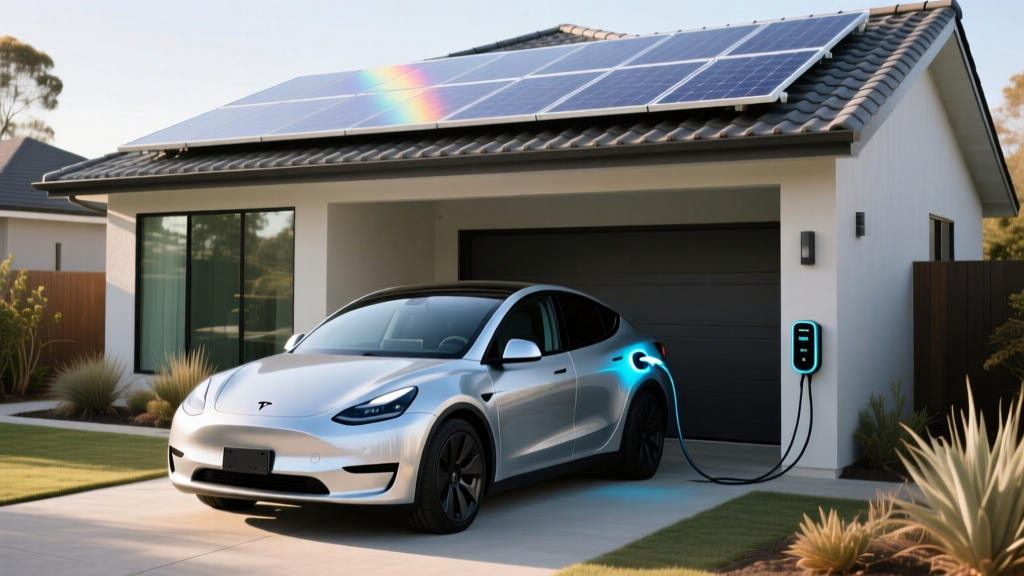
The Model 3 Performance remains the default recommendation for Camaro cross-shoppers prioritizing acceleration and charging infrastructure. Here's the full EV profile:
| Category | 2026 Tesla Model 3 Performance |
|---|---|
| Base MSRP | $54,990 |
| EPA Range | 315 miles |
| Battery | ~82 kWh usable, NMC chemistry |
| Efficiency | 125 MPGe combined / 27 kWh/100mi |
| Max DC Fast Charge | 250 kW (peak) |
| 10-80% DC Fast Charge | ~25 minutes |
| Level 2 Home Charging | 11.5 kW (~44 mi/hr) |
| 0-60 mph | 2.9 seconds |
| Drivetrain | Dual-motor AWD |
| Cargo Volume | 21 cu ft (rear trunk + frunk) |
| Battery Warranty | 8 years / 120,000 miles |
| Federal Tax Credit | Up to $7,500 (see eligibility below) |
Charging Curve Reality
Tesla's 250 kW peak charge rate is not sustained across the full session. The Model 3 Performance charges fastest between 10-40% State of Charge (SoC), where it can pull close to peak rates. Above 60%, the curve tapers significantly, and above 80%, charging slows to protect the NMC battery cells. A typical 10-80% session at a V3 Supercharger takes about 25 minutes. For daily driving, most owners charge to 80% at home on Level 2 and only use DC fast charging for road trips.
Deep Dive: 2026 Hyundai Ioniq 5 N
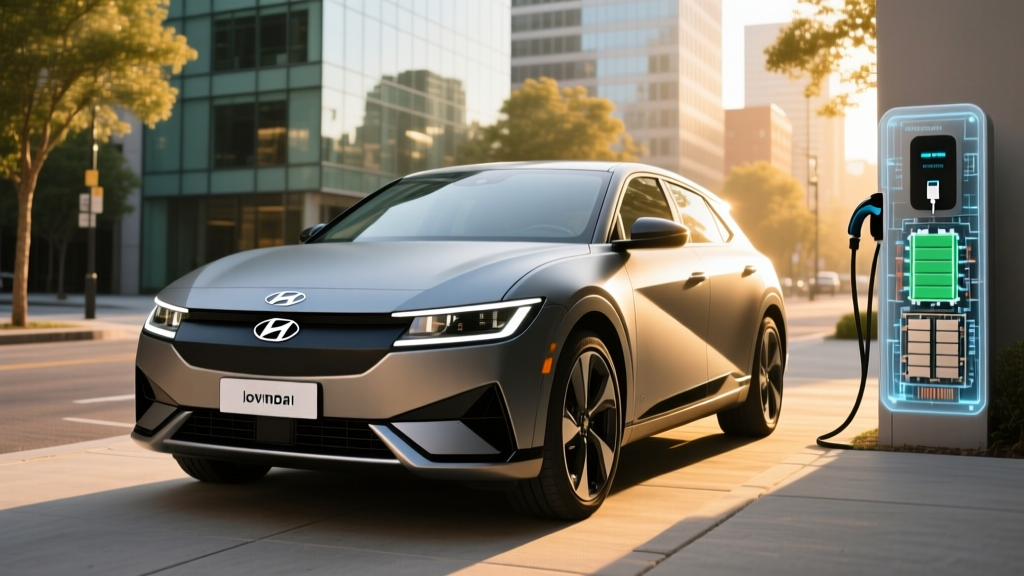
For Camaro owners who miss the engagement of a performance car, the Ioniq 5 N is the closest EV analog. Hyundai's N division engineered simulated gear shifts, synthetic engine sound, and track-capable thermal management into this electric hot hatch.
| Category | 2026 Hyundai Ioniq 5 N |
|---|---|
| Base MSRP | $67,500 |
| EPA Range | 245 miles |
| Battery | 84 kWh usable, NMC chemistry |
| Efficiency | 97 MPGe combined / 35 kWh/100mi |
| Max DC Fast Charge | 350 kW (peak, on capable chargers) |
| 10-80% DC Fast Charge | ~18 minutes |
| Level 2 Home Charging | 10.9 kW (~39 mi/hr) |
| 0-60 mph | 3.25 sec (N Active mode) |
| Drivetrain | Dual-motor AWD |
| Cargo Volume | 27.2 cu ft (rear + frunk) |
| Battery Warranty | 10 years / 100,000 miles |
| Federal Tax Credit | Up to $7,500 (see eligibility below) |
The Ioniq 5 N's 800V architecture is its charging ace. On a 350 kW-capable charger (increasingly common on Electrify America and Ionity networks), it can add 10-80% in roughly 18 minutes — faster than any Tesla on the market. This partially offsets the shorter range on road trips.
Deep Dive: 2026 Ford Mustang Mach-E GT
The Mustang badge carries emotional weight for Camaro owners. The Mach-E GT won't replicate a Coyote V8, but it delivers credible performance with practical range and Ford's growing charging network access.
| Category | 2026 Ford Mustang Mach-E GT |
|---|---|
| Base MSRP | $54,995 |
| EPA Range | 280 miles |
| Battery | 91 kWh usable (extended range), NMC chemistry |
| Efficiency | 101 MPGe combined / 33 kWh/100mi |
| Max DC Fast Charge | 150 kW (peak) |
| 10-80% DC Fast Charge | ~36 minutes |
| Level 2 Home Charging | 10.5 kW (~37 mi/hr) |
| 0-60 mph | 3.5 seconds |
| Drivetrain | Dual-motor AWD |
| Cargo Volume | 29.7 cu ft (rear + frunk) |
| Battery Warranty | 8 years / 100,000 miles |
| Federal Tax Credit | Up to $7,500 (see eligibility below) |
Federal EV Tax Credit: What Camaro Cross-Shoppers Need to Know
Under IRS §30D rules, the federal EV tax credit offers up to $7,500 for qualifying new electric vehicles. However, eligibility depends on several factors that change frequently:
- MSRP Caps: SUVs, pickups, and vans must be priced at or below $80,000. Sedans and other body styles (like the Model 3) cap at $55,000. The Ioniq 5 N, classified as a car, exceeds the $55,000 cap at $67,500 — meaning it does not qualify for the full new-vehicle credit as of 2026.
- Buyer Income Limits: Modified adjusted gross income (MAGI) must not exceed $300,000 (joint), $225,000 (head of household), or $150,000 (single).
- Battery Sourcing Requirements: The $7,500 credit splits into two halves — $3,750 for critical minerals sourcing and $3,750 for battery component manufacturing. Vehicles must meet escalating domestic-content thresholds each year. Check the DOE's qualified vehicle list for current eligibility.
- Point-of-Sale Transfer: As of 2024, buyers can transfer the credit to the dealer at purchase, reducing the purchase price directly rather than waiting for a tax refund.
| Vehicle | MSRP | Qualifies for §30D Credit? | Effective Price (with credit) |
|---|---|---|---|
| Tesla Model 3 Performance | $54,990 | Yes — up to $7,500 (if sourcing rules met) | ~$47,490 |
| Hyundai Ioniq 5 N | $67,500 | Exceeds $55K car cap — not eligible for new-vehicle credit | $67,500 |
| Ford Mustang Mach-E GT | $54,995 | Yes — classified as SUV, under $80K cap | ~$47,495 |
Note: Tax credit rules are subject to change. Consult a tax professional and verify current eligibility at IRS.gov before purchasing.
Pros and Cons: EVs vs. the 2014 Camaro SS
Why Switch to an EV
- 0-60 times of 2.9-3.5 sec crush the Camaro's 4.5 sec
- Annual fuel cost drops from ~$2,800 to $650-$780
- Cargo space doubles or triples (21-30 cu ft vs 11.3)
- Minimal maintenance — no oil changes, timing chains, or exhaust systems
- Home charging means a "full tank" every morning
- Modern safety tech (AEB, blind-spot, lane-keep) absent in 2014 models
What You'll Miss About the Camaro
- V8 engine sound and exhaust note — no EV replicates this
- Manual transmission engagement (6-speed in the SS)
- Lighter curb weight (~3,860 lbs vs 4,400-4,800 lbs for EVs)
- Lower purchase price on the used market ($12K-$20K for a clean 2014 SS)
- No charging planning needed for road trips
- Simpler ownership — no battery degradation concerns
Which EV Fits Your Use Case?
Decision Framework
Choose the Tesla Model 3 Performance if: You want the fastest acceleration, the longest range, and access to the Supercharger network — the most reliable DC fast-charging infrastructure in the US. Best for daily commuters and frequent road-trippers who value charging speed.
Choose the Hyundai Ioniq 5 N if: Driving engagement matters most. The simulated shifts, track mode, and 800V ultra-fast charging make it the enthusiast's EV. Accept the shorter 245-mile range as the cost of fun. Best for weekend canyon-carvers who don't need maximum range.
Choose the Ford Mustang Mach-E GT if: You want SUV practicality with credible performance and prefer Ford's dealer network for service. The Mach-E GT offers the most cargo space and competitive range, but its 150 kW charging speed is a road-trip drawback. Best for families wanting performance without sacrificing utility.
Keep the 2014 Camaro SS if: Sound, feel, and mechanical engagement are non-negotiable. A used SS at $15K-$20K is far cheaper than any of these EVs, and for weekend-only use, fuel costs stay manageable. Consider it as a second car alongside a more practical EV daily driver.
Frequently Asked Questions
What is the bolt pattern on a 2014 Camaro?
The 2014 Chevrolet Camaro uses a 5x120mm bolt pattern (5x4.72 inches) with a 66.9mm center bore and M14 x 1.5 lug nuts. This applies to all trims including LS, LT, SS, ZL1, and Z/28.
Will my 2014 Camaro wheels fit a Tesla or other EV?
No. Most EVs use different bolt patterns — Tesla uses 5x114.3mm, as do Hyundai and Ford EVs. The Camaro's 5x120mm pattern is not compatible. You'll need new wheels if you upgrade to an EV.
What is the real-world range of these performance EVs?
Real-world highway range typically runs 10-15% below EPA estimates. The Model 3 Performance delivers ~270-285 real-world miles, the Ioniq 5 N around 200-220 miles, and the Mach-E GT approximately 240-260 miles. Cold weather reduces all of these by an additional 20-30%.
How fast do these EVs charge at home?
On a Level 2 home charger (240V), the Model 3 Performance adds ~44 miles per hour at 11.5 kW, the Ioniq 5 N adds ~39 mi/hr at 10.9 kW, and the Mach-E GT adds ~37 mi/hr at 10.5 kW. A full overnight charge (8-10 hours) replenishes any of these batteries completely. Home Level 2 installation typically costs $500-$2,000 depending on your electrical panel, per DOE estimates.
Does the Tesla Model 3 Performance qualify for the $7,500 tax credit?
As of 2026, the Model 3 Performance qualifies for up to $7,500 under §30D, provided the buyer meets income limits ($150K single / $300K joint) and the vehicle's battery meets critical-mineral and component sourcing requirements. Verify current eligibility on the DOE's qualified vehicle list before purchasing, as sourcing compliance can change model-to-model.
Is an EV worth it vs. keeping a 2014 Camaro SS?
Financially, an EV saves $1,500-$2,000+ annually in fuel and maintenance for a driver covering 12,000 miles/year. The break-even point against a used Camaro SS (purchased at ~$15K) arrives in roughly 5-7 years when factoring the EV's higher purchase price against fuel savings and tax credits. Emotionally, the decision depends on whether V8 sound and manual engagement are worth the ongoing cost.