Quick Verdict: A City-EV Pioneer Showing Its Age
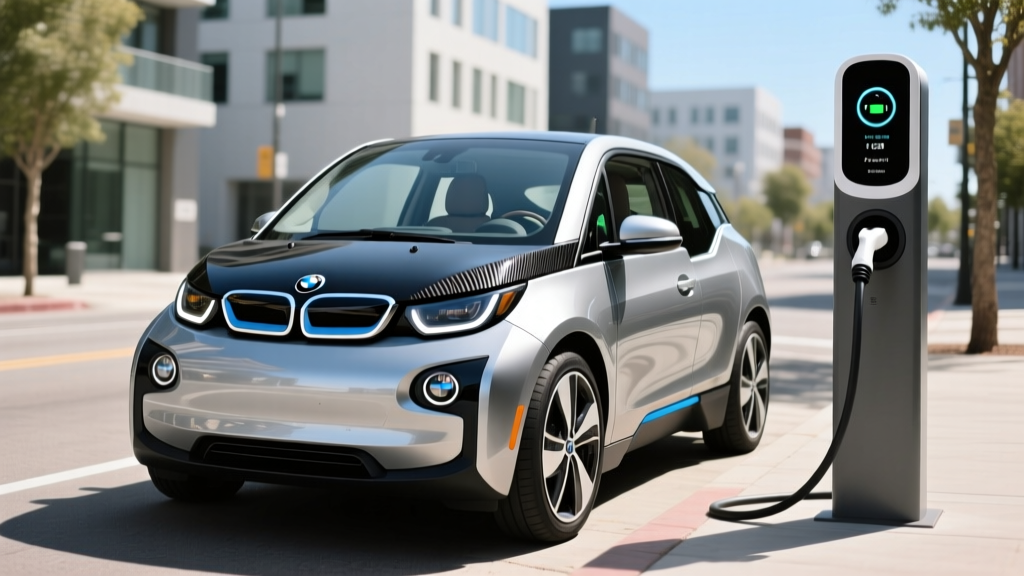
The 2014 BMW i3 RWD was a radical departure when it launched — a carbon-fiber-reinforced plastic (CFRP) passenger cell, a rear-mounted electric motor, and a quirky, futuristic design that turned heads. More than a decade later, it remains one of the most interesting EVs ever built. But with an EPA-estimated 81 miles of range from its 22 kWh battery pack, the 2014 i3 is strictly a city commuter and second-car candidate in 2026.
If you're shopping the used EV market for an affordable, fun-to-drive urban runabout with premium build quality, the i3 still has appeal. But buyers must go in with eyes wide open about its range limitations, aging battery chemistry, and the realities of owning a discontinued model. This guide covers every spec, charging figure, and ownership cost you need to evaluate one.
| Spec | Value |
|---|---|
| EPA Range | 81 miles |
| Battery (usable) | 18.8 kWh (22 kWh gross), Samsung SDI NMC |
| Motor | 125 kW (170 hp), 184 lb-ft torque, RWD |
| 0-60 mph | 7.0 seconds |
| DC Fast Charge (max) | 50 kW (CCS Combo 1) |
| DC 10-80% Time | ~25-30 minutes |
| Level 2 Charge Rate | 7.4 kW (~25 miles/hr) |
| MPGe (combined) | 124 MPGe |
| Energy Consumption | 27 kWh/100 mi |
| Cargo Volume | 15.1 cu ft (rear seats up), 36.9 cu ft (folded) |
| Curb Weight | 2,630 lbs (BEV), 3,130 lbs (REx) |
| Original MSRP (base) | $41,350 (before incentives) |
| Battery Warranty (original) | 8 years / 100,000 miles |
Range and Efficiency: 81 Miles on Paper, Less in Practice
EPA Estimated Range: 81 miles (full charge)
Real-World Expectation: Plan for 60-70 miles of usable range in mixed driving. Highway speeds above 65 mph and cold weather (below 40°F) can reduce range by 20-35%, leaving as little as 50-55 miles in winter conditions.
The 2014 i3's 18.8 kWh usable battery capacity was modest even at launch. BMW used Samsung SDI nickel-manganese-cobalt (NMC) cells arranged in eight modules of eight cells each. The pack's small size was a deliberate trade-off: lighter weight meant better efficiency and sharper handling, but it capped range hard.
Efficiency is where the i3 still shines. At 124 MPGe combined (27 kWh per 100 miles), it remains one of the most efficient EVs ever sold in the US. The CFRP body structure keeps weight down to just 2,630 pounds for the pure BEV version — lighter than many modern compact EVs. Around town, where regenerative braking recovers energy, you can approach or even exceed the EPA figure. But highway driving at 70-80 mph exposes the small battery's limits quickly.
After 10+ years and likely 80,000-120,000 miles on the odometer, expect some battery degradation. NMC cells from this era typically lose 10-20% of original capacity over a decade, depending on climate and charging habits. A 2014 i3 that originally delivered 81 EPA miles may now show 65-72 miles at full charge. Always check the battery's State of Health (SoH) before purchasing — a BMW dealer or an independent EV specialist can read this via OBD-II diagnostics.
Charging Speed: Functional but Far From Fast
| Level | Power | Connector | Speed | Time (0-100% or 10-80%) |
|---|---|---|---|---|
| Level 1 (120V) | ~1.4 kW | J1772 | ~5 miles/hr | ~13-14 hours (full) |
| Level 2 (240V) | 7.4 kW | J1772 | ~25 miles/hr | ~3 hours (full) |
| DC Fast Charge | 50 kW peak | CCS Combo 1 | ~100-120 miles/hr (initial) | ~25-30 min (10-80%) |
The 2014 i3's DC fast-charging capability was optional at launch (a $750 add-on), so verify that any used example you consider actually has the CCS port. Without it, you're limited to Level 2 charging at 7.4 kW — adequate for overnight home charging but useless for road trips.
With the CCS DC fast-charge option, the i3 can accept up to 50 kW. On a 50 kW charger, the small battery reaches 80% in roughly 25-30 minutes. The charge curve is relatively flat thanks to the pack's small size — it hits peak rate quickly and sustains it reasonably well through 70% SoC, then tapers sharply above 85%. This is one area where the i3's small battery is actually an advantage: even modest DC chargers fill it quickly in absolute terms.
For home Level 2 charging, a 32-amp, 240V station delivers the full 7.4 kW, adding about 25 miles of range per hour. A full charge from near-empty takes roughly 3 hours. If your home electrical panel supports a 40-amp circuit, installation of a quality Level 2 charger (such as a ChargePoint Home Flex or Emporia Level 2) typically runs $500-$1,500 including electrician labor, assuming no panel upgrade is needed.
Level 1 trickle charging from a standard 120V outlet adds about 5 miles per hour — enough for light daily use if your commute is under 20 miles round-trip, but painfully slow for a full recharge.
Performance and Driving Dynamics
The i3's rear-mounted synchronous electric motor produces 125 kW (170 horsepower) and 184 lb-ft of torque, driving the rear wheels through a single-speed transmission. BMW claimed a 0-60 mph time of 7.0 seconds for the pure BEV model — respectable for 2014 and still peppy in city traffic today.
What makes the i3 special isn't straight-line speed but its handling character. The ultra-light CFRP structure, low center of gravity (battery under the floor), and short wheelbase give it go-kart agility. The steering is quick, body roll is minimal, and the one-pedal driving mode (strong regenerative braking up to ~50 kW of regen) makes stop-and-go traffic effortless. The skinny 155/70R19 tires are optimized for low rolling resistance, not grip — push hard in corners and the i3 will understeer early, but that's not what this car is for.
The ride quality is firm — BMW tuned the suspension sporty, and the short wheelbase means you feel every expansion joint. Road noise is noticeable at highway speeds, partly due to the lightweight construction and minimal sound deadening. This is a car that excels at urban driving and feels out of its element on long interstate stretches.
Interior, Tech, and Practicality
The i3's interior was avant-garde in 2014 and still looks distinctive today. BMW used sustainable materials extensively — eucalyptus wood trim, recycled wool-blend upholstery, and olive-leaf-tanned leather on higher trims. The open-pore wood and airy cabin feel more like a modern loft than a car interior.
Infotainment: The 2014 model came with BMW's iDrive system and a 6.5-inch display (10.25-inch with the optional Navigation/Technology package). By 2026 standards, it's dated: no wireless Apple CarPlay or Android Auto, no over-the-air updates, and the interface feels slow. Bluetooth audio streaming and USB input are standard.
Driver Assistance: The 2014 i3 offers basic SAE Level 0-1 features: cruise control, parking sensors, and a rearview camera. There is no adaptive cruise control, no lane-keeping assist, and no automatic emergency braking on this model year. It is not a candidate for buyers wanting modern ADAS features.
Space: The rear-hinged "coach doors" (suicide doors) create a wide opening for rear-seat access, but the rear seats are best suited for children or short trips. Cargo space is 15.1 cubic feet behind the rear seats and 36.9 cubic feet with them folded — adequate for groceries and weekend bags but not for furniture or large hauls. There is no frunk (front trunk); the space under the hood houses the motor and electronics.
Notable Drawback: The i3's unique tires (155/70R19) are expensive and have limited brand options. Replacement sets can cost $800-$1,200 and may require ordering from specialty suppliers.
Used Pricing and Federal Tax Credit Eligibility
| Item | Amount |
|---|---|
| Original MSRP (base BEV) | $41,350 |
| Original MSRP (with REx range extender) | $45,200 |
| Used market price (2026, avg. 80k-100k mi) | $7,000 - $12,000 |
| Federal Used EV Tax Credit (§25E) | Up to $4,000 (30% of sale price, max $4,000) |
| Estimated price after §25E credit | $3,000 - $8,000 |
The 2014 i3 has depreciated heavily, which is good news for used buyers. Clean examples with 80,000-100,000 miles typically trade between $7,000 and $12,000 in 2026, depending on condition, battery health, and whether the DC fast-charge option is equipped. Low-mileage, garage-kept examples with strong SoH readings command the upper end of that range.
Federal Tax Credit — Important Distinction: The 2014 i3 does NOT qualify for the new-vehicle §30D credit (that applies only to new purchases). However, it can qualify for the §25E Used Clean Vehicle Credit, which provides up to $4,000 (30% of the sale price, capped at $4,000) for eligible used EV purchases from a licensed dealer. Key requirements:
- Sale price must be $25,000 or less (easily met by the i3)
- Buyer AGI must not exceed $75,000 (single), $112,500 (head of household), or $150,000 (joint)
- Vehicle must be at least two model years old (the 2014 i3 qualifies)
- Must be purchased from a licensed dealer (private-party sales excluded)
- The credit can be transferred to the dealer at point of sale as a price reduction
- Buyer can claim this credit once every three years
At a $10,000 purchase price, the §25E credit would be $3,000 (30% of $10,000), bringing your net cost to $7,000. At $13,333 or above, you'd hit the $4,000 cap. Always confirm eligibility with a tax professional and check the IRS §25E page for current-year rules.
Pros and Cons
Pros
- Ultra-efficient (124 MPGe) — minimal electricity cost per mile
- Lightweight, agile handling — genuinely fun in the city
- Unique CFRP construction — no rust, strong safety cell
- One-pedal driving with strong regen
- Distinctive design that still turns heads
- Very affordable on the used market (under $12K before credits)
- Eligible for up to $4,000 §25E used EV tax credit
Cons
- 81-mile EPA range — severely limits use to city commuting
- Battery degradation after 10+ years further reduces range
- No DC fast charging unless original buyer paid for the option
- Dated infotainment with no smartphone integration
- No modern driver-assistance features (AEB, lane-keep, ACC)
- Expensive, hard-to-find replacement tires
- Rear coach doors impractical in tight parking spaces
- Firm ride and noticeable road noise at highway speeds
Who Should Buy the 2014 BMW i3 RWD?
The 2014 i3 is a strong fit for a very specific buyer:
Best for: Urban commuters with a sub-30-mile round-trip, home Level 2 charging access, and a second vehicle for longer trips. It's also a compelling choice for EV-curious buyers who want to try electric ownership at minimal cost (as low as $5,000-$7,000 after the §25E credit). The i3 works well as a dedicated city car, a college-student commuter, or a household's second/third vehicle.
Not for: Anyone who needs highway range, carries rear-seat passengers regularly, wants modern infotainment or driver-assist features, or lives in a cold climate where winter range loss would push real-world range below 50 miles. It's also not ideal if you lack home charging — public charging infrastructure for an 81-mile-range EV creates significant lifestyle friction.
Buy the 2014 i3 if: Your daily drive is under 35 miles, you can charge at home, you value driving dynamics, and you want the cheapest possible entry into a premium-brand EV.
Look elsewhere if: You need more than 100 miles of range, you regularly drive in freezing temperatures, you want CarPlay/Android Auto, or you need back-seat space for adults.
Frequently Asked Questions
What is the real-world range of the 2014 BMW i3?
The EPA rated the 2014 i3 at 81 miles. In real-world mixed driving, expect 60-70 miles from a full charge. Highway driving at 70+ mph drops that to roughly 55-65 miles, and cold weather (below 40°F) can push it as low as 50-55 miles. A decade of battery degradation may further reduce these figures by 10-20%, so always verify the battery's State of Health before purchasing.
How fast does the 2014 i3 charge at home and on DC fast chargers?
On a Level 2 home charger (240V, 32A), the i3 charges at 7.4 kW, adding about 25 miles of range per hour. A full charge takes roughly 3 hours. With the optional CCS DC fast-charge port, it can accept up to 50 kW, reaching 80% in approximately 25-30 minutes. Note: DC fast charging was a $750 option — not all used examples have it.
Does the 2014 BMW i3 qualify for any federal tax credit?
Not the §30D new-vehicle credit. However, it qualifies for the §25E Used Clean Vehicle Credit: up to $4,000 (30% of sale price) when purchased from a licensed dealer, subject to buyer income limits ($75K single / $150K joint) and a $25,000 maximum sale price. The credit can be applied at point of sale.
What battery chemistry does the 2014 i3 use, and how long will it last?
The 2014 i3 uses Samsung SDI NMC (nickel-manganese-cobalt) lithium-ion cells. BMW's original battery warranty was 8 years/100,000 miles against capacity dropping below 70%. By 2026, original battery warranties have expired. Expect 80-90% State of Health on a well-maintained example. Individual battery modules can be replaced by specialists for roughly $200-$400 per module (8 modules total), which is more economical than a full pack replacement.
Is the 2014 BMW i3 worth buying vs. competitors like the Nissan Leaf or Fiat 500e?
Compared to the 2014 Nissan Leaf (84-mile EPA range, 24 kWh battery), the i3 is lighter, more efficient, more fun to drive, and built with premium materials. The Leaf offers slightly more cargo space and a more conventional design. The 2014 Fiat 500e (87-mile range) is similarly city-focused but feels cheaper inside. If driving enjoyment and build quality matter, the i3 wins. If you need practicality and lower repair costs, the Leaf is the safer bet. For any of these, the low range is the limiting factor — consider a 2017+ i3 (114-mile range) or a 2016+ Leaf (107 miles) if your budget allows.
Is the i3 REx (range extender) a better buy?
The REx model adds a 647cc two-cylinder gasoline engine that acts as a generator, extending total range to roughly 150 miles (81 electric + ~69 on gas). It adds about 500 pounds and complexity (oil changes, spark plugs, fuel system maintenance). If range anxiety is your primary concern, the REx provides a safety net. But for pure city driving with home charging, the BEV is lighter, simpler, and cheaper to maintain.
Sources: EPA Fuel Economy — 2014 BMW i3, IRS §25E Used Clean Vehicle Credit, BMW Group PressClub specifications archive.