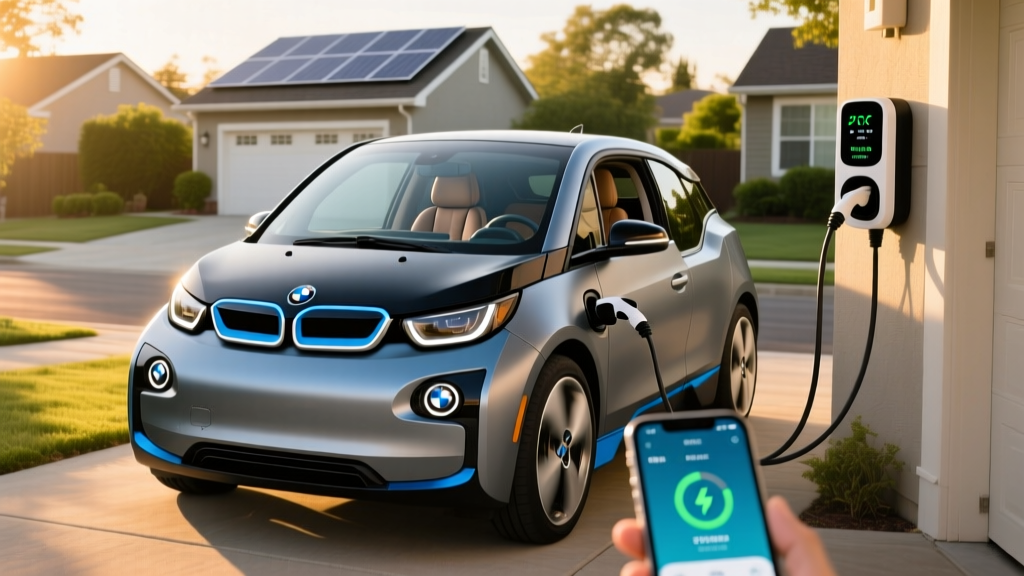
The 2014 BMW i3 REx: A Pioneer That Still Has a Niche
The 2014 BMW i3 Range Extender (REx) was one of the most unconventional electrified vehicles to reach the U.S. market. Built on a carbon-fiber-reinforced plastic (CFRP) passenger cell with a two-cylinder gasoline range extender, it offered something no other automaker dared: a purpose-built urban EV with a tiny onboard generator for backup. More than a decade later, the i3 REx remains a compelling used-EV option for city commuters who need occasional longer-range flexibility without full commitment to a battery-only drivetrain.
This review examines the 2014 BMW i3 REx from a 2026 ownership perspective — covering its real-world electric range, charging capabilities, the range-extender experience, used-market pricing, and whether it still makes sense against modern PHEV and EV alternatives.
Spec Sheet: 2014 BMW i3 REx at a Glance
| Specification | 2014 BMW i3 REx |
|---|---|
| Powertrain | 125 kW electric motor (RWD) + 647cc 2-cyl gas generator |
| Horsepower / Torque | 170 hp / 184 lb-ft |
| 0–60 mph | 7.9 seconds |
| Battery (gross / usable) | 22 kWh gross / ~18.8 kWh usable |
| Battery Chemistry | NMC (Nickel Manganese Cobalt) — Samsung SDI cells |
| EPA Electric Range | 72 miles |
| EPA Gas Range (REx) | 78 miles (combined: 150 mi total) |
| Fuel Tank Capacity | 2.4 gallons |
| MPGe (electric mode) | 117 MPGe combined |
| MPG (gas REx mode) | 39 MPG combined |
| Max DC Fast Charge | 50 kW (CCS Combo 1, optional) |
| Level 2 Charge Rate | 7.4 kW (onboard charger) |
| 10–80% DC Fast Charge | ~25–30 minutes |
| Level 2 Full Charge Time | ~3 hours (0–100%) |
| Cargo Volume | 15.1 cu ft (rear seats up) / 39.2 cu ft (folded) |
| Rear Legroom | 31.9 inches |
| Curb Weight | ~3,130 lbs |
| Battery Warranty (original) | 8 years / 100,000 miles |
| Original Base MSRP | $45,200 (before incentives) |
| Used Price Range (2026) | $9,000 – $16,000 depending on mileage and condition |
Real-World Range: What to Actually Expect
Real-World Expectation: 55–65 miles electric in mixed driving; 40–50 miles in cold weather (below 40°F); 65–72 miles in ideal city conditions with mild temps and regen-heavy routes.
The 2014 i3 REx carries a 22 kWh gross battery pack (approximately 18.8 kWh usable after the buffer reserved for battery protection). The EPA rated it at 72 miles of pure electric range — a figure that was modest even at launch and feels constrained by 2026 standards.
In real-world driving, expect to see 55 to 65 miles on a full charge during moderate-temperature mixed commuting. The i3's tall, narrow tires (155/70R19) and lightweight CFRP construction give it excellent city efficiency, often hitting 4.0–4.5 miles per kWh in stop-and-go traffic where regenerative braking recovers significant energy.
Highway driving at 70+ mph drops efficiency noticeably. The boxy shape creates aerodynamic drag, and real-world highway range falls to roughly 50–55 electric miles. In cold weather (below freezing), count on a 30–40% reduction, yielding as little as 40–50 electric miles. The i3 does offer an optional heat pump (standard on later model years), which mitigates cabin-heating energy draw, but the 2014 model year had it as an option — verify whether a specific used example is equipped with one.
Once the battery depletes to its hold threshold (around 6% displayed state of charge), the 647cc two-cylinder BMW motorcycle-derived engine fires up as a generator. It does not drive the wheels directly. The REx mode adds approximately 78 miles of range on 2.4 gallons of premium gasoline, bringing total range to roughly 150 miles. In practice, REx-mode highway driving can feel strained — the generator produces about 34 hp continuously, which is enough to maintain speed on flat terrain but will struggle on sustained mountain grades or during aggressive acceleration at highway speeds.
Charging: DC Fast, Level 2, and What You Need to Know
| Charging Level | Power / Rate | Time (Approx.) | Miles Added per Hour |
|---|---|---|---|
| Level 1 (120V household) | ~1.4 kW | 14–16 hours (full) | ~5–6 mi/hr |
| Level 2 (240V, 32A) | 7.4 kW | ~3 hours (full) | ~25 mi/hr |
| DC Fast Charge (CCS) | 50 kW peak | ~25–30 min (10–80%) | N/A |
The 2014 i3 REx came standard with a J1772 Level 2 inlet and an optional CCS Combo 1 DC fast-charge port. This is critical when shopping the used market: not all 2014 i3s have DC fast charging. Verify the presence of the CCS port below the J1772 connector before purchasing — it was a $750 option at launch, and many buyers skipped it.
With DC fast charging equipped, the i3 accepts up to 50 kW peak. On a properly preconditioned battery, a 10–80% session takes approximately 25–30 minutes. The charge curve is relatively flat up to about 80%, then tapers significantly — BMW's battery management system is conservative to protect cell longevity. Do not expect meaningful speed gains above 80% SoC; plan your charging stops accordingly.
On a Level 2 home charger (240V, 32A circuit), the i3's 7.4 kW onboard charger fills the pack from empty in roughly 3 hours. This is adequate for overnight charging and means even a basic 24A Level 2 wallbox (around $300–$500 for the unit, plus electrician installation) will fully replenish the battery while you sleep. The small battery is actually an advantage here: you do not need a 48A or 80A charger, and a modest home setup works perfectly.
Level 1 charging from a standard 120V outlet delivers roughly 5–6 miles of range per hour. For a 72-mile pack, a full Level 1 charge takes 14–16 hours — workable only as a supplement or for very low-mileage drivers who can plug in every evening.
According to fueleconomy.gov, the i3 REx achieves 117 MPGe combined in electric mode, translating to approximately 29 kWh per 100 miles — respectable efficiency that keeps charging costs low.
Performance and Driving Dynamics
The i3 REx is powered by a rear-mounted 125 kW (170 hp) synchronous electric motor producing 184 lb-ft of torque, available instantly from zero RPM. The sprint to 60 mph takes 7.9 seconds — quick enough for confident highway merging and genuinely entertaining in city driving.
The driving experience is distinctly BMW. The steering is precise, the turning radius is exceptionally tight (32.3 feet — excellent for urban parking), and the low center of gravity from the under-floor battery pack keeps the tall car surprisingly flat through corners. The single-speed transmission means seamless, uninterrupted acceleration with no shift shock.
Regenerative braking is aggressive and essentially enables one-pedal driving. Lifting off the accelerator produces significant deceleration — enough to bring the car to a complete stop in most city driving without touching the brake pedal. BMW's implementation was ahead of its time in 2014 and remains intuitive today.
The REx engine introduces a notable compromise. When the generator activates, you will hear and feel the two-cylinder engine buzzing behind the rear axle. It is not loud by conventional standards, but the drone is noticeable and the vibration transfers through the chassis. On steep highway climbs in REx mode, the car can lose speed if demand exceeds the generator's ~34 hp output. Plan accordingly on mountain passes — entering with a charged battery is strongly recommended.
Interior, Cargo, and Daily Practicality
The i3's interior was radical for 2014 and still looks distinctive. BMW used renewable materials throughout: eucalyptus wood trim, kenaf (natural fiber) door panels, and recycled-plastic textiles. The open-pore wood and airy, minimalist dashboard give the cabin a loft-like feel unlike any other production car.
Practicality is where the i3 shows its urban focus. The rear-hinged "coach doors" (suicide doors) provide wide access to the rear seats but require the front doors to be open first — a quirk that complicates curbside passenger loading. Rear legroom is tight at 31.9 inches, suitable for children or short trips but cramped for adults on longer journeys.
Cargo space measures 15.1 cubic feet behind the rear seats and 39.2 cubic feet with the 50/50-split rear seats folded. The load floor is high (the electric motor and REx engine sit below), and the trunk opening is narrow. A week's groceries for two fits easily; a family road trip's luggage does not. There is no front trunk (frunk) — the space is occupied by the 12V battery, charging electronics, and windshield-washer fluid.
Infotainment is handled by BMW's iDrive system with a 6.5-inch display (the optional Technology package upgraded to a larger screen with navigation). The rotary controller is intuitive, and the system supports Bluetooth audio and phone connectivity. There is no Apple CarPlay or Android Auto — these were not available on the 2014 model year. Aftermarket solutions exist but require third-party adapters.
Driver-assistance features are minimal by 2026 standards. The i3 offers basic cruise control, parking sensors, and a rearview camera (optional). There is no adaptive cruise, no lane-keeping assist, and no automatic emergency braking. This is an SAE Level 0 vehicle in terms of automation — the driver performs all driving tasks.
Pricing, Tax Credits, and Used-Market Value in 2026
The 2014 BMW i3 REx launched at a base MSRP of $45,200 (including destination). Well-equipped examples with the Technology package, DC fast charging, and premium interior trim pushed as-tested prices above $52,000.
In the 2026 used market, the i3 REx has depreciated significantly. Expect to pay:
- $9,000–$12,000: Higher-mileage examples (80,000+ miles), possible cosmetic wear, uncertain battery health
- $12,000–$14,500: Average-condition examples (50,000–80,000 miles), typically equipped with DC fast charging
- $14,500–$16,000: Low-mileage, well-maintained examples with documented battery health
Federal Tax Credit Eligibility (Used EV — IRS §25E)
As a used vehicle, the 2014 i3 REx is not eligible for the new-vehicle §30D credit. However, it may qualify for the §25E Used Clean Vehicle Credit, which provides up to $4,000 (or 30% of the sale price, whichever is less) for qualifying used EVs and PHEVs purchased from a dealer. Key requirements per IRS guidelines:
- Sale price must be $25,000 or less (most i3 REx examples qualify)
- Buyer adjusted gross income: ≤$75,000 single / ≤$112,500 head of household / ≤$150,000 married filing jointly
- Vehicle must be at least 2 model years old (the 2014 qualifies)
- Must be purchased from a licensed dealer (private-party sales do not qualify)
- Credit is claimable once per VIN; verify the specific vehicle has not already been claimed
- The same vehicle can only receive the credit once every three years
On a $13,000 i3 REx, the 30% calculation yields $3,900 — close to the $4,000 maximum. This can bring effective purchase cost below $10,000, making the i3 REx one of the most affordable entries into electrified driving in 2026. Consult a tax professional to confirm your personal eligibility.
Battery Health, Warranty, and Long-Term Ownership
The i3's 22 kWh NMC battery pack was built by Samsung SDI with conservative thermal management — BMW prioritized longevity over maximum range. Original battery warranty coverage was 8 years / 100,000 miles against capacity loss below 70% of original. For a 2014 model, that factory warranty expired in 2022 at the latest.
Real-world battery degradation data from i3 owner communities shows the 22 kWh pack holds up well. Most 2014 i3s with 80,000–120,000 miles report 85–92% state of health (SoH), translating to roughly 60–66 miles of real-world electric range remaining. The conservative buffer strategy and liquid-cooled thermal management have clearly paid off.
Before purchasing a used i3 REx, request a battery health report. BMW dealerships can pull the SoH reading via diagnostic software, and third-party tools like the "i3 Rex Battery Health" OBD-II reader can provide this data independently. Avoid examples below 80% SoH unless priced accordingly.
The REx engine itself requires conventional maintenance: oil changes (every ~10,000 miles or annually, whichever comes first — the engine may rarely run, but oil degrades over time), spark plug replacement, and fuel-system care. BMW recommends running the REx periodically even if you mostly drive electric, to keep the engine and fuel system in working order. Stale gasoline is a known issue for low-use REx vehicles — use a fuel stabilizer if you rarely trigger the generator.
A full battery replacement (if ever needed) runs approximately $8,000–$12,000 at a BMW dealer, though refurbished packs are increasingly available for less. Given the i3's low used-market value, a battery failure could approach the car's total worth — making pre-purchase battery health verification essential.
Pros and Cons
Pros
- Exceptional city efficiency and one-pedal driving
- Ultra-tight turning radius — ideal for urban parking
- CFRP construction is rust-proof and lightweight
- Range extender eliminates range anxiety for occasional longer trips
- Low used-market price; potential $4,000 used-EV tax credit
- Strong regenerative braking reduces brake wear
- Distinctive, premium interior with sustainable materials
Cons
- Only 72 miles EPA electric range — short by any modern standard
- REx engine is noisy and underpowered on highway grades
- No DC fast charging on many used examples (optional equipment)
- Tiny rear seats and limited cargo space
- No Apple CarPlay / Android Auto
- No modern driver-assistance features (AEB, lane-keeping, ACC)
- Expensive OEM replacement parts; limited dealer EV expertise
- 2.4-gallon fuel tank means frequent gas stops in REx mode
Who Should Buy the 2014 BMW i3 REx?
Not ideal for: Families needing rear-seat space, highway-heavy commuters (the REx drone and limited power grow tiresome), road-trippers (small fuel tank, slow REx-mode highway performance), or anyone who cannot charge at home.
The 2014 i3 REx occupies a specific niche: it is a city-first electric car with a gas-powered safety net. If your daily commute is 30–40 miles round trip, you can charge at home, and you take a longer drive perhaps once a month, the i3 REx handles this pattern economically and with genuine driving enjoyment.
Compared to a modern PHEV like the Toyota Prius Prime (44 miles electric, 48 MPG gas) or a used Chevrolet Volt (53 miles electric, 42 MPG gas), the i3 REx offers a more premium driving experience and a unique design but sacrifices practicality, range, and modern tech. The Volt is arguably more versatile with its larger battery and smoother REx operation. The Prius Prime offers far more cargo space and rear-seat room.
Against a pure EV like a used Nissan Leaf (84–107 mile range for 2014–2017 models), the i3 REx trades higher complexity for the security of the gas generator — a worthwhile trade if charging access is uncertain or if you occasionally need range beyond the battery's capability.
Frequently Asked Questions
Does the 2014 BMW i3 REx qualify for any federal tax credit?
Not the new-vehicle §30D credit. However, it may qualify for the §25E Used Clean Vehicle Credit of up to $4,000 when purchased from a dealer at or below $25,000, subject to buyer income limits. Verify eligibility with your tax professional and confirm the specific VIN has not previously been claimed.
How long does the i3 REx battery last?
Real-world data shows most 2014 i3 22 kWh packs retain 85–92% of original capacity at 80,000–120,000 miles. BMW's conservative buffer strategy and liquid cooling have resulted in better-than-average longevity. Expect 60–66 real-world electric miles at 100,000 miles of use.
Can I drive the i3 REx on gas only without charging?
Yes, but it is not ideal. The REx mode delivers roughly 39 MPG combined on 2.4 gallons — about 78 miles per tank. You will refuel frequently, and the two-cylinder engine is noisy and underpowered at highway speeds. The i3 is designed to be charged regularly; the REx is a backup, not a primary power source.
Does every 2014 i3 REx have DC fast charging?
No. DC fast charging was a $750 factory option. Many 2014 i3s were ordered without it. Always verify the presence of the CCS Combo 1 port below the standard J1772 inlet before purchasing. Without it, you are limited to 7.4 kW Level 2 charging.
What maintenance does the range extender engine require?
Standard small-engine maintenance: annual oil changes (even with low use), spark plug replacement per BMW intervals, fuel stabilizer if the engine runs infrequently, and periodic operation to prevent fuel-system degradation. BMW recommends activating the REx at least once every few weeks to keep components lubricated.
Is the 2014 i3 REx safe?
The i3 earned a 4-star overall rating from NHTSA and an IIHS Top Safety Pick designation in certain categories. The CFRP passenger cell is exceptionally rigid. However, it lacks modern active-safety features like automatic emergency braking and lane-keeping assist that are standard on most 2026 vehicles.
How does the i3 REx compare to the Chevrolet Volt?
The 2014 Chevrolet Volt offers 38 miles electric (vs. 72 for the i3 REx) but provides a smoother, more powerful range-extender experience, four usable seats, and more cargo room. The i3 REx wins on electric range, city efficiency, and driving fun. The Volt wins on versatility, highway comfort, and REx refinement. Both are strong used PHEV options depending on your priorities.