Quick Verdict: A Pioneering City EV With Real Limitations
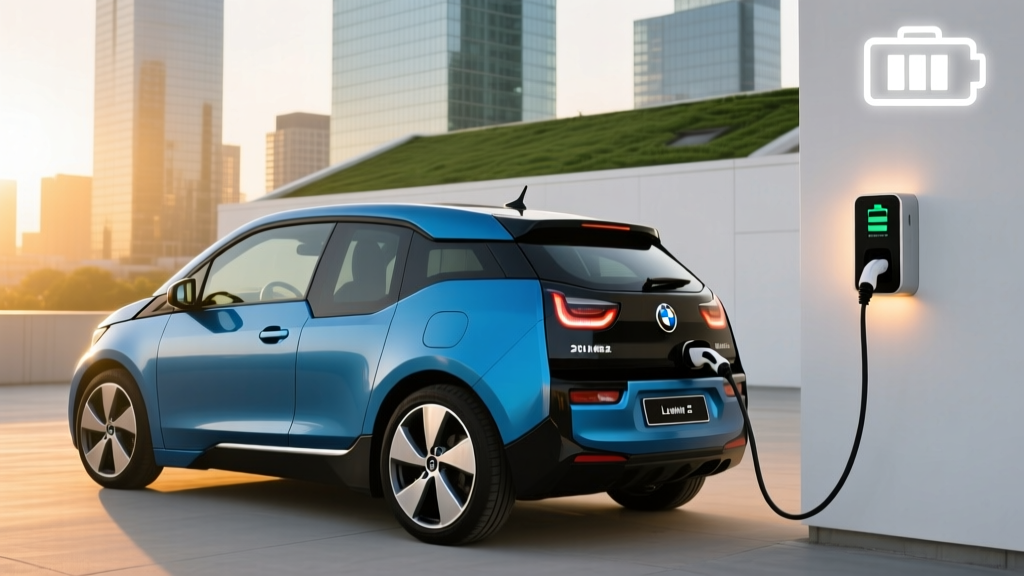
The 2014 BMW i3 base (BEV) was BMW's first mass-production electric vehicle, and it arrived with radical construction — a carbon-fiber-reinforced plastic (CFRP) passenger cell, an aluminum chassis, and skinny low-rolling-resistance tires that prioritized efficiency over grip. Over a decade later, this compact hatchback remains a curiosity on the used EV market. With an EPA-estimated 81 miles of range from its 22 kWh (gross) battery pack, the i3 base was never a road-trip machine. In 2026, it survives as an affordable urban commuter with genuine city-driving charm, but buyers must go in with eyes wide open about its range ceiling, modest DC fast-charging speed, and aging infotainment.
Spec Sheet: 2014 BMW i3 Base at a Glance
| Spec | Value |
|---|---|
| EPA Range | 81 miles |
| Battery (gross / usable) | 22 kWh / ~18.8 kWh |
| Battery Chemistry | Samsung SDI NMC (nickel-manganese-cobalt) prismatic cells |
| EPA Efficiency | 124 MPGe combined (27 kWh/100 mi) |
| Motor Output | 170 hp / 184 lb-ft torque |
| Drivetrain | Rear-wheel drive (single motor) |
| 0–60 mph | 7.0 seconds |
| DC Fast Charge (max) | 50 kW (CCS1) |
| DC 10–80% Time | ~25 minutes |
| Level 2 Charge Rate | 7.4 kW (full charge ~3 hours) |
| Original MSRP | $42,275 (incl. destination) |
| 2026 Used Price Range | $7,000–$12,000 (depending on mileage & battery SoH) |
| Cargo Volume | 15.1 cu ft (rear seats up) / 36.9 cu ft (folded) |
| Battery Warranty (original) | 8 years / 100,000 miles (70% capacity retention) |
Sources: EPA fueleconomy.gov, BMW USA press archives.
Range and Efficiency: What 81 EPA Miles Means in Practice
The 2014 BMW i3's 81-mile EPA combined range was competitive for a city-focused EV in 2014 — the Nissan Leaf managed 84 miles that year — but it is firmly at the low end by 2026 standards. The i3 achieves an impressive 124 MPGe combined (27 kWh per 100 miles), thanks to its lightweight CFRP construction (curb weight around 2,799 lbs) and aggressive regenerative braking that enables near-one-pedal driving in most conditions.
Here is what to expect in real-world scenarios:
- City commuting (30–45 mph, mild weather): 70–80 miles. The i3's strong regen and light weight make it a stellar urban efficiency machine.
- Highway driving (65–75 mph): 55–65 miles. Aerodynamic drag and the lack of a heat pump hurt efficiency at sustained speeds.
- Cold weather (below freezing, cabin heat on): 45–55 miles. The i3 uses resistive cabin heating, which draws heavily from the 18.8 kWh usable pack. Preconditioning while plugged in is essential in winter.
- Combined mixed driving (moderate climate): 65–75 miles on a good day.
Battery degradation is a real factor on 12-year-old packs. Many 2014 i3s now show 80–90% State of Health (SoH) based on owner reports on forums like BMW i3 Forum and SpeakEV. A unit at 85% SoH effectively has ~16 kWh usable, translating to roughly 65–70 miles of real-world mixed range. Always request a battery health diagnostic before purchasing.
Charging: 50 kW DC and 7.4 kW Level 2
The 2014 i3 supports DC fast charging via CCS1 at a maximum rate of 50 kW. While BMW did not make DC fast charging standard on every early i3 — some base cars were built without the DC quick-charge option — most US-market examples include it. Verify the CCS1 port (the larger connector below the J1772 inlet) is present and functional on any used example.
| Charging Level | Power | Time (10–80% or Full) | Notes |
|---|---|---|---|
| Level 1 (120V household) | ~1.3 kW | ~14–16 hours (full) | Emergency use only; adds ~4 mi/hr |
| Level 2 (240V, 32A) | 7.4 kW | ~3 hours (full) | Ideal for overnight home charging |
| DC Fast Charge (CCS1) | 50 kW peak | ~25 min (10–80%) | Tapers sharply above 80%; small battery limits sustained rate |
A key nuance with the i3's DC charging: because the usable battery is only ~18.8 kWh, a 50 kW charge rate represents roughly a 2.7C rate. The battery management system is conservative, and the charge curve tapers noticeably above 60% SoC. Expect the 50–80% portion to take almost as long as 10–50%. In practical terms, a DC fast charge from near-empty to 80% takes about 25 minutes — adequate for a lunch stop, but not competitive with modern 150–350 kW-capable EVs.
On a 240V Level 2 home charger (which the i3's 7.4 kW onboard charger can fully utilize), a full charge from empty takes about 3 hours. This is perfectly suited for overnight replenishment, and most i3 owners charge exclusively at home.
Performance and Driving Dynamics
The 2014 i3's rear-mounted electric motor produces 170 horsepower and 184 lb-ft of torque, sent to the rear wheels through a single-speed transmission. The 0–60 mph sprint takes about 7.0 seconds — genuinely quick for a compact hatchback, especially one from 2014. Instant torque delivery makes the i3 feel even faster in stop-and-go city traffic, where it will gap most gas cars from a stoplight.
The driving experience is uniquely BMW, but with an eco-twist. The steering is precise, the turning radius is tight (32.3 feet), and the CFRP chassis gives the car a rigid, planted feel despite its narrow 155/70R19 tires. Those skinny tires are a deliberate efficiency choice, but they do limit cornering grip and can feel nervous on rain-grooved highways. The aggressive regenerative braking — strong enough to bring the car to a near-stop without touching the brake pedal — means most owners quickly adapt to one-pedal driving.
There is no all-wheel-drive option, no dual-motor variant, and no performance trim for the 2014 model year. The i3 is strictly a rear-wheel-drive urban runabout.
Interior, Cargo, and Technology
The i3's cabin was radical in 2014 and still looks distinctive today. BMW used renewable materials throughout — eucalyptus wood trim, kenaf plant fibers in the door panels, and recycled polyester upholstery on base models. The result is an airy, open-feeling interior that stands apart from conventional automotive design.
Dimensions and space:
- Front headroom: 39.6 inches
- Front legroom: 40.5 inches
- Rear headroom: 37.2 inches
- Rear legroom: 31.9 inches (tight for adults on longer trips)
- Cargo (rear seats up): 15.1 cu ft
- Cargo (rear seats folded): 36.9 cu ft
The rear-hinged "coach doors" provide decent rear access but require the front door to be opened first — a quirk that can be inconvenient in tight parking spaces. There is no front trunk (frunk); the hood area houses the power electronics and the windshield washer reservoir.
Technology: The 2014 i3 came with BMW's iDrive infotainment system displayed on a 6.5-inch screen (base) or an 8.8-inch screen with navigation (optional). Bluetooth phone connectivity is standard. USB audio input is present. However, Apple CarPlay and Android Auto were not available in 2014 — a significant omission by 2026 standards. Some owners have retrofitted aftermarket CarPlay modules, but it is not a plug-and-play affair.
Driver-assistance features are minimal by modern standards. The i3 offers optional parking sensors and a rearview camera, but there is no adaptive cruise control, no lane-keeping assist, no automatic emergency braking, and no blind-spot monitoring. This is a pre-ADAS-era vehicle in terms of active safety technology.
Pricing, Tax Credits, and Used Market Value
When new, the 2014 BMW i3 base carried an MSRP of $41,350 plus a $925 destination charge, totaling $42,275. The Range Extender (REx) variant — which added a small 650cc two-cylinder gasoline generator — started at $45,200.
On the used market in 2026, a 2014 i3 base typically sells for $7,000 to $12,000 depending on mileage, condition, and battery State of Health. Low-mileage examples with verified battery health above 90% SoH command the upper end of that range.
Battery Health, Warranty, and Longevity
BMW warranted the i3's high-voltage battery for 8 years or 100,000 miles against defects and excessive capacity loss (defined as dropping below 70% of original capacity). For a 2014 model, that factory battery warranty expired in 2022 at the latest — meaning any 2014 i3 you buy today is out of battery warranty unless an extended warranty was purchased separately.
The 22 kWh Samsung SDI NMC pack has proven reasonably durable. Real-world degradation data from i3 owners suggests most packs retain 80–90% capacity after 8–10 years and 60,000–100,000 miles when properly maintained. Key factors affecting longevity:
- Avoid sustained 100% SoC: NMC chemistry degrades faster when held at full charge. Daily charging to 80–90% is ideal.
- Minimize DC fast charging: Frequent 50 kW sessions accelerate degradation compared to Level 2 charging.
- Precondition in extreme temperatures: The i3 has battery thermal management (liquid cooling/heating), but preconditioning while plugged in reduces stress.
A battery replacement for the 2014 i3 is expensive — BMW dealer quotes typically range from $10,000 to $16,000 for a new pack, though third-party refurbishment services and used pack swaps are emerging at $4,000–$8,000. Given the car's used value, a battery failure can be a total-loss scenario, making a pre-purchase battery health check absolutely essential.
Pros and Cons
Pros
- Lightweight CFRP construction delivers excellent city efficiency (124 MPGe)
- Quick 0–60 time (7.0 sec) and instant torque for city merging
- Tight turning radius and nimble urban handling
- Unique, premium interior with sustainable materials
- Strong regenerative braking enables one-pedal driving
- Affordable used pricing ($7K–$12K in 2026)
- Eligible for up to $4,000 used EV tax credit (§25E)
Cons
- Only 81 miles EPA range (often less in real-world use)
- 50 kW DC fast charging is slow by 2026 standards
- No Apple CarPlay or Android Auto
- No modern ADAS features (no AEB, no lane-keep, no adaptive cruise)
- Narrow tires limit wet-weather confidence and highway stability
- Coach doors are inconvenient in tight parking spaces
- Battery warranty has expired; replacement costs can exceed car value
- Small rear seat with limited legroom (31.9 inches)
Who Should Buy the 2014 BMW i3 Base?
- Choose the 2014 i3 base if: You need an affordable second car for city commuting under 40 miles round-trip, you can charge at home overnight, you appreciate unique design, and you want to minimize running costs with a sub-$10K EV.
- Look elsewhere if: You need more than 80 miles of range, you regularly drive on highways, you live in a very cold climate without garage parking, you need modern safety tech (AEB, lane-keep), or you cannot charge at home.
The 2014 BMW i3 base is best understood as a dedicated city commuter — a second or third vehicle in a multi-car household, or a primary car for a single urban dweller with a predictable, short commute and reliable home charging. It is not a family road-trip vehicle, it is not a cold-climate workhorse, and it is not a tech-forward EV by 2026 standards.
Compared to a used 2014 Nissan Leaf (84 miles EPA, more cargo space, softer ride), the i3 offers better build quality, more engaging driving dynamics, and a more premium interior — but less practical cargo room and a more polarizing design. Compared to a used 2015–2017 VW e-Golf (83 miles EPA, more conventional hatchback layout), the i3 is more distinctive but less practical. For buyers willing to stretch their budget, a used 2017+ Chevrolet Bolt EV (238 miles EPA) offers dramatically more range at a higher used price ($12K–$18K).
Frequently Asked Questions
What is the real-world range of the 2014 BMW i3 base?
The EPA rates it at 81 miles combined. In practice, expect 70–80 miles in mild city driving, 55–65 miles on the highway, and as little as 45–55 miles in freezing weather with heat on. Battery degradation on 12-year-old packs can further reduce these figures by 10–20%.
How fast does the 2014 i3 charge?
On a DC fast charger (CCS1), it peaks at 50 kW and charges from 10–80% in approximately 25 minutes, though the rate tapers significantly above 60% SoC. On a Level 2 home charger at 7.4 kW, a full charge takes about 3 hours. On a standard 120V outlet, expect 14–16 hours for a full charge.
Does the 2014 BMW i3 qualify for any federal tax credit?
Not the new-vehicle §30D credit — the car is discontinued. However, it may qualify for the Used Clean Vehicle Credit (IRC §25E): up to $4,000 or 30% of the sale price (whichever is less), subject to buyer income limits ($75K single / $150K joint), a $25,000 max sale price, and purchase through a licensed dealer. Confirm eligibility at IRS.gov.
Is the 2014 BMW i3 worth buying in 2026?
It depends entirely on your use case. For a cheap, fun, efficient city commuter with home charging and a sub-40-mile daily round-trip, the i3 is a compelling used buy at $7K–$12K. For anyone needing highway range, modern safety tech, or cold-weather reliability, there are better options — even in the used EV market.
What should I check before buying a used 2014 i3?
Prioritize a battery State of Health (SoH) reading — request a diagnostic from a BMW dealer or use an OBD-II app like BimmerLink to check capacity retention. Verify the DC fast-charge port works. Check for software updates (BMW issued several battery management updates). Inspect the 12V auxiliary battery (a common failure point). And confirm the car has no outstanding recalls via NHTSA.gov.
Does the 2014 i3 have a range extender option?
Yes — the i3 REx (Range Extender) variant includes a 650cc two-cylinder gasoline engine that acts as a generator to maintain battery charge, adding roughly 60–80 miles of extended range. This review covers the base BEV (battery electric) model only. The REx is a separate model with different pricing, weight, and maintenance considerations.