The 2013 RAV4 EV at a Glance: Is It Still Worth Buying?
Bottom line: The 2013 Toyota RAV4 EV is a discontinued, compliance-era electric SUV with an EPA-estimated 103 miles of range, a 41.8 kWh lithium-ion battery (NMC chemistry), and a 154-horsepower Tesla-sourced drivetrain. On the used market in 2026, expect to pay $7,000–$13,000 depending on mileage and battery state of health. It's a practical short-commute EV if you have home charging and can verify the battery hasn't degraded past 70% capacity — but its CHAdeMO-only DC fast charging and lack of modern safety tech are real limitations.
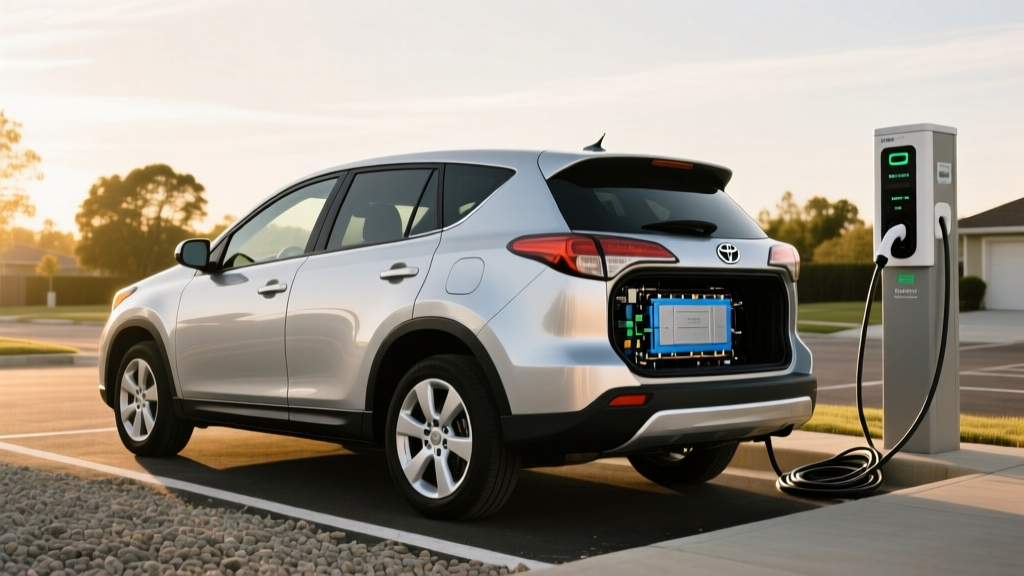
Built through a partnership between Toyota and Tesla, the 2013 RAV4 EV was only sold new in California as a zero-emission compliance vehicle. Production ended in 2014, and Toyota never produced a second generation. That means every RAV4 EV on the road today is at least 12 years old, and the battery is the single most important factor in whether one is a smart buy or a money pit.
This guide breaks down the exact specs, real-world range you should expect, charging logistics, ownership costs, and a decision framework so you can evaluate a specific listing with confidence.
Specs, Range, and Battery Health
| Specification | 2013 RAV4 EV |
|---|---|
| EPA Range | 103 miles |
| Battery Capacity (usable) | 41.8 kWh |
| Battery Chemistry | NMC (Nickel Manganese Cobalt) |
| Motor Output | 154 hp / 218 lb-ft torque |
| 0–60 mph | 8.6 seconds (Normal mode) |
| EPA Efficiency | 76 MPGe combined (44 kWh/100 mi) |
| Level 2 Charging (max) | 6.6 kW (J1772 connector) |
| DC Fast Charging | 50 kW (CHAdeMO connector) |
| DC Fast Charge 10–80% | ~45–50 minutes |
| Cargo Volume | 36.4 cu ft (rear seats up) / 73.0 cu ft (folded) |
| Curb Weight | 4,032 lbs |
| Original MSRP (2013) | $49,800 (before incentives) |
| Used Price Range (2026) | $7,000–$13,000 |
Real-World Range Reality: The EPA sticker says 103 miles, but that was tested when the battery was new. A 12-year-old NMC battery will have degraded. Expect 70–90 miles of real-world range on a typical used example with 80–85% state of health. In cold weather (below 40°F), add another 15–25% loss, which can drop effective range to 55–75 miles. Highway driving at 70+ mph also reduces range versus the EPA's mixed-cycle test.
The RAV4 EV's battery pack was manufactured by Tesla and uses 18650-format NMC cells — the same cell format Tesla used in the early Model S. NMC chemistry offers strong energy density but is more sensitive to high state-of-charge storage and heat than LFP. Toyota originally warranted the battery for 8 years/100,000 miles against defects and capacity loss below a specified threshold. That factory warranty has now expired on every 2013 example, meaning any battery repair or replacement is an out-of-pocket cost.
Before buying, insist on a battery state-of-health (SoH) reading. Some third-party OBD-II tools and apps like LeafSpy equivalents for the RAV4 EV platform can read pack voltage and estimated capacity. A pack below 75% SoH is a negotiation point or a walk-away, depending on price.
Charging: What You Need to Know
The 2013 RAV4 EV uses two connectors that are increasingly outdated in 2026:
| Charging Type | Connector | Max Power | Speed |
|---|---|---|---|
| Level 1 (120V household) | J1772 | 1.4 kW | ~4 miles per hour |
| Level 2 (240V home/public) | J1772 | 6.6 kW | ~20 miles per hour; full charge in ~7 hours |
| DC Fast Charging | CHAdeMO | 50 kW | ~45–50 min (10–80%); tapers significantly above 80% |
The CHAdeMO problem: This is the biggest practical limitation of owning a RAV4 EV in 2026. The CHAdeMO DC fast-charging standard has been largely abandoned in North America. Electrify America removed most CHAdeMO connectors from new stations, and Tesla Superchargers (the dominant network) use NACS. You can find CHAdeMO chargers at some older EVgo and ChargePoint locations, but availability is shrinking. For most owners, the RAV4 EV is effectively a home-charging-only vehicle — which is fine for a commuter car but rules out road trips.
Level 2 home charging at 6.6 kW is the practical backbone of ownership. A full charge from empty takes about 7 hours, easily handled overnight. If you don't already have a 240V outlet in your garage or driveway, budget for installation.
Ownership Costs: RAV4 EV vs. a Comparable Gas SUV
To evaluate whether a used 2013 RAV4 EV saves you money, here's a five-year cost comparison against a typical used gas-powered compact SUV (e.g., a 2013–2015 RAV4 LE with AWD, rated at 24 MPG combined) driven 10,000 miles per year.
| Cost Category (5-Year) | 2013 RAV4 EV | Used Gas RAV4 (24 MPG) |
|---|---|---|
| Purchase Price | $10,000 (mid-range example) | $12,000 |
| Fuel / Electricity | $2,200 (home charging at $0.14/kWh) | $6,875 (gas at $3.30/gal) |
| Maintenance | $1,200 (brakes, cabin filter, tires, coolant) | $3,500 (oil, filters, brakes, belts, transmission fluid) |
| Insurance (avg) | $5,500 ($1,100/yr) | $5,000 ($1,000/yr) |
| Potential Battery Repair | $2,000–$6,000 (if needed) | $0 |
| Total 5-Year Cost | $20,900–$24,900 | $27,375 |
Source: Efficiency data from fueleconomy.gov for the 2013 RAV4 EV.
The EV wins on fuel and maintenance — electricity costs about 4.4 cents per mile at the national average residential rate, versus 13.8 cents per mile for gas. Over five years, that's roughly $4,675 in fuel savings. Maintenance savings add another $2,300. But those savings can evaporate if the battery needs service. A refurbished or replacement battery pack for the RAV4 EV runs $4,000–$8,000 from independent EV shops, and parts availability is limited since the vehicle has been out of production for over a decade.
Federal tax credit note: The IRS §30D clean vehicle credit applies only to new EV purchases (or qualifying used EVs under the separate §25E used-EV credit). The §25E used-EV credit offers up to $4,000 (30% of sale price, capped), but the vehicle must be purchased from a dealer, have an MSRP under $25,000, and meet buyer income limits. A 2013 RAV4 EV from a private seller does not qualify. Verify current rules at irs.gov.
Common Misconceptions About the RAV4 EV
| Myth | Fact |
|---|---|
| "It's basically a Tesla, so parts are easy to find." | The drivetrain is Tesla-sourced, but the pack is proprietary to this model. Tesla service centers will not work on it, and parts must come from salvage or specialized EV recyclers. |
| "103 miles of range is plenty for anyone." | That's the EPA sticker on a new battery. Degradation, cold weather, and highway speeds can cut real-world range to 55–75 miles. It works for short commutes only. |
| "I can fast-charge it on road trips." | CHAdeMO infrastructure is disappearing in North America. Plan on home Level 2 charging as your primary — and likely only — fueling method. |
| "The battery will need replacing soon." | Not necessarily. Tesla's 18650-cell packs have shown strong longevity. Some owners report 85–90% SoH at 80,000+ miles. But a pre-purchase check is essential. |
| "It qualifies for EV tax credits." | Private-party sales don't qualify for §25E. Dealer sales may, if all income, price, and sourcing requirements are met. Check current IRS rules. |
What a First-Time EV Buyer Should Know
If the 2013 RAV4 EV is your entry point into electric driving, here are the practical realities that separate EV ownership from a gas car:
Home charging is nearly mandatory. Without a 240V Level 2 outlet at home, you'll be dependent on shrinking public CHAdeMO infrastructure and slow 120V Level 1 trickle charging (which adds only ~4 miles per hour — a full charge would take over 30 hours). Budget $500–$1,500 for a quality Level 2 home charger and $500–$2,000 for electrician installation, depending on whether your electrical panel needs an upgrade. A 200-amp panel is usually sufficient; older 100-amp panels may require a $1,500–$3,000 upgrade.
Maintenance is simpler but not zero. There's no oil, no spark plugs, no transmission fluid, and regenerative braking extends pad life significantly. But you still need tire rotations, cabin air filter replacement, brake fluid checks, coolant system service for the battery thermal management loop, and eventual 12V auxiliary battery replacement (a standard automotive item, not the traction battery).
Insurance can be higher. Older, low-volume EVs sometimes carry higher premiums because insurers have limited claims data and repair networks are sparse. Get a quote before purchasing — don't assume it'll match a gas RAV4.
Winter range loss is real. NMC batteries lose efficiency in cold temperatures, and the RAV4 EV uses resistive cabin heating (not a heat pump), which draws significant energy from the pack. In freezing conditions, expect a 20–30% range reduction. Preconditioning the cabin while plugged in helps preserve range.
Decision Framework: Should You Buy a 2013 RAV4 EV?
Buy it if:
- Your daily round-trip commute is under 50 miles (leaving a buffer for degradation and weather)
- You have (or can install) a 240V Level 2 charger at home
- You can verify battery SoH is above 75% before purchase
- You want a low-purchase-price EV and are comfortable with a niche, discontinued vehicle
- You live in a mild climate where cold-weather range loss is minimal
- You have a second vehicle for longer trips
Walk away if:
- You need more than 75 miles of reliable daily range
- You don't have access to home charging and live in an apartment or street-parking situation
- Battery SoH is below 70% and the seller won't negotiate on price
- You plan to road-trip — CHAdeMO charging is unreliable and sparse
- You want modern ADAS features (the 2013 RAV4 EV has no automatic emergency braking, lane-keeping, or adaptive cruise)
- You're concerned about resale value — this is a depreciating niche vehicle with a shrinking buyer pool
If you need more range and modern charging (CCS or NACS), consider stretching your budget to a used 2018–2020 Hyundai Kona Electric (258 miles EPA, CCS), a 2017+ Chevy Bolt EV (238 miles, CCS), or a used Tesla Model Y (300+ miles, NACS). These vehicles have active charging networks, better safety tech, and more predictable long-term parts support.
Frequently Asked Questions
How long does the 2013 RAV4 EV battery last?
With proper care (avoiding prolonged storage at 100% charge, minimizing DC fast charging, keeping the pack cool), the NMC battery can last 10–15 years before degrading below 70% capacity. Many examples still show 80–88% SoH at 12 years old, but individual results vary based on climate and charging habits.
What does a replacement battery cost?
A refurbished or salvaged RAV4 EV battery pack typically costs $4,000–$8,000 including installation at an independent EV specialist. OEM new packs from Toyota are no longer readily available. Factor this into your purchase budget as a contingency.
Can I charge a RAV4 EV at a Tesla Supercharger?
No. The RAV4 EV uses a J1772 connector for Level 2 and CHAdeMO for DC fast charging. Tesla Superchargers use the NACS connector. There is no commercially available CHAdeMO-to-NACS adapter that supports DC fast charging safely. You can use a J1772 adapter for Tesla Destination Chargers (Level 2 only), but not for Superchargers.
Is the 2013 RAV4 EV safe?
The 2013 RAV4 EV was not crash-tested by the IIHS or NHTSA in its EV-specific configuration. It lacks modern active safety features like automatic emergency braking, blind-spot monitoring, and lane-departure warning that became standard on later RAV4 generations. It does include stability control, antilock brakes, and multiple airbags.
How does the RAV4 EV compare to a gas RAV4 in daily driving?
The EV is quieter, delivers instant torque (it feels quicker than its 8.6-second 0–60 time suggests around town), and has a lower center of gravity from the floor-mounted battery. The trade-off is limited range, no fast-charging road-trip capability, and the constant awareness of your remaining miles. For a predictable daily commute under 50 miles, the EV experience is superior. For anything unpredictable or long-distance, the gas RAV4 is more versatile.
Sources: EPA efficiency and range data via fueleconomy.gov; IRS used clean vehicle credit rules at irs.gov.