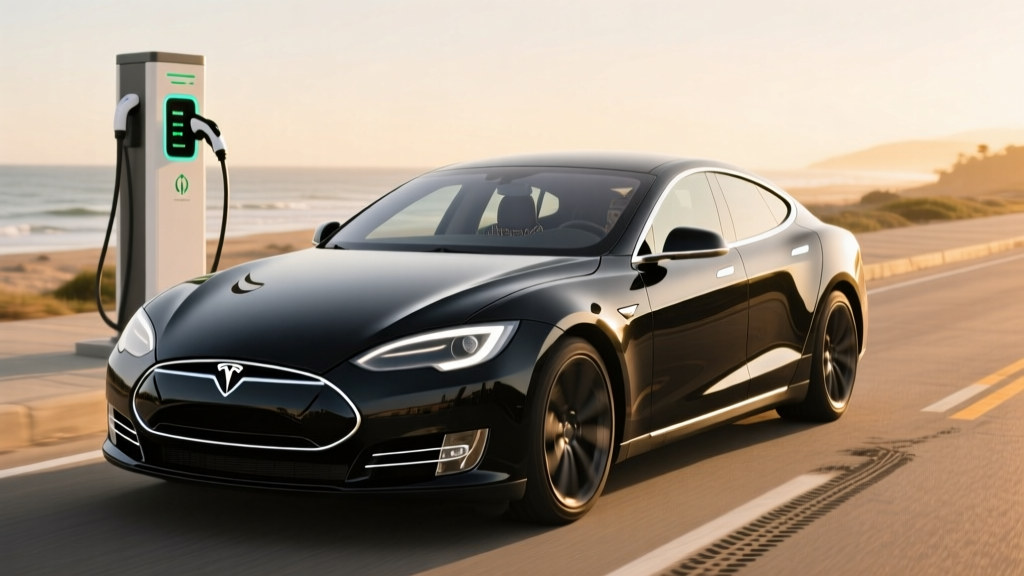
The 2013 Tesla Model S is the car that proved electric vehicles could be desirable, fast, and practical for long-distance travel. More than a decade later, it remains one of the most searched used EVs on the market — and for good reason. As a pioneering luxury electric sedan, it offers a glimpse into early Tesla engineering, battery longevity, and the realities of owning a first-generation EV in 2026.
This profile is built for used-car shoppers and EV enthusiasts who want hard data on the 2013 Model S: its real-world range today, what battery degradation looks like after 10+ years, charging speeds on modern infrastructure, and whether it still makes financial sense compared to newer used EVs. If you're typing "tesla 2013" into a search bar, you're likely weighing a used purchase — and this guide will give you the numbers to decide.
2013 Tesla Model S: Core Specifications at a Glance
| Specification | 2013 Model S 85 | 2013 Model S 60 | 2013 Model S Performance (P85) |
|---|---|---|---|
| EPA Range (Original) | 265 miles | 208 miles | 265 miles |
| Battery Capacity (Usable) | ~81 kWh (85 kWh pack) | ~60 kWh | ~81 kWh (85 kWh pack) |
| Battery Chemistry | NMC (Nickel Manganese Cobalt) | NMC | NMC |
| 0–60 mph | 5.4 seconds | 5.9 seconds | 4.2 seconds |
| Horsepower | 362 hp | 302 hp | 416 hp |
| Drivetrain | RWD (Single Motor) | RWD (Single Motor) | RWD (Single Motor) |
| EPA Efficiency | 89 MPGe (38 kWh/100 mi) | 95 MPGe (35 kWh/100 mi) | 89 MPGe (38 kWh/100 mi) |
| Cargo Volume | 26.3 cu ft (rear) + 5.3 cu ft (frunk) | 26.3 cu ft + 5.3 cu ft | 26.3 cu ft + 5.3 cu ft |
| Seating | 5 adults (optional 3rd-row jump seats for 7) | 5 adults | 5 adults |
| Original MSRP | $79,900 | $69,900 | $93,400 |
| Typical 2026 Used Price | $14,000–$22,000 | $11,000–$16,000 | $16,000–$25,000 |
| Battery Warranty (Original) | 8 years / unlimited miles | 8 years / 125,000 miles | 8 years / unlimited miles |
Sources: EPA Fueleconomy.gov, Tesla 2013 press archives.
Real-World Range in 2026: What the Battery Actually Delivers
Real-World Expectation in 2026: 180–220 miles typical, depending on battery health, driving style, and temperature.
Highway at 75 mph: Expect ~160–190 miles on a degraded pack.
Cold Weather (below 32°F): Add 20–30% range loss; a 200-mile effective range may drop to 140–160 miles.
The 2013 Model S 85's NMC battery pack was rated for 265 miles when new — a headline figure in 2013. Over a decade of charge cycles, thermal stress, and calendar aging, most surviving packs show between 10% and 25% degradation, depending on how the car was charged and stored. Vehicles that were frequently DC fast-charged to 100% or regularly sat at full charge in hot climates tend to sit at the higher end of that degradation range.
Tesla's battery management system (BMS) on the 2013 Model S includes a top and bottom buffer to protect the cells, but the NMC chemistry of this era is more sensitive to high state-of-charge (SoC) storage than the LFP packs in modern Tesla vehicles. Owners who kept daily charges at 80% or below and avoided letting the car sit at 100% for extended periods generally report better capacity retention.
For context, a 2013 Model S 85 with roughly 15% degradation will show approximately 225 miles at 100% charge on a moderate day. Highway driving at sustained speeds above 70 mph, headwinds, and elevation changes will reduce that further. In winter, the lack of a heat pump (the 2013 model uses resistive cabin heating) compounds range loss significantly.
Charging Speeds: DC Fast Charging and Home Level 2
| Charging Method | Power (kW) | Speed / Time | Connector |
|---|---|---|---|
| Level 1 (120V household) | ~1.4 kW | ~3–4 miles per hour | J1772 adapter (included) |
| Level 2 (240V home / public) | Up to 10 kW (single charger) or 20 kW (twin chargers option) | ~29 mi/hr (10 kW) or ~58 mi/hr (20 kW) | J1772 (Tesla J1772 adapter included) |
| DC Fast Charge (Tesla Supercharger V1/V2) | Peak ~90–120 kW | 10–80% in ~40–50 minutes | Tesla proprietary (NACS) |
| CHAdeMO DC Fast Charge (with adapter) | ~50 kW | 10–80% in ~70–90 minutes | CHAdeMO (aftermarket adapter required) |
The 2013 Model S uses Tesla's proprietary connector (now standardized as NACS). It originally shipped with access to Tesla's early Supercharger network, which was a major selling point. Today, those early Supercharger stalls deliver up to 150 kW, but the 2013 Model S can only accept around 90–120 kW at peak, tapering significantly above 60% SoC. Expect a realistic 10–80% session to take 40 to 50 minutes at a V2 Supercharger.
For home charging, the 2013 Model S came with either a single onboard charger (10 kW max) or an optional twin-charger setup (20 kW max). Most used examples on the market have the single charger, meaning a full charge from empty on a 48-amp Level 2 circuit takes approximately 8–9 hours. If you're installing a home Level 2 charger, a 60-amp circuit with a 48-amp continuous charger like the Tesla Wall Connector is ideal, though the car itself will cap intake at its onboard charger limit.
Important note: The 2013 Model S does not natively support CCS1 charging. To use Electrify America, EVgo, or other CCS-based networks, you need a third-party CHAdeMO or CCS adapter — and availability and reliability of these adapters varies. For most 2013 owners, Tesla's Supercharger network remains the primary road-trip charging option.
Performance and Driving Dynamics
Even in 2026, the 2013 Model S Performance (P85) feels quick. Its 416 hp and instant electric torque deliver a 4.2-second 0–60 mph time, which still outpaces many modern gas sedans. The standard 85 kWh model manages 5.4 seconds — respectable for a 4,600-pound luxury sedan.
All 2013 Model S variants are rear-wheel drive with a single motor. Tesla did not introduce dual-motor all-wheel drive until late 2014 (the 2015 model year D models). This means the 2013 car lacks the traction benefits of AWD, which is worth considering if you live in a snowy climate.
Ride quality remains a strong point. The air suspension (optional on 85 and P85, standard on some trims) delivers a supple highway cruise, though early air suspension systems are known to develop leaks over time — a common repair item on high-mileage examples. Steering is precise but heavily assisted, typical of early electric power steering systems.
Technology, Interior, and Notable Drawbacks
The 2013 Model S introduced the now-iconic 17-inch portrait touchscreen, which controlled virtually every vehicle function — climate, navigation, media, and vehicle settings. In 2013, this was revolutionary. In 2026, the hardware shows its age. The original MCU (Media Control Unit) is an NVIDIA Tegra 3 processor, which is sluggish by modern standards and no longer receives over-the-air software updates from Tesla.
Tesla offered an MCU upgrade program (replacing the Tegra 3 with an Intel Atom-based MCU2), which brought improved responsiveness and support for newer software features. Many used 2013 examples have had this upgrade performed; it's worth verifying before purchase, as it significantly improves the daily experience.
Driver Assistance: The 2013 Model S was built before Tesla introduced Autopilot hardware (HW1 arrived in late 2014). This means the 2013 model has no active driver-assistance features — no adaptive cruise control, no lane-keeping assist, no automatic emergency braking. It has basic stability control and ABS, but it lacks the SAE Level 2 driver-assist systems that buyers now expect. For reference, NHTSA's SAE automation framework classifies this vehicle as Level 0 (no automation).
Notable drawbacks:
- No Autopilot or any ADAS features
- MCU1 is slow without the upgrade
- Air suspension failures are common above 80,000 miles
- Door handles are a known failure point (motorized retractable handles)
- No heat pump — resistive heating drains range in winter
- Limited CCS charging access without adapters
- Original 18650-format cells are more degradation-prone than modern 2170 or 4680 cells
Battery Health, Warranty Status, and Replacement Costs
The 2013 Model S 85 and P85 originally came with an 8-year, unlimited-mile battery and drive unit warranty. The Model S 60 had an 8-year/125,000-mile warranty. As of 2026, all original battery warranties on 2013 models have expired.
This is the single most important factor for used buyers. If the battery fails or degrades beyond usability, replacement costs are significant:
- Remanufactured 85 kWh pack (Tesla or third-party): $12,000–$16,000 installed
- New replacement pack (if available): $18,000–$22,000+
- Drive unit (motor) replacement: $5,000–$8,000
Before purchasing any 2013 Model S, request a battery health report. This can be obtained through the car's service menu or via third-party tools that read the BMS data. Look for the "nominal full pack" kWh reading — a healthy 85 kWh pack should still show 65–72 kWh of usable capacity. Anything below 60 kWh suggests significant degradation and potential near-term replacement needs.
Some third-party shops now offer individual cell module replacements for the 85 kWh pack, which can address specific weak modules at a fraction of a full pack replacement cost ($2,000–$5,000 depending on the number of modules). This is a growing option for owners of aging Teslas.
Used Pricing and Tax Credit Eligibility
| Trim | 2026 Used Price Range | Federal Used EV Credit (§25E) | Effective Price After Credit |
|---|---|---|---|
| Model S 60 | $11,000–$16,000 | Up to $4,000 (30% of sale price, capped at $4,000) | $7,000–$12,000 |
| Model S 85 | $14,000–$22,000 | Up to $4,000 | $10,000–$18,000 |
| Model S P85 (Performance) | $16,000–$25,000 | Up to $4,000 | $12,000–$21,000 |
The 2013 Model S does not qualify for the new-vehicle §30D federal tax credit (which applies only to new EV purchases with current-year MSRP caps, income limits, and battery sourcing requirements, per IRS guidelines). However, it may qualify for the §25E Used Clean Vehicle Credit, which provides up to $4,000 (30% of the sale price, capped at $4,000) for qualifying used EVs purchased from a licensed dealer.
§25E eligibility requirements for the 2013 Model S:
- Sale price must be $25,000 or less (most 2013 Model S examples qualify)
- Buyer income caps: $75,000 single / $112,500 head of household / $150,000 joint
- Must be purchased from a licensed dealer (private-party sales excluded)
- The vehicle must have been previously titled (it qualifies as a used vehicle)
- Credit is non-refundable — it can reduce your tax liability to zero but won't generate a refund beyond that
This credit can meaningfully reduce the effective cost of a 2013 Model S, making it one of the most affordable ways into a long-range electric sedan — provided the battery is healthy.
Pros and Cons of the 2013 Model S in 2026
Pros
- Still one of the most spacious EV sedans: 26.3 cu ft rear cargo + 5.3 cu ft frunk
- Access to Tesla Supercharger network for road trips
- Strong straight-line performance (P85: 4.2s 0–60)
- Eligible for up to $4,000 used EV tax credit
- Air suspension delivers excellent ride comfort (when functional)
- Large 17-inch touchscreen (with MCU2 upgrade)
- Low running costs: ~$0.04–$0.06 per mile on home electricity
Cons
- Battery warranty expired — replacement risk is real ($12K–$22K)
- No Autopilot, no ADAS features whatsoever (Level 0)
- Significant real-world range loss vs. original 265-mile EPA sticker
- Air suspension, door handles, and MCU1 are common failure points
- No native CCS charging — limited to Superchargers and J1772 without adapters
- No heat pump — cold-weather range loss is severe
- RWD only — no AWD option for snow-belt states
Who Should Buy the 2013 Tesla Model S?
Choose the 2013 Model S if:
- You want an affordable entry into a premium electric sedan with Supercharger access
- Your daily commute is under 120 miles round-trip (leaving range buffer)
- You can verify battery health before purchase and budget for potential pack replacement
- You value cargo space, rear-seat room, and highway comfort over cutting-edge tech
- You qualify for the §25E used EV credit, bringing effective cost below $15,000
Look at a newer used EV if:
- You need driver-assistance features (adaptive cruise, lane-keeping, AEB)
- You live in a cold climate and need AWD or a heat pump
- You can't absorb a potential $15,000+ battery replacement cost
- You rely on CCS public charging networks (Electrify America, EVgo) without adapters
- You want OTA software updates and modern infotainment responsiveness
Frequently Asked Questions
What is the real-world range of a 2013 Tesla Model S in 2026?
Most 2013 Model S 85 examples deliver 180–220 miles at full charge in moderate conditions, depending on battery degradation (typically 10–25%). Highway driving at 75 mph reduces this to 160–190 miles, and cold weather can cut it further to 140–160 miles.
How fast does the 2013 Model S charge?
On a Tesla V2 Supercharger, it peaks at roughly 90–120 kW and charges from 10–80% in about 40–50 minutes. At home on a Level 2 charger (10 kW single charger), expect roughly 29 miles of range per hour of charging, or a full charge in 8–9 hours.
Does the 2013 Model S qualify for any federal tax credit?
Not the new-vehicle §30D credit, which applies only to new EVs meeting current sourcing and MSRP requirements. However, it may qualify for the §25E Used Clean Vehicle Credit of up to $4,000, provided the sale price is $25,000 or less, you buy from a licensed dealer, and your income is within the caps ($75K single / $150K joint).
Is the 2013 Model S worth buying vs. newer used EVs?
It depends on your risk tolerance. At $14,000–$22,000 before credits, it's one of the cheapest long-range electric sedans available. But the expired battery warranty and known failure points (air suspension, door handles, MCU1) mean you should budget $3,000–$5,000 for potential repairs in the first year. A 2018+ Model 3 Long Range at a similar price offers better efficiency, AWD, Autopilot hardware, and a battery that may still be under warranty.
Can I use non-Tesla chargers with the 2013 Model S?
You can use any J1772 Level 2 charger with the included adapter. For DC fast charging outside the Supercharger network, you need a third-party CHAdeMO or CCS adapter, which adds cost ($300–$700) and may not work reliably at all stations. Tesla's Supercharger network remains the most dependable option for this vehicle.
What should I check before buying a used 2013 Model S?
Prioritize: (1) Battery health report — nominal full pack kWh reading, (2) service history for air suspension, drive unit, and door handle repairs, (3) whether the MCU1-to-MCU2 upgrade has been performed, (4) title status (clean vs. salvage), and (5) Supercharger eligibility (some salvaged-title Teslas lose Supercharger access).