Quick Verdict: The EV That Started It All
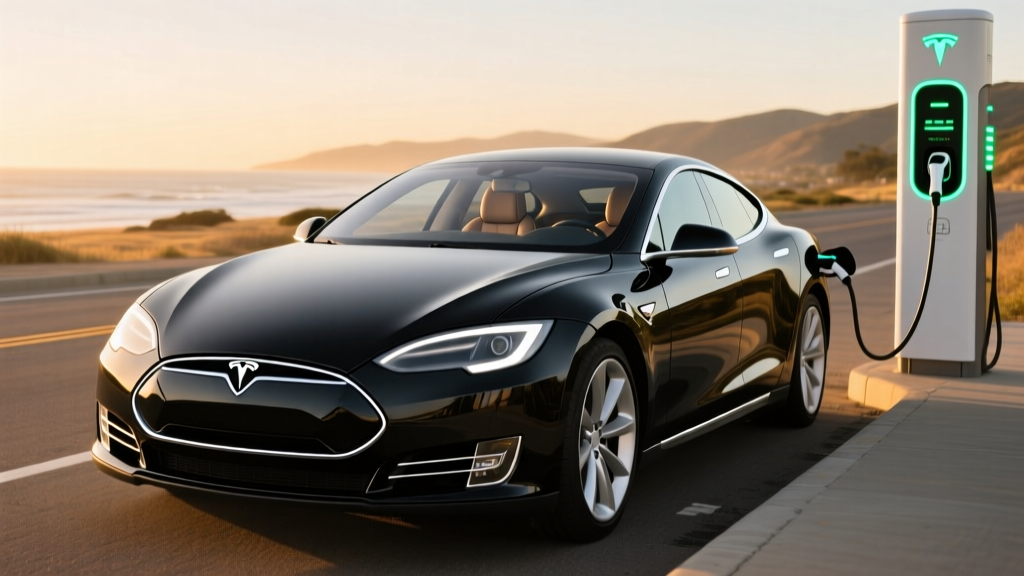
The 2013 Tesla Model S Performance wasn't just an early electric car — it was the vehicle that proved a battery-electric sedan could out-accelerate a BMW M5 while seating five adults and their luggage. More than a decade later, this pioneer still turns heads on the used market, with examples trading between $12,000 and $22,000 depending on mileage, battery state of health, and condition.
But buying a 2013 Model S Performance in 2026 requires clear eyes. The original 85 kWh NMC battery has degraded, DC fast-charge speeds are a fraction of modern EVs, and Tesla's original unlimited-mileage battery warranty has expired for most first-year cars. This guide gives you the exact numbers, real-world expectations, and ownership math you need before signing the paperwork.
2013 Model S Performance: Core Specifications
| Specification | Value |
|---|---|
| EPA Estimated Range (New) | 265 miles |
| Usable Battery Capacity | ~81 kWh (of 85 kWh gross) |
| Battery Chemistry | NMC (Nickel Manganese Cobalt), Panasonic 18650 cells |
| Drivetrain | Rear-Wheel Drive (single motor) |
| Horsepower | 416 HP |
| Torque | 443 lb-ft |
| 0–60 mph | 4.2 seconds |
| Top Speed | 130 mph |
| EPA Efficiency | 89 MPGe (38 kWh/100 mi) |
| Cargo Volume | 26.3 cu ft (rear) + 5.3 cu ft (frunk) = 31.6 cu ft total |
| Rear Legroom | 35.4 inches |
| Curb Weight | ~4,650 lbs |
| Original Base MSRP | $92,400 (before incentives) |
Real-World Range: What to Actually Expect
Real-World Expectation in 2026: 170–220 miles depending on battery State of Health (SoH), driving style, and climate.
The 265-mile EPA figure applied to a brand-new 2013 Model S with a fresh 85 kWh pack. Thirteen years of charge cycles, calendar aging, and Supercharger use have reduced most surviving packs to 70–82% of original capacity. According to data aggregated by Tesla's battery care documentation and independent fleet analyses, NMC packs from this era typically retain about 75–80% capacity after 100,000–150,000 miles.
Highway driving at 75 mph cuts range further — expect roughly 180–200 miles from a healthy 78%-SoH pack in moderate temperatures. Cold weather (below 32°F) can reduce usable range by 20–35%, since the 2013 Model S lacks a heat pump (it uses resistive cabin heating) and early battery thermal management was less aggressive than current Tesla systems. A winter highway road trip in the Midwest may yield as little as 140–160 miles on a full charge.
City and suburban driving is where this car still shines. Regenerative braking recovers energy in stop-and-go traffic, and a well-maintained example can still deliver 200–220 miles at speeds under 45 mph in temperate weather.
Charging Speeds: DC Fast, Level 2, and Level 1
Charging technology has advanced dramatically since 2013. The original Model S Performance was designed for Tesla's early Supercharger network and J1772-compatible Level 2 stations. Here is what you will actually experience at the plug:
| Charging Level | Power (kW) | Speed / Notes |
|---|---|---|
| Level 1 (120V household) | ~1.2 kW | ~3–4 miles per hour of charging |
| Level 2 (240V, single charger) | 10 kW | ~29 miles per hour; full charge in ~9 hours |
| Level 2 (240V, dual chargers — optional) | 20 kW | ~58 miles per hour; full charge in ~4.5 hours |
| DC Fast Charge (Tesla Supercharger V1/V2) | Peak ~90–120 kW | 10–80% in ~45–55 minutes |
| CHAdeMO DC Fast (with adapter) | ~50 kW | 10–80% in ~75–90 minutes |
Key reality check: The 2013 Model S cannot charge at the 250 kW speeds of modern V3/V4 Superchargers. Even at a V2 Supercharger (150 kW capable), the car's battery management system limits peak intake to roughly 90–120 kW, and that peak only holds between approximately 10–30% State of Charge. Above 50%, the charge curve tapers significantly — the 50–80% portion can take as long as the 10–50% portion. On a road trip, plan for 45–55 minute stops for a 10–80% charge, not the 15–20 minutes modern EVs achieve.
The optional dual onboard chargers (20 kW AC) were a $3,600 upgrade in 2013 and are highly desirable on the used market. They cut Level 2 home charging time nearly in half. Verify whether a used example has single or dual chargers before purchasing — it is not easily retrofitted.
Connector note: The 2013 Model S uses Tesla's proprietary connector for Supercharging and a J1772 inlet (with included adapter) for public Level 2 stations. With Tesla's NACS standard now adopted industry-wide, this car can use the expanding Supercharger network directly. For CCS-equipped public chargers (Electrify America, EVgo), Tesla sells a CCS adapter, but compatibility with 2012–2016 Model S vehicles should be confirmed with Tesla support before purchase, as early vehicles may require a firmware or hardware update.
Performance and Driving Dynamics
The "Performance" badge on the 2013 Model S was not marketing fluff. The rear-mounted AC induction motor produced 416 HP and 443 lb-ft of torque — available instantly from zero RPM. The 4.2-second 0–60 mph time placed it in the territory of a Porsche Panamera Turbo, and the silent, vibration-free launch was something no internal-combustion sedan could replicate.
Because the 2013 Performance is single-motor, rear-wheel drive, it lacks the all-weather traction of later Dual Motor (D) and Long Range AWD variants. In snow and ice, winter tires are strongly recommended. The air suspension (standard on Performance trims) provides adjustable ride height — useful for steep driveways and speed bumps — but units from this era may need refurbishment; replacement air struts cost $1,200–$2,000 per corner aftermarket.
The 17-inch capacitive touchscreen dominated the interior and controlled nearly every vehicle function. In 2013, this was revolutionary. By 2026 standards, the hardware is sluggish — the MCU1 (first-generation Media Control Unit) is known for yellowing delamination and eventual failure. Tesla offered a paid MCU2 upgrade ($1,500–$2,500) that significantly improves responsiveness and enables modern software features. Confirm whether a used example has received this upgrade.
Tech, Driver Assistance, and Interior
Infotainment: The 17-inch screen ran Tesla's proprietary Linux-based OS with navigation, Bluetooth audio, and (later via OTA) basic app support. MCU1-equipped cars lack a modern web browser, theater mode, and some newer navigation features. Over-the-air updates for 2013 hardware have become increasingly limited as Tesla's software has evolved for newer processors.
Driver Assistance: The 2013 Model S predates Tesla's Autopilot hardware suite. HW1 (introduced late 2014) and all subsequent Autopilot/FSD-capable computers are not present. This means no adaptive cruise control, no lane-keeping assist, no automatic emergency braking, and no Full Self-Driving capability. You get conventional cruise control and parking sensors. For buyers seeking modern ADAS features, this is a significant limitation.
Interior and cargo: The Model S offers genuine five-passenger seating with 35.4 inches of rear legroom — competitive with a BMW 5 Series. The rear hatch opens to 26.3 cu ft of cargo space, expandable with folded rear seats, and the front trunk (frunk) adds 5.3 cu ft. Build quality on 2013 examples is inconsistent — panel gaps, rattling trim, and early-seat-bolster wear are common complaints. Tesla improved fit and finish significantly in later model years.
Pricing, Tax Credits, and Used Ownership Costs
The 2013 Model S Performance originally started at $92,400, with well-optioned examples exceeding $110,000. In the 2026 used market, prices have settled dramatically:
| Condition / Mileage | Typical Price Range |
|---|---|
| Under 60,000 mi, battery SoH >80% | $18,000–$22,000 |
| 60,000–100,000 mi, SoH 75–80% | $14,000–$18,000 |
| Over 100,000 mi, SoH 70–75% | $12,000–$15,000 |
| Battery replaced (Tesla or aftermarket) | $22,000–$28,000 |
Federal tax credit — used EV provision: Under IRS §25E (Previously-Owned Clean Vehicle Credit), you may qualify for up to $4,000 (30% of the sale price, capped at $4,000) when purchasing a used Model S from a licensed dealer. Requirements include:
- Sale price must be $25,000 or below (most 2013 Model S Performance examples qualify)
- Buyer income caps: $75,000 single / $112,500 head of household / $150,000 married filing jointly (modified AGI)
- Vehicle must be purchased from a licensed dealer (private-party sales do not qualify)
- The vehicle must have been previously sold as new at least once (a 2013 car always satisfies this)
- Credit is non-refundable unless transferred at point of sale under current IRS rules
New EV tax credit (§30D) does not apply — the $7,500 new-vehicle credit is only available for new purchases, and the Model S is no longer produced in this generation.
Battery replacement cost: If the original pack has degraded below usable capacity or developed a fault, a Tesla remanufactured replacement runs $12,000–$16,000 installed. Third-party shops offer refurbished packs for $8,000–$12,000. This is the single largest financial risk in owning a 2013 Model S.
Warranty Status in 2026
The original 2013 Model S came with a 4-year/50,000-mile basic warranty and an 8-year/unlimited-mile battery and drive unit warranty. For a 2013 vehicle, both warranties have expired as of 2021 at the latest. Some early Performance models had an extended battery warranty option, but these too have lapsed.
This means any battery failure, drive unit issue, air suspension repair, or MCU malfunction is an out-of-pocket expense. Third-party extended warranties are available for older Teslas but often exclude the battery and drive unit — read the fine print carefully.
Pros, Cons, and Who Should Buy
Pros
- Instant 416 HP torque delivers thrilling acceleration even by 2026 standards
- Spacious liftback with 31.6 cu ft total cargo — genuinely practical
- Access to Tesla Supercharger network (with proper adapter verification)
- Air suspension provides adjustable ride height and comfortable highway cruising
- Low center of gravity yields composed handling for a large sedan
- Depreciation has largely plateaued — limited further value loss
Cons
- No Autopilot, no AEB, no modern ADAS — SAE Level 0–1 only
- Battery degradation reduces real-world range to 170–220 miles
- DC fast charging peaks at ~120 kW — road trips require longer stops
- MCU1 infotainment is slow and may require costly upgrade
- Air suspension and drive unit repairs are expensive out of warranty
- RWD only — limited snow/ice capability without winter tires
- No heat pump — cold-weather range loss is significant
Who This EV Suits Best
Buy the 2013 Model S Performance if: You want a spacious, fast electric daily driver for commuting and suburban errands, can charge at home, have a second vehicle for long road trips, and are comfortable with out-of-warranty repair risk. It is an excellent value at $14,000–$18,000 for someone who understands what they are signing up for.
Look elsewhere if: You need reliable 300+ mile road-trip range, modern driver-assist features, all-wheel drive, or a warranty-backed ownership experience. Consider a used 2018+ Model 3 Long Range AWD or a 2020+ Model Y for a more modern and supported package at a higher price point.
Frequently Asked Questions
What is the real-world range of a 2013 Model S Performance today?
Expect 170–220 miles on a full charge, depending on battery State of Health (typically 70–82% after 13 years), driving speed, and temperature. Highway driving at 75 mph in winter may yield as little as 140–160 miles. City driving in mild weather is the best-case scenario.
How fast does the 2013 Model S charge at home and on the road?
At home on a 240V Level 2 charger, expect 10 kW (single charger) or 20 kW (dual charger option), adding 29–58 miles per hour. On a Tesla Supercharger, peak DC rate is roughly 90–120 kW, achieving 10–80% in about 45–55 minutes. This is significantly slower than modern EVs that achieve 10–80% in 15–25 minutes.
Does the 2013 Model S qualify for any federal tax credit?
Not the $7,500 new-vehicle credit (§30D). However, you may qualify for the up-to-$4,000 used EV credit (§25E) if you buy from a licensed dealer for $25,000 or less and your income falls under IRS caps ($75K single, $150K married). Confirm eligibility with a tax professional and review current rules at IRS.gov.
Is the 2013 Model S Performance worth buying vs. a used Model 3?
It depends on priorities. A 2018–2019 Model 3 Long Range AWD ($18,000–$24,000 used) offers Autopilot hardware, 310-mile EPA range when new (~250–280 real-world today), faster charging, and a more modern interior — but less cargo space and a firmer ride. The 2013 Model S wins on space, ride comfort, and sheer acceleration character, but loses on tech, charging speed, and efficiency.
What are the biggest risks of buying a 2013 Model S Performance?
The three major financial risks are: (1) battery replacement at $8,000–$16,000 if the pack degrades below usable levels, (2) drive unit failure at $5,000–$8,000, and (3) air suspension repairs at $1,200–$2,000 per corner. Always request a pre-purchase battery health report showing current kWh capacity and SoH percentage before buying.
Can I use non-Tesla chargers with a 2013 Model S?
Yes, with adapters. The car uses a Tesla proprietary connector natively. For J1772 Level 2 public chargers, Tesla includes a J1772 adapter. For CCS DC fast chargers, Tesla offers a CCS adapter, but confirm compatibility with your specific VIN through Tesla support, as 2012–2016 vehicles may require a firmware or hardware update to enable CCS charging. CHAdeMO adapters were available from third parties but are increasingly rare.