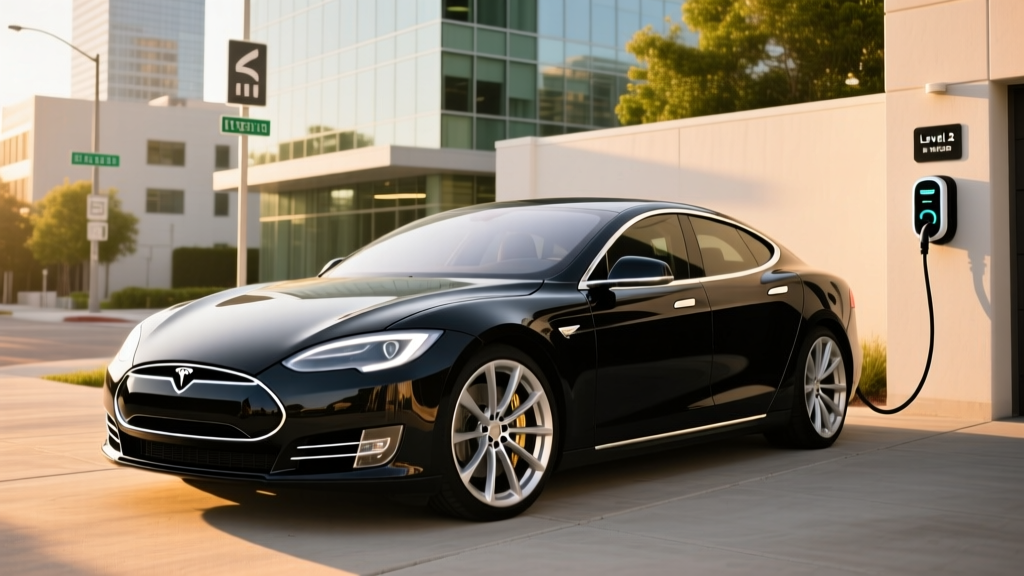
The 2013 Tesla Model S P85 was the car that proved electric vehicles could be fast, luxurious, and practical. More than a decade later, it remains one of the most compelling used EVs on the market — but buying a 12-year-old battery-electric sedan requires careful homework. This review breaks down the real-world range you should expect from an aging 85 kWh pack, the charging speeds that feel dated by 2026 standards, the performance that still turns heads, and the ownership economics that make or break this car as a daily driver.
| Spec | Value |
|---|---|
| EPA Range (original) | 265 miles |
| Battery Capacity (gross / usable) | 85 kWh / ~81 kWh (new) |
| Battery Chemistry | NMC (Nickel Manganese Cobalt) — Panasonic 18650 cells |
| Drivetrain | Rear-Wheel Drive (single motor) |
| Horsepower | 416 hp |
| Torque | 443 lb-ft |
| 0–60 mph | 4.2 seconds |
| Max DC Fast Charge | ~120 kW (V2 Supercharger peak) |
| 10–80% DC Charge Time | ~45–55 minutes (aged pack) |
| Level 2 Charge Rate | 10 kW (single onboard charger); 20 kW (twin charger option) |
| Efficiency | 89 MPGe combined / 38 kWh/100 mi |
| Cargo Volume | 26.3 cu ft (rear) + 5.3 cu ft (frunk) |
| Original Base MSRP | $79,900 (before incentives) |
| Used Price Range (2026) | $12,000–$20,000 depending on mileage & battery SoH |
| Battery Warranty (original) | 8 years / 125,000 miles |
Real-World Range: What 265 EPA Miles Means in 2026
When new, the 2013 Model S P85 carried an EPA-estimated range of 265 miles — a figure that redefined what buyers expected from an EV. According to fueleconomy.gov, the P85 achieved 89 MPGe combined (38 kWh per 100 miles). But that was with a fresh NMC battery in ideal conditions. In 2026, the reality is more nuanced.
EPA sticker: 265 miles
Expected range today (healthy pack, 70–85% SoH): 185–225 miles
Highway driving at 75 mph: ~160–195 miles (the P85's large, heavy sedan body and single-speed reduction gear lose efficiency at sustained speed)
Cold weather (below 32°F): 130–170 miles — the 2013 Model S lacks a heat pump, relying on resistive cabin heating that can draw 3–5 kW continuously, cutting range by 25–40%
Worst-case scenario (cold + highway + aged pack at 65% SoH): as low as 110–130 miles
Battery degradation on the 85 kWh Panasonic NMC pack follows a predictable curve. Most packs lose 8–12% capacity in the first 50,000 miles, then degradation slows. By 100,000–130,000 miles, expect 70–82% State of Health (SoH) depending on charging habits. Cars that were routinely charged to 100% and left sitting at full SoC in hot climates will sit at the lower end. Before buying, request a battery health reading through Tesla's service center or use third-party OBD-II tools that read pack voltage deviation and usable capacity.
Charging Speeds: Functional but Dated
The 2013 P85 was designed around Tesla's V2 Supercharger network, which peaked at 120 kW. That was impressive in 2013. In 2026, with competitors charging at 250–350 kW, it feels like a different era.
| Charging Level | Power | Speed / Time |
|---|---|---|
| Level 1 (120V household) | ~1.4 kW | ~3–4 miles per hour |
| Level 2 (240V, single charger) | 10 kW | ~29 miles per hour |
| Level 2 (240V, twin charger option) | 20 kW | ~58 miles per hour |
| DC Fast Charge (V2 Supercharger) | Peak ~120 kW | 10–80% in ~45–55 min (aged pack) |
| DC Fast Charge (CCS adapter) | ~90–110 kW typical | Varies by station; taper begins ~60% SoC |
kW vs kWh reminder: kW measures charging power (the rate at which energy flows into the battery); kWh measures energy capacity (the total amount of energy the battery stores). The P85's 85 kWh battery fills at a peak rate of 120 kW — but that peak is only sustained briefly, typically between 10–30% SoC. Above 60%, the charge curve tapers sharply. Expect the final 20% (80–100%) to take as long as the first 60%.
The 2013 Model S uses Tesla's proprietary connector. For non-Tesla DC fast chargers (Electrify America, EVgo), you will need a Tesla-to-CCS adapter, which Tesla sells and many third-party vendors offer. The adapter works well but adds a step and caps practical charging at the car's onboard limit regardless of station capability. Home Level 2 charging on a NEMA 14-50 outlet or a Tesla Wall Connector is the ownership sweet spot — at 10 kW (single charger), a full overnight charge adds roughly 200+ miles, which covers most daily needs.
Performance That Still Holds Up
The P85's rear-mounted AC induction motor produces 416 horsepower and 443 lb-ft of torque. That translates to a 0–60 mph time of 4.2 seconds — still quicker than most new crossover EVs in 2026. The instant torque delivery from a standstill remains thrilling, and the single-speed transmission means seamless, uninterrupted acceleration.
As a rear-wheel-drive car, the P85 is tail-happy in wet conditions compared to Tesla's later dual-motor ("D") all-wheel-drive variants. The air suspension (standard on early P85s) provides a comfortable ride but is a known maintenance item — strut and compressor failures are common past 80,000 miles and cost $1,500–$3,000 per corner to replace. Many owners swap to aftermarket coilover suspensions to eliminate this recurring expense.
Braking feel is a weak point. The P85's regenerative braking is not as aggressive or smoothly blended as modern EVs, and the friction brakes can feel vague. The car does not offer true one-pedal driving in the way a 2026 EV buyer might expect — you will still use the brake pedal regularly in stop-and-go traffic.
Interior, Tech, and Daily Usability
The 2013 Model S interior was minimalist before minimalism was trendy. The 17-inch portrait touchscreen was revolutionary at launch and remains large by 2026 standards, but the underlying hardware is painfully slow. The original MCU1 (Media Control Unit) uses an NVIDIA Tegra 3 processor that struggles with modern map rendering and app responsiveness. Tesla offered an MCU2 upgrade (Intel Atom-based) for roughly $1,500–$2,000, and many surviving P85s have had this retrofit. Verify before purchasing — the difference in daily usability is enormous.
Notable tech and features:
- Over-the-air (OTA) software updates — though the 2013 P85 receives only basic updates, not the full feature set of newer Teslas
- Basic Autopilot hardware (AP1) was not available on 2013 models; this car has no driver-assist features beyond cruise control and parking sensors. This is SAE Level 0–1 — no lane-keeping, no adaptive cruise, no supervised automation.
- Panoramic glass roof (early cars had a sliding moonroof instead)
- Power liftgate with 26.3 cu ft of rear cargo space plus a 5.3 cu ft front trunk (frunk)
- Seating for five adults; rear legroom is generous at 35.4 inches, but the sloping roofline limits headroom for taller passengers
Notable drawbacks:
- MCU1 infotainment is sluggish without the MCU2 upgrade
- No Autopilot or any driver-assist technology — a significant gap vs. any 2020+ EV
- Door handles, window regulators, and 12V electrical gremlins are common complaints
- No heat pump — resistive heating is a range killer in winter
- Build quality is inconsistent; panel gaps and interior rattles are typical of early Fremont production
Used Pricing, Tax Credits, and Ownership Economics
The 2013 Model S P85 originally stickered at $79,900 before any incentives (and well over $90,000 with options like the twin charger, air suspension, and Tech Package). In the 2026 used market, prices have settled dramatically:
| Factor | Detail |
|---|---|
| Original MSRP (2013) | $79,900 base; ~$90,000+ as-tested |
| Used Market Range (2026) | $12,000–$20,000 |
| Federal Used EV Credit (§25E) | Up to $4,000 or 30% of sale price (whichever is lower) — for vehicles under $25,000 sold by a licensed dealer |
| §25E Income Caps (2026) | $75,000 single / $112,500 head of household / $150,000 joint (modified AGI) |
| §30D New EV Credit | Not applicable — this is a discontinued model, not available new |
| Point-of-Sale Transfer | §25E allows dealer transfer at point of sale, reducing out-of-pocket cost |
A critical distinction for used EV buyers: the §30D federal tax credit for new EVs does not apply — the 2013 Model S is long out of production. However, the §25E used clean vehicle credit can provide up to $4,000 if you buy from a licensed dealer for under $25,000 and your income falls within IRS limits. Per IRS guidelines on the used EV credit, the vehicle must be at least two model years old (easily satisfied), sold by a dealer (not private party), and the credit can be transferred at point of sale. A $15,000 P85 purchased from a qualifying dealer could net a $4,000 credit, bringing effective cost to $11,000 — remarkable value for a 416-hp luxury sedan.
Insurance: Expect $1,800–$2,800 annually depending on your profile. Tesla-specific insurers and mainstream carriers both cover the P85, but rates reflect repair costs for aluminum body panels and the battery.
Maintenance wildcards: Budget $1,500–$3,000 per year for age-related repairs. Common items include air suspension ($1,500–$3,000 per corner), drive unit replacement ($3,000–$5,000 if out of warranty), MCU repairs, door handle mechanisms ($300–$600 each), and the 12V auxiliary battery ($200–$350). The high-voltage battery is the elephant in the room: a replacement 85 kWh pack from Tesla costs $12,000–$18,000 (refurbished) in 2026, though independent shops offer rebuilt packs for $8,000–$12,000.
Battery Warranty Status and Longevity
The original battery warranty on the 2013 P85 was 8 years / 125,000 miles, guaranteeing at least 70% capacity retention. For virtually every 2013 P85 on the road in 2026, this warranty has expired — both by time (2021 was the cutoff for a 2013 model) and often by mileage. This means any battery failure or significant degradation is the owner's financial responsibility.
That said, the Panasonic 18650 NMC cells in the 85 kWh pack have proven reasonably durable. Tesla's fleet data and third-party analyses show these packs typically retain 75–85% capacity at 120,000–150,000 miles when owners followed best practices (charging to 80% daily, avoiding prolonged storage at 100% or below 10%, minimizing DC fast charging). The key risk is not gradual degradation but cell imbalance or individual module failure, which can trigger a "max charge reduced" warning and require service.
Before purchasing, check the car's energy screen for the current rated range at 100% charge. A healthy P85 should display 190–225 rated miles at full charge. Below 170, the pack is significantly degraded and a replacement should be factored into your purchase price negotiation.
Who Should Buy the 2013 Model S P85?
- You want a fast, spacious luxury sedan for under $20,000 and accept the maintenance risk
- Your daily commute is under 80 miles round-trip, leaving range buffer
- You can charge at home (Level 2) and don't rely on DC fast charging for daily needs
- You value the 416-hp performance and 0–60 time that still embarrasses many new EVs
- You're mechanically sympathetic and budget $2,000+/year for age-related repairs
- You need reliable 250+ mile range in all weather conditions
- You want modern driver-assist features (Autopilot, adaptive cruise, lane-keeping)
- You live in a cold climate and need a heat pump for efficient winter driving
- You cannot absorb a potential $10,000–$18,000 battery replacement cost
- You want fast DC charging for road trips (120 kW peak means longer stops vs. modern 250+ kW EVs)
The P85 is best suited as a commuter and weekend cruiser for an EV-savvy buyer who understands the risk profile. It is not a set-and-forget appliance — it's a 12-year-old luxury performance car with a giant battery. For a family needing a primary vehicle with modern safety tech and range confidence, a used 2020+ Model 3 Long Range or a Chevrolet Bolt EUV makes more practical sense. But for enthusiasts who want the car that started the EV revolution, at a fraction of its original price, the P85 delivers an experience that still feels special.
- 416 hp and 4.2-second 0–60 still thrilling in 2026
- Spacious interior with 26.3 cu ft cargo + frunk
- Used prices as low as $12,000; eligible for up to $4,000 §25E credit
- Access to Tesla Supercharger network (with adapter for CCS stations)
- OTA updates still provide minor improvements
- Ride quality and cabin quietness still competitive
- Battery warranty expired — replacement costs $8,000–$18,000
- No Autopilot or any driver-assist features (SAE Level 0–1)
- 120 kW peak DC charging is slow by 2026 standards
- No heat pump — severe winter range loss (25–40%)
- Air suspension and drive unit repairs are expensive
- MCU1 infotainment is sluggish without the MCU2 upgrade
- Build quality reflects early-production inconsistency
Frequently Asked Questions
What is the real-world range of a 2013 Tesla Model S P85 in 2026?
With a healthy battery (75–85% SoH), expect 185–225 miles in mixed driving. Highway-only at 75 mph drops this to 160–195 miles. In cold weather below freezing, resistive heating and battery chemistry reduce range to 130–170 miles. The original 265-mile EPA rating is no longer achievable on a 12-year-old pack.
How fast does the 2013 Model S P85 charge?
On a V2 Supercharger, it peaks at roughly 120 kW, achieving a 10–80% charge in approximately 45–55 minutes (slower on aged packs due to increased internal resistance). At home on a 240V Level 2 outlet with the single onboard charger, it charges at 10 kW, adding about 29 miles per hour. The optional twin charger doubles this to 20 kW and ~58 miles per hour.
Does the 2013 Model S P85 qualify for any federal tax credit?
Not the §30D new-vehicle credit — the car is long discontinued. However, the §25E used clean vehicle credit offers up to $4,000 (or 30% of sale price, whichever is less) if purchased from a licensed dealer for under $25,000, and your income is within IRS caps ($75K single / $150K joint). Verify current-year eligibility at irs.gov as rules may change.
Is the 2013 Model S P85 worth buying vs. competitors?
Against a used 2018–2020 Chevrolet Bolt EV (~$12,000–$16,000), the P85 offers far more space, performance, and prestige but carries much higher repair risk and lacks modern driver assists. Against a used 2019–2021 Tesla Model 3 Long Range (~$20,000–$28,000), the Model 3 is more efficient, charges faster, has Autopilot, and still has some battery warranty remaining. The P85 wins on raw acceleration, cargo space, and ride comfort — but loses on nearly every practical ownership metric.
How much does a battery replacement cost for the 2013 P85?
A refurbished 85 kWh pack from Tesla runs $12,000–$18,000 including labor. Independent EV shops offer rebuilt packs for $8,000–$12,000. Given that used P85s sell for $12,000–$20,000, a battery replacement can approach or exceed the car's value — making pre-purchase battery health assessment essential.
Can the 2013 P85 use Tesla Superchargers and non-Tesla chargers?
Yes to both. The P85 natively uses Tesla's proprietary connector at Superchargers (now transitioning to NACS). For CCS-based networks like Electrify America or EVgo, you need a Tesla-to-CCS adapter. The car cannot use CHAdeMO stations without a rare and expensive third-party adapter.