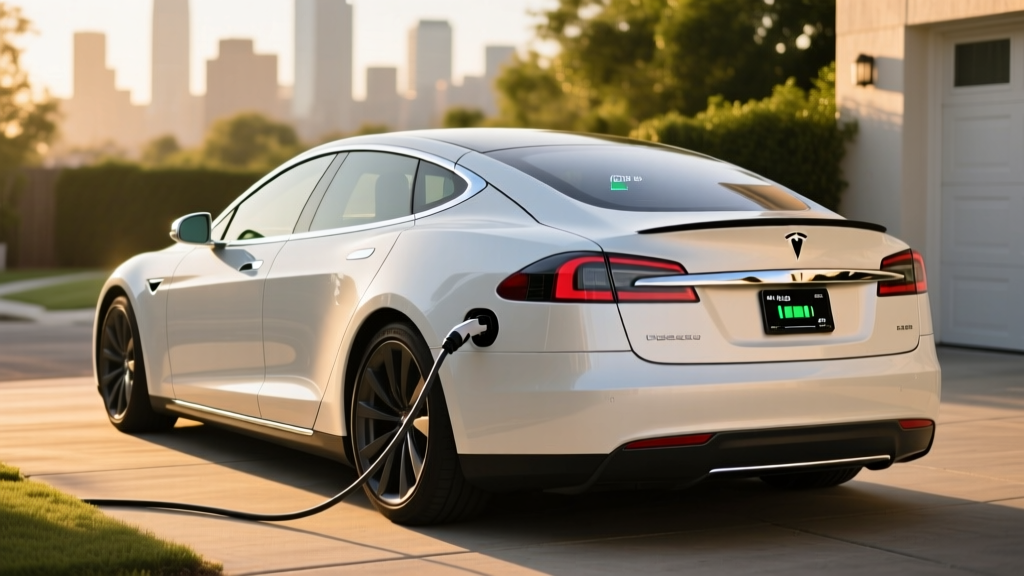
The 2013 Tesla Model S 85 was the car that proved electric vehicles could be desirable, fast, and practical for long-distance travel. More than a decade later, it remains a fixture on the used-EV market, often appearing at prices that undercut new compact EVs. But buying a 13-year-old battery-electric sedan requires a clear-eyed look at battery degradation, obsolete charging hardware, and maintenance realities that no spec sheet from 2013 will warn you about.
This review evaluates the 2013 Tesla Model S 85 as a used vehicle purchase in 2026—covering real-world range after typical battery wear, charging limitations on modern DC fast-charger networks, ownership costs, and whether it still makes sense against newer, more efficient used EVs.
2013 Tesla Model S 85: Core Specifications
| Attribute | 2013 Tesla Model S 85 |
|---|---|
| EPA Range (Original) | 265 miles |
| Battery Capacity (Usable) | ~81 kWh usable (85 kWh gross), NMC chemistry |
| Drivetrain | Rear-Wheel Drive (single motor) |
| Horsepower | 362 hp |
| 0–60 mph | 5.4 seconds |
| EPA Efficiency | 89 MPGe combined (38 kWh/100 mi) |
| DC Fast Charge (Peak) | ~120 kW (V2 Supercharger era) |
| Level 2 Charge Rate | Up to 20 kW (dual onboard chargers option) / 10 kW standard |
| Cargo Volume | 26.3 cu ft (rear) + 5.3 cu ft (frunk) |
| Seating | 5 passengers (optional rear-facing 3rd row for 7) |
| Original MSRP (2013) | $79,900 (before incentives) |
| Typical Used Price (2026) | $11,000–$18,000 depending on mileage and battery health |
| Battery Warranty (Original) | 8 years / 125,000 miles (expired) |
Real-World Range: What 265 EPA Miles Becomes After 13 Years
Real-World Expectation (2026, typical used example): 175–220 miles depending on battery State of Health (SoH), driving style, and climate
Cold-Weather Reduction: Expect 25–35% loss in freezing temperatures, yielding as little as 120–160 miles
The original 85 kWh battery pack uses NMC (nickel manganese cobalt) chemistry, which was state-of-the-art in 2013 but degrades more noticeably than today's LFP packs. Most 2013 Model S 85 examples in 2026 show between 70% and 85% State of Health, meaning usable capacity has dropped to roughly 57–69 kWh.
At 80% SoH, you're working with about 65 usable kWh. Given the car's real-world efficiency of roughly 34–38 kWh per 100 miles (highway driving at 70 mph reduces efficiency further), expect 170–200 miles of practical range in moderate weather. City driving with regenerative braking can push this slightly higher. Highway trips at 75+ mph in summer heat or winter cold will compress range toward the 140–160 mile mark.
This is the single most important factor in deciding whether a 2013 Model S 85 fits your needs. If your daily commute is under 60 miles round-trip with home charging, the degraded range is manageable. If you need 200+ miles for regular road trips without stopping, this car will frustrate you.
Charging Speed: 2013 Hardware Meets 2026 Infrastructure
| Charging Level | Power (kW) | Miles Added per Hour | Notes |
|---|---|---|---|
| Level 1 (120V household) | ~1.4 kW | ~3–4 mi/hr | Emergency/trickle only |
| Level 2 (240V, single charger) | 10 kW | ~29 mi/hr | Standard onboard charger |
| Level 2 (240V, dual chargers) | 20 kW | ~58 mi/hr | Optional; requires HPWC or compatible EVSE |
| DC Fast Charge (Tesla Supercharger V2) | Up to ~120 kW peak | ~300+ mi/hr at peak | Rarely sustained; taper begins ~60% SoC |
| DC Fast Charge (CHAdeMO adapter) | Up to ~50 kW | ~140 mi/hr at peak | Third-party adapter required; limited availability |
The 2013 Model S 85 uses Tesla's proprietary connector (pre-NACS standardization). It can access the Tesla Supercharger network, which is its biggest infrastructure advantage. However, the car's maximum DC charge rate tops out around 120 kW at V2 Supercharger stalls—and real-world charging curves are far less impressive than the peak number suggests.
Expect a 10–80% charge in approximately 45–55 minutes at a V2 Supercharger. The charge curve tapers significantly above 60% State of Charge, and battery age further reduces charge acceptance rates. At V3 or V4 Supercharger stalls (250–350 kW capable), the 2013 Model S 85 cannot accept more than its hardware limit, so you'll see no speed benefit from newer stations.
For home Level 2 charging, the standard single onboard charger delivers 10 kW, which replenishes roughly 29 miles of range per hour—a full overnight charge covers most daily needs. The optional dual-charger setup (20 kW) was popular among early adopters but requires compatible high-amperage wall connectors and a 100-amp circuit, which many homes cannot support without a panel upgrade.
Critical note: The 2013 Model S 85 does not natively support CCS or the modern NACS standard adopted by other automakers. Tesla has opened Superchargers to non-Tesla EVs via NACS, but the 2013 Model S uses the legacy Tesla connector, which remains compatible with Supercharger stalls. No adapter issues exist for Tesla-to-Tesla Supercharging.
Performance and Driving Dynamics
The single-motor, rear-wheel-drive powertrain produces 362 horsepower and delivers a 0–60 mph time of 5.4 seconds—still genuinely quick by any standard, and effortless in daily driving thanks to instant electric torque. The steering is precise, the ride is composed, and the low center of gravity (battery pack under the floor) gives it handling poise that most 2013 sedans couldn't match.
However, the 2013 Model S 85 lacks the dual-motor all-wheel-drive system that Tesla introduced in late 2014. In snow or heavy rain, RWD traction is a limitation compared to modern AWD EVs. Winter tires are strongly recommended for cold-climate owners.
Regenerative braking is adjustable and enables one-pedal-style driving, though it's not as aggressive as newer Tesla models or competitors like the Hyundai Ioniq 5. The brake-by-wire system can feel numb by modern standards, and brake components (rotors, pads) on a 13-year-old car may need replacement if not recently serviced.
Interior, Tech, and Driver Assistance
The 17-inch touchscreen was revolutionary in 2013 and remains visually striking, but the underlying hardware tells its age. The 2013 Model S shipped with the original MCU1 (NVIDIA Tegra 3) infotainment processor, which is painfully slow by 2026 standards—laggy map rendering, delayed touch response, and limited app support. Tesla offered an MCU2 upgrade (Intel Atom-based) for roughly $1,500–$2,500, which dramatically improves responsiveness and enables modern features like streaming media and Sentry Mode. Verify whether a used example has received this upgrade.
Driver assistance is basic. The 2013 model year predates Tesla's Autopilot hardware suite (introduced in late 2014). You get standard cruise control and basic stability/traction control, but no adaptive cruise control, no lane-keeping assist, no automatic emergency braking. This is a SAE Level 0 vehicle in terms of automation—entirely driver-operated with no active driver-assistance features.
Interior materials were a weak point even in 2013. The synthetic leather (Tesla's "vegan" interior wasn't standard until later) and early-production seats are prone to bolsters cracking and cushion sagging at high mileage. The panoramic roof (a popular option) can develop leaks or rattles over time. Door handles—motorized and flush-mounted—are a known failure point, with replacement running $300–$600 per handle.
Pricing, Tax Credits, and Ownership Costs
The 2013 Model S 85 originally stickered at $79,900 (before the $7,500 federal credit and any state incentives available at the time). In 2026, used examples typically sell for $11,000 to $18,000, depending on mileage, condition, battery State of Health, and whether the MCU2 upgrade has been performed.
| Cost Factor | Details |
|---|---|
| Typical Used Price (2026) | $11,000–$18,000 |
| Federal Used EV Tax Credit (§25E) | Up to $4,000 (30% of sale price, capped at $4,000; vehicle must be under $25,000; buyer income caps apply: $75K single / $150K joint; see IRS §25E rules) |
| Federal New EV Credit (§30D) | Not applicable — this is a used vehicle purchase |
| Estimated Price After §25E Credit | $7,000–$14,000 effective cost |
| Annual Insurance (Estimate) | $1,400–$2,200/year depending on state and driving record |
| Battery Replacement (if needed) | $12,000–$20,000 (remanufactured pack from Tesla or third party) |
| Annual Maintenance (Estimate) | $800–$1,500 (suspension, door handles, HVAC, coolant flush) |
The §25E used clean vehicle credit can knock up to $4,000 off your federal tax liability if you meet the income requirements and purchase from a licensed dealer. This credit applies to used EVs sold for under $25,000, and the 2013 Model S 85 qualifies on price. However, private-party sales do not qualify—you must buy from a dealer, and the dealer must report the sale to the IRS. Check the IRS used vehicle credit page for current-year income caps and transfer-at-sale provisions.
The biggest financial risk is battery replacement. If the pack drops below 70% SoH or develops cell imbalance issues, a remanufactured replacement from Tesla costs $12,000–$16,000. Third-party shops may offer rebuilt packs for slightly less. At the low end of used pricing ($11,000), a battery replacement effectively doubles your acquisition cost. Always request a battery health reading (accessible through the car's service menu or a Tesla Service Center diagnostic) before purchasing.
Warranty Status and Long-Term Reliability
The original 2013 Model S 85 came with a 4-year/50,000-mile basic warranty and an 8-year/125,000-mile battery and drive unit warranty. As of 2026, both warranties have expired on all 2013 examples regardless of mileage. You are purchasing this vehicle entirely "as-is" unless a dealer offers a separate limited warranty.
Common failure points on high-mileage 2013 Model S 85 vehicles include:
- Drive unit (motor) replacement: Early large-drive-unit failures were common at 80,000–120,000 miles. Replacement runs $5,000–$8,000.
- Air suspension: The optional air suspension system is prone to strut leaks and compressor failure. Budget $1,500–$3,000 per corner for replacement, or convert to coil springs ($2,000–$3,500).
- Door handles: Motorized flush handles fail frequently; $300–$600 each.
- 12V battery: Like all EVs, the 2013 Model S has a 12V auxiliary battery that powers electronics. It typically needs replacement every 3–5 years ($200–$400).
- MCU1 screen delamination: The original touchscreen can develop yellowing or bubbling. The MCU2 upgrade resolves this.
- Coolant system: The battery thermal management system requires periodic coolant flushes; neglected systems can lead to battery cooling issues.
According to NHTSA records, the 2013 Model S had relatively few recalls, but check the VIN against the NHTSA database for any open recall items before purchasing.
Pros and Cons: The Honest Assessment
Pros
- Supercharger network access (legacy Tesla connector still works at all Supercharger stalls)
- Spacious interior with 26.3 cu ft cargo + 5.3 cu ft frunk; optional 7-seat config
- 5.4-second 0–60 mph still feels quick and effortless
- Low used pricing ($11K–$18K) with potential §25E credit savings
- Over-the-air software updates still supported by Tesla for core functions
- Premium sound system and panoramic roof on most examples
Cons
- Battery degradation reduces range to 175–220 miles (from 265 EPA)
- Slow DC fast charging by 2026 standards (~45–55 min for 10–80%)
- No driver-assistance features (no Autopilot, no AEB, no lane-keep)
- MCU1 infotainment is slow and outdated without expensive upgrade
- All factory warranties expired; out-of-pocket repair risk is significant
- RWD only — no AWD option for snow/ice climates
- Air suspension and door handle failures are expensive and common
Who Should Buy a 2013 Tesla Model S 85?
This car fits you if: You want a spacious, quick electric sedan for a daily commute under 80 miles, you have reliable home Level 2 charging, you're mechanically inclined or have budget for unexpected repairs, and you value Supercharger access for occasional road trips. It's a compelling budget entry into EV ownership if you accept the range and maintenance trade-offs.
Look elsewhere if: You need 250+ miles of range for frequent long-distance travel, you live in a cold climate and need AWD, you want modern driver-assistance features, or you need a warranty-backed ownership experience. In that case, consider a used 2018+ Tesla Model 3 Long Range ($18,000–$24,000), a 2019+ Hyundai Kona Electric ($14,000–$19,000), or a 2020+ Chevrolet Bolt EV ($12,000–$16,000)—all of which offer better efficiency, newer battery chemistry, and CCS fast-charging compatibility.
Frequently Asked Questions
What is the real-world range of a 2013 Tesla Model S 85 in 2026?
Expect 175–220 miles depending on battery State of Health (typically 70–85% after 13 years), driving conditions, and climate. Highway driving at 70+ mph reduces range further, and cold weather can drop it to 120–160 miles.
How fast does the 2013 Model S 85 charge at home and on the road?
At home on Level 2 (240V), the standard single charger adds ~29 miles per hour (10 kW); the optional dual charger adds ~58 mi/hr (20 kW). On Tesla Superchargers, peak rate is ~120 kW, with a 10–80% charge taking roughly 45–55 minutes.
Does the 2013 Tesla Model S 85 qualify for any federal tax credit?
Not the §30D new-vehicle credit, but it may qualify for the §25E used clean vehicle credit—up to $4,000 (30% of sale price) if purchased from a dealer for under $25,000, and if your income falls under IRS caps ($75,000 single / $150,000 joint). See IRS §25E details.
Is the 2013 Model S 85 worth buying vs. a newer used EV?
It offers more space, more power, and Supercharger access at a low price—but carries higher maintenance risk, degraded range, no driver assists, and slow charging compared to a 2018+ Model 3 or 2020+ Bolt EV. It's worth it for budget-conscious buyers with short commutes and mechanical tolerance for an aging luxury EV.
What should I check before buying a used 2013 Model S 85?
Request a battery health diagnostic (State of Health percentage), verify whether the MCU2 infotainment upgrade was performed, check for air suspension issues, inspect door handle operation, confirm the drive unit has not been replaced (or was replaced under warranty), and run the VIN through NHTSA's recall database.
Can the 2013 Model S 85 use non-Tesla chargers?
Only with adapters. It natively uses Tesla's proprietary connector (compatible with all Supercharger stalls). For CHAdeMO DC fast charging, a third-party adapter is required (~$400–$700). It cannot use CCS stations without a complex and uncommon retrofit. J1772 adapters for Level 2 public charging are readily available (~$150).