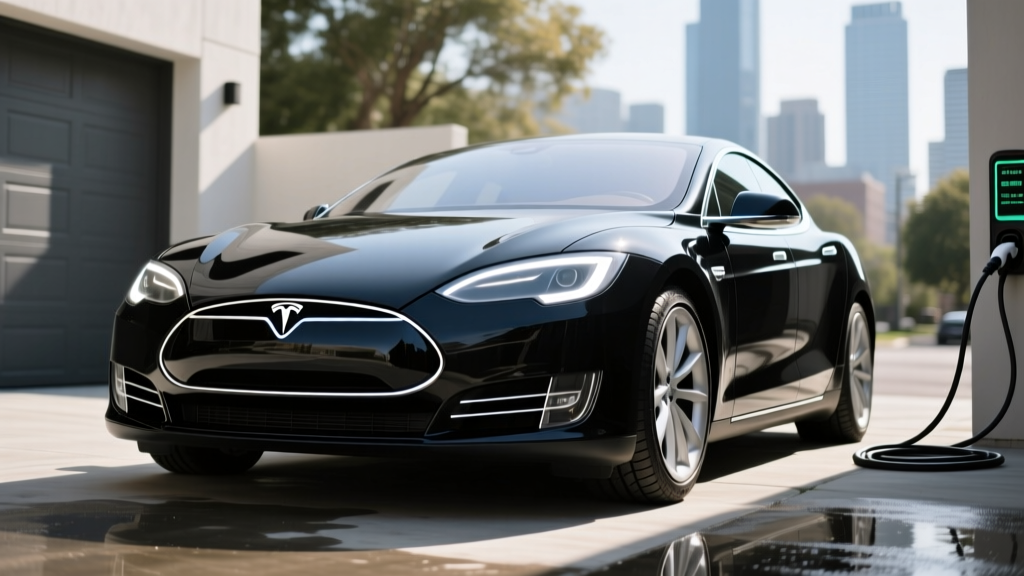
The Pioneer That Started It All: 2013 Tesla Model S at a Glance
The 2013 Tesla Model S isn't just a used electric car — it's the vehicle that proved long-range EVs could exist in the real world. More than a decade later, it remains a compelling option on the used market for buyers who want Tesla's Supercharger network access, a spacious liftback, and surprisingly brisk performance at a fraction of its original $70,000+ sticker. But buying a 13-year-old EV demands a hard look at battery health, charging limitations, and what you're giving up versus modern rivals.
Range Reality Check
EPA Estimated Range: 208 miles (60 kWh) / 265 miles (85 kWh)
Real-World Expectation: Expect 160–190 miles highway in the 60 kWh model, and 210–240 miles in the 85 kWh variant under ideal conditions. Cold weather (below 40°F) can reduce range by 20–30%, dropping the 85 kWh car to 150–180 miles. Degradation on a 2013 battery will further reduce these numbers — budget for 10–20% loss depending on mileage and charging history.
2013 Tesla Model S Performance: 0-60 MPH and Powertrain
The search for "2013 Tesla Model S 0-60" usually comes from enthusiasts curious whether this early EV still delivers. The answer: yes, especially in Performance trim.
| Trim | 0-60 mph | Horsepower | Drivetrain | Top Speed |
|---|---|---|---|---|
| 60 kWh (base) | 5.9 sec | 302 hp | RWD (single motor) | 120 mph |
| 85 kWh | 5.4 sec | 362 hp | RWD (single motor) | 125 mph |
| P85 (Performance) | 4.2 sec | 416 hp | RWD (single motor) | 130 mph |
All 2013 Model S variants are rear-wheel drive with a single motor. Dual-motor all-wheel drive didn't arrive until late 2014. The P85's 4.2-second 0-60 time was supercar territory in 2013 and still feels genuinely quick today, thanks to instant torque delivery with no gear shifts. The base 60 kWh model's 5.9-second run is respectable for a 4,600-pound luxury sedan.
Battery, Charging, and Efficiency
The 2013 Model S uses NMC (nickel-manganese-cobalt) lithium-ion cells in a skateboard-style pack mounted low in the chassis. Two battery sizes were offered:
- 60 kWh pack: ~58.5 kWh usable capacity, software-limited (some owners paid Tesla to unlock to 75 kWh in later years)
- 85 kWh pack: ~81 kWh usable capacity, the range-topping option
Charging Speeds
| Charging Level | Power (kW) | Time / Rate | Notes |
|---|---|---|---|
| Level 1 (120V household) | ~1.4 kW | ~3–4 miles per hour | Emergency/trickle only |
| Level 2 (240V, single charger) | 10 kW | ~29 miles per hour | Standard onboard charger |
| Level 2 (240V, dual charger option) | 20 kW | ~58 miles per hour | $3,600 factory option |
| DC Fast Charge (Tesla Supercharger) | ~120 kW peak | ~45 min (10–80%) | V2 Superchargers; tapers above 60% |
| CHAdeMO DC Fast (with adapter) | ~50 kW | ~60 min (10–80%) | Optional adapter, limited network |
Charging curve reality: The 2013 Model S peaks around 120 kW at low state of charge but tapers significantly above 60% SoC. Don't expect sustained peak speeds — a 10–80% session takes roughly 45 minutes on a V2 Supercharger. Modern EVs like the Hyundai Ioniq 5 or Tesla Model 3 can do 10–80% in 18–25 minutes thanks to 800V architectures and better thermal management.
Efficiency: The 85 kWh model achieves approximately 89 MPGe combined (38 kWh/100 miles) per fueleconomy.gov. That's less efficient than modern EVs — the 2024 Model S achieves 120 MPGe — but still cheaper per mile than any gasoline car at typical electricity rates.
Real-World Ownership: Range, Degradation, and Battery Health
Battery degradation is the single biggest risk when buying a 2013 Model S. Tesla's early 85 kWh packs used Panasonic NMC cells that typically lose 10–15% capacity in the first 100,000 miles, then degrade more slowly. High-mileage examples (150,000+ miles) may show 20–25% degradation, reducing an originally 265-mile car to 200 miles or less.
What to check before buying:
- Request a battery health report from Tesla Service or use third-party tools like TeslaFi or Tessie to pull State of Health (SoH) data
- Look for cars with mostly Level 2 charging history — frequent DC fast charging accelerates degradation
- Cold-climate cars may show less degradation but suffer more range loss in winter
- Check if the battery has been replaced under warranty — Tesla's 8-year/unlimited-mile battery warranty covered 2013 models through 2021, but that window has closed
Battery replacement cost: If the pack fails outside warranty, expect $12,000–$20,000 for a remanufactured replacement from Tesla or third-party shops. This can exceed the car's value, making pre-purchase battery inspection non-negotiable.
Pricing, Tax Credits, and Value
The 2013 Model S originally started at $69,900 (60 kWh) and reached $90,000+ for a loaded P85. In the 2026 used market:
| Trim | Original MSRP | Used Price Range (2026) | Federal Tax Credit |
|---|---|---|---|
| 60 kWh | $69,900 | $12,000–$18,000 | Up to $4,000 (used EV credit) |
| 85 kWh | $79,900 | $16,000–$24,000 | Up to $4,000 (used EV credit) |
| P85 | $90,000+ | $20,000–$28,000 | Up to $4,000 (used EV credit) |
Used EV tax credit (IRS §25E): Unlike the new-vehicle §30D credit, the used EV credit offers up to $4,000 (30% of sale price, capped at $4,000) for vehicles sold by a dealer for $25,000 or less. The 2013 Model S typically qualifies on price. Buyer income caps apply: $75,000 single / $112,500 head of household / $150,000 joint filers. The vehicle must be at least two model years old (2013 qualifies), and you can only claim this credit once every three years. Verify current rules at IRS.gov.
Important caveat: Private-party sales do not qualify for the used EV credit. You must buy from a licensed dealer and meet all income requirements.
Interior, Cargo, and Technology
The 2013 Model S pioneered the minimalist EV interior with a 17-inch touchscreen that controlled nearly every vehicle function. In 2026, that screen shows its age — slower response times, outdated graphics, and limited app support compared to modern Teslas.
Passenger and cargo space:
- Front legroom: 42.7 inches
- Rear legroom: 35.4 inches (tight by modern luxury-sedan standards)
- Cargo volume: 26.3 cu ft behind rear seats, 58.1 cu ft with seats folded
- Frunk (front trunk): 5.3 cu ft — a practical bonus for charging cables or groceries
- Optional third row: Two small rear-facing jump seats (rare, child-only)
Driver assistance: The 2013 Model S predates Tesla's Autopilot hardware suite (introduced late 2014). You get basic cruise control and stability control, but no adaptive cruise, lane-keeping, or any Level 2 driver-assist features. This is a significant gap versus 2016+ Teslas and modern competitors.
Pros, Cons, and Who Should Buy
Pros
- Access to Tesla Supercharger network (with NACS connector built-in)
- Spacious liftback with frunk — practical for families and road trips
- P85's 4.2-second 0-60 remains thrilling
- Low used prices make it an affordable entry to long-range EVs
- Over-the-air updates still add features (though less frequently for 2013 hardware)
- Qualifies for up to $4,000 used EV tax credit
Cons
- Battery degradation risk — replacement cost can exceed vehicle value
- No Autopilot or modern driver-assist features
- Slow DC fast charging by 2026 standards (45 min vs 18 min for modern EVs)
- Rear legroom is tight for a luxury sedan
- 17-inch touchscreen is sluggish and dated
- Single-motor RWD only — no AWD option in 2013
- 8-year battery warranty has expired on all 2013 models
Who this EV suits best: The 2013 Model S is ideal for budget-conscious buyers who want Supercharger access, don't need cutting-edge tech, and can accept the battery risk. It works well as a commuter car with home Level 2 charging, a secondary family vehicle, or an affordable road-trip EV for those willing to plan around 45-minute charging stops. It's not ideal for cold-climate buyers (range loss compounds degradation), tech enthusiasts who want modern driver-assist, or anyone who can't afford a potential $15,000 battery replacement.
2013 Model S vs Key Competitors
At $12,000–$28,000, the 2013 Model S competes with other used EVs. Here's how it stacks up:
| Vehicle | Used Price | EPA Range | DC Fast Charge | 0-60 mph |
|---|---|---|---|---|
| 2013 Tesla Model S 85 | $16k–$24k | 265 mi | 120 kW | 5.4 sec |
| 2017 Chevrolet Bolt EV | $14k–$20k | 238 mi | 55 kW | 6.5 sec |
| 2018 Nissan Leaf (60 kWh) | $15k–$22k | 226 mi | 50 kW (CHAdeMO) | 7.5 sec |
| 2016 Tesla Model 3 (Long Range) | $22k–$30k | 310 mi | 170 kW | 5.1 sec |
The 2013 Model S wins on cargo space, Supercharger access, and straight-line performance (in P85 trim). The 2016+ Model 3 is newer, more efficient, charges faster, and includes Autopilot — but costs more and offers less interior room. The Bolt and Leaf are solid budget options but lack Supercharger access and have slower DC charging.
FAQ: 2013 Tesla Model S
What is the real-world range of the 2013 Tesla Model S?
The 85 kWh model's EPA rating is 265 miles, but expect 210–240 miles in real-world driving, less with battery degradation (10–20% typical) and 20–30% less in cold weather. The 60 kWh model's 208-mile EPA rating translates to 160–190 miles real-world.
How fast does the 2013 Model S charge?
On a Tesla V2 Supercharger, it peaks at ~120 kW but tapers above 60% SoC, taking about 45 minutes for 10–80%. Home Level 2 charging at 10 kW (single charger) adds ~29 miles per hour; the optional dual charger doubles that to 20 kW and ~58 miles per hour.
Does the 2013 Tesla Model S qualify for a tax credit?
Not the new-vehicle §30D credit (that's for new purchases only). However, it may qualify for the used EV credit (IRS §25E): up to $4,000 if purchased from a dealer for $25,000 or less, and you meet income caps ($75k single / $150k joint). Verify at IRS.gov.
Is it worth buying a 2013 Model S in 2026?
Yes, if you prioritize Supercharger access, cargo space, and performance at a low price, and you accept the battery risk. No, if you need modern driver-assist, fast DC charging, or can't budget for a potential battery replacement. A pre-purchase battery health check is essential.
What are the biggest problems with the 2013 Model S?
Battery degradation (10–25% capacity loss typical), outdated infotainment, no Autopilot, slow DC charging by modern standards, and expensive out-of-warranty battery replacement ($12k–$20k). Early cars also had door handle and sunroof leak issues.
Can I still use Tesla Superchargers with a 2013 Model S?
Yes. The 2013 Model S has a native NACS (Tesla) connector and full Supercharger access. This is a major advantage over non-Tesla used EVs, which may need adapters or have limited fast-charging networks.
Sources: fueleconomy.gov, IRS Used Clean Vehicle Credit, Tesla owner documentation.