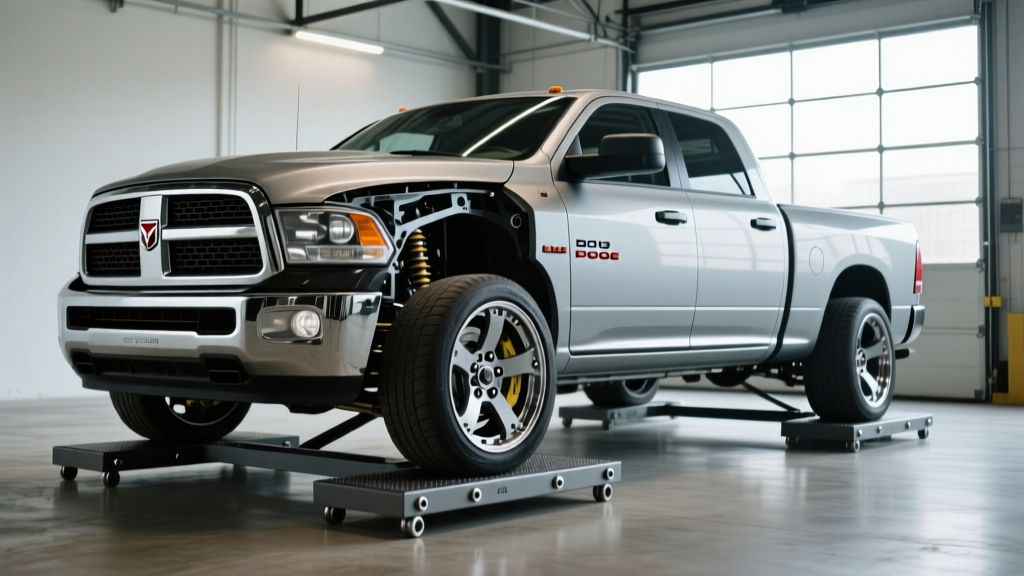
If you're planning an electric-vehicle conversion on a 2013 Dodge Ram 1500 chassis, or shopping for aftermarket wheels that clear larger brake calipers on an electrified truck build, the bolt pattern is the single most important fitment number you need to get right. The 2013 Ram 1500 uses a 5-lug, 139.7 mm (5.5-inch) bolt circle — commonly written as 5×139.7 or 5×5.5. This guide breaks down the exact specs, what they mean for an EV swap or wheel upgrade, and which other vehicles share this pattern for parts sourcing.
2013 Dodge Ram 1500 Bolt Pattern: The Exact Numbers
| Specification | Value |
|---|---|
| Bolt Pattern | 5×139.7 mm (5×5.5 in) |
| Number of Lugs | 5 |
| Center Bore | 77.8 mm |
| Lug Nut Thread Size | M14 × 1.5 |
| Lug Nut Torque Spec | 130 lb-ft (176 Nm) |
| Stock Wheel Offset | +19 to +25 mm (varies by trim) |
| Stock Wheel Size | 17" to 20" (trim-dependent) |
The 5×139.7 mm pattern has been a Ram 1500 constant since the third generation (2002). For the 2013 model year — part of the fourth-generation DS/DJ platform — Chrysler retained this pattern across all trim levels (Tradesman, SLT, Sport, Laramie, Laramie Longhorn). This matters for EV builders because it means wheels from a wide range of older and newer Ram 1500s will physically bolt on, giving you a large used-wheel sourcing pool.
Why Bolt Pattern Matters for an EV Conversion Build
When converting a 2013 Ram 1500 to battery-electric propulsion, wheel and hub compatibility becomes more critical than on a stock truck. Here's why:
- Increased weight: A completed EV conversion typically adds 500–1,500 lbs of battery mass over the stock V6 or V8 powertrain. Wheels must be rated for the higher gross axle weight — many lightweight aftermarket wheels are not.
- Brake clearance: If you upgrade to larger rotors to handle the increased mass and regenerative-braking loads, you need wheels with enough inner barrel clearance. The 77.8 mm center bore must also match or exceed your hub diameter.
- Hub-centric vs. lug-centric: The Ram 1500 uses a hub-centric design (the center bore carries the load, not the lug studs). Any aftermarket or adapter wheel must maintain this — otherwise, vibration and premature bearing wear result.
- Wheel adapters for motor mounting: Some EV conversion kits (e.g., those using a NetGain Hyper9 or Tesla drive unit coupled to the stock rear axle) require custom hub adapters. Knowing the exact bolt pattern and center bore lets your machinist spec the adapter correctly.
Cross-Compatible Vehicles Sharing the 5×139.7 Bolt Pattern
One advantage of the 5×139.7 mm pattern is its prevalence across several truck and SUV platforms. If you're sourcing wheels for a Ram-based EV build, these vehicles share the same bolt circle:
| Vehicle | Years | Center Bore |
|---|---|---|
| Dodge Ram 1500 | 2002–2024 | 77.8 mm |
| Ford F-150 | 2004–2020 | 87.1 mm (adapter ring needed) |
| Ford Expedition | 2007–2020 | 87.1 mm |
| Lincoln Navigator | 2007–2020 | 87.1 mm |
| Toyota Tundra | 2007–2021 | 110.1 mm (requires bushing) |
| Toyota Land Cruiser 200 | 2008–2021 | 110.1 mm |
| Jeep Grand Cherokee (WK2) | 2011–2021 | 71.5 mm (too small — will NOT fit) |
Critical note: Sharing a bolt pattern does not guarantee direct fitment. The center bore, offset, and brake clearance must all be verified. A Ford F-150 wheel with an 87.1 mm center bore can fit a Ram hub (77.8 mm) using a hub-centric ring, but a Jeep Grand Cherokee wheel with a 71.5 mm bore will not physically slide onto the Ram hub. Always measure before buying.
Wheel Adapter Options for EV Motor Swaps
If your EV conversion uses a non-Ram drive unit, you may need to adapt the motor's output flange to the Ram's 5×139.7 hub. Common scenarios include:
- Tesla small drive unit to Ram 1500 rear axle: Several conversion shops machine custom adapter plates that bolt to the Ram's differential input flange while accepting the Tesla spline. The wheel-side bolt pattern remains stock 5×139.7.
- Aftermarket hub adapters (5×139.7 to 5×120 or 5×114.3): If you want to run Tesla Model S/X wheels (5×120) or a wider selection of performance wheels (5×114.3), billet aluminum hub adapters are available in 25–40 mm thickness. These change your effective offset and must be sourced from a reputable manufacturer (e.g., Motorsport Tech, Wheel Adaptus) with proper hub-centric rings.
- Custom axle shafts: For solid-axle conversions or independent rear suspension swaps, aftermarket axle shafts can be machined with any bolt pattern. Most builders retain the stock 5×139.7 to maximize wheel options.
Load Rating Considerations for Electrified Trucks
A stock 2013 Ram 1500 has a curb weight of roughly 4,700–5,600 lbs depending on cab configuration and engine. After an EV conversion with a 60–100 kWh battery pack, expect a curb weight of 5,800–6,800 lbs. This pushes axle loads higher, particularly at the rear where most battery packs are mounted.
Each wheel must carry its share. Divide the gross axle weight rating (GAWR) by two:
- Front GAWR (typical): 3,700 lbs → 1,850 lbs per wheel minimum
- Rear GAWR (typical): 4,000 lbs → 2,000 lbs per wheel minimum
Many cast-aluminum aftermarket wheels are rated at 1,500–1,800 lbs per corner — insufficient for a loaded EV truck. Specify flow-formed or forged wheels rated at 2,200+ lbs per corner for a safety margin. The wheel's load rating is typically stamped on the back of the wheel or listed in the manufacturer's catalog.
Torque Specs and Maintenance for EV Builds
Electric powertrains deliver instant torque from 0 RPM, which places higher shock loads on wheel studs during aggressive acceleration. Proper lug nut maintenance is non-negotiable:
- Initial torque: 130 lb-ft (176 Nm) in a star pattern using a calibrated torque wrench
- Re-torque interval: After the first 50 miles, then every 500 miles for an EV conversion (more aggressive than the stock 600-mile OEM recommendation due to higher torque loads)
- Stud upgrade: Consider ARP chromoly wheel studs (M14 × 1.5, part #100-7701 or equivalent) for higher tensile strength if running high-torque motor setups (400+ lb-ft)
- Never use impact wrenches for final torque — always finish with a hand torque wrench
Practical Sourcing: Where to Find 5×139.7 Wheels
For an EV conversion build on a budget, used OEM wheels are often the smartest choice. The 5×139.7 pattern means you have a 20+ year production run of Ram 1500 wheels to choose from, plus compatible Ford and Toyota options:
- Junkyard/salvage: 2009–2018 Ram 1500 17" and 20" OEM wheels are abundant. Expect $75–$200 per wheel in good condition.
- Online marketplaces: eBay Motors and Facebook Marketplace frequently list take-off sets from Ram owners who upgraded to aftermarket wheels.
- New aftermarket: Method Race Wheels (MR301, MR501), American Racing AR767, and Pro Comp 7036 are all available in 5×139.7 with load ratings exceeding 2,500 lbs per corner — ideal for heavy EV builds.
Frequently Asked Questions
Will 2024+ Ram 1500 wheels fit a 2013 model?
No. The 2025 Ram 1500 (sixth generation, DT platform) switched to a 6×139.7 mm bolt pattern. These wheels have six lugs and will not fit the five-lug hubs of a 2013 Ram 1500. Stick to 2002–2024 (DS/DJ fourth and fifth generation) wheels for direct compatibility.
Can I use wheel spacers on an EV-converted Ram 1500?
Hub-centric spacers up to 25 mm are generally safe if they maintain the 77.8 mm center bore and are torqued to spec. Thicker spacers (30–50 mm) effectively act as adapters and must include their own integrated studs. For a heavy EV conversion, minimize spacer thickness to reduce bearing load and deflection.
Does the bolt pattern affect regenerative braking performance?
Not directly. However, the wheel's weight (unsprung mass) does affect how quickly the braking system — including regen — can modulate wheel speed. Heavier wheels increase rotational inertia, slightly reducing regen effectiveness and increasing stopping distances. Forged or flow-formed wheels in the 22–26 lb range are preferable to heavy cast wheels at 30+ lbs.
What if my EV swap uses a different rear axle?
If you swap in a different axle assembly (e.g., a Tesla rear subframe or a Ford 9-inch), the new axle's hub bolt pattern dictates your wheel choice. In this case, you either select wheels matching the new pattern or use adapters to retain 5×139.7 wheels. Many builders choose to keep the stock Ram rear axle housing and install an EV motor via a custom driveshaft or belt-drive coupling, preserving the original bolt pattern.
For official vehicle specifications and towing/weight data, refer to Ram Trucks owner documentation. For aftermarket wheel load ratings, consult the wheel manufacturer's published specifications before purchase.