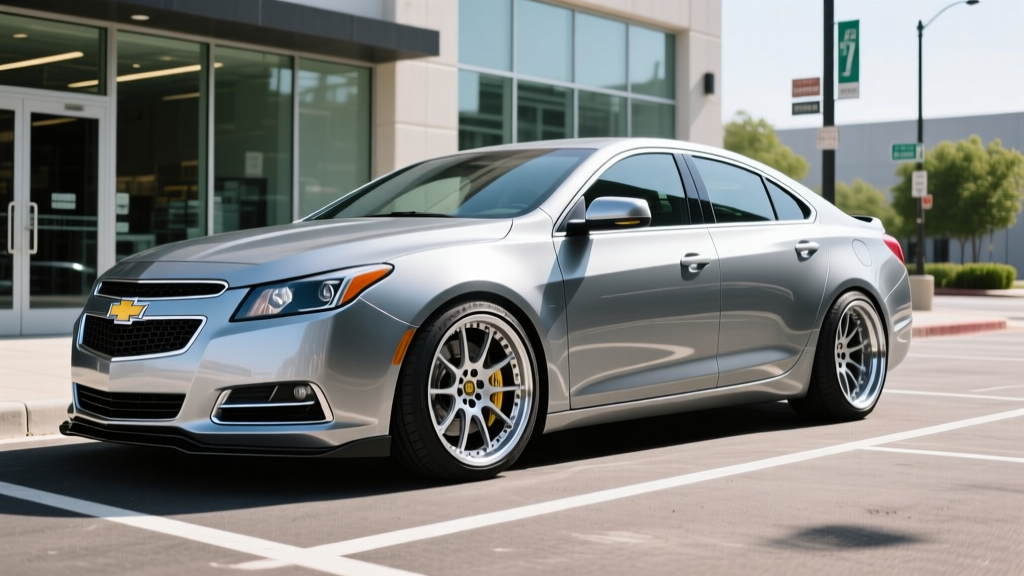
If you've landed here searching for the 2013 Chevrolet Malibu bolt pattern, you likely need the exact wheel lug specification — whether for replacement wheels, a tire upgrade, or an early-stage EV conversion project on Chevy's midsize sedan platform. This guide delivers the precise bolt pattern data, wheel fitment numbers, and context for how this chassis interfaces with aftermarket and EV-swap hardware.
A quick note on scope: AutoEdgeView focuses on electric and electrified vehicles. The 2013 Malibu was sold exclusively as a gasoline-powered sedan (2.5L I4 or 2.0L turbo) — it was never offered as an EV or hybrid. However, the Malibu's chassis, suspension geometry, and wheel specs remain relevant to EV conversion enthusiasts and to buyers cross-shopping used sedans against modern EVs. We'll cover the bolt pattern thoroughly, then frame what this platform means in an electrified context.
2013 Chevrolet Malibu Bolt Pattern: The Exact Spec
The 2013 Chevrolet Malibu uses a 5-lug bolt pattern measuring 5x120 mm (also written as 5x4.72 inches). This is the same bolt circle diameter used on many GM vehicles of the era, as well as several BMW and Honda models. Here is the complete wheel specification breakdown:
| Specification | Value |
|---|---|
| Bolt Pattern (PCD) | 5x120 mm (5x4.72") |
| Center Bore | 66.9 mm |
| Thread Size | M12 x 1.5 |
| Stock Wheel Sizes | 17" / 18" / 19" (trim-dependent) |
| Stock Tire Size (Base) | 225/55R17 |
| Stock Tire Size (LTZ) | 235/45R18 or 245/40R19 |
| Typical Offset (ET) | +38 to +42 mm |
| Lug Type | Lug nut (conical seat) |
The 5x120 pattern means five lug holes arranged on a circle with a 120 mm diameter. When sourcing replacement wheels, matching all four parameters — bolt pattern, center bore, offset, and thread size — is essential for safe fitment. A wheel with the correct bolt pattern but wrong offset will alter scrub radius and suspension loading, which matters even more if you're adding the weight of batteries in a conversion.
Why Bolt Pattern Matters for EV Conversions
For the small but dedicated community of DIY EV converters, the 2013 Malibu's Epsilon II platform presents an interesting candidate. The unibody chassis is reasonably light (~3,400 lbs curb weight for the 4-cylinder), has a generous trunk for battery placement, and the 5x120 bolt pattern opens up a wide wheel selection. Here's why bolt pattern becomes critical in an EV swap:
- Weight increase: A typical EV conversion adds 300–800 lbs of battery mass. You need wheels rated for higher load capacity, and the 5x120 pattern gives access to BMW and heavy-duty aftermarket options rated for 1,500+ lbs per corner.
- Low rolling-resistance tires: Maximizing range from a converted EV means running efficient tires like the Michelin Energy Saver or Continental EcoContact. The 225/55R17 size on the 5x120 pattern has good availability in eco-tire lines.
- Hub-centric fitment: The 66.9 mm center bore must match precisely (or use hub-centric rings) to avoid vibration at highway speed — vibration that worsens when unsprung mass changes in a conversion.
- Regenerative braking loads: Aggressive regen puts different torque loads on lug nuts than friction-only braking. Proper torque spec (typically 100 lb-ft for the M12 studs on this platform) is non-negotiable.
EV Conversion Reality Check: 2013 Malibu Platform
Before committing to an EV swap on this chassis, understand what you're signing up for. The 2013 Malibu was never designed for electrification, and a conversion requires fabricating motor mounts, battery enclosures, and high-voltage routing. Here's a realistic comparison of a Malibu EV conversion versus buying a purpose-built used EV:
| Factor | Malibu EV Conversion | Used 2020 Chevy Bolt EV |
|---|---|---|
| Vehicle Acquisition | $3,000–$6,000 (used) | $12,000–$18,000 |
| Battery Pack (30–40 kWh) | $4,000–$8,000 | Included |
| Motor + Controller | $3,000–$6,000 | Included |
| Fabrication + Wiring | $2,000–$5,000 | N/A |
| Labor (if not DIY) | $5,000–$15,000 | N/A |
| Total Estimated Cost | $17,000–$40,000 | $12,000–$18,000 |
| EPA Range | 60–100 mi (est.) | 259 mi (EPA) |
| DC Fast Charging | Typically none | 55 kW (CCS) |
| Safety Certifications | None (custom build) | NHTSA certified |
| Federal Tax Credit (§30D) | Not eligible | Eligible if under $25k used credit rules |
The data makes the case clear: unless you're doing the conversion yourself for the engineering experience, a used production EV delivers far more range, safety, and charging capability per dollar. The 2020 Chevy Bolt EV on fueleconomy.gov shows 259 miles of EPA range and 119 MPGe combined — figures no backyard conversion will approach.
Wheel and Tire Options for the 5x120 Pattern
Whether you're refreshing a stock Malibu or fitting wheels on a converted EV, the 5x120 bolt pattern has strong aftermarket support. Here are practical options organized by use case:
Efficiency-Focused (EV Conversion or MPG Maximization)
- 17x7.5" ET40 with 215/55R17 low-rolling-resistance tires — reduces rotational mass and rolling resistance for maximum range
- Lightweight forged alloys (e.g., Enkei TS-10 in 5x120) — saves 3–5 lbs per corner vs. stock, meaningfully reducing energy consumption
Load-Rated for Battery Weight
- 17x8" ET38 with XL (extra load) rated tires — necessary if your conversion adds 500+ lbs over the rear axle
- BMW-spec 5x120 wheels (E90/E60 generation) share the pattern and often carry higher load ratings, but verify the 66.9 mm center bore (BMW uses 72.6 mm, requiring a hub-centric ring)
OEM Replacement
- GM part numbers for the 2013 Malibu 17" and 18" wheels remain available through dealerships and aftermarket suppliers
- Always verify the center bore and offset match — aftermarket "universal" 5x120 wheels often use larger center bores that require rings
What This Means for EV Buyers Cross-Shopping Sedans
If you're researching the 2013 Malibu because you're weighing a cheap used sedan against a new or used EV, here's the ownership economics comparison that matters. A 2013 Malibu with the 2.5L engine gets an EPA-rated 25 MPG combined. A modern EV like the 2025 Hyundai Ioniq 6 achieves 140 MPGe combined (approximately 24 kWh/100 mi).
| Vehicle | Energy Cost | Annual Cost | 5-Year Cost |
|---|---|---|---|
| 2013 Malibu 2.5L (25 MPG) | Gas at $3.30/gal | $1,584 | $7,920 |
| Modern EV (28 kWh/100mi) | Electricity at $0.16/kWh | $538 | $2,690 |
| 5-Year Savings with EV | $5,230 | ||
That $5,230 five-year fuel savings doesn't account for EV maintenance reductions (no oil changes, fewer brake replacements due to regen), which typically add another $2,000–$3,000 in savings over five years. Even a used EV at $15,000 can beat a $5,000 Malibu on total cost of ownership within 3–4 years, depending on your electricity rate and mileage.
Proper Lug Nut Torque and Safety
Whether this is a daily driver or a conversion project, correct lug nut torque is critical. The 2013 Malibu's M12 x 1.5 lug nuts should be torqued to 100 lb-ft (135 Nm) in a star pattern. After any wheel removal, re-torque after the first 50 miles of driving. This is especially important for EV conversions where regenerative braking adds cyclical torque loads to the hub assembly that a gasoline car never sees.
Use a calibrated torque wrench — never an impact gun without a torque stick. Over-torquing stretches studs and can cause failure; under-torquing allows wheels to work loose. For conversions adding significant unsprung weight or power, consider upgrading to ARP wheel studs for additional clamping margin.
Frequently Asked Questions
What is the bolt pattern on a 2013 Chevrolet Malibu?
The 2013 Chevrolet Malibu uses a 5x120 mm bolt pattern (5 lugs on a 120 mm bolt circle diameter). This is equivalent to 5x4.72 inches. The center bore is 66.9 mm and the lug thread size is M12 x 1.5.
Will BMW wheels fit a 2013 Malibu?
Many BMW wheels share the 5x120 bolt pattern, but BMW uses a 72.6 mm center bore versus the Malibu's 66.9 mm. You'll need hub-centric rings (72.6 mm OD to 66.9 mm ID) to eliminate vibration. Verify offset (ET) is in the +35 to +45 range for proper clearance.
Can I convert a 2013 Malibu to electric?
Yes, technically — but it's rarely cost-effective. A DIY EV conversion typically costs $17,000–$40,000 all-in for 60–100 miles of estimated range, no DC fast charging, and no safety certifications. A used Chevy Bolt EV or Nissan Leaf delivers more range and capability for less money. Conversions make sense as engineering projects, not as economic decisions.
What is the lug nut torque spec for the 2013 Malibu?
GM specifies 100 lb-ft (135 Nm) for the M12 x 1.5 lug nuts on the 2013 Malibu. Always torque in a star pattern and re-check after 50 miles of driving following any wheel removal.
Does a 2013 Malibu EV conversion qualify for tax credits?
No. The IRS §30D federal tax credit applies only to new qualified plug-in electric vehicles from certified manufacturers. Custom EV conversions of existing gas vehicles do not qualify for any federal EV tax credit. The used EV credit (§25E, up to $4,000) also requires the vehicle to be a factory-produced EV sold through a dealer.
What size tires come on a 2013 Malibu?
The base 2013 Malibu LS and LT use 225/55R17 tires. The LTZ trim came with 235/45R18 or optional 245/40R19. For EV conversions targeting range, the 17" size offers the widest selection of low-rolling-resistance tires.