Quick Verdict: The 2013 BMW i3 in 2026
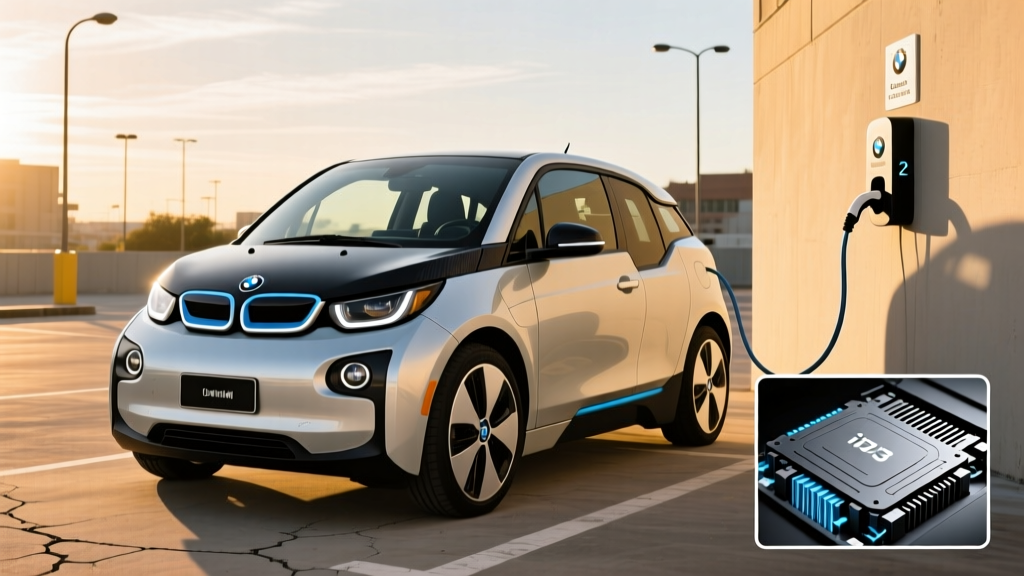
The 2013 BMW i3 was one of the first mass-market EVs built from the ground up as an electric car — a carbon-fiber-reinforced plastic (CFRP) pod on an aluminum skateboard, designed for urban efficiency rather than highway dominance. More than a decade later, it remains one of the most distinctive EVs on the used market. But with an EPA-estimated range of just 81 miles (for the pure battery-electric version) and a small 22 kWh battery pack, the 2013 i3 is firmly a city commuter — not a road-trip vehicle.
If you're shopping for a used EV on a tight budget (typically $6,000–$11,000 in 2026 depending on mileage and condition), the 2013 i3 offers premium build quality, a uniquely fun driving experience, and cheap home charging. However, its limited range, aging battery, and the discontinuation of the REx (range-extender) model's support ecosystem mean buyers need to go in with eyes open.
| Spec | Value |
|---|---|
| EPA Range | 81 miles (BEV) / 72 mi EV + ~80 mi gas (REx) |
| Battery Capacity (gross / usable) | 22 kWh gross / ~18.8 kWh usable |
| Battery Chemistry | NMC (Nickel Manganese Cobalt) — Samsung SDI cells |
| Motor Output | 125 kW (170 hp) / 184 lb-ft torque |
| Drivetrain | Rear-wheel drive (single motor) |
| 0–60 mph | 7.0 seconds (BEV) / 7.9 sec (REx) |
| Top Speed | 93 mph (electronically limited) |
| EPA Efficiency | 124 MPGe combined (27 kWh/100 mi) |
| DC Fast Charge (CCS) | 50 kW max (optional on early models) |
| Level 2 Charge Rate | 7.4 kW (onboard charger) |
| Cargo Volume | 15.1 cu ft (rear seats up) / 36.9 cu ft (folded) |
| Curb Weight | 2,630 lbs (BEV) |
| Original MSRP (base) | $41,350 (BEV) / $45,200 (REx) |
| Used Price Range (2026) | $6,000–$11,000 |
| Battery Warranty (original) | 8 years / 100,000 miles (capacity > 70%) |
Range and Efficiency: What 81 EPA Miles Means in the Real World
Real-World Expectation: 60–75 miles on mixed highway/city driving; as low as 50–55 miles in cold weather (below 35°F) or sustained 70+ mph highway use. The REx model adds a 647cc two-cylinder gasoline engine that extends total range to roughly 150 miles, but its electric-only portion drops to about 60–65 real-world miles.
The 2013 i3's 22 kWh gross battery (approximately 18.8 kWh usable due to top/bottom buffer) was competitive in 2013–2014 but is severely limited by 2026 standards. According to fueleconomy.gov, the BEV version achieves 124 MPGe combined, making it one of the most efficient EVs ever sold. That 27 kWh/100 mi figure is genuinely excellent — the problem is that the tank (battery) is simply too small.
Real-world range depends heavily on three factors:
- Temperature: The 2013 i3 lacks a dedicated battery heat pump (it uses resistive cabin heating). In winter conditions, expect 25–35% range loss. Owners in cold climates consistently report 50–60 miles of usable range in sub-freezing weather.
- Speed: The i3's aerodynamic profile (Cd 0.29) and tall, narrow tires (155/70 R19) are optimized for city efficiency. At 75 mph highway speeds, range drops to roughly 60–65 miles even in mild weather.
- Battery degradation: A 2013 model is now 12+ years old. Most examples will have lost 15–25% of original capacity depending on charging habits and climate exposure. A degraded pack may deliver only 55–65 real-world miles in optimal conditions. Always request a battery State of Health (SoH) reading before purchase — many i3s can display this through the hidden service menu or OBD2 apps like LeafSpy-equivalent tools for BMW.
Charging: DC Fast, Level 2, and the CCS Connector Question
Charging speed is where the 2013 i3 shows its age most clearly. Early 2013 models were equipped with a CCS1 DC fast-charging port only as an option — and some early-build cars shipped without DC capability at all. Verify before purchasing.
| Level | Power | Time (10–80%) | Notes |
|---|---|---|---|
| Level 1 (120V) | ~1.4 kW | ~14–16 hours (full) | Emergency/trickle only; adds ~5 mi/hr |
| Level 2 (240V) | 7.4 kW | ~3 hours (full) | Standard J1772; adds ~25 mi/hr |
| DC Fast (CCS) | 50 kW peak | ~28–30 min (10–80%) | Optional on 2013 models; tapers sharply above 80% |
The 50 kW DC fast-charge capability was respectable in 2013 but feels glacial compared to 2026 EVs charging at 150–350 kW. On a 50 kW CCS station, the i3 will accept its peak rate only between roughly 10–50% State of Charge, then taper significantly. Plan for about 30 minutes to reach 80% from near-empty. Above 80%, charging slows dramatically to protect the NMC cells — this is normal lithium-ion behavior, not a defect.
For daily use, Level 2 home charging at 7.4 kW is the practical standard. A full charge takes about 3 hours, meaning overnight charging is more than sufficient. The 7.4 kW onboard charger means you won't fully utilize a 48-amp (11.5 kW) Level 2 station, but you will get a complete charge on any standard 32-amp home charger.
Connector note: The 2013 i3 uses CCS1 for DC fast charging and J1772 for AC Level 2. It is not compatible with Tesla's NACS connector natively. Adapters exist (CCS-to-NACS), but verify compatibility with the specific adapter manufacturer before relying on Tesla Superchargers.
Performance and Driving Experience
The i3's 170-hp electric motor driving the rear wheels through a single-speed transmission delivers surprisingly punchy acceleration. The 0–60 mph time of 7.0 seconds (BEV) feels quicker than the number suggests because electric torque is instant — there's no transmission lag. Around town, the i3 is genuinely quick off the line and will surprise drivers accustomed to its quirky appearance.
The steering is heavy and direct (classic BMW), and the ultra-narrow 155-section tires prioritize low rolling resistance over grip. The i3 is not a sports car — it's an efficiency-optimized urban runabout that happens to be fun. The tight 32.8-foot turning circle makes it exceptional for city parking.
The REx (Range Extender) model adds a 34-hp 647cc two-cylinder BMW motorcycle engine that acts as a generator to maintain battery charge. It does not drive the wheels directly. When the battery depletes to approximately 6% SoC, the REx kicks in, producing noticeable noise and vibration — a stark contrast to the silent EV mode. The REx adds roughly 180 lbs to the curb weight, reducing the 0–60 time to 7.9 seconds and slightly lowering electric-only range.
Interior, Cargo, and Technology
The i3's interior was genuinely innovative in 2013 and still looks distinctive today. Sustainable materials dominate: eucalyptus wood trim, kenaf (natural fiber) door panels, and recycled-plastic upholstery on base trims. The cabin feels airy thanks to the flat floor and thin, tall greenhouse.
Passenger space: The rear seats are best described as occasional-use. Legroom is tight at 31.9 inches, and the rear-hinged "coach doors" (no B-pillar) require the front door to be open before the rear door can open — a design quirk that's charming until you're in a tight parking spot.
Cargo: 15.1 cubic feet with rear seats up, expanding to 36.9 cu ft with seats folded. The cargo floor is high (the motor sits beneath), and there's no frunk — the front hood area houses the charging electronics and, on REx models, the gas engine and 2.4-gallon fuel tank.
Tech features: The 2013 i3 came with BMW's iDrive infotainment (6.5-inch screen on base, 8.8-inch on Mega World/Technology packages). Navigation with range-optimizing routing was standard on higher trims. The ConnectedDrive services included remote climate preconditioning via smartphone — a valuable feature for extending range in cold weather by warming the cabin while plugged in. Notable omissions by 2026 standards: no Apple CarPlay, no Android Auto, no adaptive cruise control, and only basic driver-assist features (forward collision warning, but no automatic emergency braking on 2013 models).
Pricing, Tax Credits, and Used-EV Economics
| Item | Amount |
|---|---|
| Original MSRP (BEV base / REx) | $41,350 / $45,200 |
| Typical used price (2026, 60k–90k mi) | $6,000–$11,000 |
| Federal used-EV credit (§25E) | Up to $4,000 (30% of sale price, max $4,000) |
| Effective price after credit | As low as ~$4,000–$7,000 |
| New-EV §30D credit | NOT eligible (used vehicle purchase) |
The 2013 i3 does not qualify for the new-vehicle §30D federal tax credit — it's a used purchase. However, it may qualify for the §25E Previously-Owned Clean Vehicle Credit, which provides 30% of the sale price up to a maximum of $4,000. Key eligibility requirements per IRS guidelines:
- Sale price must be $25,000 or less (easily met — most 2013 i3s sell for under $11,000)
- Buyer income caps: $75,000 single / $112,500 head of household / $150,000 joint filers (modified AGI)
- The vehicle must be purchased from a licensed dealer (private-party sales do not qualify)
- The vehicle must be at least two model years old (met)
- The credit can be claimed only once per VIN — verify the previous owner did not already use it
- You can claim the §25E credit only once every three years per buyer
At a typical $8,000 sale price through a dealer, the 30% credit yields $2,400 back on your taxes. At $11,000, you'd receive $3,300. This makes the i3 one of the cheapest ways to get into a premium-badge EV in 2026.
Battery Longevity, Warranty, and Replacement Cost
The 2013 i3's Samsung SDI NMC battery was warranted for 8 years / 100,000 miles with a capacity retention threshold of 70% (BMW's stated minimum). As of 2026, all 2013 models have aged out of the original battery warranty based on the 8-year clock. Some high-mileage examples may have already experienced warranty-covered replacements, which is actually a buying advantage — a newer replacement pack in an older chassis means less degradation concern.
Real-world degradation data from i3 owner communities (e.g., SpeakEV, BMW i3 Facebook groups) suggests average capacity loss of 15–25% over 10–12 years, depending heavily on:
- DC fast-charging frequency: Frequent 50 kW charging accelerates degradation in NMC chemistry
- Climate: Hot climates (Arizona, Texas) show faster degradation than temperate zones; the 2013 i3 has active battery thermal management (liquid cooling/heating), which helps
- State of Charge habits: Regularly charging to 100% and draining to near-zero increases wear
If the battery requires replacement out of warranty, expect costs of $8,000–$14,000 for a refurbished or new pack through BMW, plus labor. Third-party battery repair shops can sometimes replace individual modules for $2,000–$4,000, but this requires specialized expertise. Given that a 2013 i3 might cost $8,000 to purchase, a full battery replacement could approach or exceed the vehicle's value — a critical consideration.
Pros, Cons, and Who Should Buy
Pros
- Exceptional efficiency (124 MPGe, 27 kWh/100 mi)
- Unique, premium build quality — CFRP structure, sustainable interior
- Tight turning circle, easy city parking
- Fun, instant-torque acceleration (170 hp, 7.0 sec 0–60)
- Very low running costs — ~$0.04–$0.06/mile on home electricity
- Eligible for up to $4,000 used-EV federal tax credit
- Strong resale community and parts availability (for now)
Cons
- Only 81 miles EPA range (60–75 real-world; less in cold)
- 50 kW max DC charging — slow by 2026 standards
- Battery warranty expired; replacement costs can exceed vehicle value
- Rear seats impractical for adults; coach doors inconvenient
- No modern driver-assist features (no AEB, no lane-keep)
- No Apple CarPlay/Android Auto
- REx model: gasoline engine maintenance adds complexity
- Parts availability uncertain long-term as model ages
Who the 2013 BMW i3 suits best: Single drivers or couples with a second vehicle, living in urban or suburban areas, with reliable home Level 2 charging access and a one-way commute under 30 miles. It's an excellent second car for grocery runs, school drop-offs, and city errands — not a primary vehicle for highway commuters or families.
Who should look elsewhere: Anyone without home charging, anyone with a commute exceeding 35 miles one-way, families needing rear-seat space, or buyers in extreme cold climates where winter range could drop below 50 miles.
2013 BMW i3 vs. Key Used-EV Competitors
| Vehicle | EPA Range | Battery | DC Fast Charge | Typical Used Price (2026) |
|---|---|---|---|---|
| 2013 BMW i3 (BEV) | 81 mi | 22 kWh (NMC) | 50 kW (optional) | $6,000–$11,000 |
| 2013 Nissan Leaf | 75 mi | 24 kWh (NMC) | 50 kW CHAdeMO | $4,500–$8,000 |
| 2014 Chevrolet Spark EV | 82 mi | 21 kWh (NMC) | None (CCS rare) | $4,000–$7,000 |
| 2013 Fiat 500e | 87 mi | 24 kWh (NMC) | None | $5,000–$9,000 |
The i3 stands out for build quality and driving dynamics but matches competitors closely on range. The Nissan Leaf has a larger dealer network and more established battery-replacement ecosystem. The Spark EV is cheaper but lacks DC fast charging entirely. The Fiat 500e offers slightly more range but has no fast-charge option and a less premium interior.
Frequently Asked Questions
What is the real-world range of the 2013 BMW i3?
Expect 60–75 miles in mild weather on mixed driving. In cold weather (below 35°F), range drops to approximately 50–55 miles. Battery degradation on a 12-year-old pack will further reduce these figures by 15–25% unless the battery has been replaced.
How fast does the 2013 BMW i3 charge?
On DC fast charge (50 kW CCS, if equipped), expect 10–80% in approximately 28–30 minutes. On a Level 2 home charger (7.4 kW), a full charge takes about 3 hours. Level 1 (120V) trickle charging adds roughly 5 miles per hour and is only practical for overnight top-ups.
Does the 2013 BMW i3 qualify for the federal EV tax credit?
Not the new-vehicle §30D credit. However, it may qualify for the §25E used-EV credit: up to $4,000 (30% of sale price) if purchased from a dealer for under $25,000 and the buyer meets income caps ($75K single / $150K joint). Verify eligibility with a tax professional and confirm the VIN hasn't previously claimed the credit.
Is the 2013 BMW i3 worth buying in 2026?
Yes, but only for the right use case: a budget-conscious urban commuter with home charging and a short daily drive. It's one of the cheapest premium EVs available used, and the §25E credit can bring the effective price below $5,000. The risk is battery replacement cost — always check State of Health before purchasing.
What are the biggest problems with the 2013 BMW i3?
The primary concerns are limited range (especially in cold weather), potential battery degradation on a 12-year-old pack, the optional nature of DC fast charging on early models, and the lack of modern driver-assist technology. REx models add gasoline-engine maintenance (oil changes, fuel stabilizer for rarely-used gas). The rear coach doors are also impractical in tight parking spaces.
Can I use a Tesla Supercharger with the 2013 BMW i3?
Not natively. The i3 uses CCS1 for DC fast charging. Some CCS-to-NACS adapters exist, but compatibility with Tesla Superchargers for non-Tesla vehicles varies by adapter and Supercharger generation. Check NHTSA and adapter manufacturer guidance before relying on this for travel.