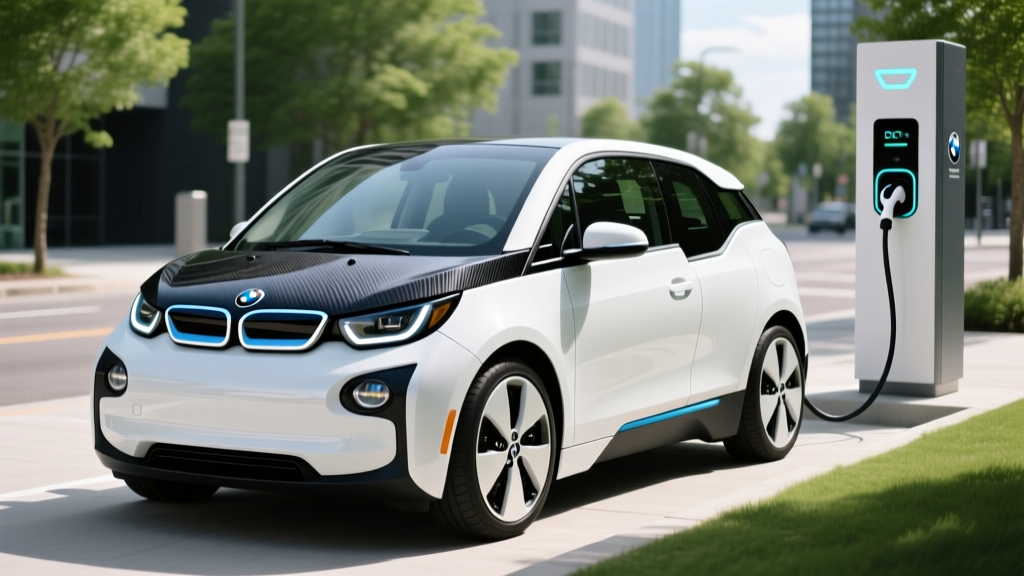
The 2013 BMW i3 was one of the first mass-produced electric vehicles built from the ground up with a carbon-fiber-reinforced plastic (CFRP) passenger cell and an aluminum chassis. More than a decade after its debut, this quirky city EV remains a fixture on the used-car market. But with an EPA-estimated range of just 81 miles and a battery that has aged through a full decade of charge cycles, is the original i3 still a practical daily driver in 2026?
This review breaks down every number that matters: real-world range, battery health expectations, DC fast-charging speed, home charging economics, interior space, and whether the federal used EV tax credit (IRS §25E) can bring the purchase price down. If you are cross-shopping a used i3 against a Nissan Leaf, Chevy Bolt, or Fiat 500e, this guide gives you the exact data to decide.
Quick Verdict: Who Should Buy a Used 2013 BMW i3?
Choose the 2013 BMW i3 if: You need a premium-feeling, ultra-efficient city commuter with a sub-25-mile round trip, you can charge at home every night, and you want a lightweight EV that sips electricity at 27 kWh/100 mi (one of the lowest consumption figures of any EV ever sold).
Pass on the 2013 BMW i3 if: You regularly drive more than 60 miles between charges, need DC fast charging above 50 kW, want modern ADAS features like adaptive cruise or lane-centering, or live in a region with extreme winters where range loss will push you below 50 usable miles.
Range, Battery, and Efficiency: The Numbers That Matter
| Spec | Value |
|---|---|
| EPA Range | 81 miles |
| Battery (total / usable) | 22 kWh total / ~18.8 kWh usable |
| Battery Chemistry | NMC (Samsung SDI prismatic cells) |
| EPA Efficiency | 137 MPGe combined (27 kWh/100 mi) |
| Motor Output | 125 kW (170 hp) / 184 lb-ft torque |
| Drivetrain | Rear-wheel drive (single motor) |
| 0–60 mph | 7.0 seconds |
| Curb Weight | 2,630 lbs |
| Cargo Volume (rear seats up / folded) | 15.1 cu ft / 36.9 cu ft |
| Rear Legroom | 31.9 inches |
| Battery Warranty (original) | 8 years / 100,000 miles (capacity > 70%) |
EPA Sticker: 81 miles
Real-World Expectation: In mild weather (60–80 °F) with city driving, expect 70–80 miles from a 2013 i3 with a healthy battery. Highway driving at 70 mph drops that to roughly 55–65 miles. In freezing temperatures (below 32 °F) with cabin heat, plan for 45–55 miles of usable range. The 2013 i3 uses a resistive PTC heater, not a heat pump, so cold-weather energy draw is significant.
State of Health (SoH) Warning: A 2013 i3 battery is now 12–13 years old. Expect 15–25% degradation depending on climate and charging habits. A battery at 75% SoH effectively delivers ~14 kWh usable — translating to roughly 55–65 miles in ideal conditions and potentially under 45 miles on the highway in winter.
The 2013 i3's 22 kWh battery pack uses Samsung SDI NMC (nickel-manganese-cobalt) prismatic cells. BMW designed an active liquid thermal management system that has held up better than the passive-air cooling in the contemporaneous Nissan Leaf. According to long-term owner data aggregated by fueleconomy.gov, the 2013 i3 achieves 137 MPGe combined — making it one of the most energy-efficient EVs ever certified by the EPA.
For context, 27 kWh per 100 miles means a full charge at the national average electricity rate of $0.17/kWh costs roughly $4.60 — or about $0.046 per mile driven. That is a fraction of what even a 40-MPG gasoline car costs at current fuel prices.
Charging Speed: DC Fast, Level 2, and Level 1
| Level | Power / Rate | Time (0–100% or 10–80%) | Miles Added per Hour |
|---|---|---|---|
| Level 1 (120V household) | ~1.4 kW | ~14–16 hours (full) | ~5 mi/hr |
| Level 2 (240V, 32A) | 7.4 kW | ~3 hours (full) | ~25 mi/hr |
| DC Fast Charge (CCS Combo) | 50 kW peak | ~30 min (10–80%) | ~100 mi/hr (at peak) |
A critical note on 2013 i3 DC fast charging: not all 2013 i3s came equipped with a CCS DC fast-charge port. BMW offered it as an option (approximately $750 when new). When shopping the used market, visually confirm the presence of the CCS Combo 1 inlet below the J1772 port. Without DC fast charging, the i3 is strictly a home-and-city vehicle.
The 50 kW peak charge rate is modest by 2026 standards — modern EVs charge at 150–350 kW. But for an 18.8 kWh usable battery, 50 kW represents a C-rate of roughly 2.5C, which is aggressive. The charge curve tapers sharply above 80% state of charge, so a 10–80% session takes approximately 25–30 minutes at a functional 50 kW station. Expect the full 0–100% DC session to take closer to 45 minutes due to the taper.
On Level 2, the onboard 7.4 kW charger is adequate. A full charge from empty takes about 3 hours — perfectly suited for overnight replenishment. If your home electrical panel supports a NEMA 14-50 outlet on a 40A or 50A circuit, you will get the full 7.4 kW benefit. Installation costs for a Level 2 home setup typically range from $500 to $2,000 depending on panel proximity and local permitting, according to industry estimates from the U.S. Department of Energy.
Performance and Driving Dynamics
The 2013 i3's rear-mounted synchronous electric motor produces 170 horsepower and 184 lb-ft of torque, available instantly from zero RPM. The 0–60 mph time of 7.0 seconds feels brisk in city traffic, and the instant torque makes merging and passing effortless at urban speeds. Top speed is electronically limited to 93 mph.
What makes the i3 genuinely unique is its construction. The CFRP (carbon-fiber-reinforced plastic) passenger cell — called "Life Module" by BMW — sits atop an aluminum "Drive Module" housing the motor, battery, and suspension. The result is a curb weight of just 2,630 lbs, roughly 1,000 lbs lighter than a Tesla Model 3. This low mass is the primary reason the i3 achieves such exceptional efficiency.
The trade-off: the i3's narrow 155/70R19 tires (chosen for low rolling resistance) provide modest grip, and the tall, narrow body produces noticeable lean in aggressive cornering. This is a city car that rewards smooth inputs, not a sports sedan. The turning circle of 32.8 feet is excellent for tight urban parking.
An optional Range Extender (REx) variant added a 647cc two-cylinder BMW Motorrad gasoline engine that acted as a generator, extending total range to approximately 150 miles. The REx adds roughly 260 lbs and reduces cargo space slightly. If you find a REx model, note that the gas engine requires occasional maintenance (oil, spark plugs, fuel filter) and the fuel tank holds only 2.4 gallons.
Interior, Tech, and Daily Practicality
The i3's cabin was radical for 2013 and still feels distinctive today. BMW used sustainable materials throughout: eucalyptus wood trim, recycled-plastic dashboard surfaces, and kenaf-fiber door panels. The result is an airy, loft-like interior that stands apart from conventional automotive design.
The iDrive infotainment system in the 2013 i3 runs on a 6.5-inch display (10.2-inch with the optional Navigation/Technology package). It supports Bluetooth audio and phone connectivity but does not support Apple CarPlay or Android Auto — a significant omission by 2026 standards. Some owners have added aftermarket CarPlay adapters or head-unit replacements.
Driver-assistance features are minimal compared to modern EVs. The 2013 i3 offers:
- Park Distance Control (front and rear parking sensors)
- Rear-view camera (optional)
- Cruise control (standard, not adaptive)
- ABS, stability control, and six airbags
There is no lane-keeping assist, no adaptive cruise control, no blind-spot monitoring, and no automatic emergency braking. The i3 predates the widespread adoption of these SAE Level 2 driver-assist features. You are the driver-assist system.
Practicality notes:
- Seating: 4 passengers only. The rear "coach doors" (rear-hinged half-doors) require the front doors to be open before they can be opened — awkward in tight parking spots.
- Cargo: 15.1 cu ft behind the rear seats; 36.9 cu ft with the 50/50 rear bench folded. Adequate for groceries and carry-on luggage, not for furniture or large gear.
- Frunk: The i3 has no front trunk. The space under the hood houses the power electronics and, on REx models, the gasoline engine.
- Towing: Not rated for towing.
Pricing, Used Market Value, and Tax Credits in 2026
The 2013 BMW i3 originally started at an MSRP of $42,275 (including destination) for the base Mega World trim, with the Giga World and Tera World trims adding $2,000–$4,000 respectively. The REx range-extender option added approximately $3,850.
| Item | Estimated Amount |
|---|---|
| Used Market Price (good condition, 60–90k mi) | $8,000 – $13,000 |
| Used Market Price (REx, good condition) | $10,000 – $15,000 |
| Federal Used EV Tax Credit (§25E, 30% of sale price) | Up to $4,000 |
| Estimated Net Cost After Credit (base BEV) | $5,600 – $9,100 |
Federal Used EV Tax Credit (IRS §25E): The 2013 i3 can qualify for a credit equal to 30% of the purchase price, capped at $4,000. However, eligibility depends on several conditions per IRS guidelines:
- Sale price cap: The vehicle must sell for $25,000 or less. Most 2013 i3s meet this threshold.
- Buyer income limits (2026 tax year): Adjusted gross income must not exceed $75,000 (single), $112,500 (head of household), or $150,000 (married filing jointly).
- Dealer requirement: The vehicle must be purchased from a licensed dealer (not a private party) to claim the credit.
- Model year rule: The vehicle must be at least two model years old (easily satisfied).
- First transfer: The credit can only be claimed once per vehicle VIN after August 16, 2022. If a previous owner already claimed the §25E credit on this specific VIN, you cannot claim it again.
- Battery capacity: The vehicle must have a battery of at least 7 kWh (the i3's 22 kWh pack qualifies).
Important: The §25E credit is non-refundable, meaning it can only reduce your federal tax liability to zero — it cannot produce a refund beyond what you owe. Consult a tax professional to confirm your eligibility before purchasing.
Pros and Cons: Honest Ownership Assessment
Pros
- Exceptional efficiency: 137 MPGe / 27 kWh/100 mi — among the best of any EV
- Ultra-lightweight CFRP construction yields nimble city handling
- Premium interior materials and distinctive design
- Strong 170-hp motor makes city acceleration effortless
- Low operating cost: ~$0.05/mile on average electricity rates
- Qualifies for up to $4,000 federal used-EV tax credit
- Liquid-cooled battery has aged better than air-cooled competitors
- Tight 32.8-ft turning circle ideal for urban parking
Cons
- 81-mile EPA range (less with battery degradation) limits use severely
- No Apple CarPlay or Android Auto support
- Minimal driver-assistance features (no AEB, no adaptive cruise)
- DC fast charging limited to 50 kW and was optional
- Coach doors are impractical in tight parking spaces
- Only 4 seats; limited rear legroom (31.9 in)
- No frunk; limited total cargo capacity
- Battery replacement cost ($8,000–$14,000) can exceed vehicle value
- Resistive cabin heater causes significant winter range loss
How the 2013 BMW i3 Compares to Key Rivals
If you are shopping a used 2013–2015 EV in the $8,000–$15,000 range, these are the primary alternatives:
| Spec | 2013 BMW i3 | 2015 Nissan Leaf (30 kWh) | 2017 Chevy Bolt EV |
|---|---|---|---|
| EPA Range | 81 mi | 107 mi | 238 mi |
| Battery | 22 kWh (NMC) | 30 kWh (NMC) | 60 kWh (NMC) |
| DC Fast Charge | 50 kW (optional) | 50 kW (CHAdeMO) | 55 kW (CCS) |
| Efficiency | 137 MPGe | 114 MPGe | 119 MPGe |
| 0–60 mph | 7.0 sec | 9.9 sec | 6.5 sec |
| Seats | 4 | 5 | 5 |
| Used Price (2026) | $8k–$13k | $6k–$10k | $12k–$17k |
| Thermal Management | Active liquid | Passive air | Active liquid |
Bottom line: The 2013 i3 wins on efficiency, build quality, and city driving enjoyment. The Leaf offers more range and seats five but suffers from passive battery cooling that accelerates degradation in hot climates. The Bolt is the clear range champion and the most practical all-around choice — but typically costs $3,000–$5,000 more on the used market.
Battery Longevity and Replacement Considerations
BMW's original battery warranty guaranteed that the 22 kWh pack would retain at least 70% of its capacity for 8 years or 100,000 miles. That warranty expired for all 2013 i3s by the end of 2021. In 2026, you are buying entirely "as-is" unless a third-party extended warranty is in place.
Owner-reported data from BMW i3 forums and battery-health databases suggests that well-maintained 2013 i3 batteries (garaged, DC fast-charged infrequently, kept between 20–80% SoC) retain approximately 75–82% of original capacity after 10–12 years. Units in hot climates (Arizona, Texas) with frequent DC fast charging may show 65–72% SoH.
If the battery requires replacement, expect to pay $8,000–$14,000 for a refurbished or new pack plus installation at a specialist shop. Given that a well-maintained 2013 i3 sells for $8,000–$13,000, a battery replacement can approach or exceed the vehicle's value. Before purchasing, request a battery health report (SoH percentage) from the seller or have a BMW dealer or independent EV specialist perform a diagnostic scan.
Frequently Asked Questions
What is the real-world range of a 2013 BMW i3 in 2026?
With a healthy battery (80%+ SoH), expect 65–75 miles in mild city driving, 55–65 miles on the highway, and 45–55 miles in freezing winter conditions. A degraded battery (70% SoH) reduces these figures by another 10–15 miles.
How fast does the 2013 i3 charge at home and on DC fast chargers?
On a 240V Level 2 charger at 7.4 kW, a full charge takes about 3 hours (~25 miles of range per hour). On a 50 kW DC fast charger (if equipped with the optional CCS port), a 10–80% charge takes approximately 25–30 minutes. Note: DC fast charging was not standard — verify CCS port presence before buying.
Does the 2013 BMW i3 qualify for the federal EV tax credit?
Not the new-vehicle §30D credit (that expired for the i3 long ago). However, it can qualify for the §25E Used Clean Vehicle Credit: 30% of the sale price, up to $4,000, subject to buyer income limits ($75k/$112.5k/$150k by filing status), a $25,000 sale-price cap, dealer purchase requirement, and the credit not having been previously claimed on the same VIN after August 2022. Confirm eligibility with a tax professional.
Is the 2013 BMW i3 worth buying compared to a used Nissan Leaf or Chevy Bolt?
The i3 is worth buying if your priority is city efficiency, premium build quality, and low purchase price — and you can live with 60–70 real-world miles of range. If you need more range, five seats, or modern safety features, the used Chevy Bolt (238 mi EPA) is a more practical choice at a higher price. The Nissan Leaf offers middle-ground range but lacks active battery thermal management.
What are the biggest risks of buying a 2013 i3?
The three primary risks are: (1) battery degradation reducing range below 50 miles in winter, making the car impractical; (2) battery replacement costs ($8,000–$14,000) that can exceed the car's value; and (3) lack of DC fast charging on some units, limiting the car to home-charge-only use. Always verify battery SoH and CCS port presence before purchasing.
Does the 2013 i3 have Apple CarPlay or Android Auto?
No. The 2013 i3's iDrive system does not support smartphone integration beyond basic Bluetooth audio and phone calls. Some owners install aftermarket CarPlay adapters or replace the head unit entirely.
Can I install a home charger for the 2013 i3?
Yes. The i3 uses a standard J1772 connector for Level 1 and Level 2 AC charging. Any Level 2 home charger (ChargePoint Home Flex, Emporia Vue, Wallbox Pulsar Plus, etc.) with a J1772 plug will work. A 240V/32A circuit delivers the i3's maximum 7.4 kW charge rate. Consult a licensed electrician for installation — total costs typically range from $500 to $2,000 depending on panel capacity and run length.
Sources: EPA Fuel Economy — 2013 BMW i3, IRS Used Clean Vehicle Credit (§25E), NHTSA Vehicle Safety Data.