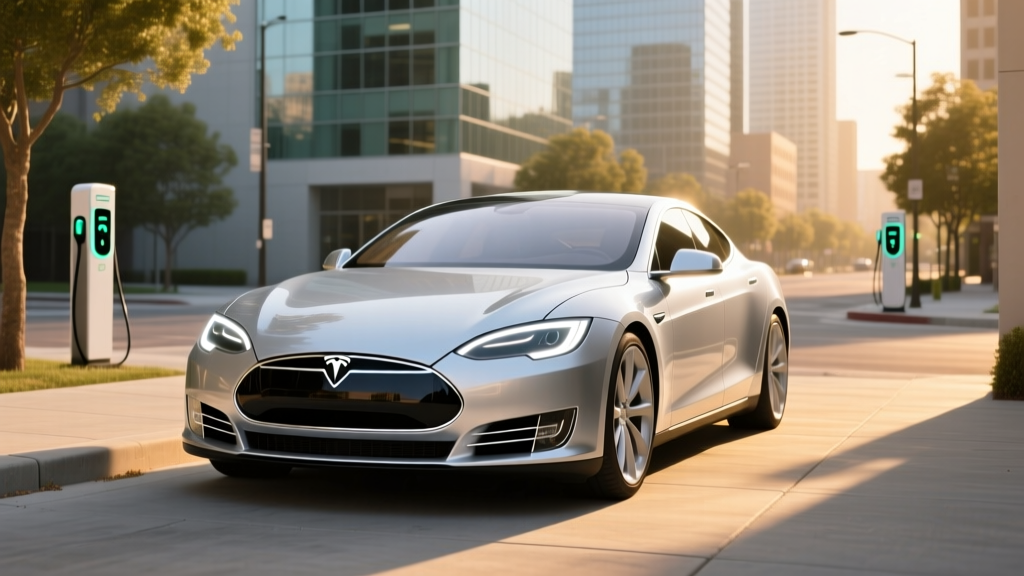
The 2012 Tesla Model S didn't just launch a car company — it launched the modern EV era. As the first production sedan to prove that electric vehicles could be fast, luxurious, and practical, it set benchmarks that competitors spent the next decade chasing. But what does owning a 2012 Tesla Model S look like in 2026, more than a decade after it first rolled off the Fremont assembly line?
This review covers the original 2012 Model S in its production variants — the 40 kWh, 60 kWh, and 85 kWh battery configurations — with a focus on what used buyers need to know today: real-world range degradation, charging speeds, battery health, ownership costs, and whether this pioneering EV is still a smart purchase or a money pit.
2012 Tesla Model S: Quick Verdict for Used Buyers
Specs at a Glance: 2012 Tesla Model S Variants
| Spec | Model S 40 | Model S 60 | Model S 85 |
|---|---|---|---|
| Battery (usable) | 40 kWh (NMC) | 60 kWh (NMC) | 85 kWh (NMC) |
| EPA Range (new) | 139 mi | 208 mi | 265 mi |
| Horsepower | 235 hp (base) / 362 hp (Performance) | 302 hp | 362 hp (std) / 416 hp (Performance) |
| 0-60 mph | ~6.5 sec | ~5.9 sec | ~5.4 sec (std) / 4.2 sec (P85) |
| Drivetrain | RWD | RWD | RWD |
| Efficiency (EPA) | 89 MPGe | 95 MPGe | 89 MPGe |
| Original MSRP | ~$59,900 | ~$69,900 | ~$79,900 (P85: $94,900+) |
| 2026 Used Price (est.) | $8,000–$14,000 | $10,000–$18,000 | $12,000–$22,000 |
Real-World Range in 2026: What Degradation Actually Looks Like
The 2012 Model S uses NMC (nickel-manganese-cobalt) lithium-ion cells manufactured by Panasonic in Tesla's early pack configurations. NMC chemistry offers high energy density — which is why the 85 kWh pack achieved 265 miles in a 2012 sedan — but it is more susceptible to calendar and cycle degradation than the LFP (lithium iron phosphate) chemistry used in modern Tesla Standard Range models.
Key factors affecting real-world range for a 2012 Model S today:
- Highway driving at 75+ mph: Expect 15–20% range reduction versus EPA, even with a healthy battery. The Model S's large frontal area and lack of modern heat pump technology hurt efficiency at speed.
- Cold weather (below 40°F): Early Model S vehicles lack a heat pump and rely on resistive cabin heating, which can consume 3–5 kW continuously. Expect 25–40% range loss in freezing temperatures.
- Battery degradation curve: Most 2012 packs experienced the steepest degradation in the first 30,000–50,000 miles (roughly 8–12% loss), with a slower linear decline afterward. Vehicles with 150,000+ miles may have lost 25–35% of original capacity.
- DC fast charging history: Packs that were regularly Supercharged at high rates show measurably higher degradation. Tesla's early Superchargers delivered up to 120 kW without the sophisticated thermal management of modern V3/V4 stations.
How to check before you buy: Request the vehicle's current rated range at 100% State of Charge from the instrument cluster. Compare it to the original EPA figure to estimate State of Health (SoH). A third-party diagnostic from a Tesla-certified shop or an OBD-II scan using tools like Scan My Tesla can provide more precise cell-level data.
Charging Speeds: DC Fast, Level 2, and Level 1
The 2012 Model S was designed in an era when charging infrastructure was nascent. Its charging capabilities reflect that reality — and they're a significant limitation by 2026 standards.
| Charge Level | Power / Rate | Speed (mi/hr) | Notes |
|---|---|---|---|
| Level 1 (120V household) | ~1.4 kW | ~3–4 mi/hr | Emergency/trickle only |
| Level 2 (240V, NEMA 14-50) | Up to 10 kW (single charger) / 20 kW (twin chargers) | ~29 mi/hr (single) / ~58 mi/hr (twin) | Twin charger was a $3,600 option |
| DC Fast Charge (Tesla Supercharger) | Peak ~120 kW (V2) | ~300 mi/hr at peak | 10–80% in ~45–55 min; tapers significantly above 80% |
| CHAdeMO adapter (optional) | Up to 50 kW | ~120 mi/hr | Tesla offered a CHAdeMO adapter; CCS not natively supported |
Important 2026 context: The 2012 Model S uses Tesla's proprietary connector (which later became the basis for NACS, the North American Charging Standard adopted industry-wide starting in 2024). This means the 2012 Model S can use Tesla Superchargers natively — a significant advantage for road trips — but accessing third-party networks like Electrify America or EVgo requires adapters that may be hard to source for older vehicles.
The early Model S does not support the 250 kW peak rates of Tesla's V3 Superchargers. The vehicle's battery management system caps the charge rate to protect the pack, typically peaking around 90–120 kW depending on State of Charge and battery temperature. Expect a 10–80% session to take roughly 45–55 minutes at a V2 Supercharger, with aggressive tapering above 80%.
For home charging, most 2012 Model S vehicles came with a single onboard charger (10 kW max). A full charge from empty on a 40-amp Level 2 circuit takes approximately 6–9 hours depending on battery size. The optional twin-charger configuration (20 kW) halves that time but requires a 100-amp dedicated circuit — an expensive electrical upgrade.
Performance and Driving Dynamics
Even by 2026 standards, a 2012 Model S Performance (P85) delivers thrilling acceleration. The 416 hp rear-mounted AC induction motor propels the sedan to 60 mph in approximately 4.2 seconds — a figure that embarrassed sports cars at launch. The standard 85 kWh model manages 5.4 seconds, while the 60 kWh variant clocks in around 5.9 seconds.
All 2012 variants are rear-wheel drive (RWD). Tesla didn't introduce dual-motor all-wheel drive until the 2014 Model S 85D. This means 2012 owners in snowy climates should budget for dedicated winter tires.
The driving experience remains impressive: the low center of gravity (battery pack under the floor), precise electric torque delivery, and spacious cabin make it a comfortable grand tourer. However, the adaptive air suspension — standard on many 2012 models — is a known failure point. Replacement air struts cost $1,500–$2,500 per corner, and most 2012 vehicles will need them by now if they haven't been replaced already.
Interior, Cargo, and Technology
The 2012 Model S was designed to compete with the BMW 5 Series and Mercedes E-Class, and its dimensions reflect that ambition:
- Passenger volume: 97 cu ft (EPA)
- Front legroom: 42.7 inches
- Rear legroom: 35.4 inches
- Cargo (rear trunk): 26.3 cu ft
- Frunk (front trunk): 5.3 cu ft
- Total cargo with rear seats folded: 58.1 cu ft
The frunk was a revelation in 2012 and remains useful today — though later Model S revisions reduced its size to accommodate additional electronics.
Infotainment: The 2012 Model S features the original 17-inch touchscreen running Tesla's early software. While it received over-the-air updates for years, the hardware is now dated. Expect sluggish touch response, no modern app ecosystem, and limited navigation mapping. The system does support Bluetooth audio and basic phone integration but lacks Apple CarPlay and Android Auto — features that were not available in any Tesla at the time.
Driver assistance: The 2012 Model S predates Tesla's Autopilot hardware suite. Vehicles built before September 2014 lack the cameras, radar, and ultrasonic sensors required for any Level 2 driver-assist features. This means a 2012 Model S offers no adaptive cruise control, no lane-keeping assist, and no automatic emergency braking — a significant safety gap compared to even budget 2026 vehicles. It is a SAE Level 0 vehicle in terms of automation.
Battery Warranty, Degradation, and Replacement Costs
This is the most critical section for any used 2012 Model S buyer.
Original warranty terms: Tesla provided an 8-year, unlimited-mileage battery and drive unit warranty on 2012 Model S vehicles. That warranty expired no later than 2020 for all 2012 examples. You are buying this vehicle entirely out of warranty unless a previous owner purchased an extended service agreement.
Battery replacement cost: If the pack fails or degrades beyond usability, a Tesla remanufactured battery pack for the 2012 Model S costs approximately $12,000–$20,000 installed at a Tesla Service Center, depending on battery size and current parts pricing. Third-party EV shops may offer refurbished packs for $8,000–$14,000, but quality varies and Tesla's software may not fully integrate with non-OEM packs.
Drive unit failures: The rear AC induction motor and power electronics are generally robust, but inverter failures have been reported. Replacement runs $3,000–$6,000.
What to look for: Before purchasing, check the Tesla mobile app (if the seller grants access) or the vehicle's energy screen for the current rated range at 100% SoC. Any vehicle showing less than 70% of its original EPA range should be treated as needing a battery replacement soon — factor that $12,000–$20,000 into your purchase decision.
Pricing, Tax Credits, and Ownership Costs
The 2012 Model S is no longer eligible for the federal §30D EV tax credit because that credit applies only to new vehicle purchases. However, used buyers should investigate the used clean vehicle credit (§25E), which offers up to $4,000 or 30% of the sale price (whichever is less) for qualifying used EVs. Key restrictions:
- The vehicle must be purchased from a licensed dealer (private-party sales do not qualify)
- The sale price must be $25,000 or less (most 2012 Model S examples qualify at current market prices)
- Buyer income caps: $75,000 single / $112,500 head of household / $150,000 joint filers (modified AGI)
- The credit can be transferred to the dealer at point of sale as a discount
- The vehicle must have been previously titled — a 2012 Model S clearly qualifies
5-Year Ownership Cost Estimate (2012 Model S 85):
| Category | Estimated Cost |
|---|---|
| Purchase price (Model S 85, avg.) | $16,000 |
| Used EV tax credit (§25E, if eligible) | –$4,000 |
| Home Level 2 charger install (240V/40A) | $800–$2,000 |
| Electricity (5 yrs, 12,000 mi/yr, $0.15/kWh) | $3,200 |
| Insurance (5 yrs, avg. $1,800/yr) | $9,000 |
| Maintenance & repairs (air suspension, cooling system, 12V battery) | $4,000–$8,000 |
| Potential battery replacement | $0–$18,000 |
| Total 5-year cost (best case / worst case) | $24,200 / $52,200 |
The spread between best-case and worst-case ownership is enormous. A 2012 Model S with a healthy battery and intact air suspension can be one of the cheapest ways to drive a large, fast, premium EV. One with a degraded pack and failing components can quickly exceed the cost of a newer, warranted used EV.
2012 Tesla Model S vs. Modern Used EV Alternatives
- Still quick — P85 does 0-60 in 4.2 sec
- Spacious sedan with frunk + large trunk (58 cu ft total)
- Native Tesla Supercharger access (NACS)
- Premium build quality, aluminum body resists rust
- Low purchase price ($10K–$22K) for a luxury EV
- Over-the-air updates kept software relevant for years
- Battery out of warranty; replacement costs $12K–$20K
- No Autopilot, no AEB, no driver assists (SAE Level 0)
- Slow DC charging vs. modern EVs (45–55 min 10–80%)
- No heat pump — severe cold-weather range loss
- Dated infotainment, no CarPlay/Android Auto
- Air suspension failures common and expensive
- Insurance costs higher than comparable gas sedans
Who should buy a 2012 Model S? Enthusiasts who appreciate its historical significance, DIY-oriented buyers comfortable with out-of-warranty EV ownership, and those who need a spacious, fast sedan for moderate-distance commuting with home charging access. It works best as a second car or a weekend cruiser.
Who should look elsewhere? Daily commuters who need reliable range in cold climates, families who want modern safety features (AEB, lane-keeping), buyers who can't absorb a surprise $15,000 repair bill, and anyone who values the latest infotainment and driver-assist technology. A 2018+ Model 3, a used Chevrolet Bolt EUV, or a 2020+ Model Y will offer better reliability, warranty coverage, and technology for similar money.
Frequently Asked Questions
What is the real-world range of a 2012 Tesla Model S today?
Expect 185–225 miles from the 85 kWh variant, 145–175 miles from the 60 kWh, and 95–115 miles from the 40 kWh — assuming moderate battery degradation (15–30%). Highway driving at 75+ mph and cold weather below 40°F will reduce these figures by an additional 15–40%.
How fast does the 2012 Model S charge at home and on the road?
At home on a 240V Level 2 circuit, the single-charger Model S adds about 29 miles of range per hour (10 kW). The optional twin-charger doubles that to ~58 mi/hr (20 kW). On a Tesla Supercharger, it peaks around 90–120 kW, taking approximately 45–55 minutes to charge from 10% to 80%.
Does the 2012 Tesla Model S qualify for any tax credit?
Not the new-vehicle §30D credit. However, the used clean vehicle credit (§25E) may provide up to $4,000 if you buy from a dealer, the sale price is under $25,000, and your income falls below IRS caps ($75K single / $150K joint). Verify eligibility on IRS.gov and consult a tax professional.
Is the 2012 Model S worth buying versus a modern used EV?
It depends on your risk tolerance. The 2012 Model S offers more space, more power, and Supercharger access for less money than most modern used EVs — but with zero warranty protection and higher repair risk. If you want a worry-free used EV, look at a 2019+ Model 3 or a certified pre-owned EV with remaining battery warranty.
Can I upgrade the battery in a 2012 Model S?
Tesla has occasionally offered battery upgrades (e.g., swapping a 60 kWh pack for a 90 kWh), but this program is not consistently available and pricing varies. Third-party upgrades are theoretically possible but not widely supported. Plan for a like-for-like replacement rather than an upgrade.
Does the 2012 Model S have Autopilot or self-driving capability?
No. The 2012 Model S predates Tesla's Autopilot hardware. It has no adaptive cruise control, no lane-keeping, and no automatic emergency braking. It is an SAE Level 0 vehicle — the driver is responsible for all driving tasks at all times.