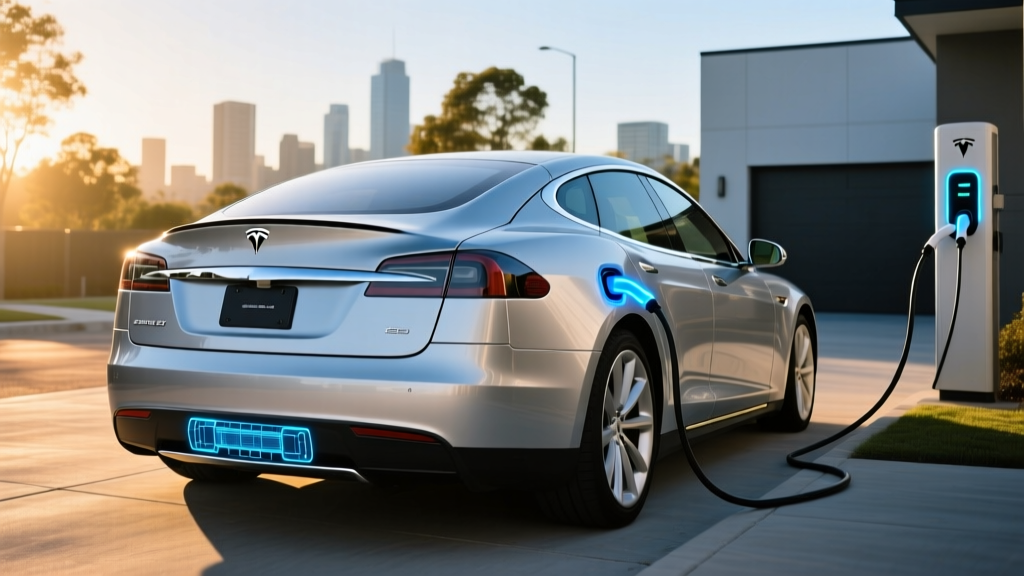
The 2012 Tesla Model S was the car that proved a battery-electric sedan could rival a luxury flagship. Over a decade later, thousands of these pioneering EVs remain on the road — and they show up frequently in the used market at tempting prices. But buying a 12-plus-year-old electric vehicle in 2026 requires a clear-eyed look at battery degradation, outdated charging hardware, and what real-world ownership actually costs. This review covers every spec, limitation, and financial consideration you need before signing the paperwork on a 2012 Model S.
Quick Verdict: A Pioneer Showing Its Age
The 2012 Model S launched with an EPA-estimated 265 miles of range in its top 85 kWh trim — a figure that stunned the auto industry. In 2026, that original battery pack has almost certainly degraded 20–35%, meaning realistic range sits between 170 and 210 miles on a full charge. DC fast charging tops out at roughly 90 kW (via the car's original CHAdeMO adapter or a CCS retrofit), and the onboard infotainment lacks Apple CarPlay, Android Auto, and modern over-the-air updates. If you can secure a unit with a recent battery replacement under Tesla's warranty and you primarily commute under 100 miles round-trip, the 2012 Model S can still serve as a comfortable, spacious daily driver. For road-trip-heavy buyers, it is a hard pass.
EPA Range vs. Real-World Expectations
Real-World Expectation in 2026: 170–210 miles for the 85 kWh pack after 12+ years of degradation. Expect 140–175 miles in freezing temperatures and sustained 75 mph highway driving.
The 2012 Model S was offered with three battery configurations: 40 kWh, 60 kWh, and 85 kWh. The 40 kWh variant was software-limited and exceedingly rare; most used-market listings feature the 60 or 85 kWh packs. The 85 kWh Performance trim earned its 265-mile EPA rating when new, according to fueleconomy.gov.
Lithium-ion batteries of this era — primarily NMC (nickel-manganese-cobalt) chemistry from Panasonic — degrade measurably. Industry data and Tesla owner surveys indicate an average capacity loss of 15–30% over 10–12 years depending on charging habits, climate exposure, and Supercharger frequency. An 85 kWh pack that has lost 25% of its usable capacity delivers roughly 64 kWh — translating to approximately 190 miles at the car's original efficiency of ~34 kWh/100 miles.
Cold weather compounds this. NMC chemistry loses roughly 15–25% of available capacity below 32°F (0°C) due to increased internal resistance and cabin heating demands. The 2012 Model S lacks a heat pump (introduced by Tesla years later), relying instead on resistive PTC heating that draws heavily from the traction battery.
Battery Chemistry, Capacity, and Degradation Data
| Specification | 40 kWh | 60 kWh | 85 kWh |
|---|---|---|---|
| Usable Capacity (new) | ~36 kWh | ~56 kWh | ~81 kWh |
| Chemistry | NMC (Panasonic) | NMC (Panasonic) | NMC (Panasonic) |
| Estimated Usable (2026, 25% degradation) | ~27 kWh | ~42 kWh | ~61 kWh |
| EPA Range (new) | 160 mi | 208 mi | 265 mi |
| Expected Range (2026) | ~100–120 mi | ~140–165 mi | ~170–210 mi |
| EPA Efficiency | — | 95 MPGe (36 kWh/100mi) | 89 MPGe (38 kWh/100mi) |
Tesla's battery warranty for the 2012 Model S was 8 years with unlimited miles for the 85 kWh pack, and 8 years/125,000 miles for the 60 kWh. By 2026, all original warranty coverage has expired unless the battery was replaced under warranty at some point — in which case the replacement battery carries its own warranty period. Always request service records confirming battery health percentage (State of Health, or SoH) via the car's diagnostic menu or a Tesla Service Center inspection.
Battery replacement cost (2026): A remanufactured 85 kWh pack from Tesla or a third-party EV battery specialist typically runs $12,000–$18,000 installed. This can exceed the vehicle's market value, making pre-purchase battery inspection non-negotiable.
Charging Speed: The 2012 Model S's Biggest Weakness
The 2012 Model S was designed before modern DC fast-charging standards existed. It originally shipped with a Tesla-proprietary Supercharger connector and a J1772 inlet for Level 2 AC charging. Here is what charging looks like in 2026:
| Charging Level | Connector | Max Rate | Speed |
|---|---|---|---|
| Level 1 (120V) | J1772 adapter | 1.4 kW | ~3–4 mi/hr |
| Level 2 (240V, single charger) | J1772 / NACS adapter | 10 kW | ~29 mi/hr |
| Level 2 (240V, dual charger option) | J1772 / NACS adapter | 20 kW | ~58 mi/hr |
| DC Fast (Supercharger V2) | Tesla proprietary (legacy) | ~90 kW (peak) | 10–80% in ~55 min |
| DC Fast (CHAdeMO adapter) | CHAdeMO | ~50 kW | 10–80% in ~85 min |
kW vs kWh refresher: kW (kilowatts) measures the rate of power flowing into the car — like water pressure from a hose. kWh (kilowatt-hours) measures the total energy stored in the battery — like the size of the bucket. A 90 kW charge rate fills the bucket faster than a 50 kW rate, but the 2012 Model S's older battery management system limits sustained peak rates.
The 2012 Model S cannot access Tesla's latest V3/V4 Superchargers at full speed (250+ kW) because its battery and charge controller were not designed for those rates. Even at V2 Superchargers, the car typically peaks around 80–90 kW and tapers significantly above 60% State of Charge. A 10–80% session takes roughly 50–60 minutes — roughly double the time of a modern EV like the Hyundai Ioniq 5 or Tesla Model 3 Highland.
For home charging, the single onboard charger (10 kW) adds about 29 miles per hour. A full overnight charge from 20% to 100% takes approximately 7–8 hours on a 48-amp Level 2 circuit. The optional dual-charger configuration (20 kW) halves that time but requires a 100-amp dedicated circuit — a significant electrical investment.
Performance, Drivetrain, and Efficiency
| Metric | 85 kWh (RWD) | 85 kWh Performance (P85) |
|---|---|---|
| Drivetrain | Rear-Wheel Drive | Rear-Wheel Drive |
| Horsepower | 362 hp | 416 hp |
| Torque | 325 lb-ft | 443 lb-ft |
| 0–60 mph | 5.4 sec | 4.2 sec |
| Top Speed | 130 mph | 130 mph |
| EPA Efficiency | 89 MPGe / 38 kWh/100mi | 89 MPGe / 38 kWh/100mi |
All 2012 Model S variants are single-motor, rear-wheel drive. Tesla did not introduce Dual Motor all-wheel drive until late 2014. The P85 Performance variant's 4.2-second 0–60 time remains genuinely quick by 2026 standards, and the car's low center of gravity (battery pack mounted under the floor) delivers composed handling for its 4,600-pound curb weight.
Efficiency of 38 kWh per 100 miles is modest by modern standards — the 2025 Tesla Model 3 Long Range achieves roughly 25 kWh/100mi — but the 2012 Model S was a large luxury sedan pioneering the segment. At the US average electricity rate of ~$0.17/kWh (EIA, 2025), fueling costs roughly $6.46 per 100 miles versus approximately $12–$14 for a comparable gasoline sedan at $3.50/gallon.
Interior, Cargo, and Technology
The 2012 Model S interior was minimalist and forward-looking at launch, with a 17-inch center touchscreen that dwarfed anything else in the 2012 luxury segment. However, that screen hardware is now severely outdated:
- Infotainment: No Apple CarPlay, no Android Auto, no Bluetooth audio streaming on early builds. Navigation maps may be outdated without recent connectivity.
- Driver Assistance: Early 2012 builds predate Autopilot hardware entirely. Models produced after September 2012 may include the first-generation Autopilot sensor suite (camera + ultrasonic), offering basic adaptive cruise control and lane-departure warning — but not the lane-centering Autosteer introduced in 2015. This is SAE Level 1 at best.
- Over-the-Air Updates: The 2012 Model S receives limited or no OTA software updates in 2026 due to hardware constraints.
Cargo space remains a strong suit. The rear hatchback design provides 26.3 cubic feet behind the rear seats and 58.1 cubic feet with seats folded. The front trunk (frunk) adds 5.3 cubic feet — a feature still missing from many 2026 EVs. Rear legroom measures 35.4 inches, adequate for adults on shorter trips.
Pricing, Tax Credits, and Ownership Costs
| Category | Amount |
|---|---|
| Original MSRP (2012, 85 kWh) | $79,900 |
| Original MSRP (2012, P85 Performance) | $94,900 |
| Used Market Price (2026, avg. 85 kWh) | $12,000–$22,000 |
| Federal Used EV Tax Credit (§25E) | Up to $4,000 (30% of sale price, max $4,000) |
| Credit-Adjusted Price Range | $8,000–$18,000 |
Tax credit details: The 2012 Model S does NOT qualify for the new-vehicle §30D credit (the car hasn't been manufactured in over a decade). However, it may qualify for the §25E Used Clean Vehicle Credit — up to $4,000 or 30% of the sale price, whichever is less. Per IRS guidelines, eligibility requires:
- Sale price of $25,000 or less
- Buyer income: ≤$75,000 single / $112,500 head of household / $150,000 joint
- Purchased from a licensed dealer (private-party sales do not qualify)
- Vehicle must be at least 2 model years old (easily met)
- Must be for personal use, primarily in the United States
Consult a tax professional to confirm eligibility for your specific situation. The credit is non-refundable — it can reduce your tax liability to zero but will not generate a refund beyond that.
Pros, Cons, and Who Should Buy
- Spacious hatchback cargo area (26.3 cu ft + 5.3 cu ft frunk)
- Strong acceleration (P85: 4.2 sec 0–60) even with battery degradation
- Low used-market entry price ($12K–$22K before credit)
- Eligible for up to $4,000 used-EV federal tax credit
- Access to Tesla Supercharger network (legacy V2 stalls)
- Comfortable air suspension (if not failed — check for leaks)
- Severely degraded range (170–210 mi real-world for 85 kWh)
- Slow DC fast charging (~90 kW peak, ~55 min 10–80%)
- No modern driver assists (no Autosteer, no automatic emergency braking)
- No Apple CarPlay, Android Auto, or modern infotainment
- Battery replacement ($12K–$18K) can exceed vehicle value
- Air suspension and drive unit failures are common at this age
- RWD only — no AWD option for snow-belt buyers
- No heat pump — cold-weather range loss is severe
Who this EV suits: Budget-conscious commuters with home Level 2 charging who drive under 100 miles round-trip and want a spacious, quick sedan without a car payment. The $4,000 used-EV credit makes it one of the cheapest ways into a full-size luxury EV.
Who should skip it: Road-trip drivers, cold-climate commuters without garage parking, anyone who relies on modern safety technology (AEB, lane-keeping), and buyers without access to reliable Level 2 home charging. The slow DC charging and degraded range make this car frustrating for anything beyond local use.
Frequently Asked Questions
What is the real-world range of a 2012 Tesla Model S in 2026?
For the most common 85 kWh variant, expect 170–210 miles on a full charge assuming 20–25% battery degradation. The 60 kWh variant delivers roughly 140–165 miles. Cold weather and sustained highway speeds above 70 mph will reduce these figures by an additional 15–25%.
How fast does the 2012 Model S charge?
At home on a Level 2 (240V) single charger, it adds roughly 29 miles per hour at 10 kW. On a Tesla V2 Supercharger, it peaks around 80–90 kW, with a 10–80% session taking approximately 50–60 minutes. It cannot charge at the 250 kW rates of modern Supercharger V3/V4 stalls.
Does the 2012 Tesla Model S qualify for any federal tax credit?
Not the new-vehicle §30D credit. It may qualify for the §25E Used Clean Vehicle Credit — up to $4,000 — if purchased from a licensed dealer for $25,000 or less and the buyer meets IRS income thresholds. Always verify current rules at irs.gov.
Is the 2012 Model S worth buying versus a newer used EV?
It depends on budget and use case. At $12,000–$22,000 (before credit), it is cheaper than a used 2018+ Model 3 ($18K–$28K). However, the Model 3 offers better range, faster charging (up to 170–250 kW), modern Autopilot, and a far lower risk of catastrophic battery-replacement costs. If your budget allows $20K+, a newer Model 3 or Chevrolet Bolt EV is a safer, more capable choice.
What are the most common failures on a 2012 Model S?
The most expensive and common issues include: air suspension strut failure ($1,500–$3,000 per corner), drive unit (motor) replacement ($5,000–$8,000), MCU (touchscreen) failure ($2,000–$3,500), and 12V battery drain from the always-on systems. Battery degradation is gradual but can accelerate if the car was frequently Supercharged or stored at 100% SoC in hot climates.
Can I still use Tesla Superchargers with a 2012 Model S?
Yes. The 2012 Model S retains access to Tesla's Supercharger network using its original proprietary connector. However, you will be limited to V2 Supercharger speeds (~90 kW peak). As Tesla transitions to the NACS standard, legacy connectors remain supported but receive no speed upgrades.