Quick Verdict: The EV That Started It All — Should You Buy One Today?
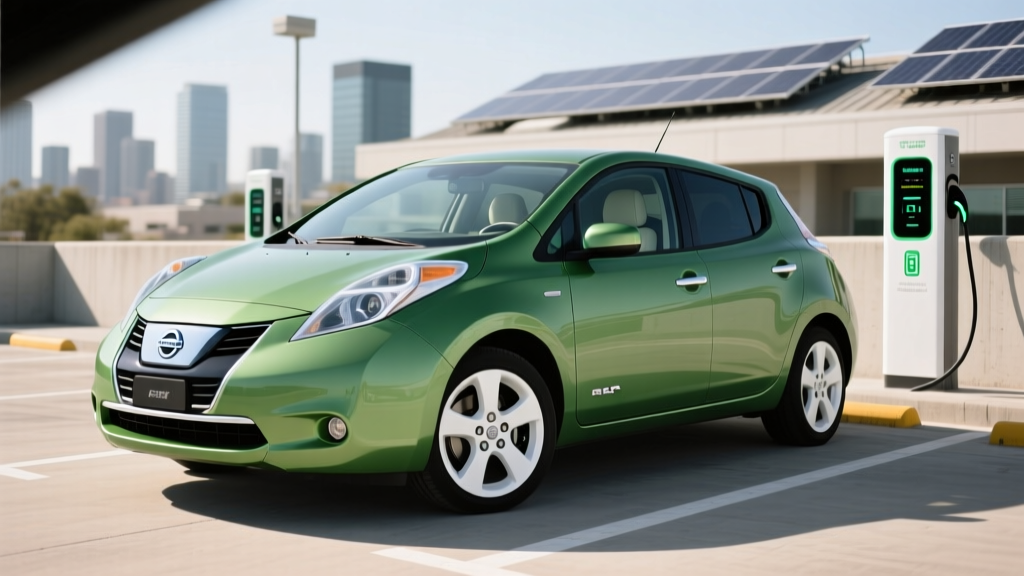
The 2012 Nissan Leaf was the first mass-market battery electric vehicle sold in the United States, and it remains one of the most affordable used EVs you can buy in 2026. With examples routinely selling between $4,000 and $8,000 on the private market, it's a tempting entry point for budget-conscious commuters. But this pioneering hatchback comes with serious caveats that every prospective buyer must understand before handing over cash: a small 24 kWh battery that has degraded significantly over 14 years, passive air-cooled thermal management that accelerates capacity loss, and CHAdeMO DC fast charging that is increasingly orphaned as the industry shifts to NACS and CCS.
This review breaks down the exact specs, real-world range expectations, charging realities, and ownership economics of the 2012 Leaf so you can decide whether it's a smart used-EV bargain or a cautionary tale of battery degradation.
2012 Nissan Leaf Specifications at a Glance
| Attribute | Specification |
|---|---|
| EPA Range (new) | 73 miles |
| Battery Capacity (total / usable) | 24 kWh / ~21.5 kWh |
| Battery Chemistry | Lithium Manganese Oxide (LMO) — laminated cells by AESC |
| Motor Output | 80 kW (107 hp), 207 lb-ft torque |
| Drivetrain | FWD, single-speed reduction gear |
| 0–60 mph | ~9.9 seconds |
| EPA Efficiency | 99 MPGe combined (34 kWh/100 mi) |
| DC Fast Charge (CHAdeMO) | ~50 kW peak (80% in ~30 min when new) |
| Level 2 Charge (J1772) | 3.3 kW onboard charger (~12 mi/hr) |
| Level 1 Charge (120V) | ~1.4 kW (~5 mi/hr) |
| Cargo Volume | 14.5 cu ft (rear seats up), 24.0 cu ft (folded) |
| Passenger Volume | 94.0 cu ft; rear legroom 33.3 in |
| Curb Weight | 3,340 lbs |
| Original MSRP (2012) | $35,200 (base SV) / $37,250 (SL) |
| Used Price Range (2026) | $4,000–$8,000 private party |
Battery, Range, and the Degradation Reality
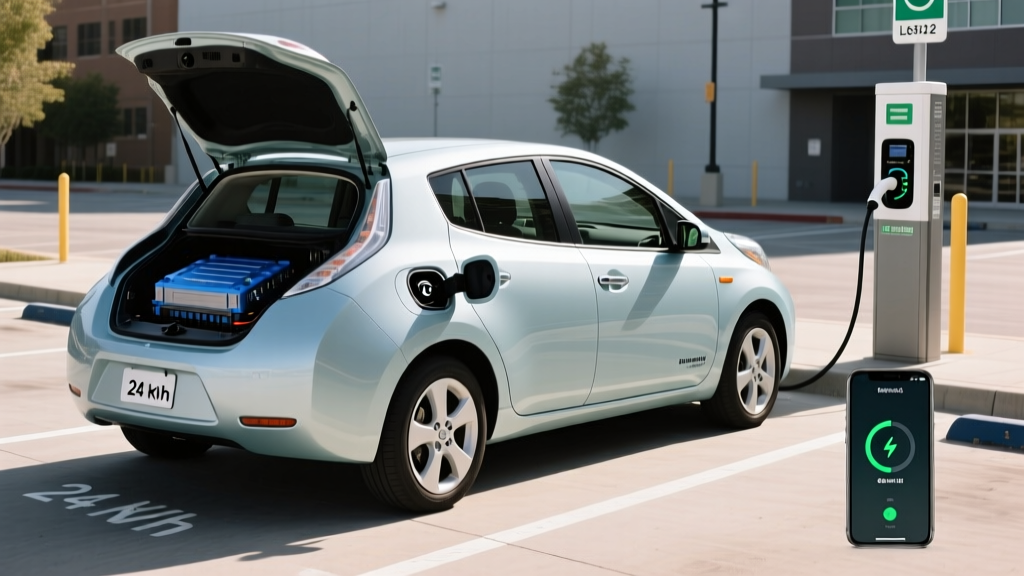
The 2012 Leaf's defining characteristic — and its biggest liability — is its 24 kWh lithium manganese oxide (LMO) battery pack, manufactured by AESC (Automotive Energy Supply Corporation, a Nissan-NEC joint venture). Unlike modern NMC or LFP packs, this chemistry was chosen for cost and safety but offers lower energy density and faster capacity fade, particularly when exposed to heat.
EPA estimate (when new): 73 miles
Typical 2026 range (14-year-old pack, moderate degradation): 45–60 miles in warm weather city driving
Highway driving (65–70 mph, warm): 38–50 miles
Cold weather (below 35°F, city): 30–42 miles
Cold weather highway: 25–35 miles
The 2012 Leaf has no active thermal management — the battery relies on passive air cooling. This means heat-driven degradation in hot climates (Arizona, Texas, Southern California) is severe, with some packs showing 30–40% capacity loss after 8–10 years. Cold weather saps range doubly: no heat pump, resistive cabin heater draws heavily from the small pack.
Nissan provides a 12-bar battery health indicator on the dashboard. Each bar represents roughly 8.3% of original capacity. A 2012 Leaf showing 9 or 10 bars in 2026 is considered average; 11–12 bars is exceptional (often indicating a replacement pack). Anything below 8 bars means you're working with under 65% of original capacity — expect under 45 miles of real range.
According to data compiled by the U.S. EPA on fueleconomy.gov, the 2012 Leaf's official combined rating is 99 MPGe (34 kWh per 100 miles). In practice, owners report 30–38 kWh/100 mi depending on driving style and climate use.
Battery Replacement and Refurbishment Options
If you're considering a 2012 Leaf, budget for a potential battery replacement. Options in 2026 include:
- Nissan OEM replacement pack: $6,500–$8,500 installed at a dealer — often exceeding the car's value
- Refurbished/remanufactured pack: $4,000–$6,000 from third-party EV shops
- Used pack from a salvage Leaf: $2,000–$3,500, but you inherit someone else's degradation
- Upgraded 40 kWh or 62 kWh pack swap: Some specialist shops offer larger-pack conversions for $8,000–$12,000, though availability is limited and not factory-supported
Charging: CHAdeMO's Declining Infrastructure
The 2012 Leaf uses the CHAdeMO DC fast-charging connector and a J1772 inlet for Level 1 and Level 2 AC charging. This is critical context for 2026 buyers: CHAdeMO is a legacy standard in the U.S., with Tesla's NACS now dominant and CCS1 widely deployed on non-Tesla networks.
| Level | Connector | Max Power | Speed (approx.) |
|---|---|---|---|
| Level 1 (120V household) | J1772 | 1.4 kW | ~5 miles/hour |
| Level 2 (240V home/public) | J1772 | 3.3 kW | ~12 miles/hour |
| DC Fast Charge | CHAdeMO | ~50 kW peak | 0–80% in ~30 min (when new); degraded packs charge slower |
The 3.3 kW onboard charger is a significant limitation. Even on a 7.2 kW or 11.5 kW Level 2 station, the Leaf can only accept 3.3 kW — meaning a full charge from empty takes roughly 7 hours. The 2013+ SV/SL models upgraded to a 6.6 kW charger, so if charging speed matters, a 2013 or newer Leaf is a meaningful improvement.
The CHAdeMO Problem
CHAdeMO DC fast-charging stations are increasingly scarce in the U.S. Electrify America, EVgo, and ChargePoint have shifted investment toward CCS1 and NACS connectors. While many existing CHAdeMO stations still operate, new installations are rare. Some networks have begun decommissioning CHAdeMO stalls during site upgrades. If your local charging infrastructure lacks CHAdeMO connectors, the 2012 Leaf's DC fast-charging capability becomes largely theoretical.
Additionally, the 2012 Leaf's DC charging curve is rudimentary by modern standards. It peaks near 46–50 kW up to roughly 50% state of charge, then tapers significantly. Above 80%, charging slows to under 15 kW. In hot weather, the passively cooled battery may throttle charging power further to protect the cells — a phenomenon Leaf owners call "Rapidgate."
Performance and Driving Experience
The 2012 Leaf's 80 kW (107 hp) AC synchronous motor delivers 207 lb-ft of torque to the front wheels through a single-speed reduction gear. The 0–60 mph time of approximately 9.9 seconds is leisurely by 2026 EV standards, but the instant torque delivery makes the Leaf feel surprisingly responsive in city traffic up to about 40 mph.
Top speed is electronically limited to roughly 90 mph. At highway speeds, the Leaf is stable but the thin, low-rolling-resistance tires and soft suspension tuning prioritize efficiency over engagement. Wind and road noise are noticeable above 65 mph.
The regenerative braking system offers two modes: standard "D" (drive) with mild regen that lets the car coast, and "B" (brake) with stronger regen that recovers more energy and slows the car more aggressively when you lift off the accelerator. However, the 2012 Leaf does not offer true one-pedal driving — the regen does not bring the car to a complete stop, so you still need the friction brake pedal.
Notable Tech and Features
- Carwings telematics: Remote climate control pre-conditioning, battery status monitoring, and charging scheduling via smartphone app (note: Nissan discontinued Carwings support for 2011–2015 Leaf models, so app connectivity may no longer function)
- Navigation with EV routing: 7-inch touchscreen with range-estimating navigation (no live traffic or over-the-air updates)
- Heat pump (SL trim only): More efficient cabin heating that reduces winter range loss compared to the SV's resistive heater
- Solar panel (SL trim): Small rear spoiler-mounted solar panel that trickle-charges the 12V auxiliary battery — not the traction pack
- Standard safety: Six airbags, ABS, stability control, tire-pressure monitoring. No advanced driver-assistance features (no AEB, lane-keeping, or adaptive cruise)
Ownership Costs and Tax Credit Reality
The 2012 Nissan Leaf originally qualified for the full $7,500 federal EV tax credit under pre-2023 rules. However, under current IRS §30D regulations, the used-EV credit (also called the Previously-Owned Clean Vehicle Credit, §25E) applies differently:
- Credit amount: 30% of the sale price, up to a maximum of $4,000
- Vehicle price cap: Sale price must be $25,000 or less (easily met — used 2012 Leafs sell for $4K–$8K)
- Vehicle age requirement: Must be at least 2 model years old (met)
- Income caps: Adjusted gross income must not exceed $75,000 (single), $112,500 (head of household), or $150,000 (joint)
- Dealer requirement: Must be purchased from a licensed dealer (not private party) to claim the credit
- Point-of-sale transfer: Eligible buyers can transfer the credit to the dealer for an immediate price reduction
- Battery capacity: Must have at least 7 kWh (the Leaf's 24 kWh qualifies)
At a $6,000 dealer sale price, 30% = $1,800 credit. Not the full $4,000 cap, but still a meaningful discount. Consult a tax professional for your specific situation.
5-Year Estimated Cost of Ownership (Used 2012 Leaf)
| Category | Estimated Cost |
|---|---|
| Purchase price (dealer, after credit) | $4,200–$6,000 |
| Home charging electricity (12,000 mi/yr at $0.15/kWh) | $3,060 |
| Insurance (5 years) | $4,500–$6,000 |
| Maintenance (tires, cabin filter, brake fluid, wipers) | $1,200–$1,800 |
| Potential battery replacement | $0–$8,500 |
| Registration/taxes (varies by state) | $500–$1,500 |
| Total (no battery replacement) | $13,460–$19,560 |
| Total (with battery replacement) | $21,960–$28,060 |
2012 Leaf vs. Key Used-EV Competitors
| Spec | 2012 Nissan Leaf | 2013 Chevy Volt (PHEV) | 2013 Ford Focus Electric | 2014 Fiat 500e |
|---|---|---|---|---|
| EPA EV Range | 73 mi | 38 mi (EV) + 380 mi (gas) | 76 mi | 87 mi |
| Battery kWh | 24 | 16.5 | 23 | 24 |
| DC Fast Charge | CHAdeMO 50 kW | None | None (CCS on later models) | None |
| Level 2 Charger | 3.3 kW | 3.6 kW | 6.6 kW | 6.6 kW |
| Thermal Mgmt | Passive air | Active liquid | Active liquid | Active liquid |
| Used Price (2026) | $4K–$8K | $5K–$9K | $4K–$7K | $6K–$10K |
The Leaf's DC fast-charging capability (even with the CHAdeMO caveat) is its main advantage over these contemporaries. However, the Volt's extended range via its gas generator eliminates range anxiety entirely, and the Focus Electric and Fiat 500e both feature active liquid-cooled batteries that have degraded far less than the Leaf's passively cooled pack. If you're choosing strictly among used EVs from this era, the Leaf is best suited to buyers who can charge at home, drive short distances, and live in temperate climates.
Pros, Cons, and the Bottom Line
Pros
- Extremely low purchase price ($4K–$8K)
- Eligible for up to $4,000 used-EV tax credit (§25E)
- Low operating costs — cheap to charge at home
- Spacious hatchback cargo area for its size (14.5 cu ft)
- Instant torque makes city driving pleasant
- Strong parts availability and active owner community
Cons
- Severe battery degradation — expect 45–60 mi real range
- No active thermal management — heat kills the battery
- CHAdeMO fast-charging infrastructure is declining
- 3.3 kW onboard charger — slow Level 2 charging
- No modern driver-assistance features
- Carwings app support discontinued
- Battery replacement can exceed vehicle value
Who Should Buy a 2012 Nissan Leaf?
The 2012 Leaf makes sense for a narrow buyer profile: someone with reliable home Level 2 charging, a round-trip commute under 35 miles, access to a second vehicle for longer trips, and the willingness to accept a potential battery replacement cost. It works as a dedicated city runabout, a college-student commuter, or a second car for errands. It does not work for anyone who needs highway range, lives in a hot climate without a garage, lacks home charging, or expects modern tech and safety features.
Frequently Asked Questions
What is the real-world range of a 2012 Nissan Leaf in 2026?
Most 2012 Leafs on the road today deliver between 45 and 60 miles of real-world range in warm weather city driving. Highway driving at 65+ mph drops that to 38–50 miles. In freezing temperatures, expect 30–42 miles in the city and as low as 25–35 miles on the highway. Always check the dashboard's 12-bar battery health indicator before purchasing — each lost bar represents roughly 6–7 miles of range.
How fast does the 2012 Leaf charge at home and on DC fast chargers?
At home on a standard 240V Level 2 station, the 2012 Leaf charges at just 3.3 kW due to its small onboard charger, adding about 12 miles of range per hour. A full charge from empty takes approximately 7 hours. On a CHAdeMO DC fast charger, it can accept up to ~50 kW, reaching 80% in roughly 30 minutes when the battery is in good health — but degraded packs and hot weather significantly slow this rate.
Does the 2012 Nissan Leaf qualify for the federal EV tax credit?
Yes, but under the §25E Previously-Owned Clean Vehicle Credit, not the new-vehicle §30D credit. You can claim 30% of the purchase price up to $4,000, provided you buy from a licensed dealer, your income falls under IRS caps ($75K single / $150K joint), and the sale price is $25,000 or less. At typical 2012 Leaf prices, expect a credit of $1,200–$2,400.
Is the 2012 Leaf worth buying compared to newer used EVs?
It depends on your budget and needs. A 2016+ Leaf with a 30 kWh pack or a 2018+ Leaf with a 40 kWh pack offers substantially more range (107–151 miles EPA) and better battery health, but costs $8,000–$15,000 used. If your budget is strictly under $6,000 and your commute is short, the 2012 Leaf is viable. If you can stretch to $10,000+, a 2018 Leaf, a used Chevy Bolt EV, or a 2017+ BMW i3 offer far better range, charging, and battery longevity.
What should I check before buying a used 2012 Leaf?
Three critical pre-purchase checks: (1) Read the battery health bars on the dashboard — 9+ bars out of 12 is acceptable; below 8 is a red flag. (2) Use an OBD2 scanner with the LeafSpy app to read the actual State of Health (SoH) percentage — this is far more accurate than the bar display. (3) Test DC fast-charge the vehicle to confirm the CHAdeMO port functions and the battery accepts reasonable power. Also verify the 12V auxiliary battery is healthy, as a dead 12V battery prevents the car from starting even if the main pack is fully charged.
Can I replace the 2012 Leaf's battery myself?
Nissan does not sell battery packs directly to consumers, and the high-voltage system requires specialized training and safety equipment. While some experienced EV hobbyists have performed pack swaps, it is strongly recommended to use a qualified EV technician. Budget $4,000–$8,500 for parts and labor depending on whether you source a refurbished, used, or OEM pack.