Quick Verdict: The 2012 Fisker Karma in 2026
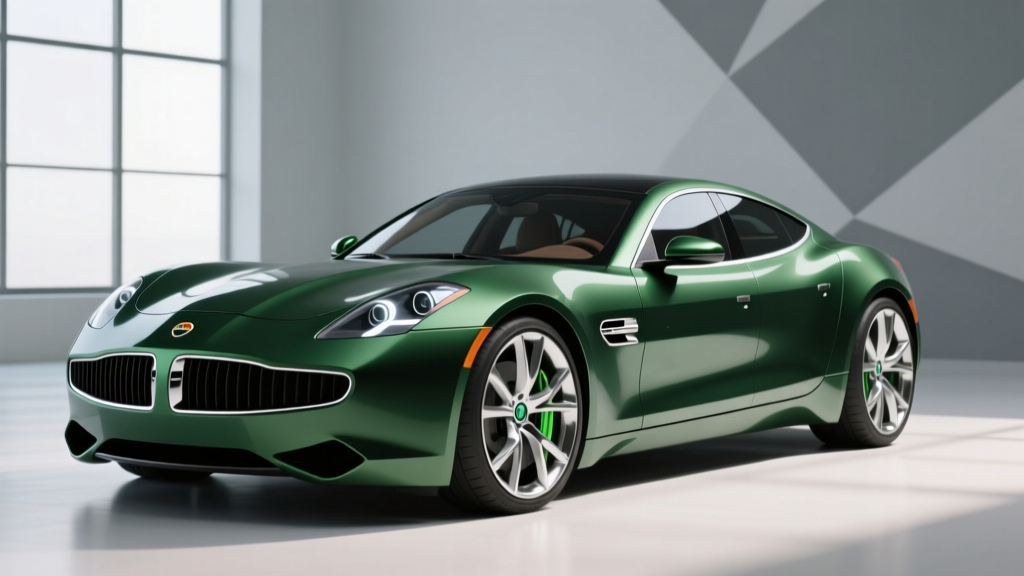
The 2012 Fisker Karma was one of the first extended-range electric vehicles (EREVs) to reach U.S. showrooms — a plug-in luxury sedan that predated the BMW i3 REx and Chevrolet Volt in concept, if not in sales volume. Fisker Automotive collapsed in 2013, and the Karma was later revived under the Karma Automotive brand as the Revero. But for buyers researching 2012 Fisker Karma specs today, the question is practical: what does owning a 14-year-old, low-volume plug-in hybrid actually look like in 2026?
This is a collector-grade EREV with a 32-mile EPA electric range, a 20.1 kWh lithium-ion battery, and a turbocharged GM Ecotec range extender. It delivers 403 horsepower and head-turning design. It also carries real ownership risks: limited parts availability, no federal tax credit on the used market under current §30D rules for a 2012 model, and a battery that has degraded meaningfully over more than a decade.
2012 Fisker Karma Spec Table
| Spec | 2012 Fisker Karma |
|---|---|
| Vehicle Type | Extended-Range EV (EREV / PHEV) |
| EPA EV Range | 32 miles (electric only) |
| Total Range (EV + Gas) | ~230 miles (EPA combined) |
| Battery Capacity | 20.1 kWh (usable ~18 kWh), NMC lithium-ion |
| Battery Supplier | A123 Systems (prismatic NMC cells) |
| Drivetrain | RWD — dual rear-mounted electric motors (no mechanical link to engine) |
| Combined Horsepower | 403 HP (300 kW) |
| Combined Torque | 959 lb-ft (wheel torque via reduction gears) |
| 0–60 mph | 5.8 seconds (Sport mode, full charge) |
| Top Speed | 125 mph (electronically limited) |
| Range Extender Engine | 2.0L turbocharged GM Ecotec I-4, 260 HP (generator only) |
| Fuel Tank | 9.5 gallons (premium required) |
| EPA MPGe (EV mode) | 54 MPGe combined |
| EPA MPG (charge-sustaining) | 20 MPG combined |
| DC Fast Charging | Not supported (no DC fast-charge port) |
| Level 2 Charging | 3.3 kW (J1772), ~6 hours 0–100% |
| Level 1 Charging | 1.4 kW (120V), ~14 hours 0–100% |
| Cargo Volume | 7.0 cu ft (trunk); no frunk |
| Rear Legroom | 29.6 inches (very tight) |
| Curb Weight | 5,300 lbs |
| Original MSRP (2012) | $96,850 (base) – $110,000+ (EcoSport/EcoChic) |
| Used Price (2026 est.) | $18,000 – $32,000 depending on condition/mileage |
| Original Battery Warranty | 5 yr / 50,000 mi (expired) |
Sources: EPA fueleconomy.gov, Fisker Automotive original press specifications.
Real-World Range: What the EPA Number Doesn't Tell You
EPA EV Range: 32 miles
Real-World Expectation (2026, 14-year-old battery): 18–26 miles on a full charge, depending on battery degradation, temperature, and driving style.
Highway at 70 mph: Expect 16–22 electric miles before the range extender engages.
Cold Weather (below 40°F): 14–20 electric miles; the NMC cells lose 20–30% capacity in freezing temps, and cabin heat draws heavily from the pack.
The Karma's 32-mile EPA rating was modest even in 2012. By 2026, the original A123 Systems NMC battery has undergone at least a decade of calendar degradation. Expect 15–30% capacity loss depending on climate history and charge habits. Owners in hot climates (Arizona, Texas) tend to see worse degradation than those in temperate coastal areas.
The Karma operates as a series hybrid: the gasoline engine never drives the wheels directly. It spins a generator to produce electricity that feeds the rear-mounted dual motors. This means driving feel remains electric at all times — smooth, linear torque delivery — but fuel economy once the battery depletes is poor at 20 MPG combined, because you're pushing a 5,300-lb sedan through an energy conversion chain (gas → generator → motor → wheels).
For context, a 2026 Toyota Prius Prime delivers 44 miles of electric range on a 13.6 kWh pack and achieves 48 MPG in hybrid mode. The Karma was never designed for efficiency — it was designed to be a statement.
Charging Speed: Level 2 Only, No Fast Charging
| Charge Level | Power (kW) | Connector | 0–100% Time | Miles of EV Range/Hour |
|---|---|---|---|---|
| Level 1 (120V) | 1.4 kW | NEMA 5-15 | ~14 hours | ~2.5 mi/hr |
| Level 2 (240V) | 3.3 kW | J1772 | ~6 hours | ~5.5 mi/hr |
| DC Fast Charge | N/A | Not equipped | N/A | N/A |
This is the Karma's most significant practical limitation for modern ownership. There is no DC fast-charging capability. The onboard charger maxes out at 3.3 kW on Level 2, which was acceptable in 2012 when public charging infrastructure was sparse and expectations were lower. In 2026, when even budget EVs charge at 100–150 kW DC and premium models hit 250–350 kW, the Karma's 3.3 kW ceiling means you are exclusively a home-and-destination charger.
On a 240V Level 2 home charger (the most common residential setup), a full charge takes roughly six hours. That's fine for overnight replenishment — plug in when you get home, wake up to a full 32-mile EV buffer. But it means you cannot meaningfully top up during a quick stop. And since the battery is small (20.1 kWh), the total energy cost per full charge is low: roughly $2.40–$3.60 at the national average residential rate of $0.12–$0.18/kWh.
The J1772 connector is the legacy Level 2 standard. Most 2026 public Level 2 stations still carry J1772 plugs, so destination charging (hotels, workplaces, shopping centers) is compatible. But you will never use a Tesla Supercharger, Electrify America, or any CCS/NACS DC fast charger with this vehicle.
Performance: 403 HP, Series-Hybrid Architecture
The Karma's powertrain is unconventional and worth understanding before you buy:
- Two rear-mounted electric motors produce a combined 403 HP and 959 lb-ft of wheel torque (measured after the reduction gears, not at the motor shaft — this figure is often misquoted).
- The 2.0L turbo Ecotec engine (borrowed from the GM Epsilon platform) acts solely as a generator. It never mechanically drives the wheels.
- Sport Mode runs the engine continuously to maintain battery charge and deliver maximum power — 0–60 mph in 5.8 seconds.
- Stealth Mode runs purely on battery electric power — 0–60 mph in roughly 7.5 seconds, with the engine staying off until the pack depletes.
The driving experience is genuinely compelling when the system works. Instant electric torque from a standstill, no transmission shifts, and a low center of gravity (the battery pack runs longitudinally through the center tunnel) make the Karma feel planted and responsive. The steering is heavy and communicative by 2012 standards.
The trade-off: at 5,300 lbs, the Karma is heavy, and that mass is noticeable under braking and through tight corners. The regenerative braking system is relatively mild — there is no true one-pedal driving mode. You will use the friction brakes frequently, and replacement rotors and pads for the Karma-specific brake system can be expensive and slow to source.
Interior, Cargo, and Technology
The 2012 Karma's interior is where the car's 2012 origins show most clearly:
- Infotainment: A 10.2-inch touchscreen (large for 2012) with basic navigation, Bluetooth, and a USB port. No Apple CarPlay, no Android Auto, no over-the-air updates. The touch interface is resistive and sluggish by modern standards.
- Instrument Cluster: A hybrid analog/digital display showing battery state of charge, power flow, and range. Functional but dated.
- Driver Assistance: None. No adaptive cruise, no lane-keeping, no automatic emergency braking, no blind-spot monitoring. This is a pre-ADAS vehicle.
- Solar Roof Panel: A distinctive feature — a photovoltaic panel integrated into the glass roof that trickle-charges the 12V auxiliary battery and powers cabin ventilation when parked. It does not meaningfully contribute to the traction battery.
Cargo space is severely limited: 7.0 cubic feet of trunk volume, compromised by the battery pack and rear motor placement. The trunk opening is narrow and shallow. Fitting two carry-on bags is tight; a full set of golf clubs is a challenge. There is no front trunk (frunk) — the engine/generator assembly occupies that space.
Rear seats are essentially decorative for adult passengers. With 29.6 inches of rear legroom, the Karma is a strict two-adult-plus-occasional-child vehicle. The high center tunnel (housing the battery) makes the rear middle seat unusable. Most owners treat the rear as additional storage.
Pricing, Tax Credits, and Total Ownership Cost
| Cost Item | Amount |
|---|---|
| Used Price Range (2026) | $18,000 – $32,000 |
| Federal §30D Tax Credit | Not eligible (vehicle MSRP when new exceeded caps; battery sourcing does not meet 2026 critical-mineral requirements) |
| Used EV Credit (§25E) | Not eligible — the §25E credit ($4,000 or 30% up to $4,000) applies only to used EVs and PHEVs with a sale price ≤$25,000; most Karma listings exceed this, and the vehicle's battery sourcing likely fails current requirements |
| Insurance (annual est.) | $1,800 – $2,800 (specialty/collector policies may be lower) |
| Annual Maintenance Reserve | $2,000 – $4,000 (suspension, brakes, electrical gremlins) |
| Battery Replacement (if needed) | $8,000 – $15,000 (refurbished/remanufactured pack; new OEM packs no longer produced) |
The 2012 Karma's original MSRP was $96,850 for the base EcoStandard trim, climbing past $110,000 for the EcoSport and EcoChic trims (which featured hand-stitched leather and reclaimed wood interior accents). Depreciation has been severe: most 2026 listings sit between $18,000 and $32,000, with low-mileage, well-documented examples occasionally reaching $38,000 among collectors.
Tax credit reality: Under current IRS §30D rules, the Karma does not qualify for the new clean vehicle credit (it is not a new vehicle). Under the §25E previously-owned clean vehicle credit, a used PHEV can qualify for up to $4,000 (30% of sale price, capped at $4,000) — but only if the sale price is $25,000 or less, the buyer meets income caps ($75,000 single / $150,000 joint), and the vehicle's battery meets current critical-mineral and component sourcing requirements. The Karma's A123 Systems battery, sourced predominantly from non-FTA-country supply chains in 2012, almost certainly fails the sourcing test. Consult a tax professional before assuming eligibility.
Pros and Cons: Honest Assessment
✓ Pros
- Stunning design by Henrik Fisker — still turns heads in 2026
- Genuine EV driving feel (series hybrid — always electric at the wheels)
- 403 HP provides strong acceleration when battery is charged
- Solar roof is a unique conversation piece
- Low used price vs. original MSRP (entry-level collector PHEV)
- Can drive indefinitely on gasoline if battery is depleted
✗ Cons
- No DC fast charging — Level 2 at 3.3 kW only
- Real-world EV range degraded to 18–26 miles (from 32 EPA)
- 20 MPG on gasoline — poor for a PHEV in charge-sustaining mode
- Extremely tight rear seats (29.6" legroom) and tiny 7.0 cu ft trunk
- Fisker Automotive defunct — parts sourcing is difficult and slow
- No modern driver-assistance features (ADAS)
- Original battery warranty expired; replacement costs $8,000–$15,000
- Dated infotainment with no smartphone integration
- Known recalls: battery coolant leak (fire risk), faulty hose clamp
Who Should Buy the 2012 Fisker Karma?
- You're a collector or enthusiast who values design provenance (Henrik Fisker also designed the Aston Martin DB9 and BMW Z8)
- You want a garage-kept weekend car with genuine EV capability for short errands
- You can perform or afford specialist maintenance and are comfortable with parts lead times
- You understand this is a 14-year-old, low-production vehicle from a defunct manufacturer
- You need a daily commuter — a 2026 Toyota Prius Prime ($33,000 new, 44-mi EV range, 48 MPG, full warranty) is vastly more practical
- You rely on public DC fast charging for road trips
- You need rear-seat passenger space or cargo capacity
- You want modern safety tech (AEB, lane-keeping, blind-spot monitoring)
- You're counting on a federal tax credit to offset cost
Frequently Asked Questions
What is the real-world electric range of a 2012 Fisker Karma in 2026?
Expect 18–26 miles of electric-only driving on a full charge, down from the original 32-mile EPA estimate. Actual range depends on battery degradation (15–30% loss over 14 years), ambient temperature, and driving style. Highway driving at 70 mph and cold weather below 40°F will push range toward the lower end of that band.
How fast does the 2012 Karma charge?
The Karma charges at a maximum of 3.3 kW on Level 2 (240V, J1772 connector), taking approximately 6 hours for a full 0–100% charge. On a standard 120V outlet (Level 1), it charges at 1.4 kW and takes about 14 hours. There is no DC fast-charging capability — the vehicle was not equipped with a DC fast-charge port.
Does the 2012 Fisker Karma qualify for any federal EV tax credit?
Not under current rules. The §30D new-vehicle credit does not apply (it's a used vehicle). The §25E used-EV credit requires a sale price of $25,000 or less, buyer income within caps, and battery sourcing that meets 2026 critical-mineral requirements — the Karma's A123 Systems NMC battery almost certainly fails the sourcing test. Always verify with a tax professional and the IRS §25E guidance page.
Is the 2012 Karma worth buying vs. a modern PHEV?
As a daily driver, no. A 2026 Prius Prime, Chrysler Pacifica PHEV, or Hyundai Tucson PHEV offers more EV range, better fuel economy, full warranties, modern safety tech, and dealer support at comparable or lower total cost. As a collector vehicle or weekend car, the Karma has unique appeal — its design, series-hybrid architecture, and place in EV history give it enthusiast value that modern PHEVs lack.
What are the biggest ownership risks?
Parts availability is the primary concern. Fisker Automotive went bankrupt in 2013, and while Karma Automotive (the successor company) has supported some parts flow, many components — body panels, Karma-specific suspension parts, the A123 battery modules, and the custom HVAC system — have long lead times or require aftermarket fabrication. The original NHTSA recalls included a battery coolant leak that posed a fire risk; verify any used example has had recall work completed. Budget $2,000–$4,000 annually for maintenance and set aside $8,000–$15,000 for a potential battery refurbishment.
Can I still get the 2012 Karma serviced?
Independent shops familiar with GM Ecotec engines can handle the range-extender side. The electric powertrain and Karma-specific electronics require specialists — a small network of former Fisker technicians and EV-specialty shops across the U.S. can service these cars, but availability is regional and turnaround times can be long. Before purchasing, identify a qualified shop within 50 miles of your location.