The 2012 Fisker Karma: An Electrified Icon Revisited
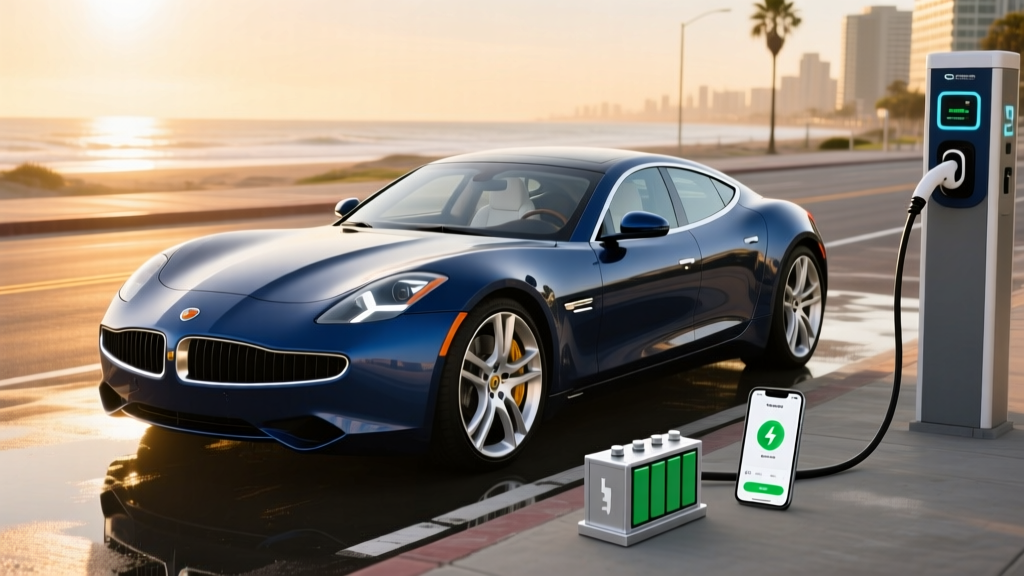
The 2012 Fisker Karma occupies a strange place in electric-vehicle history. Designed by Henrik Fisker — the mind behind the BMW Z8 and Aston Martin DB9 — it was one of the first extended-range electric vehicles (EREVs) sold in the United States, predating the BMW i3 REx and the Chevrolet Volt's mainstream success. With its dramatic coach-built proportions, solar-panel roof, and eco-conscious interior materials, the Karma promised a new paradigm for luxury electrification.
But Fisker Automotive filed for bankruptcy in 2013, A123 Systems (the battery supplier) collapsed before it, and the Karma's production run ended after roughly 2,400 units were built. Today, the 2012 Fisker Karma exists exclusively on the used market — and prospective buyers need to understand exactly what they're getting into with this discontinued EREV. This review breaks down the real specs, the ownership realities, and whether this aging plug-in hybrid is a collector curiosity or a viable daily driver in 2026.
Spec Sheet: 2012 Fisker Karma at a Glance
| Specification | Value |
|---|---|
| Powertrain Type | Extended-Range EV (EREV) — Series Hybrid |
| Electric Motors | Twin rear-mounted motors (RWD) |
| Total System Output | 403 hp / 960 lb-ft torque (in Sport mode) |
| 0–60 mph | 5.8 seconds (Sport) / 7.9 seconds (Stealth/EV mode) |
| Top Speed | 125 mph (Sport) / 95 mph (Stealth) |
| Battery Capacity | 20.1 kWh gross (~18.0 kWh usable), NMC lithium-ion |
| EPA EV Range | 32 miles (electric only) |
| EPA Combined (gas) | 20 MPG (gasoline engine running) |
| EPA MPGe (electric) | 54 MPGe |
| Gas Tank | 9.5 gallons |
| Total Range (EV + Gas) | ~230 miles combined |
| DC Fast Charging | Not supported |
| Level 2 Charging | 3.3 kW onboard charger |
| Level 1 Charging | 120V / ~1.4 kW |
| Curb Weight | 5,300 lbs |
| Length / Width / Height | 196.7" / 78.1" / 52.4" |
| Original MSRP | $96,850 – $110,000+ (depending on trim/paint) |
| Used Market Price (2026) | $25,000 – $45,000 depending on condition/mileage |
| Warranty (original) | 4 yr/50,000 mi basic; 5 yr/60,000 mi battery (now expired) |
Electric Range & Real-World Efficiency
Real-world expectation: Expect 22–28 miles of pure electric driving in mixed conditions. Highway driving at 70+ mph reduces this to roughly 18–22 miles. In cold weather (below 40°F), battery capacity drops and cabin heating demands further erode range — plan for 15–20 miles of EV range in winter. The gasoline 2.0L turbo engine (a GM Ecotec unit producing 260 hp) acts as a generator to extend total range to approximately 230 miles.
The Karma's 20.1 kWh A123 Systems battery pack uses NMC (nickel-manganese-cobalt) chemistry — standard for the era but notably less energy-dense than modern cells. Of that 20.1 kWh, only about 18 kWh is usable; the rest is a buffer to protect cell longevity. When the battery depletes to its minimum state of charge, the onboard 2.0L turbocharged four-cylinder generator kicks in, producing electricity to feed the twin rear motors. This is a true series-hybrid architecture — the gas engine never mechanically drives the wheels.
The EPA rated the Karma at 54 MPGe in electric mode and 20 MPG combined when running on gasoline. That 20 MPG figure reflects the Karma's 5,300-pound curb weight and the inherent inefficiency of converting gasoline → electricity → motion. For comparison, the 2012 Chevrolet Volt achieved 35 EV miles and 37 MPG in extended-range mode — substantially better efficiency from a lighter, less powerful vehicle.
According to fueleconomy.gov, the Karma consumes approximately 62 kWh per 100 miles in electric mode — a high figure by modern standards, where efficient EVs achieve 25–30 kWh/100mi.
Charging: Home Only, No DC Fast Charge
The 2012 Fisker Karma's charging story is its most significant limitation by 2026 standards. The vehicle was designed before DC fast-charging infrastructure existed at scale, and Fisker did not equip the Karma with any DC fast-charge capability. All charging is AC-only.
| Charging Level | Power | Time (0–100%) | Miles of EV Range per Hour |
|---|---|---|---|
| Level 1 (120V household) | ~1.4 kW | ~14 hours | ~5 miles/hr |
| Level 2 (240V, 16A) | 3.3 kW | ~6 hours | ~10 miles/hr |
| DC Fast Charge | Not supported — no DC inlet | ||
The Karma uses a standard J1772 connector for AC charging. The 3.3 kW onboard charger is the bottleneck — even if you plug into a 48-amp Level 2 station capable of delivering 11.5 kW, the Karma will only accept 3.3 kW. This means a full charge from empty takes roughly six hours on Level 2.
For owners with a short commute (under 25 miles round-trip) and reliable home Level 2 charging, this is manageable — plug in overnight, wake up with a full battery. But road-trip charging is impractical: there is no way to add meaningful electric range at a public DC fast-charger. You'll rely entirely on the gasoline generator for highway travel, burning fuel at roughly 20 MPG.
Home charging setup note: Because the Karma only draws 3.3 kW, a basic 240V/20A circuit with a Level 2 EVSE (such as a ChargePoint Home Flex set to 16A) is sufficient. Installation costs typically range from $500–$1,500 if your electrical panel has capacity, or $2,000–$4,000+ if a panel upgrade is needed. Consult a licensed electrician for your specific situation.
Performance & Driving Dynamics
Despite its weight, the Karma delivers genuine performance when you need it. In Sport mode, both rear electric motors combine for 403 horsepower and a claimed 960 lb-ft of torque at the wheels (a figure that reflects torque multiplication through the final drive, not motor output directly). The result is a 0–60 mph time of 5.8 seconds — respectable for a luxury sedan of this era, and the instant electric torque delivery makes it feel quicker than the number suggests.
In Stealth mode (pure electric), output drops to approximately 201 hp, and the 0–60 time stretches to 7.9 seconds. Top speed is electronically limited to 95 mph in Stealth and 125 mph in Sport.
The driving experience is defined by the Karma's mass. At 5,300 pounds, weight transfer is noticeable under hard braking and through corners. The double-wishbone front suspension and multi-link rear do their best, but this is a grand-touring cruiser, not a sports sedan. Steering feel is communicative but heavy, and the regenerative braking — while adjustable — doesn't offer true one-pedal driving as modern EVs do.
One quirk owners should understand: the gasoline generator's engagement is audible and sometimes abrupt. When the battery depletes on the highway, the 2.0L turbo spools up at a fixed RPM to generate electricity. The drone is noticeable in the cabin, particularly at low speeds or when stopped.
Interior, Cargo & Practicality
The Karma's interior is where its design ambition is most evident — and where practicality suffers most. The cabin seats four (not five) in individually sculpted bucket seats. The center console runs the full length of the interior, dividing front and rear passengers into separate cocoons.
Key interior dimensions:
- Front legroom: 42.3 inches
- Rear legroom: 29.6 inches (tight for adults over 5'10")
- Trunk cargo volume: 6.9 cubic feet (severely limited by battery placement)
- No front trunk (frunk) — the engine bay houses the gasoline generator
The 6.9 cu-ft trunk is the Karma's most glaring practicality failure. The T-shaped battery pack intrudes into what would normally be cargo space, leaving a shallow, narrow trunk that struggles to fit two carry-on suitcases. This is a vehicle for two people and a weekend bag, not family road trips.
The eco-conscious interior materials were innovative for 2012: reclaimed wood trim, recycled glass-infused paint, and optional "EcoStandard" leather alternatives. However, build quality was inconsistent — panel gaps varied, and early-production cars suffered from electrical gremlins in the infotainment system.
The infotainment system uses a 10.2-inch touchscreen (large for 2012) but runs proprietary Fisker software with no modern smartphone integration — no Apple CarPlay, no Android Auto, no over-the-air updates. Bluetooth audio streaming works, but navigation maps are outdated and cannot be updated easily given Fisker's bankruptcy.
The solar-panel roof is a signature feature. It does provide trickle charging to the 12V auxiliary battery and can power cabin ventilation while parked, but it contributes negligibly to the traction battery — don't expect meaningful range from it.
Used Pricing & Tax Credit Reality
The 2012 Fisker Karma originally carried an MSRP between $96,850 and $110,000+ depending on paint and options. Fisker's collapse devastated residual values, and used prices have fluctuated between bargain and collector territory.
| Condition | Typical Price Range (2026) | Notes |
|---|---|---|
| High-mileage / project car | $18,000 – $25,000 | May need battery service, cosmetic work |
| Good condition, 40k–70k miles | $25,000 – $35,000 | Most common market segment |
| Excellent / low-mileage collector | $35,000 – $50,000+ | Under 20k miles, documented history |
Federal tax credit status: The 2012 Fisker Karma does not qualify for the current §30D new EV tax credit (it's a used vehicle). Under the IRS Used Clean Vehicle Credit (also known as §25E), buyers may be eligible for up to $4,000 or 30% of the sale price (whichever is less) — but with critical caveats:
- The vehicle must be purchased from a licensed dealer (not a private party)
- The sale price must be $25,000 or less to qualify
- Buyer income caps apply: $75,000 single / $112,500 head of household / $150,000 married filing jointly (modified AGI)
- The credit can only be claimed once per vehicle (check if a prior owner already claimed it)
- The vehicle must be at least two model years old (the 2012 Karma qualifies)
In practice, this means a Karma selling for $24,500 from a dealer could yield a $4,000 credit for an income-eligible buyer — bringing effective cost to $20,500. But most Karmas on the market exceed the $25,000 price cap, disqualifying them entirely. Always verify current IRS rules and consult a tax professional before relying on credit eligibility.
Ownership Considerations: Battery, Parts & Reliability
Buying a 2012 Fisker Karma in 2026 means accepting significant ownership risks that don't apply to current-production EVs.
Battery degradation and replacement: The A123 Systems NMC battery pack is now 13–14 years old. NMC chemistry from this era typically exhibits 15–30% capacity loss over this timeframe, depending on usage and climate exposure. Some owners report EV ranges of 20–25 miles on a full charge — down from the original 32. Battery replacement is theoretically possible but extremely challenging: A123 Systems went bankrupt, and compatible replacement packs are not readily available through standard channels. Some specialist shops have performed cell-level refurbishments, but costs typically run $8,000–$15,000+ with no guarantee of long-term availability.
Parts and service: Fisker Automotive's bankruptcy means no dealer network, no warranty support, and limited OEM parts supply. The 2.0L GM Ecotec turbo engine is serviceable (it's shared with other GM vehicles), but Fisker-specific components — body panels, interior trim, proprietary electronics, the rear electric motors — are scarce. Online owner communities and specialist shops (primarily in California and Florida) are the main support ecosystem.
Known issues to watch for:
- 12V battery drain (the Karma's electronics can drain the auxiliary battery if left unplugged)
- Coolant pump failures affecting battery thermal management
- Infotainment system freezes and reboots
- Recall for battery-pack mounting bolts (verify recall completion — NHTSA recall 12V-248)
- Hurricane Sandy saltwater-damage vehicles: approximately 1,000 Karmas were flooded at Port Newark in 2012. Some were subsequently sold at auction. Check the vehicle's history carefully — saltwater corrosion in high-voltage components is a serious safety concern.
The NHTSA page for the 2012 Fisker Karma lists open recalls and safety investigations — verify all have been addressed before purchase.
Pros, Cons & Verdict
Pros
- Stunning design — still turns heads in 2026
- 403 hp Sport mode performance
- Series-hybrid EREV eliminates pure range anxiety
- Eco-conscious materials ahead of their time
- Solar roof is a unique conversation piece
- Used prices well below original MSRP
Cons
- No DC fast charging — ever
- Only 32 miles EPA EV range (22–28 real-world)
- Tiny 6.9 cu-ft trunk, 4-seat layout
- Bankrupt manufacturer — no dealer support
- Aging battery with expensive/uncertain replacement
- Outdated infotainment, no smartphone integration
- 20 MPG on gas is poor for an "eco" vehicle
- Potential Sandy-flood vehicles in circulation
Verdict: The 2012 Fisker Karma is not a rational daily-driver purchase in 2026. It is, however, a compelling collector vehicle for enthusiasts who appreciate its design significance and can accept the practical compromises. If you have a short commute, reliable home charging, a second vehicle for longer trips, and access to a specialist mechanic — the Karma can be a rewarding weekend car or design statement. If you need practicality, modern tech, fast charging, or worry-free reliability, look elsewhere.
Frequently Asked Questions
What is the real-world electric range of the 2012 Fisker Karma?
The EPA rates it at 32 miles, but real-world driving typically yields 22–28 miles in mixed conditions. Highway driving and cold weather can reduce this to 15–20 miles. After 13+ years of battery aging, many examples deliver even less.
Can the Fisker Karma use DC fast chargers?
No. The Karma has no DC fast-charge inlet or capability. All charging is AC-only via J1772, at a maximum of 3.3 kW on Level 2. A full charge takes approximately six hours.
How much does a 2012 Fisker Karma cost in 2026?
Used prices range from roughly $18,000 for project-condition examples to $50,000+ for low-mileage collector specimens. Most well-maintained examples trade between $25,000 and $35,000.
Does the 2012 Fisker Karma qualify for any federal tax credit?
It may qualify for the IRS §25E Used Clean Vehicle Credit (up to $4,000) if purchased from a dealer for $25,000 or less and the buyer meets income caps. Most Karmas exceed the $25,000 price threshold, disqualifying them. Verify current IRS rules and consult a tax professional.
Is the 2012 Fisker Karma worth buying vs. a modern EV or PHEV?
As a daily driver, no. A used Chevrolet Volt, BMW i3 REx, or a new Toyota Prius Prime offers far better efficiency, reliability, and practicality for less money. The Karma makes sense only as a design-focused collector vehicle for someone who understands and accepts the ownership risks.
What happens if the Karma's high-voltage battery fails?
The car becomes inoperable — the gas engine is a generator that requires the HV battery to function. Replacement is expensive ($8,000–$15,000+) and parts availability is uncertain due to A123 Systems' bankruptcy. Factor this risk into any purchase decision.