The 2012 Fisker Karma EcoSport: A Cautionary EV Pioneer
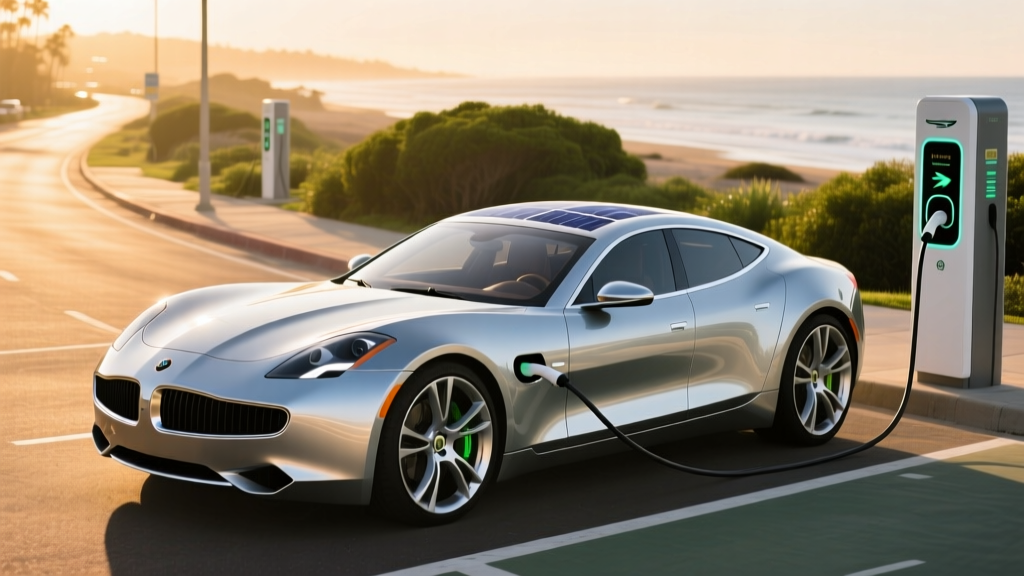
The 2012 Fisker Karma EcoSport occupies a strange place in electrified-vehicle history. Marketed as a luxury extended-range electric vehicle (EREV), it paired a 20 kWh lithium-ion traction battery with a 2.0-liter turbocharged GM Ecotec generator to deliver what Fisker claimed was 32 miles of pure-electric driving before the gasoline engine kicked in. Henrik Fisker's design was genuinely stunning — a low-slung, four-door sedan with corrugated roof panels and a solar panel integrated into the glass roof. But beneath the coachbuilt beauty lay a troubled powertrain, a bankrupt supplier (A123 Systems), and a company that would file for bankruptcy in 2013.
If you're researching the 2012 Fisker Karma EcoSport in 2026, you're almost certainly looking at the used market. This review covers the real-world ownership picture: what the battery actually delivers after more than a decade of degradation, what charging looks like, whether parts are still obtainable, and whether this car is a collector's curiosity or a daily-driver gamble.
| Specification | Value |
|---|---|
| Powertrain Type | Extended-Range EV (EREV / Series PHEV) |
| Battery Capacity (Usable) | ~20 kWh (gross ~22.3 kWh), Lithium-Ion (NMC) |
| EPA Electric-Only Range | 32 miles |
| EPA Combined (Charge-Sustaining) | 20 MPG |
| MPGe (Electric Mode) | 54 MPGe |
| Total System Output | 403 HP / 960 lb-ft torque (electric motors) |
| 0-60 mph | 5.8 seconds (Sport mode, combined) |
| Drivetrain | Rear-wheel drive (twin rear electric motors) |
| DC Fast Charging | None (no DC fast-charge capability) |
| Level 2 Charge Rate | 3.3 kW (SAE J1772) |
| Level 2 Full Charge Time | ~6 hours (0-100%) |
| Length / Width / Height | 196.7" / 78.1" / 52.4" |
| Cargo Volume (Trunk) | 6.9 cu ft |
| Rear Legroom | 29.6 inches |
| Curb Weight | 5,300 lbs |
| Original Base MSRP | $102,000 (EcoStandard); ~$109,850 (EcoSport) |
| Used Price Range (2026) | $18,000 – $45,000 (condition/battery dependent) |
| Battery Warranty (Original) | 5 years / 60,000 miles (expired) |
Electric Range and Real-World Efficiency
The EPA rated the Karma at 32 miles of all-electric range when new. That figure assumed a fully charged 20 kWh usable battery, moderate temperatures, and mixed driving. The Karma uses a series-hybrid architecture: the two rear-mounted electric motors (each producing roughly 201 HP) drive the wheels at all times. The 2.0L turbo four-cylinder never connects to the drivetrain mechanically — it acts solely as a generator to recharge the battery once the state of charge drops to a buffer threshold (roughly 15-20% SoC).
EPA sticker: 32 miles electric-only. Expect 18-25 miles from a 2012 Karma in 2026, depending on battery state of health (SoH). Most surviving examples show 30-50% capacity degradation after 12+ years. Cold weather (below 40°F) further reduces range by 15-25%. In charge-sustaining (gas generator) mode, expect 18-20 MPG combined — the Karma's 5,300-lb curb weight and wide 255-section tires work against efficiency. Highway driving at 70+ mph drops electric range to approximately 15-20 miles even with a healthy battery.
The Karma's efficiency in electric mode was rated at 54 MPGe (combined) by the EPA on fueleconomy.gov. In charge-sustaining mode — once the generator kicks in — the Karma returns a dismal 20 MPG combined. That's worse than many conventional V6 sedans of the era, a consequence of the heavy battery pack, generator conversion losses, and the car's substantial mass.
Owners report that the transition from EV mode to generator mode is not seamless. The Ecotec four-cylinder is audible and coarse under load, a jarring contrast to the silent electric driving experience. The "Sport" mode engages the generator proactively for maximum combined output (403 HP), but fuel consumption spikes accordingly.
Charging: Slow by Any Standard
The 2012 Karma EcoSport was designed before DC fast charging became mainstream, and it shows. The car has no DC fast-charge capability whatsoever. There is no CCS port, no CHAdeMO, no Tesla NACS connector. Charging is limited to:
| Charging Level | Power (kW) | Connector | 0-100% Time | Miles of Range Added/Hour |
|---|---|---|---|---|
| Level 1 (120V household) | ~1.4 kW | SAE J1772 | ~14-16 hours | ~4-5 miles/hr |
| Level 2 (240V, 16A) | 3.3 kW | SAE J1772 | ~6 hours | ~10-12 miles/hr |
| DC Fast Charge | N/A | Not supported | N/A | N/A |
The onboard charger maxes out at 3.3 kW, meaning even if you plug into a 7.2 kW or 11.5 kW Level 2 station, the Karma will only draw 3.3 kW. A full charge from empty takes roughly 6 hours on Level 2 — adequate for overnight charging at home, but impractical for any mid-day top-up. On a standard 120V household outlet, expect 14-16 hours for a full charge.
For context, a 2026 Chevrolet Equinox EV charges at up to 190 kW DC and can add 70 miles of range in 10 minutes. The Karma's charging architecture is a full generation behind — something to internalize if you plan to drive it beyond your daily commute radius.
The A123 Battery Problem: Degradation and Replacement
The Karma's single biggest ownership risk is its battery pack. Fisker sourced the 22.3 kWh (gross) lithium-ion pack from A123 Systems, which used an NMC (nickel-manganese-cobalt) chemistry. A123 filed for bankruptcy in October 2012, triggering massive recalls and leaving early Karma owners stranded. The original battery warranty was 5 years/60,000 miles — long expired for every 2012 example on the road today.
Battery degradation is the central question for any used Karma purchase. Expect 30-50% capacity loss on original packs, meaning a car that once delivered 32 electric miles may now manage only 16-22. A pre-purchase battery diagnostic is non-negotiable. Some owners have pursued aftermarket battery refurbishment or cell replacement through independent EV shops, with costs ranging from $5,000 to $12,000 depending on the extent of work and cell sourcing. A full OEM-equivalent replacement pack, when available, has historically cost $8,000-$15,000.
There is no active manufacturer support network for Karma battery service. Fisker Automotive ceased operations in 2013. The Fisker brand name was later acquired by Henrik Fisker for Fisker Inc. (the Ocean SUV company), which itself filed for bankruptcy in 2024. Parts availability relies on salvage yards, enthusiast forums (FiskerBuzz, FiskerOwnersClub), and a small ecosystem of independent specialists.
Performance and Driving Dynamics
When the battery is healthy and Sport mode is engaged, the Karma delivers genuine performance. The twin rear electric motors produce a combined 403 HP and a massive 960 lb-ft of torque (available from 0 RPM). The 0-60 mph sprint takes approximately 5.8 seconds, and the instant torque delivery makes the car feel quicker than the number suggests in city driving.
The Karma is rear-wheel drive only — there is no AWD or dual-motor front axle. The car's 5,300-lb curb weight is evident in corners; this is a grand tourer, not a sports sedan. The steering is heavy and somewhat numb, and the regenerative braking feel is inconsistent by modern standards. Ride quality is firm but compliant, and the cabin isolation is excellent when running on battery power alone.
The EcoSport trim (the mid-level option above EcoStandard and below EcoChic) added specific wheel designs, a premium audio system, and sustainable interior materials including recycled wood trim and "Diamond Dust" eco-suede. The interior design was distinctive but not without quirks: the center stack featured a small touchscreen, haptic-touch climate controls that were difficult to use while driving, and a digital instrument cluster that has not aged gracefully in terms of resolution.
Cargo, Space, and Practicality
The Karma's proportions are dramatic, but interior packaging is compromised by the battery tunnel running through the center of the car. The consequences:
- Trunk: 6.9 cubic feet — barely enough for two carry-on bags. The trunk is shallow and wide, with the battery pack encroaching on the space behind the rear axle.
- Rear seats: 29.6 inches of legroom — tight for adults on anything beyond short trips. The battery tunnel eliminates any possibility of a middle rear seat; the Karma is strictly a four-seater.
- Front seats: Generously proportioned with adequate headroom despite the low roofline. The EcoSport's eco-suede and recycled-material upholstery has held up reasonably well in survivor examples.
- No frunk: The front compartment houses the 2.0L generator engine, inverter, and 12V systems. There is no front trunk.
This is not a family car. It's a two-person luxury express with occasional rear-seat capability for children or short-distance adult passengers.
Pricing, Tax Credits, and 2026 Ownership Costs
The 2012 Fisker Karma EcoSport carried an original MSRP of approximately $109,850 (destination included). Today, used examples trade in a wide range depending on condition, mileage, and critically, battery health:
| Condition | Price Range | Notes |
|---|---|---|
| Project / Non-Running | $8,000 – $15,000 | Dead battery, needs significant work |
| Fair (Degraded Battery) | $18,000 – $28,000 | Runs, 15-20 mi EV range, cosmetic wear |
| Good (Healthy Battery) | $30,000 – $45,000 | 25+ mi EV range, documented service, clean title |
| Collector / Low-Mileage | $45,000 – $65,000+ | Sub-20k miles, battery refurbished, concours condition |
Federal Tax Credit Eligibility
The 2012 Fisker Karma does not qualify for the §30D federal EV tax credit as a new vehicle purchase — it hasn't been sold new since 2012. For used-EV buyers, the IRS Previously-Owned Clean Vehicles Credit (up to $4,000 or 30% of sale price, whichever is less) has specific requirements:
- The vehicle must be purchased from a licensed dealer (not private party)
- Sale price must be $25,000 or less
- Buyer income caps: $75,000 single / $150,000 married filing jointly
- The vehicle must be at least two model years old (2012 qualifies)
- The vehicle must have a battery capacity of at least 7 kWh (Karma qualifies at 20 kWh)
In practice, finding a Karma with a healthy battery at or below the $25,000 dealer-sale threshold is challenging. Most well-maintained examples sell above that price. If you do find one under $25,000 from a dealer, you could claim up to $4,000 (30% of sale price). Consult a tax professional and verify eligibility on irs.gov before relying on this credit.
Insurance and Maintenance
Insurance for a Karma is difficult to place. Many mainstream insurers will not write policies for discontinued, low-volume vehicles. Specialty insurers (Hagerty, Grundy) offer agreed-value collector-car policies, typically $800-$1,500/year for limited-mileage coverage. Standard daily-driver insurance, when available, runs $2,000-$3,500/year depending on state and driver profile.
Maintenance is the other cost wildcard. The GM-sourced 2.0L Ecotec engine is serviceable by any competent mechanic, but the power electronics, electric motors, and high-voltage system require specialized knowledge. Parts for Fisker-specific components (body panels, interior trim, display screens) are scarce and expensive.
Pros
- Stunning design — still turns heads in 2026
- Instant 960 lb-ft torque in Sport mode
- True series-hybrid: always drives on electric motors
- Solar roof panel provides trickle charge to 12V system
- Collector appreciation potential for pristine examples
- GM-sourced generator engine is widely serviceable
Cons
- No DC fast charging — 3.3 kW Level 2 max
- Severe battery degradation on original packs
- No manufacturer support; Fisker Automotive bankrupt since 2013
- 6.9 cu ft trunk; 29.6" rear legroom — impractical for families
- 20 MPG in gas mode — worse than most non-hybrid sedans
- Parts scarcity for Fisker-specific components
- Insurance difficult and expensive to secure
- Infotainment and displays are dated and unreliable
Who Should (and Shouldn't) Buy a 2012 Karma EcoSport
Buy the Karma if: You want a head-turning collector vehicle with genuine EV credentials for short, local drives. You have access to a specialist mechanic, can budget $5,000-$12,000 for battery work, and view the car as a weekend/garage piece rather than daily transportation. You appreciate the design and accept the practicality trade-offs.
Do not buy the Karma if: You need a daily commuter, family vehicle, or road-trip car. You lack access to overnight Level 2 charging. You cannot absorb a $10,000+ surprise battery bill. You expect modern infotainment, driver-assist features, or reliable parts availability. You want any form of federal tax credit on a new-vehicle purchase.
Key Competitors to Consider Instead
If the Karma's concept appeals to you — a stylish plug-in with electric-first commuting — several alternatives deliver far more practicality in 2026:
| Vehicle | Type | EV Range | Used Price (2026) | Key Advantage |
|---|---|---|---|---|
| BMW i3 REx (2015-2018) | EREV | 72-114 mi (EV only) | $12,000 – $22,000 | Lighter, more reliable, BMW dealer support |
| Chevrolet Volt (2016-2019) | PHEV | 53 mi (EV only) | $14,000 – $24,000 | 42 MPG gas mode, strong parts network |
| Polestar 1 (2020-2021) | PHEV | 52 mi (EV only) | $70,000 – $95,000 | Modern design, 619 HP, Volvo backing |
| Toyota Prius Prime (2023+) | PHEV | 44 mi (EV only) | $28,000 – $38,000 | Reliability, 50+ MPG, full warranty |
The BMW i3 REx is the closest spiritual successor to the Karma's EREV concept, with a range-extender gasoline engine and a far more robust support network. The second-gen Chevrolet Volt offers 53 miles of electric range and 42 MPG in hybrid mode — making it a vastly more efficient daily driver at a fraction of the Karma's original price.
Frequently Asked Questions
What is the real-world electric range of a 2012 Fisker Karma EcoSport in 2026?
With the original battery, expect 18-25 miles of electric-only range depending on battery state of health, temperature, and driving style. A refurbished or replaced battery pack could restore range closer to the original 32-mile EPA estimate. Highway driving and cold weather reduce range further — plan for 15-20 miles in winter or at sustained highway speeds.
How fast does the 2012 Karma charge?
The Karma charges at a maximum of 3.3 kW on Level 2 (240V), taking approximately 6 hours for a full charge. There is no DC fast-charging capability. On a standard 120V household outlet (Level 1), a full charge takes 14-16 hours. The car uses a standard SAE J1772 connector.
Does the 2012 Fisker Karma qualify for any federal tax credit?
Not as a new vehicle — it's been out of production since 2012. Under the IRS used-EV credit (§25E), you may qualify for up to $4,000 (30% of sale price) if you buy from a dealer for $25,000 or less, meet income caps ($75K single / $150K joint), and the vehicle has at least a 7 kWh battery. Given that healthy Karmas typically sell above $25,000, qualifying is difficult. Always verify current rules at irs.gov and consult a tax professional.
Is the 2012 Fisker Karma EcoSport worth buying vs. competitors?
As a daily driver: no. The Chevrolet Volt, BMW i3 REx, and modern PHEVs offer more range, better efficiency, reliable parts, and lower ownership costs. As a collector piece or weekend car for someone who values the design and accepts the risks: potentially yes, if the price is right and the battery has been addressed. Budget at least $5,000-$10,000 beyond the purchase price for battery and electrical-system work.
What are the biggest risks of owning a 2012 Karma?
Battery degradation and replacement cost ($5,000-$15,000), parts scarcity for Fisker-specific components (body panels, screens, interior trim), lack of any manufacturer dealer support, difficulty securing insurance, and the car's poor fuel economy (20 MPG) when the gasoline generator is running. The A123 Systems battery recall history also complicates some vehicles' service records.
Can I still get parts and service for the Fisker Karma?
The GM-sourced 2.0L Ecotec engine can be serviced by any mechanic familiar with GM powertrains. However, Fisker-specific parts — body panels, the solar roof, interior displays, power electronics — must be sourced from salvage, enthusiast networks (FiskerBuzz forums), or independent EV specialists. There is no authorized dealer network. Several independent shops in California and Florida have developed Karma expertise.